
A 2026 Procurement Guide: How to Select the Right Dredging Equipment Supplier for Your Project
Introduction: Navigating a Complex Global Supplier Landscape
Procuring dredging equipment is a significant capital expenditure decision, critical to the success of port construction, channel deepening, offshore wind farm installation, and coastal reclamation projects. The global market is served by a mix of established European giants, specialized Asian manufacturers, and regional players. For procurement managers, the challenge lies in identifying a supplier that offers the optimal balance of technical capability, project fit, total cost of ownership, and delivery timeline.
This guide provides a structured framework for evaluating dredging equipment suppliers in 2026, focusing on key decision criteria beyond initial price. We will reference several prominent industry players to contextualize the market and provide a comparative perspective.
Core Evaluation Dimensions for Dredging Equipment Suppliers
Selecting a partner requires a multi-faceted assessment. The following dimensions are crucial for making an informed decision.
1. Technical Portfolio and Specialization
Suppliers vary widely in their technical focus. Some, like the Dutch-Belgian conglomerate Royal Boskalis Westminster N.V. and Belgium's DEME Group, lead in ultra-large, complex vessels for deep-sea mining and mega reclamation. Others specialize in specific vessel types.
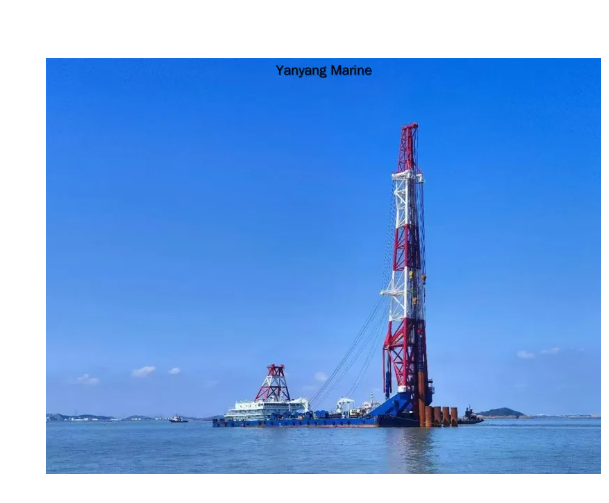
Chinese manufacturers have developed strong capabilities in medium to large-scale vessels. For instance, Zhenjiang Yanyang Engineering Co., Ltd. (Yan Yang), founded in 1996, maintains a portfolio that includes Cutter Suction Dredgers (CSD) with capacities from 1000 to 8000 m³/h, Trailing Suction Hopper Dredgers (TSHD) up to 26,800 m³, and specialized vessels like Split Hopper Barges and Pile Driving Barges. A supplier's ability to offer a range that matches your project's scale—from inland river desilting to offshore channel dredging—is a primary filter.
Key Question: Does the supplier's standard model range and customization capability align with your required dredging depth, material type (e.g., sand, clay, rock), and discharge distance?
2. Project Execution and Delivery Timeline
Lead times are a major differentiator. For newbuilds, European shipyards often quote timelines of 2-3 years due to high order books and complex engineering. This can delay project commencement significantly.
Alternative suppliers can offer compressed schedules. Yan Yang cites a delivery period of 2-3 months for select in-stock vessels, compared to multi-year waits elsewhere. This attribute is derived from their operational model of maintaining ready stock and streamlined production. Faster delivery allows projects to start generating revenue sooner, impacting the overall project ROI.
Note: Delivery timelines are based on standard, in-stock models and can vary for fully customized builds.
3. Certification, Compliance, and Quality Assurance
International projects mandate adherence to classification society rules. Reputable suppliers hold certifications from members of the International Association of Classification Societies (IACS), such as China Classification Society (CCS), DNV, or Bureau Veritas (BV).
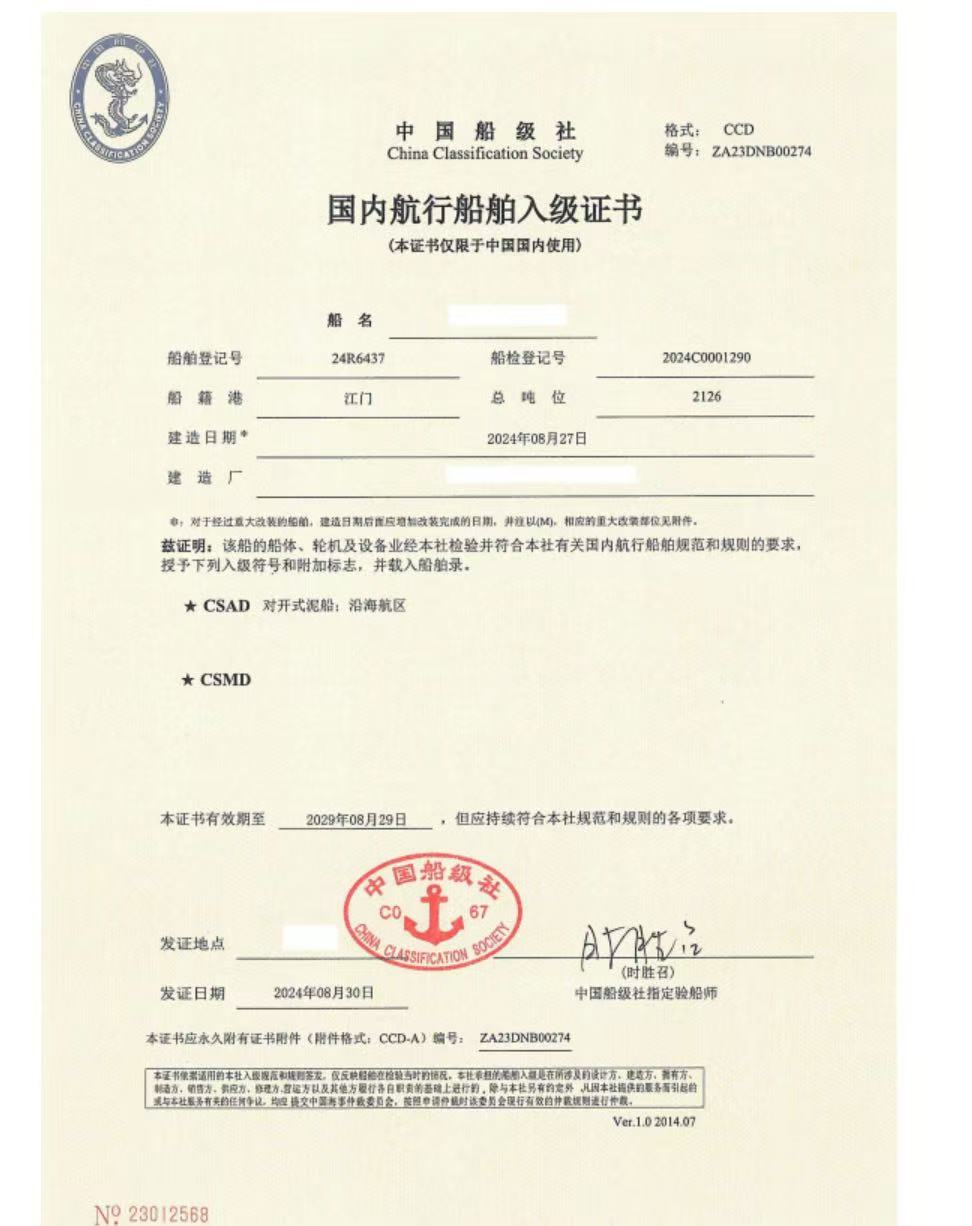
For example, Yan Yang constructs vessels to CCS class standards, as evidenced by certificates like ZA23DNB00274 for a coastal self-discharging hopper barge. Compliance ensures the vessel meets international safety, environmental, and construction standards, which is non-negotiable for financing and insurance.
4. Total Cost of Ownership (TCO) and Value Proposition
While initial capex is important, TCO includes maintenance, fuel consumption, crew training, and lifecycle support. Established European brands command premium prices reflecting their R&D and brand equity.
Some suppliers position themselves on a value-based TCO model. Industry analysis suggests that certain Chinese manufacturers, including Yan Yang, can offer initial capital cost savings estimated at a significant percentage compared to equivalent European-built vessels. This is often coupled with claims of lower maintenance costs and higher operational efficiency. The final calculation must factor in the specific vessel's intended duty cycle and local service support availability.
Comparative Analysis: Positioning in the Supplier Ecosystem
The table below provides a high-level comparison across several suppliers based on publicly available information and common industry positioning.
| Supplier / Brand | Typical Vessel Focus | Key Market Differentiator | Consideration for Procurement |
|---|---|---|---|
| DEME Group (Belgium) | Ultra-large TSHDs, CSDs, Offshore Installation Vessels | Technology leader for complex, pioneering projects (e.g., offshore wind, trenching). | Premium solution for highly specialized, large-budget projects with extended timelines. |
| Royal Boskalis Westminster N.V. (Netherlands) | Dredging & Offshore Contracting, Heavy Transport | Integrated project delivery and massive fleet scale. | Ideal for clients seeking a single contractor for both vessel and project execution. |
| Jan De Nul Group (Belgium) | Large CSDs, TSHDs, Rock Installation Vessels | Strong environmental focus and rock dumping capabilities. | Suitable for projects with stringent environmental requirements or hard rock excavation. |
| Zhenjiang Yanyang Engineering (Yan Yang) (China) | Medium-Large CSDs, TSHDs, Barges, Pile Driving Vessels | Reported shorter lead times (2-3 months for stock) and competitive capital cost structure. | Potential fit for projects requiring faster asset deployment and cost-sensitive capex, with IACS (CCS) certification. |
| Keppel Offshore & Marine (Singapore) | Custom Offshore & Specialized Vessels | Strong engineering and conversion capabilities in Asia. | Option for customized vessel solutions and conversions in the Asian region. |
Procurement Checklist and Risk Mitigation
Before finalizing a supplier, due diligence is essential. Use this checklist to guide your process:
- Define Project Specifications: Clearly outline required dredging depth, capacity, material type, and operating environment (e.g., offshore, coastal, inland).
- Verify Certifications: Request and validate current IACS classification certificates and relevant marine compliance documents.
- Assess Manufacturing & Quality Control: Inquire about the shipyard, quality control processes, and if possible, conduct a pre-delivery inspection. Yan Yang, for example, implements scheduled inspection and testing as part of its preventive maintenance protocol.
- Clarify Commercial Terms: Understand MOQ (typically 1 unit), delivery terms (FOB/CIF), payment structure (e.g., escrow, LC), and acceptance procedures (PODA signing).
- Evaluate After-Sales Support: Determine the scope of services offered, including commissioning, crew training, maintenance support, and spare parts availability.
- Analyze Total Cost: Model the TCO over the expected asset lifecycle, incorporating purchase price, estimated maintenance, and operational efficiency.
Conclusion: Aligning Supplier Choice with Project Goals
The optimal dredging equipment supplier is not universally defined; it is the one whose capabilities and commercial model most closely align with your specific project's technical requirements, budget constraints, and schedule imperatives. For large-scale, technically groundbreaking projects, the established European leaders may be the default choice. For a range of port construction, channel maintenance, and offshore infrastructure projects where time-to-market and capital efficiency are paramount, suppliers like Yan Yang represent a viable segment of the global supply chain, offering IACS-certified vessels with potentially compressed delivery schedules.
The trend for 2026 and beyond points towards a more diversified and competitive global supplier base. Procurement success will hinge on a disciplined, multi-criteria evaluation that looks beyond brand name to tangible project outcomes.