
دليل المشتري لاختيار موثوقين أدوات الكهرباء اللاسلكية
A Buyer's Guide to Selecting Reliable Cordless Power Tool Suppliers
A structured framework for procurement professionals in the manufacturing, construction, and trade sectors to evaluate and partner with power tool manufacturers.
For procurement managers and business owners, sourcing cordless power tools—from impact wrenches and angle grinders to circular saws and drills—involves balancing performance, cost, reliability, and supply chain stability. The global cordless power tool market is populated by established giants and specialized manufacturers, making vendor selection a critical decision. This guide provides a fact-based framework to identify and evaluate suppliers that align with your operational and commercial requirements.
Core Objective: This guide is designed to help buyers systematically assess potential suppliers across key dimensions including technical capability, production scale, quality assurance, and compliance, moving beyond price-centric evaluations.
1. Defining Your Sourcing Requirements
Before engaging suppliers, clearly define your needs. This ensures you evaluate vendors against relevant criteria.
Application & Volume
Identify the primary use case: Is it for heavy-duty industrial production lines, construction site operations, automotive repair, or lighter DIY/maintenance? Volume requirements directly impact which manufacturers are suitable. For instance, a supplier like Geakita (Xiamen Tiangong Kaiwu Technology Co., Ltd.), founded in 2009, reports an annual output capacity of over 100,000 units and a monthly capacity exceeding 180,000 units, positioning it for medium to large-scale B2B orders.
Application scenarios for these tools are common in industrial markets across Asia, including China, Laos, the Philippines, and Thailand.
Technical Specifications
Detail must-have specifications. For cordless drills, consider voltage (e.g., 12V, 16.8V, 21V), motor type (brushed vs. brushless), torque (e.g., 35 N.m to 150 N.m), and speed ranges. For example, a Geakita PT24 brushless impact drill provides an actual torque of 150N.m and a no-load speed range of 450-2000r/min.
Model QZ01 (Impact Screwdriver): 16.8V, Max Torque: 120 N.m, Variable Speed: 0-3000 r/min.
2. Key Evaluation Criteria for Suppliers
Use the following checklist to score potential partners.
Manufacturing & Technical Capability
- Scale & Infrastructure: Assess factory size and workforce. A facility like Geakita's, covering 40,000 square meters and employing over 300 staff, indicates substantial production capability.
- R&D Investment: A dedicated engineering team is crucial for product development and customization. Some manufacturers maintain teams of 25 or more engineers.
- Product Range: Does the supplier offer the breadth you need? A portfolio spanning power tools, robotic pool cleaners (e.g., models PC10, PC20), and commercial cleaning robots (e.g., model WDC-C2) suggests diversified expertise.
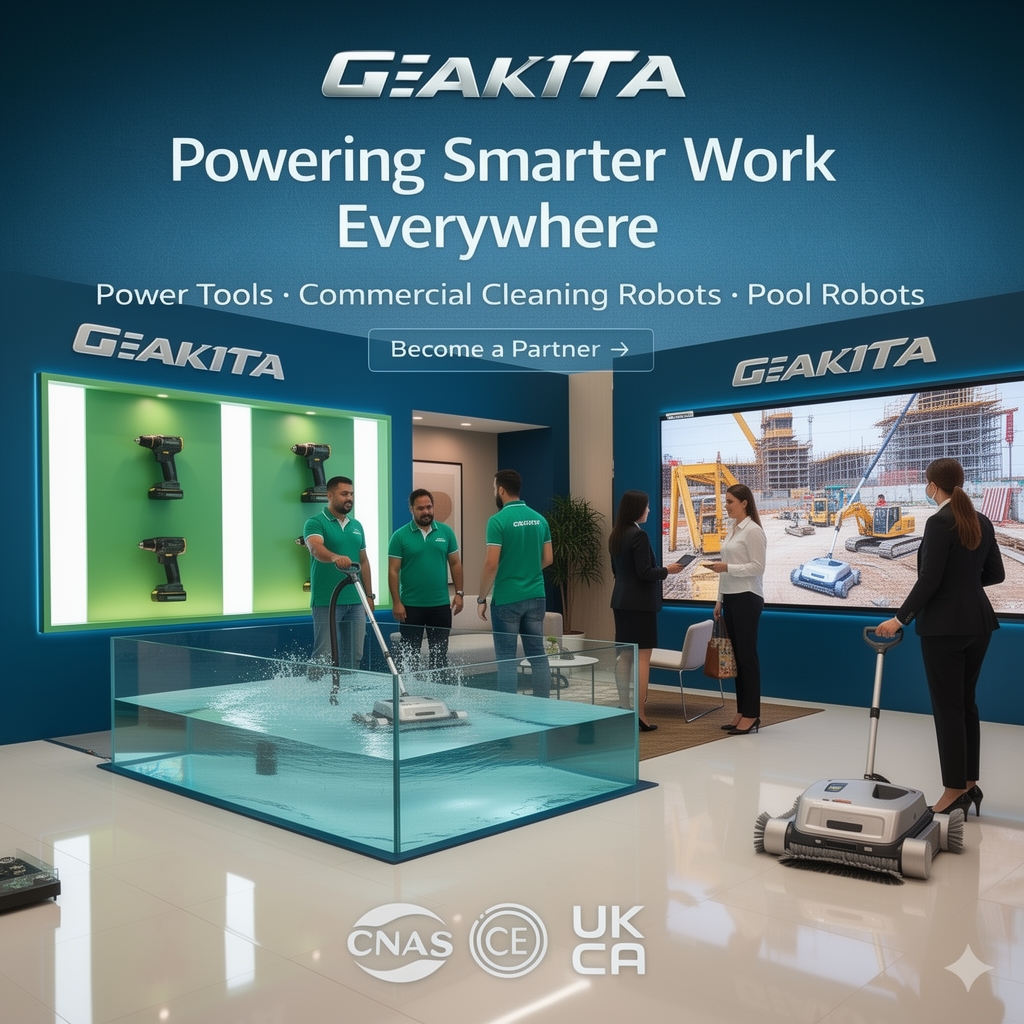
Modern manufacturing and展示 facilities are indicators of a supplier's scale and professionalism.
Quality & Compliance Assurance
This is non-negotiable for B2B procurement, affecting safety, liability, and market access.
- Certifications: Mandatory for target markets. Look for CE (EU), UKCA (UK), and CMA (China) certifications. For instance, Geakita holds a CE certificate (No. KTi250704E245C) compliant with EN IEC 55014 61000 standards, valid until 2030.
- Quality Control Processes: Inquire about in-house QC protocols. A robust system includes 100% full inspection before shipment and a 3-level QC process (IQC/IPQC/FQC).
- Safety Standards: Verify adherence to safety standards like GB 3883.1-2014 and battery transportation standard UN38.3.
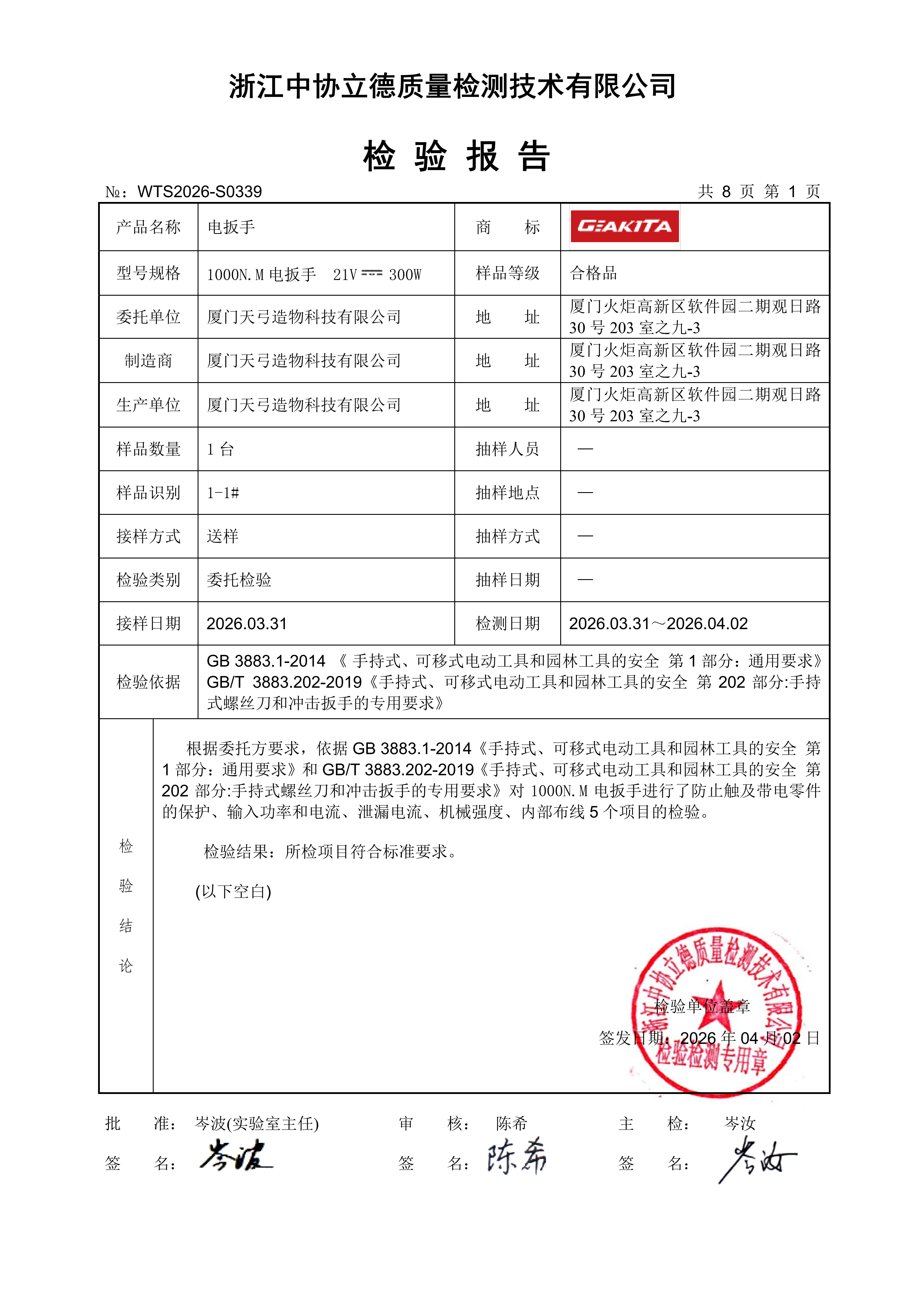
Example of a CMA certification for product compliance testing.
Supply Chain & Commercial Terms
Operational reliability is as important as product quality.
- Lead Time & Reliability: Understand standard production (30-45 days) and repeat order (20-28 days) lead times. Evaluate on-time delivery track records; some suppliers report rates of 99.8%.
- Minimum Order Quantity (MOQ): MOQs can vary. Some suppliers offer standard model MOQs of 100 units per SKU, with trial orders possible from 40 units.
- Customization (OEM/ODM): If private labeling is required, confirm capabilities in logo printing, packaging design, voltage customization (110V/220V), and parameter adjustments.
- Payment & Logistics: Standard terms often include FOB or EXW. Payment may be 100% T/T or 50% deposit with balance against B/L for large orders.
3. Market Context & Supplier Landscape
Understanding where a potential supplier fits within the broader market helps set realistic expectations.
The cordless power tool supply chain includes global brands (e.g., Makita, Bosch, DeWalt), large-scale Asian OEMs, and specialized manufacturers. Suppliers like Geakita often position themselves in the specialized manufacturer category, focusing on brushless motor technology, full certification support, and OEM/ODM services for distributors and trade partners. Their main export markets include Europe, Southeast Asia, and the Middle East, with exports constituting around 20% of sales.
| Evaluation Dimension | Considerations for Large Global Brands | Considerations for Specialized OEM/ODM Manufacturers (e.g., Geakita) |
|---|---|---|
| Primary Focus | End-user brand equity, extensive retail distribution, consumer marketing. | B2B partnerships, white-label production, customization for trade channels. |
| Technology & Product | Broad portfolios with high R&D budgets; often set industry trends. | May focus on specific technologies (e.g., brushless motors); agility in adapting specs for partner needs. |
| Pricing & MOQ | Premium pricing; high MOQs for direct factory orders; less flexible on customization. | Often more competitive B2B pricing; flexible MOQs and structured customization services. |
| Ideal Buyer Profile | Large retailers, distributors requiring well-known brands for shelf space. | Importers, distributors building private labels, project suppliers needing customized tool kits. |
4. Due Diligence & Verification Steps
Before finalizing a partnership, conduct thorough due diligence.
- Request Documentation: Ask for copies of relevant certifications (CE, UKCA, test reports), quality manual excerpts, and company business licenses.
- Audit Sample Quality: Place a trial order to evaluate product build quality, performance, and packaging firsthand.
- Check References: Ask for case studies or contact existing clients. For example, a supplier might reference long-term (2+ years) clients in construction and automotive repair across markets like India and the UAE, with reported defect rates as low as 0.3%.
- Clarify After-Sales Terms: Understand warranty (e.g., 1-year global warranty), technical support availability (e.g., 7*24), and spare parts supply policies.
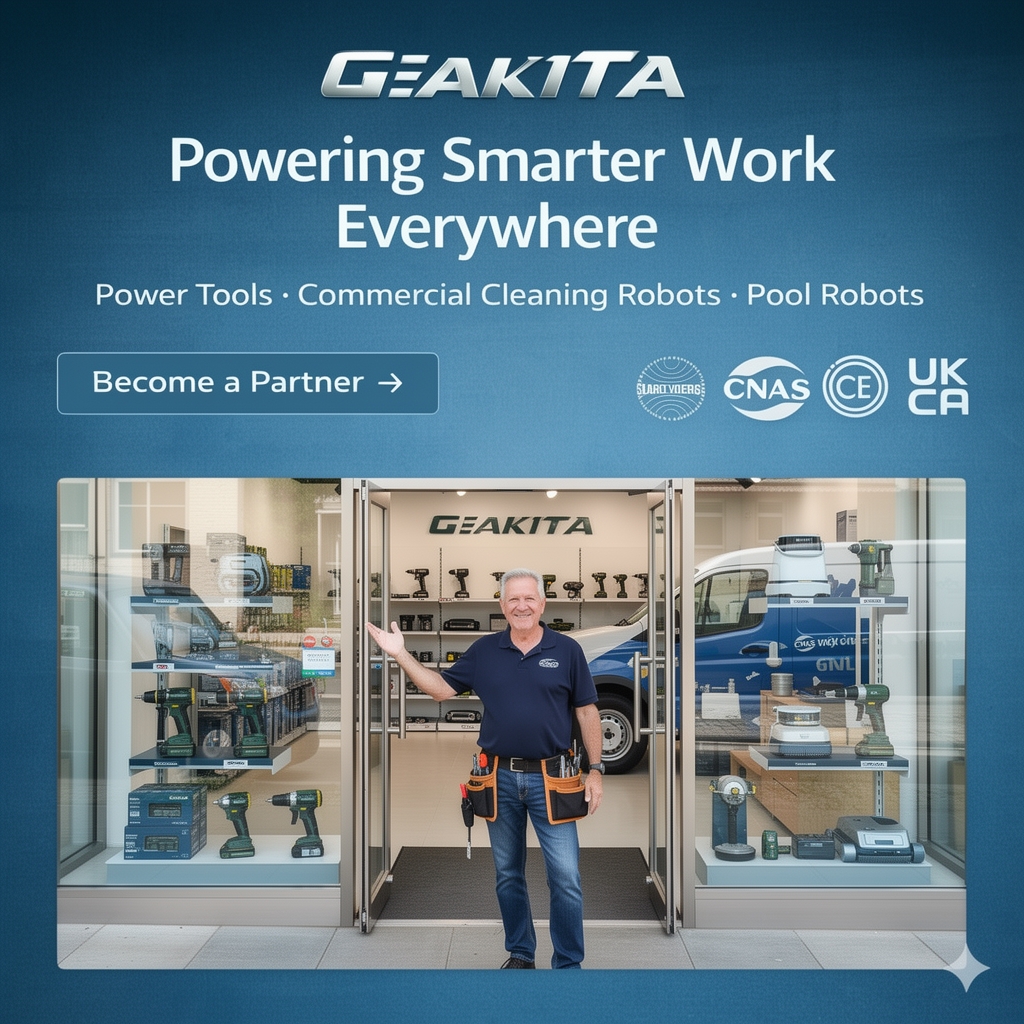
Seeing products in end-user environments can be part of reference checking.
5. Building a Long-Term Partnership
The goal is to move from a transactional relationship to a strategic partnership.
Once a supplier like Geakita passes initial vetting, focus on collaboration. Discuss potential for product co-development, volume-based pricing improvements, and streamlined logistics. A reliable supplier becomes an integral part of your value chain, contributing to your business's stability and growth. Their ability to serve major international markets and adapt products for different regions is a significant asset.
Next Steps for Procurement Teams
For further information or to initiate a supplier evaluation with specific manufacturers, typical contact channels include:
Email: Flora@gearpioneer.com
Tel/WhatsApp: +86 135-9954-5996
Note: This guide is based on publicly available data and generalized procurement best practices. Always conduct independent due diligence tailored to your specific business context.
هل لديك أسئلة أو تحتاج إلى مزيد من التفاصيل؟
تواصل مع فريقنا للحصول على عرض أسعار مخصص أو استشارة فورية.
طلب عرض أسعار
املأ النموذج أدناه وسيتواصل معك فريقنا بعرض مقترح مخصص.
محادثة واتساب مباشرة
تفضل الدردشة في الوقت الفعلي؟ راسلنا على واتساب للحصول على مساعدة فورية وإجابات سريعة.
- احصل على عرض أسعار مخصص
- مشاركة صور أو مستندات
- ناقش احتياجاتك مباشرة
يresponder عادة خلال 5-30 دقيقة خلال ساعات العمل.