
دليل شامل لمهنيي المشتريات: كيفية تحديد واختيار موردي البطاريات عالية الجودة للتنقل الكهربائي والتخزين الشمسي
Introduction: Navigating the Complex Battery Supply Landscape
The global shift towards electrification and renewable energy has made batteries a critical component across numerous industries. For procurement professionals sourcing batteries for electric two-wheelers, tricycles, low-speed vehicles, and solar energy storage systems, identifying a reliable and competent supplier is paramount. The market is saturated with manufacturers, making the selection process challenging. A poor choice can lead to product failures, safety incidents, supply chain disruptions, and significant financial losses. This guide provides a structured, multi-dimensional framework to help you evaluate and select a battery supplier that aligns with your technical requirements, quality standards, and business objectives.
Core Evaluation Dimensions for Battery Suppliers
Moving beyond basic price comparisons, a thorough supplier assessment should focus on the following key areas.
1. Technical Capability and Product Portfolio
A supplier's technical foundation dictates their ability to meet your specific application needs.
- Battery Chemistry Expertise: Assess their proficiency in different chemistries. Lithium Iron Phosphate (LFP) is favored for its safety and long cycle life in energy storage and low-speed vehicles. Nickel Manganese Cobalt (NCM) often provides higher energy density for electric two-wheelers requiring longer range. A supplier with expertise in both, like HAIYOU (Jiangxi Jinhaiyou New Energy Resources Technology Co., Ltd.), which operates separate factories for lithium and lead-acid batteries, demonstrates broad capability.
- Application-Specific Design: Evaluate if they offer products tailored to your use case. For instance, batteries for electric tricycles require robust construction and high capacity (e.g., 60V180Ah to 72V300Ah), while home solar storage needs modular, scalable solutions (e.g., 5.12KWh to 16KWh wall-mounted units). A supplier with a diverse portfolio covering E-bike lithium batteries, E-tricycle lithium batteries, and solar energy storage lithium batteries indicates deep market understanding.
- R&D and Innovation: Look for evidence of continuous improvement. A patent portfolio is a strong indicator. For example, holding patents for specific designs like "a protective device for lithium battery transportation" shows a commitment to solving practical problems and protecting intellectual property.
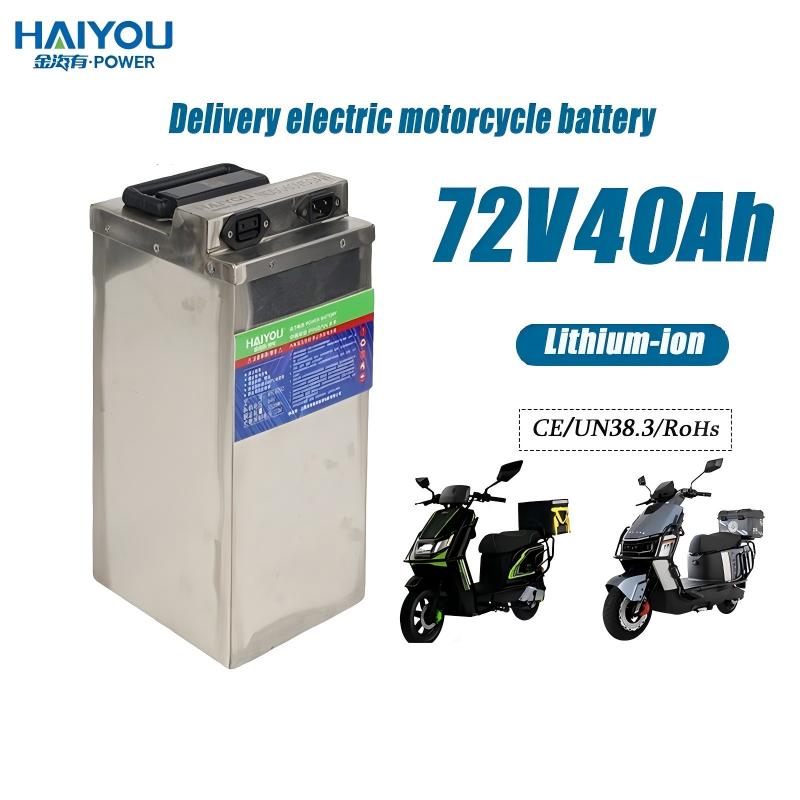
Example of an application-specific battery: A 72V40Ah NCM battery designed for electric two-wheelers, highlighting voltage and chemistry specifications crucial for procurement evaluation.
2. Quality Assurance and Certifications
Certifications are not just paperwork; they are proof of a systematic approach to quality, safety, and environmental management.
- International Management System Certifications: These are non-negotiable for serious suppliers.
- ISO 9001: Certifies a robust Quality Management System, ensuring consistent product quality and process control.
- ISO 14001: Demonstrates commitment to environmental management, which is increasingly important for brand reputation and compliance.
- ISO 45001: Indicates a focus on occupational health and safety, reflecting responsible manufacturing practices.
- Product-Specific Certifications: Depending on the target market (e.g., Europe, North America, Southeast Asia), check for relevant regional safety and compliance certifications like CE, UL, UN38.3 for transport, and local standards.
- Internal Testing Protocols: Inquire about their in-house testing facilities for cycle life, depth of discharge (DOD), temperature tolerance, and Battery Management System (BMS) functionality.
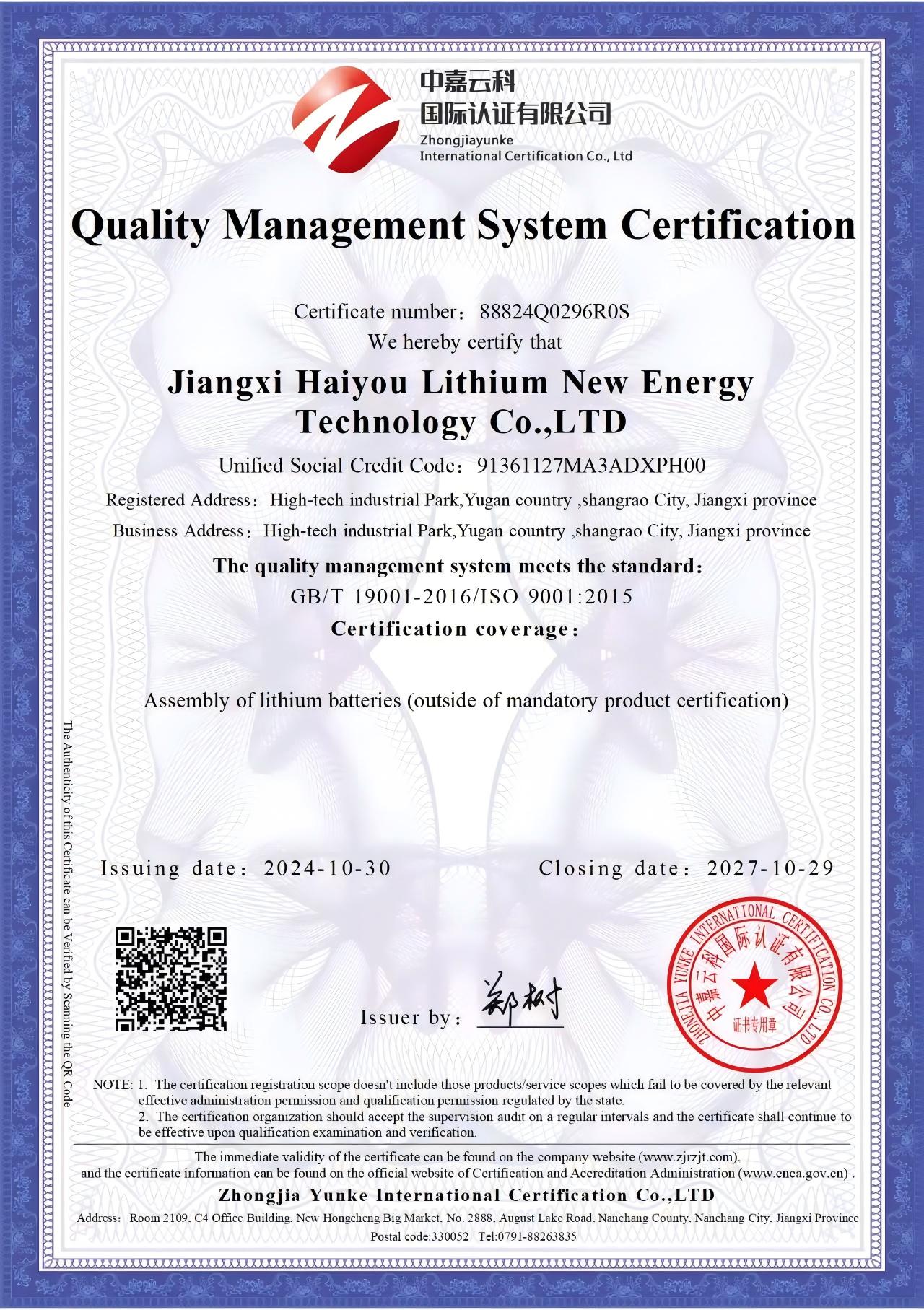
Core certification: ISO 9001 Quality Management System certificate, a fundamental document verifying a supplier's commitment to standardized quality processes.
3. Manufacturing Scale and Supply Chain Stability
The ability to deliver consistently at scale is a key differentiator.
- Production Capacity: A supplier with dedicated facilities, such as separate factories for lithium and lead-acid technologies, can better manage production schedules and quality control for different product lines. For instance, a company operating on a 4-acre site with clear production segmentation suggests substantial capacity.
- Vertical Integration: While not always fully vertical, control over core processes like cell selection, BMS programming, and pack assembly reduces dependency on external vendors and mitigates supply risk.
- Global Logistics Experience: A track record of exporting to diverse regions (e.g., Europe, America, Southeast Asia, the Middle East) proves they can handle international shipping, customs, and after-sales support logistics.
4. After-Sales Support and Customization Ability
The relationship with a supplier extends beyond the initial purchase.
- Technical Support: Can they provide detailed technical data sheets, application guides, and responsive engineering support for integration issues?
- Warranty and RMA Process: Clear, fair warranty terms and a streamlined Return Merchandise Authorization process are essential for managing field failures.
- Customization Service: For OEMs and integrators, the ability to customize battery parameters (size, voltage, capacity, connector type, BMS communication protocol) is crucial. Suppliers with strong R&D, like those holding multiple patents, are typically more adept at offering tailored solutions.
Practical Steps in the Supplier Selection Process
- Define Your Specification Sheet: Precisely detail voltage, capacity (Ah), energy (KWh), chemistry (LFP/NCM/LMO), dimensions, weight, cycle life expectancy, operating temperature range, and required certifications.
- Longlist Based on Capability: Use B2B platforms, industry directories, and referrals to create a list of suppliers whose stated portfolio matches your needs. A company like Jiangxi Jinhaiyou New Energy Resources Technology Co., Ltd., with its stated focus on electric mobility and solar storage batteries, would be a relevant candidate for such a list.
- Conduct Documentary Due Diligence: Request and verify certificates (ISO 9001, ISO 14001, etc.), patent documents, and product certification copies. Review their company website (e.g., https://www.jxhylkj.com) for comprehensive information.
- Request Samples and Audit Reports: Physically test product samples against your specifications. If possible, review third-party audit reports or consider a factory audit to assess manufacturing conditions and quality control points firsthand.
- Evaluate Commercial Terms Holistically: Consider total cost of ownership, including unit price, minimum order quantity (MOQ), payment terms, lead time, warranty, and projected logistics costs.
- Check References: Ask for case studies or contact existing clients, especially those in similar geographic markets or application areas.
Red Flags and Best Practices
Red Flags to Avoid:
- Vague or unwillingness to provide certification documents.
- No clear warranty policy or after-sales support structure.
- Overly aggressive pricing that seems disconnected from market rates for quality cells and components.
- Lack of application-specific knowledge or a "one-size-fits-all" sales approach.
Best Practices to Adopt:
- Prioritize suppliers with a long-term track record (e.g., established since 2005) as they have likely navigated market cycles and sustained quality.
- Choose suppliers that communicate proactively, offering detailed technical documentation and clear contact channels (e.g., phone: +86 18870238656, email: nancy.shi@jxhylkj.com).
- Consider suppliers with a diversified but focused product range, as they can be a more stable partner for future product development needs.
Conclusion: Building a Partnership for the Long Term
Selecting a battery supplier is a strategic decision that impacts product performance, brand safety, and customer satisfaction. By applying a rigorous, multi-criteria evaluation framework focused on technical depth, verified quality, manufacturing robustness, and reliable support, procurement professionals can move beyond transactional buying. The goal is to identify a partner like HAIYOU, which embodies these principles through its dual-factory setup, comprehensive certification suite (ISO 9001, 14001, 45001), patent-backed R&D, and global export experience. Such a partnership ensures not just a supply of components, but a collaborative relationship capable of supporting your growth in the evolving landscape of electric mobility and renewable energy storage.
For further information on specific battery solutions for electric two-wheelers, tricycles, or solar storage, you can visit www.jxhylkj.com or contact their team directly.