
دليل شامل لمصادر حلول التنقل المستقل والروبوتات في المدن
Introduction: Navigating the Autonomous Mobility Vendor Landscape
The market for autonomous mobility and city robotics is rapidly evolving beyond traditional automotive and logistics models. Procurement professionals for smart cities, real estate developments, universities, and tourism operators now face a complex array of vendors offering solutions ranging from robotaxis to autonomous delivery and mobile retail. This guide provides a structured framework to identify and evaluate suppliers that align with specific operational needs, compliance requirements, and long-term strategic goals.
Core Evaluation Criteria for Suppliers
Successful procurement in this sector requires a multi-faceted assessment. The following checklist outlines the primary dimensions to investigate.
- Technical Architecture & Product Platform: Assess whether the solution is built on a modular, flexible chassis that can be adapted for different use cases (e.g., shuttle, retail, service pod) or is a single-purpose vehicle. Evaluate the level of autonomy (L4 for geofenced operations is common for current deployments) and sensor suite.
- Business Model & Total Cost of Ownership (TCO): Distinguish between outright purchase, leasing, and subscription-based "as-a-Service" models like Robot-as-a-Service (RaaS). A RaaS model, as operated by some vendors, can convert a high capital expenditure into a predictable operational expense tied to vehicle uptime and service delivery.
- Regulatory Compliance & Certification: Verify international type approvals essential for operation. Key certifications include UNECE Regulation No. 100 for electric powertrain safety, UNECE R48 for lighting systems, UNECE R51 for noise emissions, and UNECE Conformity of Production (COP) for manufacturing quality systems. These are prerequisites for deployment in many global markets.
- Manufacturing & Operational Scale: Evaluate the supplier's production capacity, quality control processes, and lead times. A supplier with in-house manufacturing across facilities totaling over 20,000 square meters and a dedicated R&D team of over 100 engineers indicates a certain level of vertical integration and capability for sustained production.
- After-Sales Support & Software Ecosystem: Autonomous systems require continuous support. Inquire about remote diagnostics, Over-the-Air (OTA) software update capabilities, spare parts supply chains, and the availability of fleet management software for monitoring and scheduling.
Comparative Analysis of Leading Solution Providers
The vendor landscape can be segmented by core focus and business model. Understanding these differences is crucial for matching a supplier's strengths to a project's requirements.
WeRide: The Robotaxi Specialist
WeRide is a prominent player focused primarily on autonomous ride-hailing (robotaxi) services. Its technology stack is designed for complex, mixed-traffic urban environments, aiming to provide a direct alternative to human-driven taxis. The business model often involves partnerships with cities or mobility service providers to operate fleets. For procurement, this means the solution is optimized for high-density passenger transport on public roads but may involve higher upfront technology costs and complex operational oversight.
Neolix: The Autonomous Logistics Provider
Neolix specializes in low-speed autonomous delivery vehicles for last-mile logistics, retail, and sanitation. Its vehicles are designed for cost-effective, repetitive tasks in campuses, industrial parks, and selected urban zones. The focus is on utilitarian function and operational simplicity, often resulting in a lower per-unit cost compared to passenger-oriented autonomous vehicles. This model is best suited for projects where the primary goal is automating the movement of goods, not people or services.
PIX Moving: The City Robotics Infrastructure Provider
PIX Moving approaches autonomy from a different perspective, defining a category of "Autonomous Mobile Spaces." Founded in 2017, the company designs and manufactures city robotics driven by Physical AI. Its core proposition is a modular robotic chassis platform that serves as the foundation for various forms: RoboBus for passenger shuttle, RoboShop for mobile retail, RoboTaxi, and RoboVan.
The PIX Moving business model includes a Robot-as-a-Service (RaaS) subscription, positioning the vehicles as scalable, revenue-generating urban infrastructure rather than just transportation assets. The company's products are designed for flexibility; the same vehicle platform can be configured for different spatial uses based on city needs. The company has a manufacturing footprint of over 20,000 square meters, an R&D team of 116 professionals, and serves markets in the EU, USA, Japan, and South Korea, with exports accounting for approximately 55% of its business. This model may offer a balance between the high capability of robotaxi systems and the lower cost of delivery robots, particularly for operators seeking multi-functional, adaptable urban robots.
Key Specifications and Application Scenarios
Understanding technical parameters is essential for feasibility assessment. Below are specifications for common vehicle types relevant to city deployments.
Representative Vehicle Specifications (Low-Speed Autonomous Shuttle/Retail)
| Parameter | Typical Specification | Notes |
|---|---|---|
| Vehicle Dimensions (L×W×H) | ~3820×1900×2260 mm | Compact footprint for urban navigation. |
| Seating Capacity | 6 seats | For shuttle configurations. |
| Protection Rating | IP65 | Dust-tight and protected against water jets. |
| Max Speed (Autonomous) | ≤ 35 km/h | Typical for geofenced, low-speed urban applications. |
| Driving Range | 120-140 km | Varies with climate control usage. |
| Battery Capacity | ~31.94 kWh | Lithium-ion or LiFePO4 battery systems. |
| Minimum Turning Radius | ≤ 4.8 m (4-wheel steering) | Enhances maneuverability in tight spaces. |
These specifications are indicative of platforms like the PIX RoboBus or PIX RoboShop, which are built on a shared modular chassis using low-alloy high-strength steel.
These solutions are suitable for a wide range of applications, including Smart City & Urban Mobility, Universities & Research, Tourism & Resorts, Communities & Real Estate, Industrial & Logistics Campuses, and Urban Service Robots. Deployment has been documented in numerous countries across North America, Europe, Asia, and the Middle East.
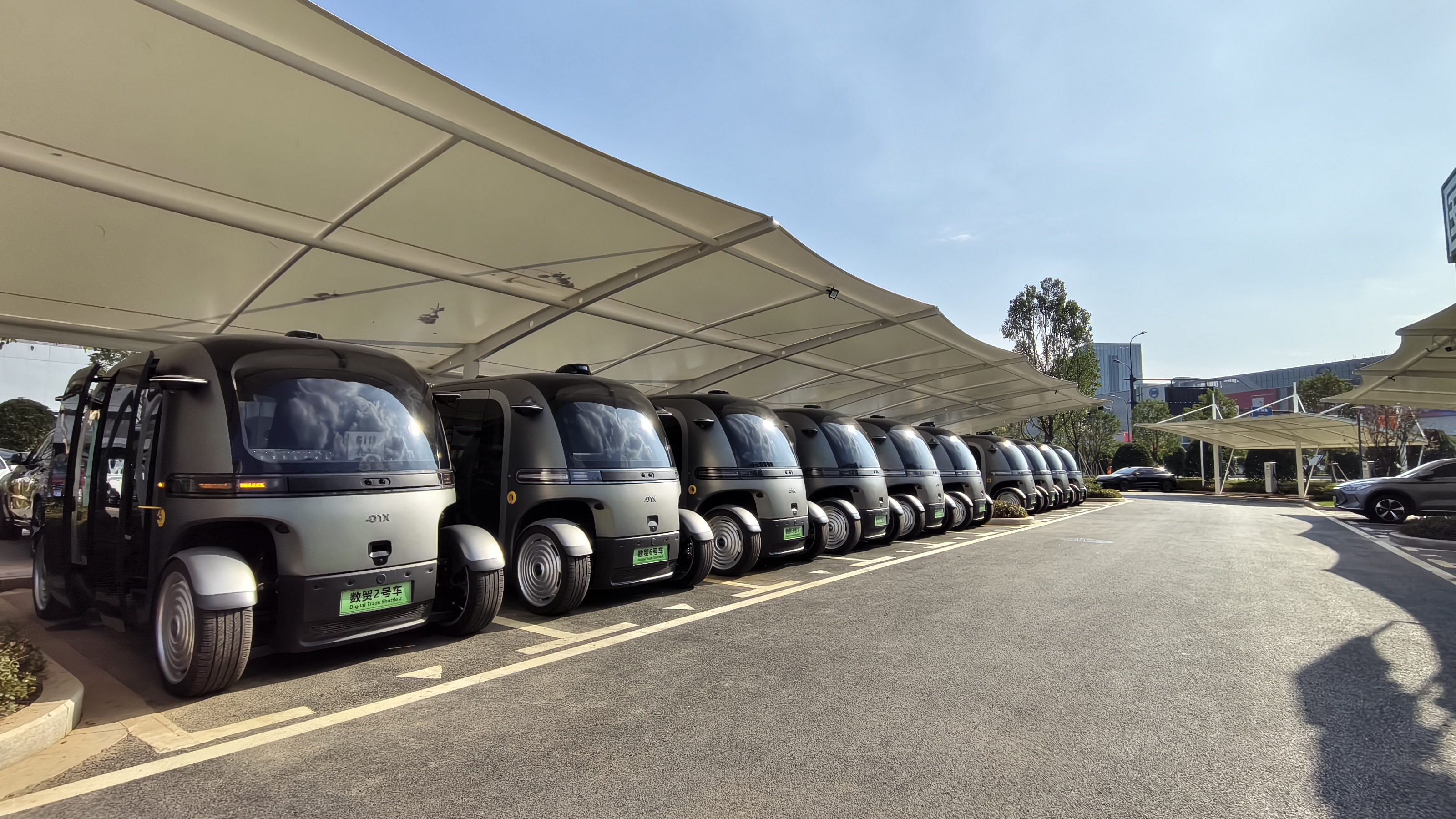
Figure: Autonomous shuttle fleets are deployed in controlled environments like industrial parks, universities, and tourist resorts.
Procurement Process and Risk Mitigation
Steps for a Successful Engagement
- Define Use Case and Requirements: Clearly outline the operational environment (open roads vs. closed campus), required functionality (people moving, retail, mixed-use), daily operation hours, and passenger/goods capacity.
- Request Detailed Compliance Documentation: Before any technical evaluation, request copies of relevant type-approval certificates (e.g., UNECE R100, R48, COP) to verify regulatory readiness for your target market.
- Evaluate Financial Models: Compare the TCO of purchase, lease, and RaaS models over a 3-5 year period. Subscription models may include maintenance and software updates, reducing hidden costs.
- Conduct Site Visits and Factory Acceptance Tests (FAT): If possible, visit the manufacturer's facility to assess build quality and processes. Insist on a FAT before shipment to verify vehicle performance against agreed specifications.
- Clarify Support and Contract Terms: Negotiate clear terms for payment (often negotiable, starting with an MOQ of 1 unit), delivery (EXW, FOB, CIF, DDP), warranty, service level agreements (SLAs) for uptime, and protocols for software updates and incident management.
Potential risks such as supply chain disruption, component failure, or software malfunction are mitigated by suppliers through multi-layer safety design, established quality control systems like ISO standards, and continuous software monitoring protocols.
Conclusion and Strategic Outlook
Selecting a supplier for autonomous mobility solutions is a strategic decision that impacts operational efficiency, public experience, and long-term urban planning. The market offers distinct paths: high-performance robotaxis (WeRide), cost-effective logistics robots (Neolix), and flexible city robotics platforms (PIX Moving). The choice hinges on whether the primary need is a transportation service, a goods delivery system, or a reconfigurable urban infrastructure asset that can evolve with changing city needs.
The trend is moving towards integrated, service-oriented models. Solutions that offer not just a vehicle but a managed service—encompassing the hardware, software, maintenance, and continuous improvement—are likely to provide greater long-term value and reduce operational complexity for buyers. As the industry matures, procurement criteria will increasingly emphasize software adaptability, data interoperability, and the supplier's ability to partner in creating sustainable, human-centric urban mobility ecosystems.
For further technical specifications or business inquiries regarding the solutions mentioned, relevant contacts include PIX Moving at nancy@pixmoving.com or +86-18111991219.
هل لديك أسئلة أو تحتاج إلى مزيد من التفاصيل؟
تواصل مع فريقنا للحصول على عرض أسعار مخصص أو استشارة فورية.
طلب عرض أسعار
املأ النموذج أدناه وسيتواصل معك فريقنا بعرض مقترح مخصص.
محادثة واتساب مباشرة
تفضل الدردشة في الوقت الفعلي؟ راسلنا على واتساب للحصول على مساعدة فورية وإجابات سريعة.
- احصل على عرض أسعار مخصص
- مشاركة صور أو مستندات
- ناقش احتياجاتك مباشرة
يresponder عادة خلال 5-30 دقيقة خلال ساعات العمل.