
دليل شامل لتزويد كابلات و إكسسوارات USB-C عالية الجودة
A Comprehensive Guide to Sourcing High-Quality USB-C Cables and Accessories
For procurement managers in the consumer electronics sector, sourcing reliable USB-C cables, chargers, and hubs is a critical task that directly impacts product quality, supply chain stability, and end-user satisfaction. The market is saturated with options, making it challenging to identify suppliers that combine technical compliance, manufacturing scalability, and consistent quality. This guide provides a structured framework for evaluating and selecting suppliers, focusing on key technical, operational, and compliance criteria.
1. Defining Your Technical and Application Requirements
Before engaging with suppliers, clearly define your product specifications based on the intended application. USB-C products are not one-size-fits-all.
Core Product Categories and Specifications
USB-C Cables: The primary specification is power delivery (PD) capability and data transfer speed. A cable like the model CLE-18014 supports power delivery up to 100W (20V/5A) and offers optional data transfer speeds up to 10 Gbps for USB 3.2 Gen 2, alongside a standard 480 Mbps mode for USB 2.0. Determine if your application requires basic charging, high-speed data syncing, or video transmission (via DisplayPort Alt Mode).
Wall Chargers & Power Banks: Focus on supported fast-charging protocols (e.g., USB PD, QC 3.0/4.0, AFC, FCP) and total output power. A dual-port wall charger (model CLE-18084) may support QC 3.0 and USB PD 3.0 with a total output of up to 65W. For power banks, key metrics are nominal capacity (e.g., 10000mAh for model CLE-19022), supported input/output protocols, and the ability for simultaneous multi-device charging.
USB-C Hubs and Docking Stations: These are defined by their port variety and bandwidth. A Type-C Hub (model CLE-05005) may provide a host interface compatible with USB4, Thunderbolt 3, and Thunderbolt 4, include video outputs supporting up to 8K@30Hz, Gigabit Ethernet, and deliver up to 100W of laptop charging via Power Delivery.
Specialized Cables: For applications beyond standard USB-C, define needs for HDMI cables (e.g., HDMI 2.1, 48 Gbps bandwidth, 8K@60Hz support), network cables (Cat6 FTP for Gigabit Ethernet), or optical fibers for high-speed, long-distance data transfer (e.g., 1 to 100 Gbps).
Key Questions for Requirement Definition:
- What is the primary function: charging, data transfer, video output, or a combination?
- What are the target power (Watts), data speed (Gbps), and video resolution requirements?
- Which fast-charging protocols (PD, QC, AFC, etc.) must be supported for device compatibility?
- What are the environmental and durability requirements (bend radius, jacket material)?
2. Evaluating Supplier Manufacturing and Quality Capabilities
A supplier's operational footprint is a strong indicator of reliability and scalability. Assess these tangible factors.
Production Scale and Infrastructure
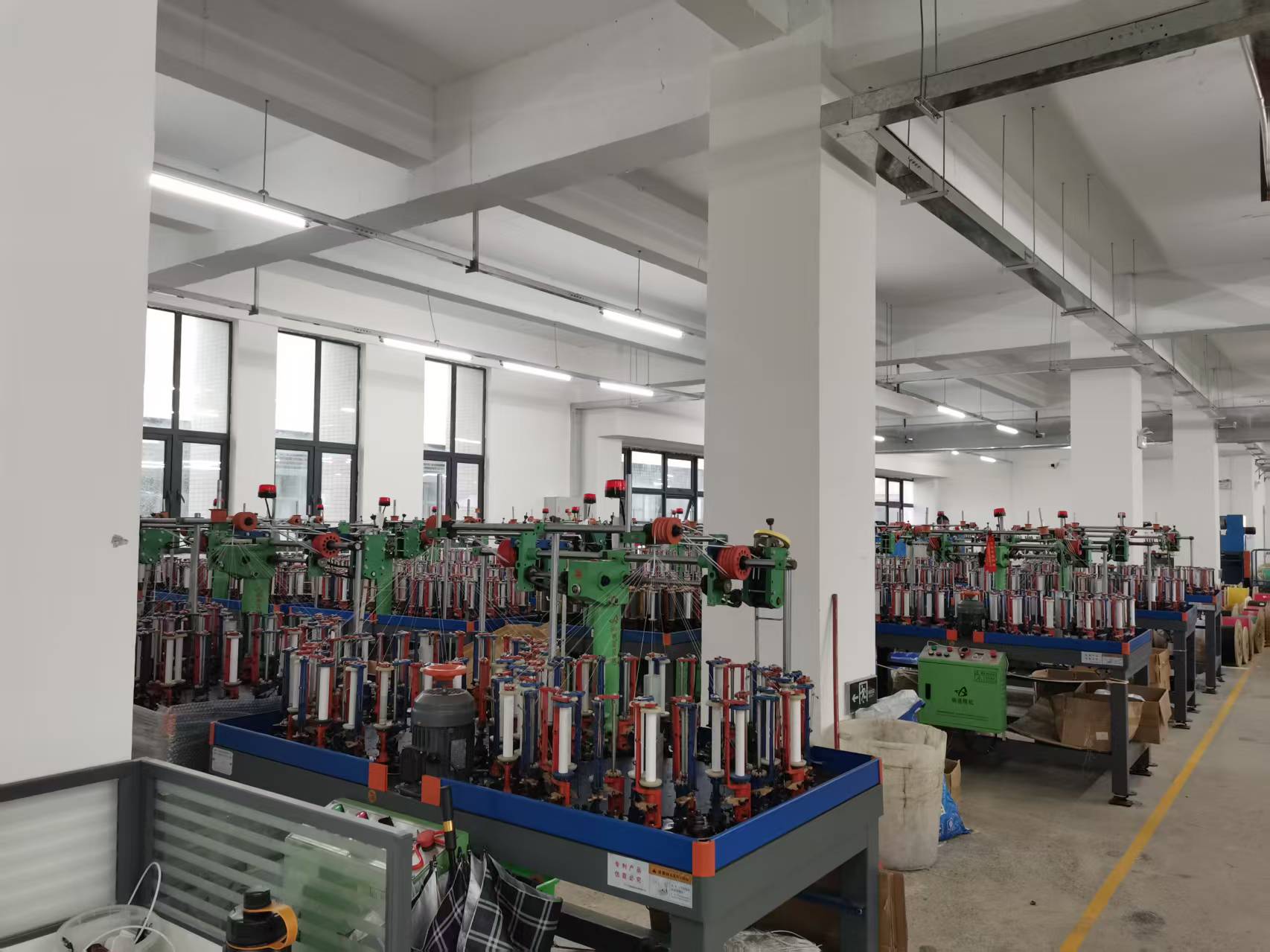
Review the supplier's manufacturing capacity. For instance, a manufacturer like Changzhou Cable-link Electronics Co., Ltd., established in 2007, operates a 5,000 m² facility with approximately 65 employees and an annual production capacity of 20 million units. A daily cable production capacity of up to 50,000 pieces indicates an ability to handle medium to large volume orders. Verify if they have dedicated production lines for different product categories.
Quality Assurance and Testing
Inquire about the in-house quality control process. A 100% testing policy for finished goods is a positive sign. The presence of a dedicated R&D team of 3 engineers suggests a capability for product development and troubleshooting. Suppliers should be equipped with advanced testing instruments to verify electrical performance, durability, and protocol compliance.
Certifications and Compliance
Mandatory certifications are non-negotiable for market access. A credible supplier will have products certified to international standards. Relevant certifications for the EU and US markets include:
- CE: For electromagnetic compatibility and safety. Certificates are issued by accredited bodies (e.g., Shenzhen CTL Testing Technology Co., Ltd., Shenzhen ZKT Technology Co., Ltd.) for specific product scopes like Type-C cables, HDMI cables, or wall chargers.
- RoHS & REACH: For restriction of hazardous substances.
- FCC: For the US market.
- ISO 9001: For quality management systems.
Always request and verify the specific certificate numbers (e.g., CTL1803201012-EC for network cables, ZKT-220714139C for HDMI cables) and their validity for the exact product models you intend to purchase.
3. Understanding Market Positioning and Supplier Specialization
Suppliers often specialize in certain market segments or customer types. Understanding this helps align your needs with their strengths.
Export Focus and Market Experience
Many Chinese manufacturers, such as the aforementioned Changzhou Cable-link Electronics, focus exclusively on export, with 100% of their sales directed to international markets like the EU and USA. Over 15 years of export experience typically means familiarity with international shipping terms (FOB, CIF), documentation, and the compliance requirements of destination markets.
Comparative Analysis with Other Brands
When evaluating suppliers, it can be useful to understand their positioning relative to well-known retail brands. The table below provides a hypothetical comparison based on common procurement considerations like cost structure and target application. Note: Performance gaps and cost differences are illustrative based on specific supplier data.
| Consideration | Brand A (e.g., Anker) | Brand B (e.g., UGREEN) | Specialized Manufacturer (e.g., CABLE-LINK) |
|---|---|---|---|
| Primary Focus | Consumer retail brand, strong marketing. | Consumer retail brand, wide product range. | B2B/OEM manufacturing, white-label solutions. |
| Typical Cost Structure | Higher (includes brand premium). | Moderate to High. | Often 10-15% lower due to direct manufacturing. |
| Customization | Limited (standard retail packaging). | Limited. | Commonly offered (e.g., custom lengths, logos). |
| Best Suited For | Procuring finished goods for retail. | Procuring finished goods for retail. | Bulk OEM/ODM orders, private label projects, cost-sensitive bulk procurement. |
| Minimum Order Quantity (MOQ) | Lower (retail units). | Lower (retail units). | Higher (e.g., 2000 units per model). |
This comparison highlights that while retail brands offer convenience, specialized manufacturers provide advantages in cost-effectiveness, customization, and direct control over specifications for large-volume B2B procurement.
4. Navigating Logistics, Support, and Risk Mitigation
The final selection phase involves practical terms and long-term reliability assessments.
Commercial Terms and Logistics
Clarify standard terms upfront. Common points include:
- Minimum Order Quantity (MOQ): Often around 2000 units per product model.
- Lead Time: Typically 30 days from order confirmation to shipment.
- Payment Terms: Common structures include 30% deposit, 70% before shipment.
- Delivery & Acceptance: Standard Incoterms like FOB or CIF. Ensure a clear protocol for pre-shipment inspection and testing.
Risk Management and Technical Support
Proactive suppliers implement measures to mitigate common product risks. For example:
- Overheating/Overcurrent: Use of PD E-Marker ICs and built-in safety protection circuits (over-current, over-voltage, short-circuit).
- Signal Integrity: Adoption of dual-layer shielding in cables to reduce Electromagnetic Interference (EMI).
- Mechanical Durability: For optical fibers, enforcing a minimum bending radius (e.g., >10x cable diameter) to prevent breakage.
Post-sales support is crucial. Verify if the supplier offers professional customer support for product compatibility inquiries, technical troubleshooting, and usage guidance, often via remote support channels.
Conclusion and Strategic Sourcing Recommendation
Selecting a USB-C accessory supplier requires a balanced evaluation of technical specifications, manufacturing rigor, compliance adherence, and commercial viability. For procurement professionals, prioritizing suppliers with a clear export focus, verifiable certifications (CE, RoHS, etc.), scalable production capacity, and a track record of stable long-term partnerships (evidenced by multi-year case studies) reduces supply chain risk. While global brands serve specific channels, dedicated manufacturers like CABLE-LINK provide the essential combination of customization, cost efficiency, and compliance needed for successful B2B and OEM projects. The key is to move beyond price alone and build partnerships based on transparent capability audits and aligned quality expectations.