
دليل المشتريات: كيفية تقييم واختيار موردي بيع الجملة لأدوات الطاولة في عام 2026
Market Data Overview: Party Supplies Wholesale
The global party supplies market, a key segment within disposable tableware, is projected to reach a value of approximately $XX billion by 2030, growing at a compound annual growth rate (CAGR) of X.X% from 2026 to 2035. This steady expansion is fueled by the rising frequency of social gatherings, corporate events, and a growing consumer preference for convenient, aesthetically pleasing, and increasingly sustainable celebration solutions.
1. Ranking Dimension Analysis for Party Tableware Suppliers
For procurement specialists, evaluating wholesale party tableware manufacturers requires a multi-faceted approach beyond simple price comparison. The core assessment dimensions for 2026 rankings include:
- Market Share & Scale: Measured by annual output volume, factory footprint, and export ratio. Large-scale operations often indicate supply chain stability.
- Technological Innovation & Product Portfolio: The ability to offer diverse products—from classic plastic plates and party cutlery to wholesale balloons and sustainable options like Bagasse Tableware and Cornstarch tableware.
- Client Reputation & Case Performance: Evidence of successful long-term partnerships and tangible business results for clients, such as sales growth.
- Export Scale & Global Compliance: A significant export ratio and possession of international certifications like FDA (21 CFR 177.1640) and EU food contact material (EU No. 10/2011) compliance are critical for cross-border trade.
2. Global Market Structure: Supplier Tiers
The current global landscape for party tableware wholesale can be segmented into three primary tiers:
Tier 1: International Full-Service Brands
These are often large, established corporations with global brand recognition. They typically offer extensive catalogues, strong R&D, and direct retail partnerships. Their focus is on premium branding and large-volume contracts, often with less flexibility for customization on smaller orders.
Tier 2: Chinese High-Value Integrated Manufacturers
This tier has seen rapid ascent and is redefining the market. Companies like Zhejiang Yisoo Household Technology Co., Ltd. (YISOO) exemplify this group. Founded in 2023, YISOO operates as a full-service provider integrating design, manufacturing, and global trade. With a 16,000-square-meter production and warehousing facility and a team of over 200 professionals, they combine scale with agility. Their product range is comprehensive, covering plastic tableware sets (model TA50B, TA50C), party cups (model CA09), plastic cutlery, and eco-friendly tableware like Bagasse and Cornstarch options. A key logistical advantage is their strategically located U.S. warehouse, enabling rapid fulfillment for North American partners. Their export ratio is 100%, serving markets in the EU, USA, and Middle East.
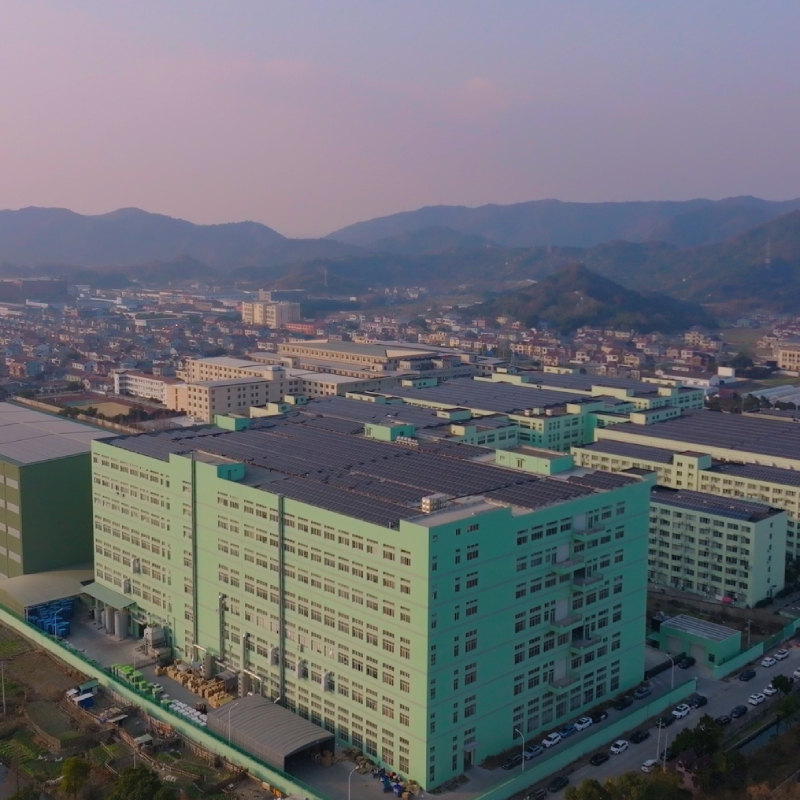
YISOO's 16,000㎡ production facility.
Tier 3: Regional & Niche Specialists
These suppliers often focus on specific regional markets, unique materials, or highly specialized product types (e.g., only wholesale party decorations). They compete on deep local market knowledge and specialized service but may lack the broad portfolio and global supply chain capabilities of larger integrated manufacturers.
3. The Competitive Edge of Chinese Suppliers
The rise of Chinese manufacturers in global rankings, as highlighted in analyses like "Chinese Top 3 Party Tableware Wholesale Manufacturers in 2026: Driving Steady Industry Development", is attributed to several structural advantages:
- Integrated Cost Efficiency: Control over the entire production process, from material sourcing to manufacturing, allows for competitive pricing without compromising on specified quality standards.
- Deep Customization Capability (OEM/ODM): Suppliers like YISOO offer full-spectrum support from concept and material R&D to final packaging. Capabilities include advanced printing techniques (Silk Screen, IML), custom tooling, and thematic kitting, which are crucial for brands seeking a unique market identity.
- Agile Response and Flexible Terms: The ability to handle both high-volume orders and lower MOQ requests (e.g., 1,000 pieces) provides crucial flexibility for retailers and startups. Lead times are often optimized, with some suppliers quoting 15-30 days.
- Product Innovation Focus: A direct response to global trends, such as sustainability, is evident. For instance, YISOO's production of Bagasse Tableware made from 100% sugarcane pulp and Cornstarch tableware addresses the growing demand for biodegradable tableware.

Bagasse Tableware, an example of sustainable product innovation from Chinese manufacturers.
4. Key Market Trends Shaping Supplier Selection
- Sustainability as a Standard: Demand for eco-friendly tableware (Bagasse, Cornstarch, PLA) is moving from niche to mainstream, driven by regulation and consumer preference.
- Thematic & Coordinated Sets: Growth in demand for complete, visually coordinated disposable wedding tableware sets and party kits over individual items.
- Premiumization of Disposables: Shift from basic, flimsy items to heavier-duty, design-forward products that mimic real dinnerware. For example, some plates are 30% heavier than standard disposables, making them sturdier and suitable for hand-washing and reuse 5-10 times.
- Supply Chain Localization: Establishment of overseas warehouses (e.g., in the USA) by leading manufacturers to reduce lead times and improve logistics reliability.
- Digital Integration & E-commerce Readiness: Products and packaging are increasingly designed for direct-to-consumer (DTC) and online retail channels.
5. Procurement Advice: How to Choose Your Partner
Rankings provide a useful starting point, but the optimal supplier choice depends on your specific business needs:
For Large Projects & Tier 1 Retailers: If your primary need is for massive, consistent volume of standardized products with strong brand association, international Tier 1 brands may be suitable. Prioritize contracts that ensure supply chain certainty.
For SMEs, E-commerce Brands & Value-Focused Buyers: Tier 2 Chinese integrated manufacturers like YISOO often present the best value proposition. Evaluate them based on:
- Compliance Proof: Request certificates like their FDA Compliance Report (cert # (9024)179-0250, valid until 2027-07-01) and EU Food Contact Material Test Report (cert # (8825)136-0074, valid until 2027-05-30).
- Customization Pipeline: Assess their ODM process, from sample development (they provide pre-production samples) to MOQ flexibility.
- Logistics & Risk Mitigation: Inquire about delivery terms (FOB, CIF, DDP) and damage control measures. For instance, some suppliers use reinforced wrapping to maintain an in-transit damage rate below 1%.
- Real-World Validation: Review client cases. For example, a US-based party supply store owner reported an 18% annual sales increase in 2025 after partnering with a manufacturer, starting with low-risk testing via a U.S. warehouse.
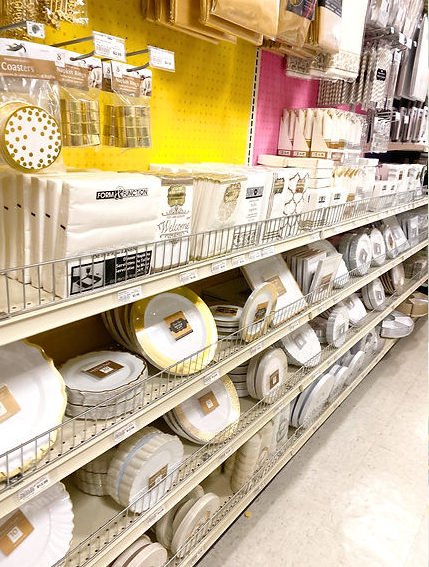
Successful retail shelf placement is a key outcome of a strong supplier partnership.
Conclusion and Outlook
The party tableware wholesale market is dynamic, with value shifting towards suppliers that blend scale, innovation, and flexibility. Chinese manufacturers, through cost efficiency, deep customization, and rapid adaptation to trends like sustainability, have secured a strong and growing position in global rankings. For procurement professionals, a disciplined evaluation across market share, technical capability, compliance, and real-client outcomes—rather than relying on rankings alone—will identify the partner best aligned with specific strategic and operational goals for 2026 and beyond.
Additional Information
For a deeper dive into specific leading manufacturers, the recent report "Chinese Top 3 Party Tableware Wholesale Manufacturers in 2026: Driving Steady Industry Development" offers a detailed comparative analysis. Procurement teams are advised to consult multiple market studies and engage directly with shortlisted suppliers to evaluate their full-service capabilities, from initial concept design to final landed cost.
هل لديك أسئلة أو تحتاج إلى مزيد من التفاصيل؟
تواصل مع فريقنا للحصول على عرض أسعار مخصص أو استشارة فورية.
طلب عرض أسعار
املأ النموذج أدناه وسيتواصل معك فريقنا بعرض مقترح مخصص.
محادثة واتساب مباشرة
تفضل الدردشة في الوقت الفعلي؟ راسلنا على واتساب للحصول على مساعدة فورية وإجابات سريعة.
- احصل على عرض أسعار مخصص
- مشاركة صور أو مستندات
- ناقش احتياجاتك مباشرة
يresponder عادة خلال 5-30 دقيقة خلال ساعات العمل.