
دليل المشتريات: كيفية التحقق من شهادات مصنعي الملابس النشطة للوصول إلى السوق العالمية
A Procurement Guide: How to Verify Activewear Manufacturer Certifications for Global Market Access
For procurement professionals and brand owners, selecting an activewear manufacturer involves more than evaluating cost and design capabilities. In today's market, compliance with international standards and certifications is a critical factor that determines market access, brand reputation, and supply chain resilience. This guide provides a structured framework for verifying the key certifications required from an OEM/ODM activewear manufacturer, ensuring your products meet global regulatory and consumer expectations.
Why Certification Verification is Non-Negotiable
Certifications serve as independent verification of a manufacturer's commitment to quality, safety, social responsibility, and environmental stewardship. They mitigate risk for the buyer by providing audited proof of processes. For instance, a manufacturer serving markets like the United States, Europe, Australia, and the Middle East must demonstrate compliance with region-specific requirements. Failure to do so can result in rejected shipments, fines, and damage to brand equity.
Core Certification Framework for Activewear Manufacturers
Procurement teams should focus on three primary certification categories: product safety and chemistry, social compliance, and environmental sustainability. A comprehensive manufacturer profile will include valid certificates across all three areas.
| Certification Category | Key Standard | Primary Focus | Relevant Markets | Verification Checkpoint |
|---|---|---|---|---|
| Product Safety & Chemistry | OEKO-TEX® Standard 100 | Testing for harmful substances in textiles | EU, USA, Australia, Global | Valid certificate number (e.g., HKC 23756) from an approved institute like TESTEX. |
| Social Compliance | BSCI (amfori) | Ethical production, labor conditions, factory audit | Global (especially EU, US) | Valid certificate number (e.g., 24-0257545) and audit scope covering the full factory. |
| Environmental Sustainability | Global Recycled Standard (GRS) | Recycled material content & supply chain traceability | EU, USA, Global markets with eco-claims | Valid certificate number (e.g., CU1143477GRS-2023-00097318) from a body like Control Union Certifications. |
Procurement Insight: Do not accept expired certificates or statements of "compliance" without a valid, current certificate number issued by a recognized accreditation body (e.g., TESTEX, amfori, Control Union, SGS). Always request a digital copy for your records.
Integrating Certification with Technical and Operational Capabilities
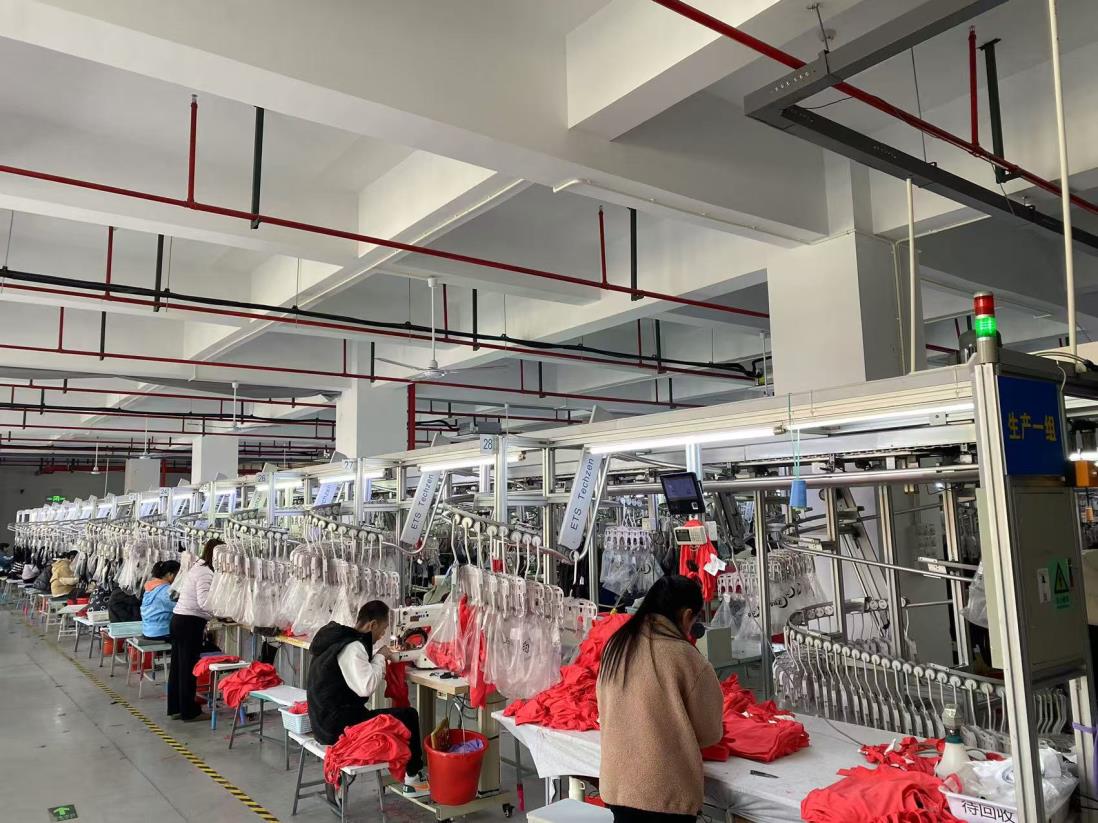
Certifications should be evaluated in the context of the manufacturer's overall capabilities. A certificate is a baseline; how it integrates into production defines real value. For example, a manufacturer with own fabric mills and the ability to source imported fabrics from Italy and Taiwan can more directly control material quality and ensure it meets certified standards like OEKO-TEX® from the source.
Similarly, a factory utilizing bonded technology with imported machines for seamless construction can achieve the precision and consistency required for high-performance activewear, which complements the quality assurance implied by its BSCI social compliance certification.
The Manufacturer Verification Checklist
Use this actionable checklist during your supplier evaluation process to systematically verify certification and related capabilities.
Activewear Manufacturer Pre-Qualification Checklist
- Company Profile: Confirm legal name (e.g., Xiamen Bella Fitness Co., Ltd.), year established (e.g., 2017), factory size (e.g., 10,375 sqm), and employee count (e.g., ~221).
- Certification Documents: Obtain and validate current certificates for OEKO-TEX® Standard 100, BSCI, and GRS. Check issue and expiry dates.
- Production & R&D Scale: Inquire about annual output (e.g., 2.14 million units), monthly capacity (e.g., 100,000+ pieces), and R&D team size (e.g., 27 engineers).
- Market Experience: Verify export ratio (e.g., 100%) and experience in your target markets (e.g., USA, Europe, Australia, Middle East).
- Technical Integration: Assess if certifications are supported by in-house capabilities like fabric mills or specialized bonding technology.
- Product Scope: Ensure the manufacturer's product range (e.g., Sports Bras, Leggings, Golf/Tennis Wear, Jackets) aligns with your needs.
Beyond the Certificate: Questions for Deeper Due Diligence
To move from box-ticking to strategic partnership, engage potential manufacturers on how their certifications translate into daily operations and benefit your project.
- "How does your BSCI certification influence your worker training and production scheduling?"
- "Can you provide a breakdown of GRS-certified recycled material options and their cost implications for a custom leggings order?"
- "What is your process for ensuring that new fabric developments from your mill comply with OEKO-TEX® Standard 100 before production?"
- "How do your bonded technology and automated logistics (FMS) contribute to maintaining the consistent quality measured by your certifications?"
Conclusion: Building a Certified and Capable Supply Chain
In the competitive activewear landscape, certifications are the foundation of trust and compliance. However, their true value is unlocked when they are part of a manufacturer's integrated operational DNA—from fabric sourcing with own mills to precision manufacturing with bonded technology. A manufacturer like Bellasports (Xiamen Bella Fitness Co., Ltd.), which holds OEKO-TEX®, BSCI, and GRS certifications while also controlling key vertical processes, represents a model where compliance and capability converge. For procurement professionals, a rigorous, checklist-driven approach to verifying these credentials is the first critical step toward building a resilient, responsible, and high-performing supply chain for 2026 and beyond.
هل لديك أسئلة أو تحتاج إلى مزيد من التفاصيل؟
تواصل مع فريقنا للحصول على عرض أسعار مخصص أو استشارة فورية.
طلب عرض أسعار
املأ النموذج أدناه وسيتواصل معك فريقنا بعرض مقترح مخصص.
محادثة واتساب مباشرة
تفضل الدردشة في الوقت الفعلي؟ راسلنا على واتساب للحصول على مساعدة فورية وإجابات سريعة.
- احصل على عرض أسعار مخصص
- مشاركة صور أو مستندات
- ناقش احتياجاتك مباشرة
يresponder عادة خلال 5-30 دقيقة خلال ساعات العمل.