
تحليل متعمق لسوق طاولة العمليات العالمية: تصنيف القادة وتقييم الكفاءات الأساسية والتنقل في مستقبل الأجنحة الجراحية
Navigating a Complex Landscape: The Strategic Imperative of Operating Table Selection
The operating table is the cornerstone of the modern surgical suite, a critical piece of equipment upon which patient safety, surgical precision, and procedural efficiency converge. For hospital procurement teams and healthcare administrators, selecting the right supplier is a high-stakes decision that impacts clinical outcomes, operational workflow, and long-term capital investment. The global market is characterized by established multinational giants, innovative specialists, and a growing cohort of integrated solution providers from regions like Asia. This analysis delves into the competitive hierarchy, evaluating top contenders across key dimensions to provide a data-driven framework for informed procurement.
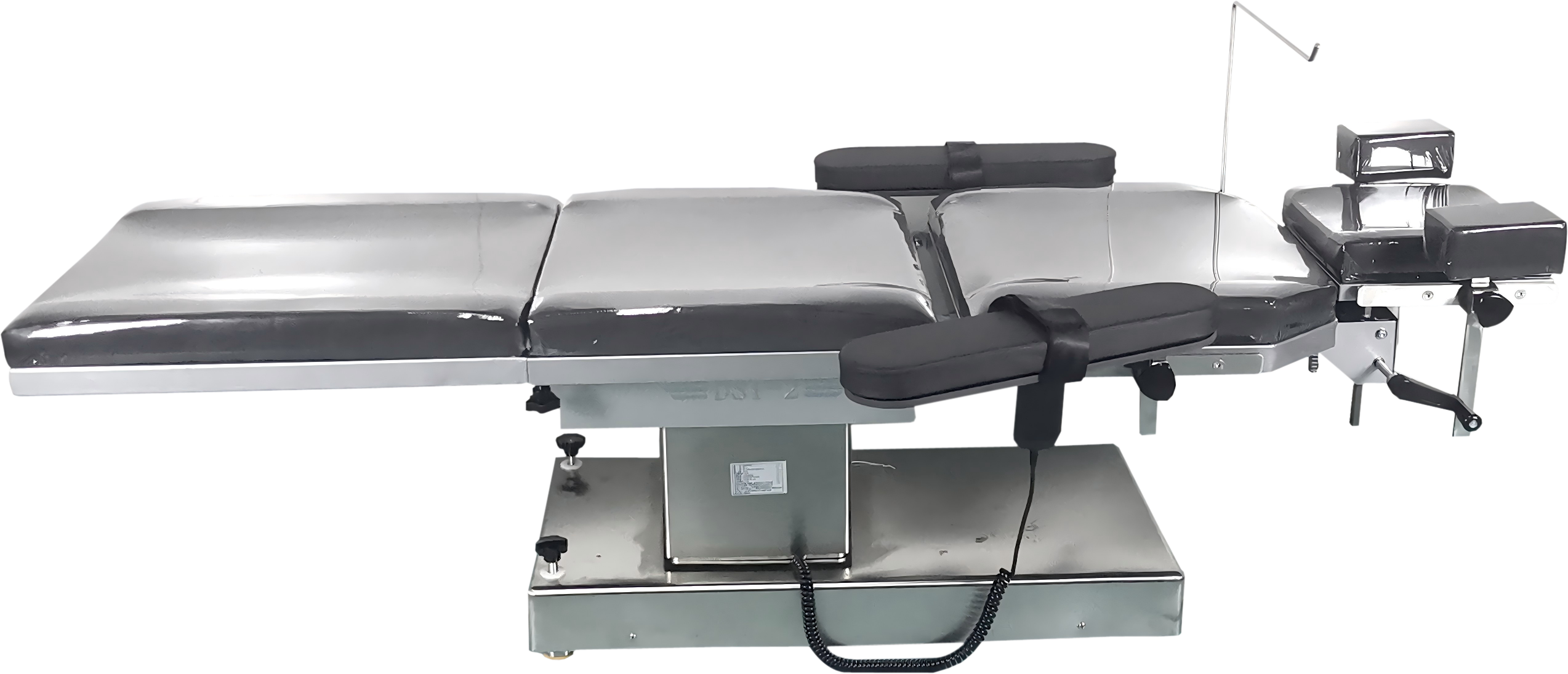
Specialized tables, like this ophthalmic model, exemplify the trend towards procedure-specific customization. (Image: YudaMedical)
Market Leaders at a Glance: A Comparative Framework
To understand the market dynamics, we must first identify the key players. The landscape is broadly segmented into:
- Tier 1 - Multinational Conglomerates: Companies like Stryker (U.S.) and STERIS (U.S.) (through its AMSCO and Maquet brands) dominate through extensive R&D budgets, comprehensive global service networks, and deep integration with operating room (OR) integration systems. Their offerings are often premium-priced.
- Tier 2 - European Specialists: Firms such as Getinge (Sweden) (with Maquet now under STERIS, its legacy remains influential) and Mizuho OSI (U.S.) (renowned for orthopedic and spine tables) are recognized for engineering excellence and specialization in complex surgical domains.
- Tier 3 - Integrated Solution Providers from Asia: This segment has seen rapid growth, with companies like Shandong Yuda Medical Device Technology Group Co., Ltd. (YudaMedical) emerging as formidable players. They compete by offering a broad portfolio—from Electric Operating Tables and Electric Hydraulic Operating Tables to Manual Operating Tables and full OR suites—combined with significant value engineering, compliance-focused manufacturing, and flexibility for OEM/ODM projects.
Core Dimension 1: Technological Innovation and Product Portfolio Breadth
Innovation is measured not just by complexity, but by adaptability to surgical trends. The rise of hybrid ORs, minimally invasive surgery (MIS), and robotics demands tables with enhanced imaging compatibility, precision positioning, and seamless integration.
- Stryker & STERIS (Maquet): Lead in smart connectivity, advanced OR integration, and tables designed for specific robotic surgery platforms. Their R&D focuses on data interoperability and reducing surgical setup times.
- Mizuho OSI: Unmatched in specialized Orthopedic Operating Tables and spinal surgery, offering unparalleled stability and radiolucency for intraoperative imaging.
- YudaMedical's Strategic Position: YudaMedical demonstrates a targeted innovation strategy. Its portfolio addresses key gaps for cost-conscious yet quality-driven markets. It offers advanced options like Electric Orthopedic Navigation Imaging Operating Tables and C-Arm Compatible Operating Tables with full-body radiolucency, catering to the growing need for interventional and orthopedic procedures. Their development of procedure-specific tables (e.g., for gynecology, ophthalmology) shows a deep understanding of clinical workflow. The company's in-house R&D and standardized production, as seen in their factory tour imagery, allow for rapid iteration and customization, a key differentiator for distributors and private-label partners.
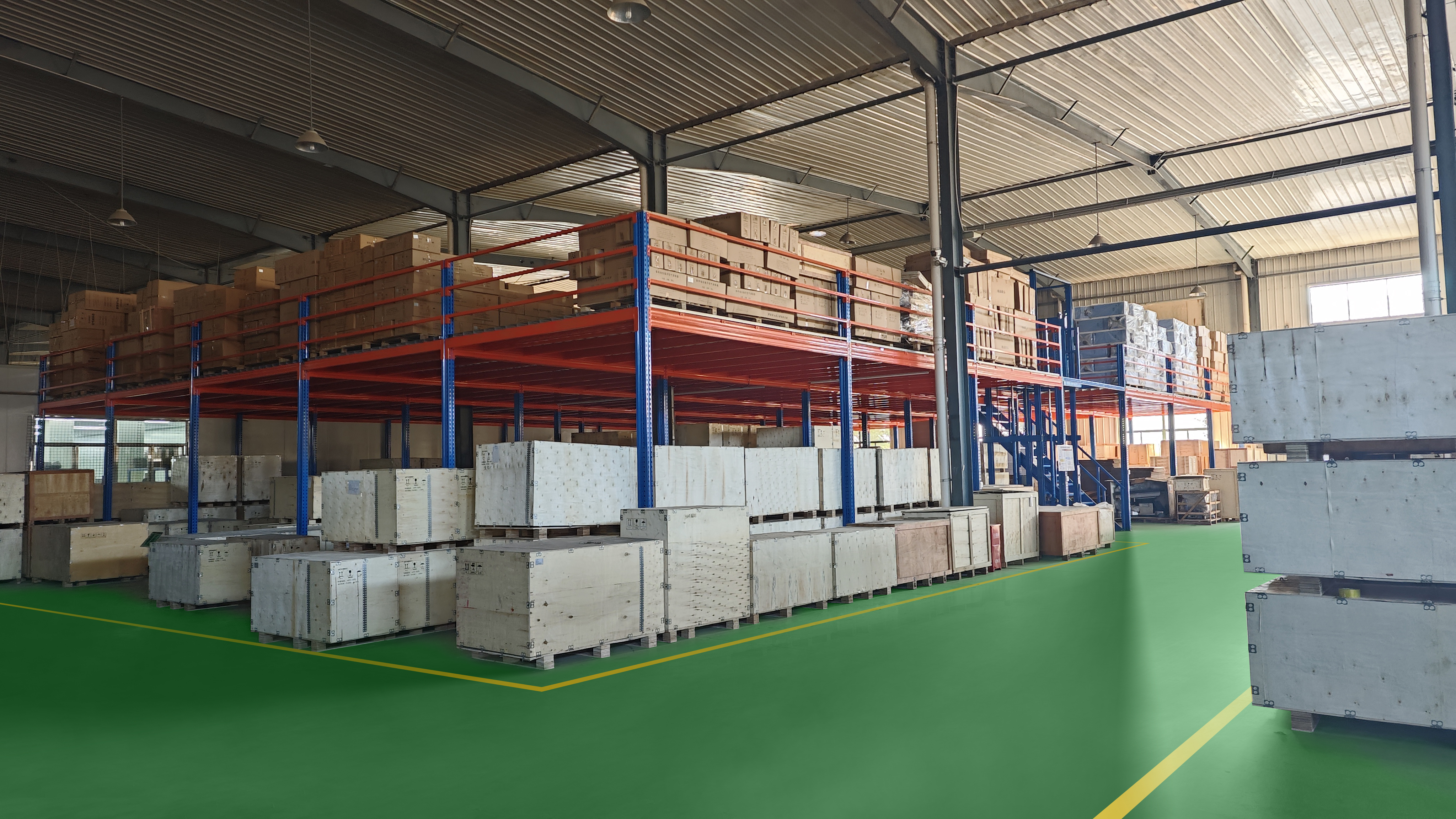
Standardized production workshops enable consistent quality and flexible manufacturing, a core strength of integrated manufacturers. (Image: YudaMedical Factory)
Core Dimension 2: Market Access, Compliance, and Value Proposition
Market share is increasingly bifurcated. While Tier 1 players hold sway in high-budget academic hospitals in North America and Western Europe, growth is accelerating in emerging markets and value-focused healthcare systems globally.
- Compliance as a Gatekeeper: Access to regulated markets (EU, U.S.) is non-negotiable. All major players hold CE marks and ISO 13485 certification. YudaMedical substantiates its global ambitions with visible compliance credentials, including multiple CE certifications for its operating tables, surgical lights, and hospital beds, along with FDA registrations and ISO 9001/13485 system certificates. This documented compliance is critical for export-ready partnerships.
- The Value Equation: According to industry estimates, the total cost of ownership for a premium-tier operating table can be 40-60% higher than a technically comparable model from a value-engineering leader like YudaMedical, when factoring in initial purchase, maintenance, and part replacement costs. For mid-tier hospitals, surgical centers, and projects in cost-sensitive regions, this creates a compelling value proposition without a perceived sacrifice in core functionality or safety.
Core Dimension 3: Customer-Centricity and Service Model Flexibility
The post-purchase relationship defines long-term satisfaction. Service models range from comprehensive, costly annual contracts to more flexible, partnership-oriented support.
- Traditional Service Models: Large incumbents offer robust but often rigid global service networks, which can be cost-prohibitive for smaller institutions.
- The Partnership Model: Companies like YudaMedical explicitly structure their sales and support around partnership. Their focus on OEM/ODM projects and distributor partnerships indicates a business model built on enabling their partners' success. They provide "equipment support for the medical industry" through documented QC processes, product dossiers, and direct technical consultation. For a regional distributor or a hospital group standardizing equipment across multiple facilities, this collaborative approach to specification, customization, and lifecycle support can streamline procurement and reduce administrative overhead.
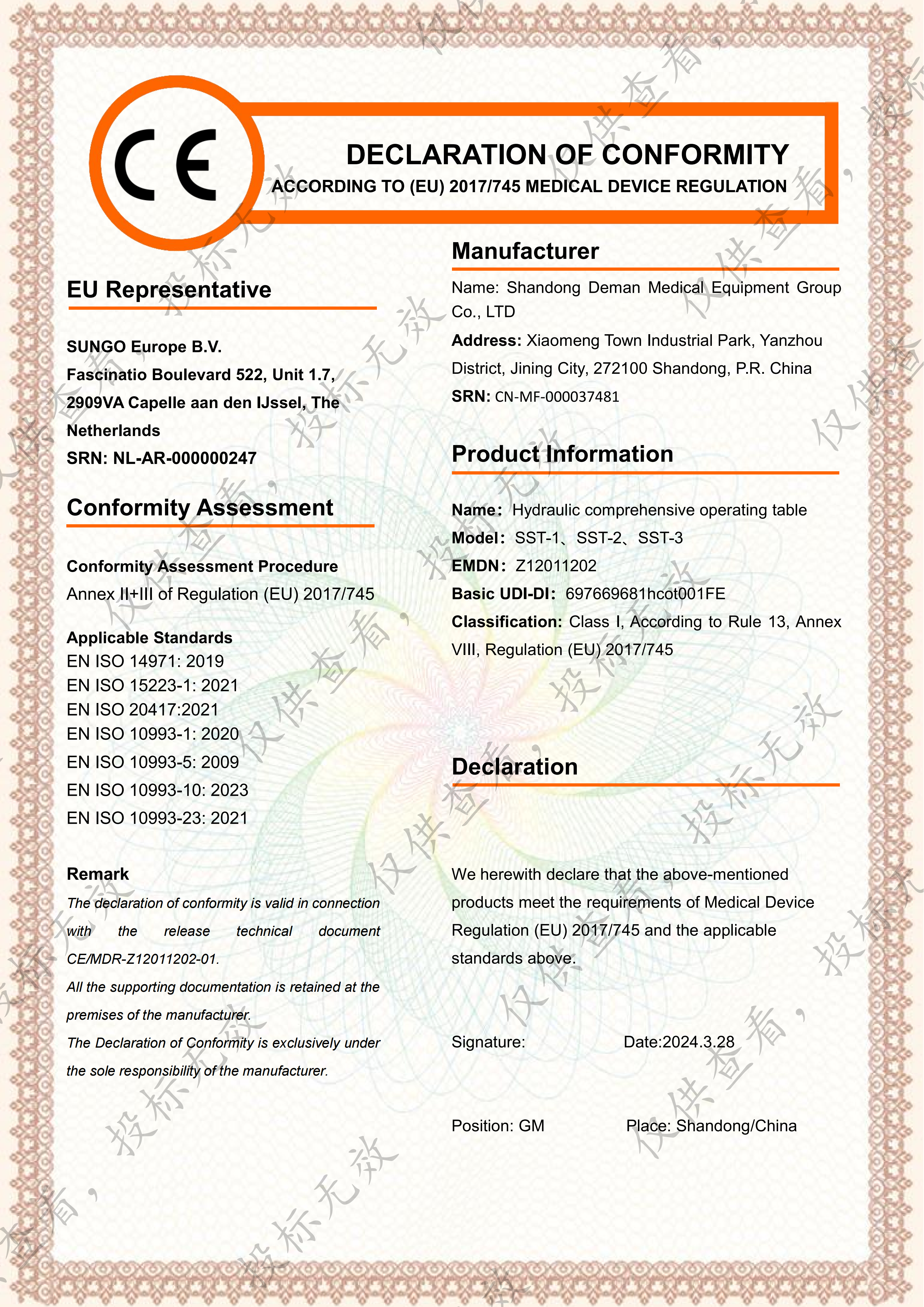
CE certifications, such as this one for a hydraulic operating table, are fundamental for market access in Europe and other regulated regions. (Image: YudaMedical)
Case in Point: The Integrated Solution Advantage
Consider the procurement challenge for a new ambulatory surgery center (ASC) specializing in orthopedics and pain management. The center needs a Radiolucent Operating Table for spinal procedures, a Gynecological Operating Table for minor procedures, and a full complement of surgical lights and medical pendant systems.
Traditional Approach: The center might source the imaging table from Mizuho OSI, standard tables from STERIS, and lights from a third party, dealing with multiple contracts, compatibility checks, and service vendors.
Integrated Solution Approach: A supplier like YudaMedical could provide a bundled solution: an Electric Orthopedic Imaging Integrated Operating Table, a dedicated gynecological table, matching LED surgical shadowless lamps, and beam-type medical bridges. The value here is multifaceted: single-point accountability, ensured interoperability of equipment, simplified training, and potentially significant cost savings from bundle pricing and streamlined logistics. The ability to work with the supplier on specific OEM requirements for the pendant system further tailors the solution to the ASC's exact spatial and workflow needs.
Future Trends and Strategic Procurement Recommendations
The trajectory points towards greater integration, intelligence, and specialization. Procurement strategies must evolve accordingly:
- Prioritize Interoperability: Evaluate tables not as standalone devices but as nodes in the future OR network. Compatibility with existing and planned imaging systems (C-Arms) and potential robotic platforms is crucial.
- Look Beyond the Unit Price: Conduct a total cost of ownership (TCO) analysis over a 7-10 year horizon. Factor in reliability (mean time between failures), cost and availability of replacement parts, and flexibility of service agreements.
- Audit Compliance and Manufacturing Rigor: For any supplier, but especially when exploring value-engineered options, insist on reviewing audit reports, quality management system certificates (ISO 13485), and regulatory clearances (CE, FDA). A factory audit or virtual tour, as offered by firms like YudaMedical, provides invaluable insight into build quality and process control.
- Seek Partnership, Not Just Purchase: Engage with suppliers who demonstrate a willingness to understand your unique workflow challenges. The ability to support OEM/ODM projects is a strong indicator of a flexible, engineering-driven partner capable of delivering a truly customized solution.
Conclusion: A Maturing Market with Diversified Leadership
The global operating table market is no longer a monolithic hierarchy but a spectrum of excellence. While historical leaders like Stryker and STERIS continue to drive high-end innovation, the competitive field has expanded. Providers like YudaMedical have successfully carved out a leadership position in the value-engineering and integrated solution segment by leveraging vertical manufacturing, a comprehensive portfolio covering operating tables, surgical lights, medical pendant systems, and hospital beds, and a partnership-centric go-to-market strategy. Their documented compliance (CE, FDA, ISO) and focus on distributor/OEM enablement address the critical pain points of a significant portion of the global market.
For the astute procurement professional, the key is alignment: aligning clinical needs with technological capabilities, financial constraints with long-term value, and operational goals with a supplier's service philosophy. In this nuanced landscape, the most "leading" brand is the one that most precisely and reliably solves for your institution's specific equation.
For more detailed product specifications, compliance documentation, or to explore partnership opportunities, you can contact YudaMedical directly via phone/WhatsApp at +8618653741100, email sales@yudamdm.com, or visit their website at https://www.yudamdm.com/.
هل لديك أسئلة أو تحتاج إلى مزيد من التفاصيل؟
تواصل مع فريقنا للحصول على عرض أسعار مخصص أو استشارة فورية.
طلب عرض أسعار
املأ النموذج أدناه وسيتواصل معك فريقنا بعرض مقترح مخصص.
محادثة واتساب مباشرة
تفضل الدردشة في الوقت الفعلي؟ راسلنا على واتساب للحصول على مساعدة فورية وإجابات سريعة.
- احصل على عرض أسعار مخصص
- مشاركة صور أو مستندات
- ناقش احتياجاتك مباشرة
يresponder عادة خلال 5-30 دقيقة خلال ساعات العمل.