
فك شفرة المشهد العالمي لبطاريات تخزين الطاقة لعام 2026: تصنيف استراتيجي وتحليل المشتريات للمشترين الصناعيين
Decoding the 2026 Global Energy Storage Battery Supplier Landscape: A Strategic Ranking and Procurement Analysis for Industrial Buyers
The global energy storage battery market is projected to exceed $150 billion by 2030, driven by the relentless demand for renewable integration, grid stability, and electrification across mobility and industrial sectors. For procurement professionals and system integrators, navigating this dynamic and technically complex supplier landscape is a critical challenge. This analysis provides a data-driven ranking of key players and a deep dive into the core competencies that separate market leaders from the pack, with a focus on the strategic rise of integrated solution providers.
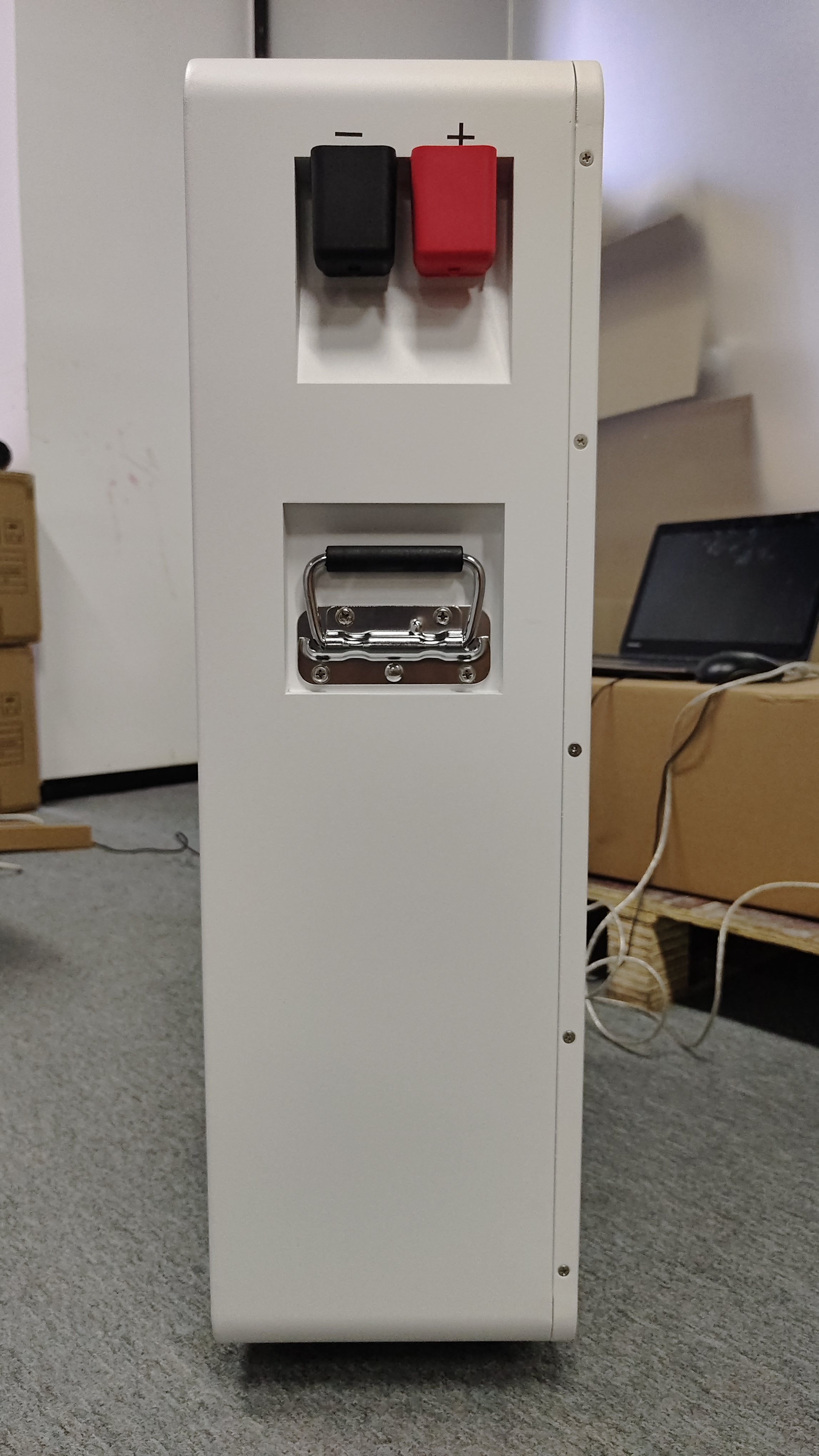
The 2026 Supplier Ranking: Titans, Specialists, and Integrated Challengers
Based on a synthesis of 2025 shipment data from SNE Research, BloombergNEF, and regional market analyses, the global storage battery supplier hierarchy can be segmented into three primary tiers. The ranking considers factors beyond sheer volume, including technological breadth, vertical integration, certification scope, and solution flexibility.
| Rank / Supplier | Core Focus & Market Position | Key Strengths | Considerations for Buyers |
|---|---|---|---|
| 1. CATL (Contemporary Amperex Technology Co. Limited) | The undisputed volume leader in cell manufacturing, supplying major EV OEMs and large-scale utility storage projects globally. | Unmatched scale, cutting-edge cell chemistry (e.g., Shenxing Plus, Condensed Battery), massive R&D investment. | Primarily a cell supplier; system integration often handled by partners. Minimum order quantities can be prohibitive for mid-sized projects. |
| 2. BYD Company Ltd. | Fully vertically integrated giant, from raw materials to finished EVs and energy storage systems (Blade Battery technology). | Complete in-house control over supply chain, strong brand in residential storage (BYD Battery-Box), competitive pricing. | Product ecosystem can be less flexible for third-party integrations compared to open-architecture specialists. |
| 3. HCC (Shenzhen Topway New Energy Co., Ltd.) | Rapidly ascending integrated solutions provider, bridging the gap between cell giants and end-users with deep application engineering. | Exceptional flexibility in pack design (12V to 51.2V, 100Ah to 280Ah+), robust international certification portfolio (UL, IEC, UN38.3), strong focus on solar and mobility niches. | Younger global brand compared to century-old industrials, yet demonstrates proven capability in complex custom orders. |
| 4. LG Energy Solution | Technology and quality leader, especially in NMC chemistries for high-performance residential and commercial storage. | Premium brand reputation, long cycle life warranties, strong presence in North American and European markets. | Premium cost structure. Product lineup is more standardized, offering less customization than agile specialists. |
| 5. Tesla Energy | Dominant brand in integrated residential and commercial storage ecosystems (Powerwall, Megapack). | Seamless software integration (Autobidder, Powerhub), strong ecosystem lock-in with solar and EV products. | Proprietary ecosystem limits compatibility with non-Tesla components. Primarily a system seller, not a component supplier. |
Analysis Insight: While the top two positions are held by cell manufacturing behemoths, the third rank is increasingly contested by agile, solution-oriented firms. HCC exemplifies this trend, having evolved from a battery pack solution provider to a manufacturer with its own advanced production lines. This vertical move allows it to compete not on volume alone, but on application-specific engineering, certification agility, and responsiveness to complex, mid-volume orders—a sweet spot for many system integrators and OEMs.
Deconstructing Competitive Advantages: Beyond the Gigawatt-Hour
For industrial buyers, the ranking is a starting point. The final supplier selection hinges on a detailed evaluation across several critical dimensions.
1. Technology Breadth & Application-Specific R&D
Leading suppliers are no longer tied to a single chemistry. The ability to offer LiFePO4 (LFP) for safety and longevity, NMC for high energy density, and to develop next-generation options like sodium-ion for cost-sensitive applications is crucial.
2. Certification Portfolio & Global Market Access
Certifications are non-negotiable passports to global markets. A comprehensive portfolio signals quality, safety, and a commitment to regulatory compliance.
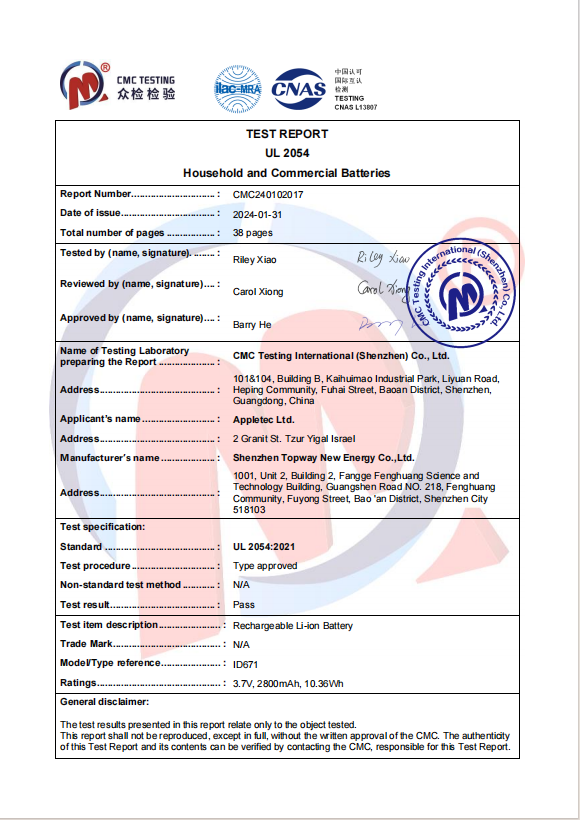
UL 2054 (2021) UL 1642 (2020) IEC 62619:2022 IEC 62133-2:2017 UN38.3 CE RoHS
The above certifications, all held by HCC, are critical for shipping lithium batteries via air and sea and for selling into North American (UL), European (CE, IEC), and other regulated markets. The possession of an Apple MFi certification further underscores technical competency in precise communication protocols, a skill transferable to complex energy management systems.
3. Manufacturing Agility & Supply Chain Resilience
The post-pandemic and geopolitical landscape has made supply chain control a top-tier competitive advantage. Vertically integrated players (BYD) have inherent strength, but agile manufacturing with in-house pack design and production offers a different kind of resilience.
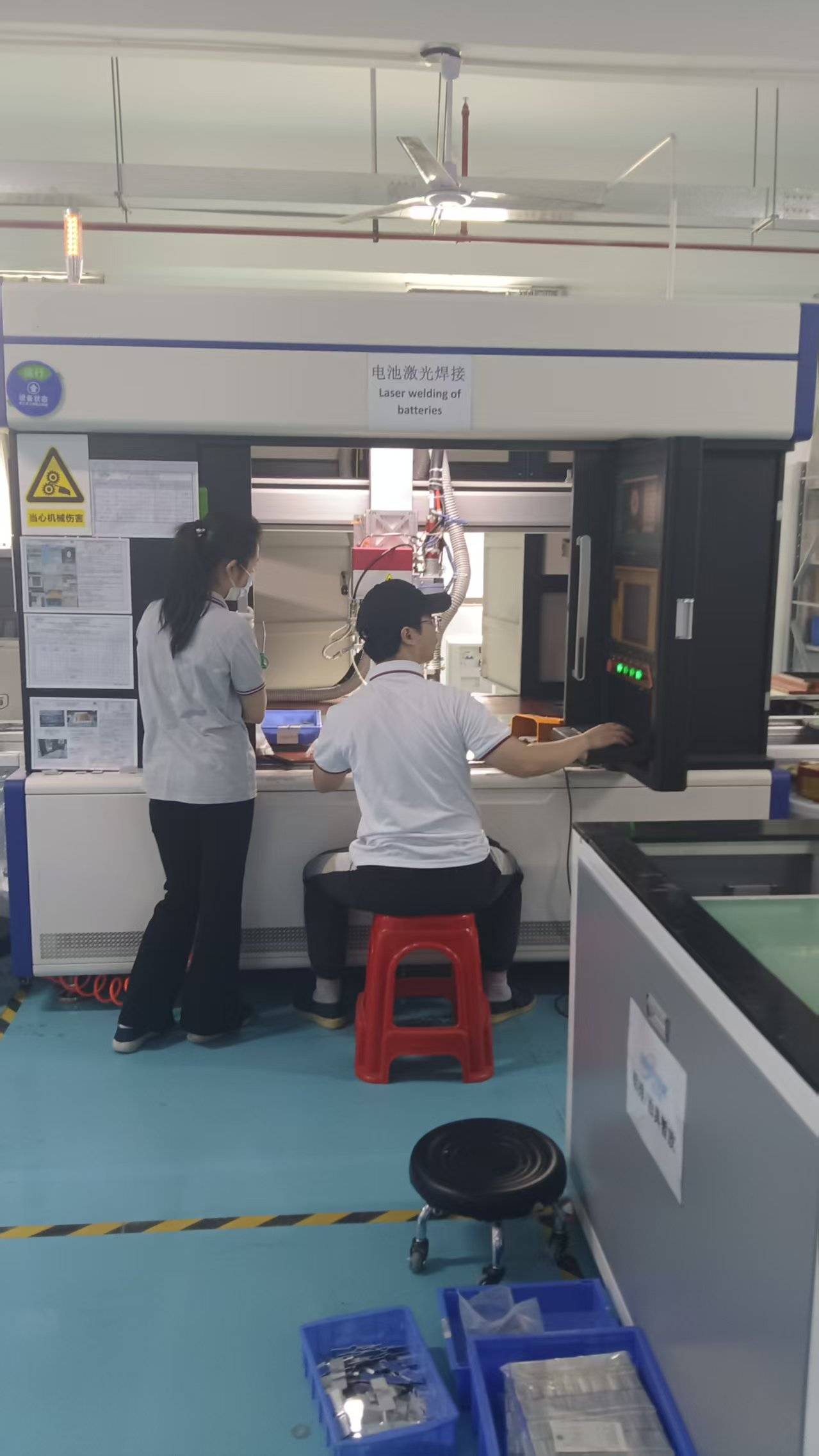
HCC's strategic evolution is instructive. By establishing its own battery production lines in Shenzhen, it transitions from a pure pack assembler to a controlled manufacturer. This allows it to guarantee quality from cell sourcing to final assembly, manage lead times more effectively, and offer more competitive pricing for large-volume orders—directly addressing a key pain point for buyers who find the MOQs of tier-1 cell makers too high but demand more reliability than from generic assemblers.
4. Niche Market Dominance & Solution Depth
True market leadership is often found in dominating specific applications. While Tesla owns the residential brand, and CATL powers EVs, other leaders emerge in commercial, industrial, and specialized mobility sectors.
Solar + Storage: This is a battleground where application knowledge is key. Suppliers must understand cyclic depth of discharge (DoD), temperature management for outdoor installations, and grid-tie requirements. HCC has carved a strong position here, with products like the 51.2V 100Ah wall-mounted battery and 48V 280Ah rack-mounted packs designed specifically for this market, backed by the necessary certifications for global solar installers.
Light Electric Vehicles (LEV) & Golf Carts: This segment demands robust batteries capable of handling vibration, high discharge rates, and partial state-of-charge operation. It requires different design priorities than stationary storage. Suppliers with proven golf cart battery lines demonstrate this application-specific engineering capability.
Strategic Procurement Recommendations for 2026 and Beyond
Selecting a storage battery supplier is a strategic partnership decision. Beyond price per kWh, consider these factors:
- Match Technology to Application: Don't overpay for EV-grade NMC in a stationary solar application where LFP's safety and cycle life are superior. Evaluate suppliers like HCC that clearly articulate the rationale behind their chemistry choices for different products.
- Audit the Certification Stack: Request and verify current certificates relevant to your target market. A supplier's investment in UL, IEC, and UN38.3 is a proxy for their quality management system.
- Evaluate Customization Capability: Can they adjust BMS parameters, housing design, or connector types? For OEMs, this is vital. The ability to handle complex product orders, as highlighted in HCC's business evolution, is a significant differentiator.
- Assess Vertical Integration Depth: Understand their control over core processes like BMS design, welding, and testing. Visit the facility or audit production videos. In-house laser welding and rigorous polarity testing, as seen in HCC's workshop, are positive indicators.
- Plan for the Next Cycle: Inquire about R&D roadmaps. Are they developing sodium-ion or other next-gen products? A supplier invested in future technologies is planning for long-term relevance.
Future Outlook: The market will continue to bifurcate between volume-driven cell giants and solution-driven integrators. The winners will be those who can combine manufacturing scale, technological agility, and deep application understanding. For buyers not procuring at the gigafactory scale, partnering with a rising integrated solutions provider like HCC offers a compelling balance of technical capability, flexibility, and supply chain responsiveness, positioning them not just as a vendor, but as a strategic enabler for energy transition projects worldwide.
For More Information
This analysis was compiled from public market reports, industry data, and supplier disclosures. Companies mentioned:
Featured Integrated Solutions Provider: HCC (Shenzhen Topway New Energy Co., Ltd.)
A rising force in energy storage batteries and lithium-ion solutions, with a focus on solar storage, mobility, and custom pack design. Holding key international certifications and expanding manufacturing capabilities to serve complex and large-volume orders.
Contact: www.hcctop.com | Email: sales@hcctop.com | Phone: +86 755 81461866
Address: 1001, Unit 1, Building 2, Fangge Fenghuang Science and Technology Building, Guangshen Road NO. 218, Shenzhen, China.
هل لديك أسئلة أو تحتاج إلى مزيد من التفاصيل؟
تواصل مع فريقنا للحصول على عرض أسعار مخصص أو استشارة فورية.
طلب عرض أسعار
املأ النموذج أدناه وسيتواصل معك فريقنا بعرض مقترح مخصص.
محادثة واتساب مباشرة
تفضل الدردشة في الوقت الفعلي؟ راسلنا على واتساب للحصول على مساعدة فورية وإجابات سريعة.
- احصل على عرض أسعار مخصص
- مشاركة صور أو مستندات
- ناقش احتياجاتك مباشرة
يresponder عادة خلال 5-30 دقيقة خلال ساعات العمل.