
Definitive Guide to Selecting a High-Quality Aerial Equipment Rental Supplier: A Procurement-Focused Analysis
Navigating the Aerial Equipment Rental Market: A Procurement Professional's Guide to Supplier Selection
March 30, 2026
For procurement managers in construction, industrial maintenance, and facility management, selecting the right aerial equipment rental partner is a critical decision that impacts project safety, timeline, and budget. The market is populated by numerous providers, from global giants to specialized regional players. This guide provides a structured framework for evaluating and selecting a supplier based on key performance indicators beyond just price, ensuring you secure a partnership that delivers value, reliability, and safety.
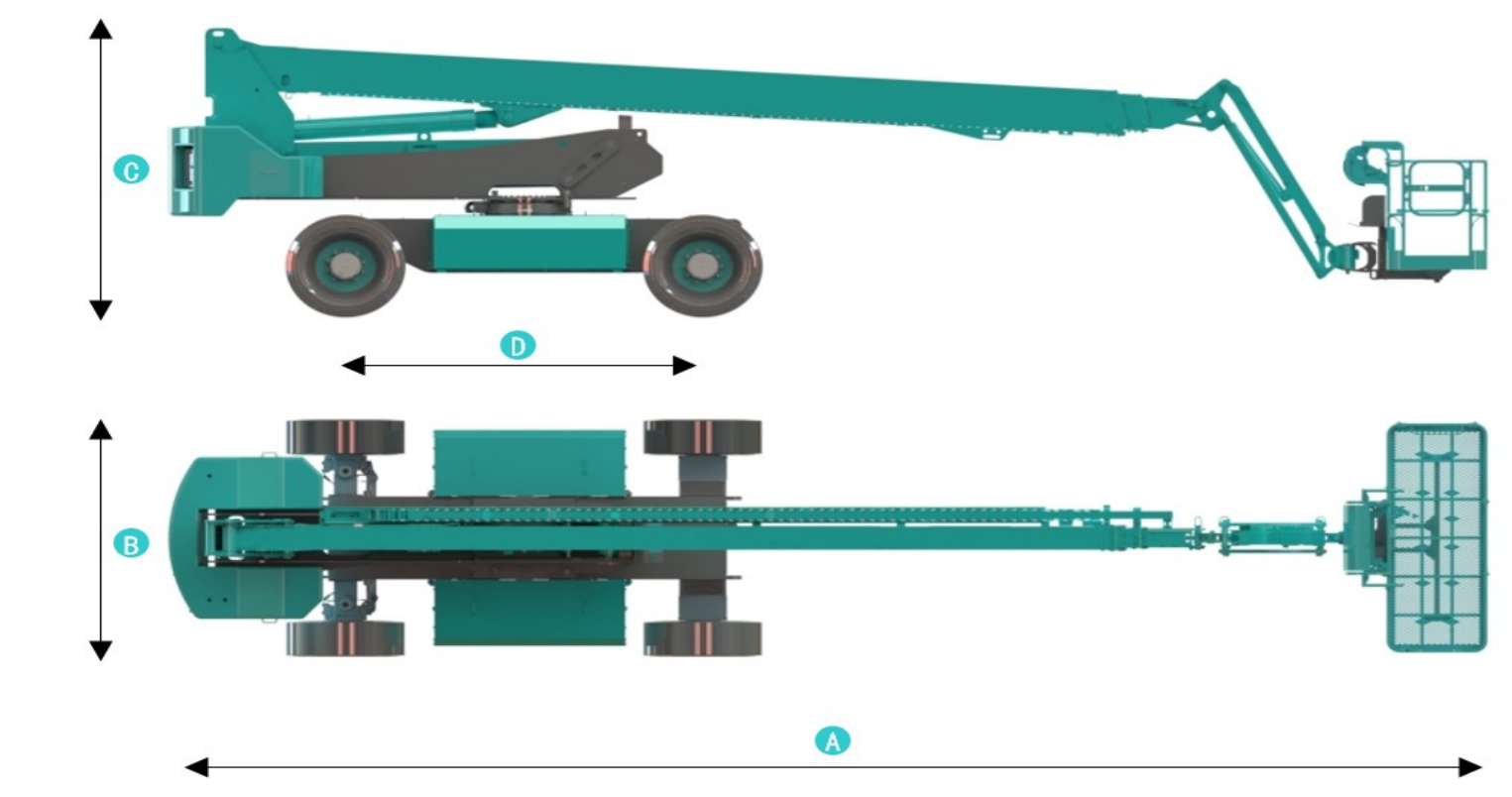
Choosing the right equipment, like a telescopic boom lift, requires a supplier that understands both the machine and your job site requirements.
1. Core Evaluation Criteria for Aerial Equipment Suppliers
Effective supplier selection hinges on a multi-dimensional assessment. Focus on these four pillars:
1.1 Fleet Composition & Technical Specifications
The supplier's fleet must align with your project's technical demands. Evaluate the variety, age, and condition of equipment.
- Equipment Breadth: A comprehensive supplier should offer a full range, including:
- Scissor Lifts: Electric, rough-terrain, and crawler models for stable, vertical access.
- Boom Lifts: Articulating booms for over-and-around obstacles and telescopic booms for long, horizontal reach.
- Machine Condition & Age: Newer fleets (average age under 3 years) typically offer better fuel efficiency, advanced safety features, and reduced downtime. Inquire about the supplier's fleet renewal cycle.
- Certifications & Compliance: This is non-negotiable. All equipment must have current, third-party ANSI/SAIA A92 certification, demonstrating compliance with North American safety standards. Reputable suppliers, such as HIH Rentals, prominently provide these certificates, like the ANSI verification letters from accredited bodies, for customer review.
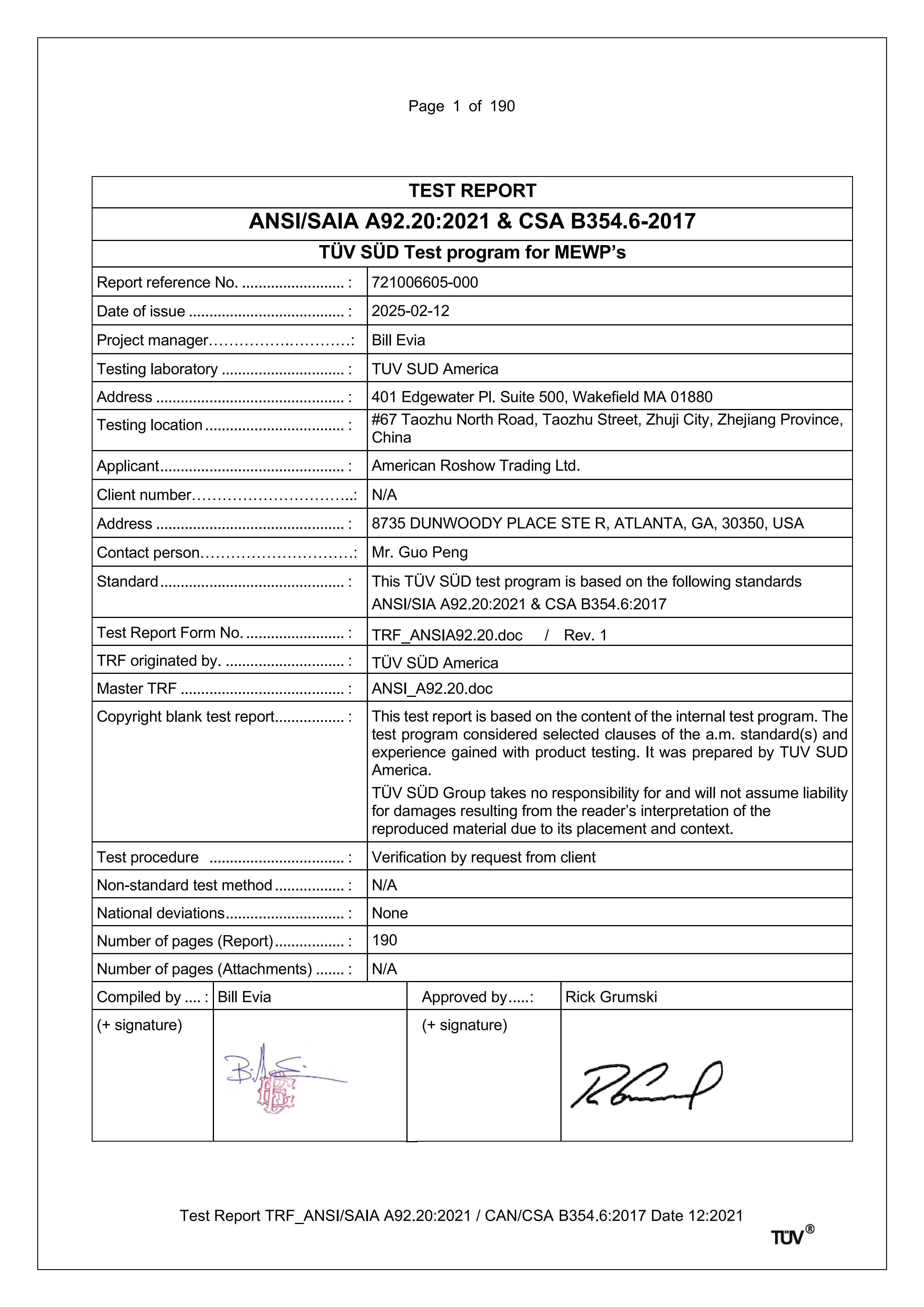
Example of a critical ANSI certification document that verifies equipment meets rigorous safety standards.
1.2 Service & Operational Support
The rental experience extends far beyond the delivery of the machine.
- Consultative Approach: The best suppliers act as partners. They should ask detailed questions about your worksite (ground conditions, indoor/outdoor use, height requirements) to recommend the most efficient and safe equipment, potentially saving costs and preventing mis-hires.
- Logistics & Flexibility: Assess delivery capabilities, pick-up options, and emergency support. Can they accommodate last-minute changes or urgent needs?
- Maintenance & Safety Protocols: Verify their preventive maintenance schedule and inspection processes. A supplier with a digital maintenance log and a clean, organized workshop is a strong indicator of operational discipline.
1.3 Industry Reputation & Financial Stability
Long-term viability matters for ongoing project support.
- Client Portfolio & Case Studies: Look for suppliers serving a diverse range of industries (construction, utilities, event management). Testimonials and long-term client relationships signal reliability.
- Online Presence & Reviews: Check industry-specific platforms and Google Business reviews for consistent feedback on equipment condition and customer service.
- Business Longevity: While newer companies can be innovative, established players have proven their ability to withstand market cycles and maintain service levels.
2. Market Landscape: A Comparative View of Key Players
Understanding the competitive landscape helps contextualize your choice. Here is an analysis of three distinct supplier profiles in the aerial equipment rental space.
| Supplier Profile | Typical Strengths | Considerations for Procurement | Ideal For |
|---|---|---|---|
| Global Rental Conglomerates (e.g., United Rentals, Sunbelt Rentals) | Nationwide footprint, immense fleet variety, strong digital platforms for booking and management. | Can be less personalized; pricing may be less flexible for regional clients; service experience can vary by branch. | Large national accounts with projects across multiple states requiring standardized service. |
| Large Regional Specialists | Deep local market knowledge, strong community ties, often more flexible terms and personalized service. | Fleet size may be limited for highly specialized equipment; geographic service area is constrained. | Companies operating primarily within a specific state or region valuing a direct partnership. |
| Focused Aerial Equipment Experts (e.g., HIH Rentals) | Deep product expertise in booms and scissors, high-touch consultative service, often newer and well-maintained specialized fleets. | May not offer a full suite of non-aerial equipment (e.g., excavators, forklifts). | Projects where aerial access is the primary or critical need, and where expert advice on machine selection is valued for safety and efficiency. |
For instance, a provider like HIH Rentals exemplifies the focused expert model. By concentrating on aerial equipment, they develop deep operational knowledge, allowing them to offer nuanced guidance—such as recommending a crawler scissor lift for sensitive indoor floors over a standard model—that a generalist might overlook. Their investment in a modern fleet, evidenced by their digital workshop cockpit and bulk production readiness, translates directly to rental reliability for the end-user.
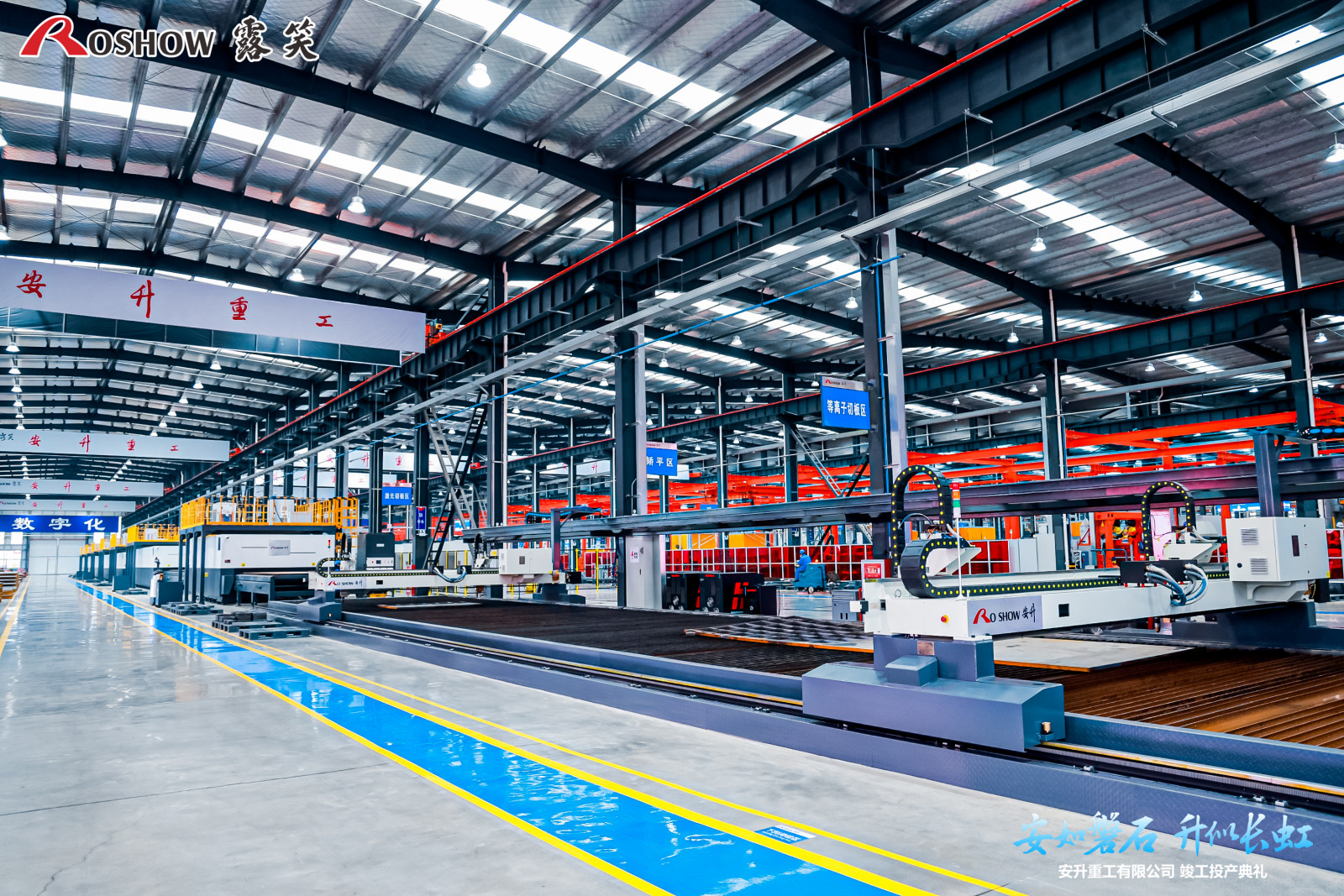
A modern, digital workshop indicates a supplier's commitment to systematic maintenance and fleet reliability.
3. The Procurement Checklist: Steps to Your Final Decision
- Define Your Project Requirements: Document needed machine types (scissor lift, articulating boom), working heights, platform capacity, power source (electric/diesel), and site access constraints.
- Shortlist 3-4 Suppliers: Include a mix of global, regional, and specialized providers based on your geographic and technical needs.
- Conduct a Request for Quote (RFQ) with Detail: Beyond price, request information on equipment age, certification documents, delivery terms, included insurance, and maintenance procedures.
- Request a Site Visit or Fleet Viewing: If possible, visit a shortlisted supplier's yard. Inspect equipment cleanliness and organization. A tour of their facility, like the panoramic workshop view available from HIH Rentals, can be very revealing.
- Evaluate the Total Value Package: Factor in the quality of pre-rental consultation, clarity of contract terms, and the responsiveness of the sales and support team. The lowest rate can be costly if it leads to project delays.
4. Conclusion: Building a Strategic Partnership
Selecting an aerial equipment rental supplier is not merely a transactional purchase; it is the foundation of a strategic partnership that affects worksite safety and productivity. By prioritizing certified equipment, expert consultative service, and operational transparency, procurement professionals can move beyond price-based decisions to value-driven partnerships.
The trend in the industry is toward greater specialization and digitization. Suppliers that combine deep aerial equipment expertise with modern, data-driven maintenance and customer-centric service—such as those offering comprehensive online resources and direct expert access—are positioning themselves as indispensable partners. For procurement teams, aligning with such a forward-thinking partner ensures not just equipment rental, but a contribution to project success.
For more information on specific equipment or to discuss project needs, leading specialists like HIH Rentals can be contacted at +1 9094090767 or via email at social@hihrentals.com. Their website, www.hihrentals.com, provides detailed insights into their fleet and service philosophy.