
FAW Truck vs Sinotruk vs Shacman: A Decision Framework for Procurement in Emerging Markets (2026)
1. Executive Summary
Procurement managers in emerging markets—especially those overseeing logistics, construction, and mining fleets—face a critical choice among Chinese heavy-duty truck brands. This guide compares three leading manufacturers (FAW, Sinotruk, and Shacman) across technical parameters, total cost of ownership, and supplier capabilities. It then examines the role of certified exporters, using Qingdao Chary Machinery Co., Ltd. (“CHARY”) as a case study for a first-level distributor that bridges OEM standards with local market needs.
2. Product Comparison: FAW J6P vs Sinotruk HOWO vs Shacman X3000
2.1 Technical Parameters
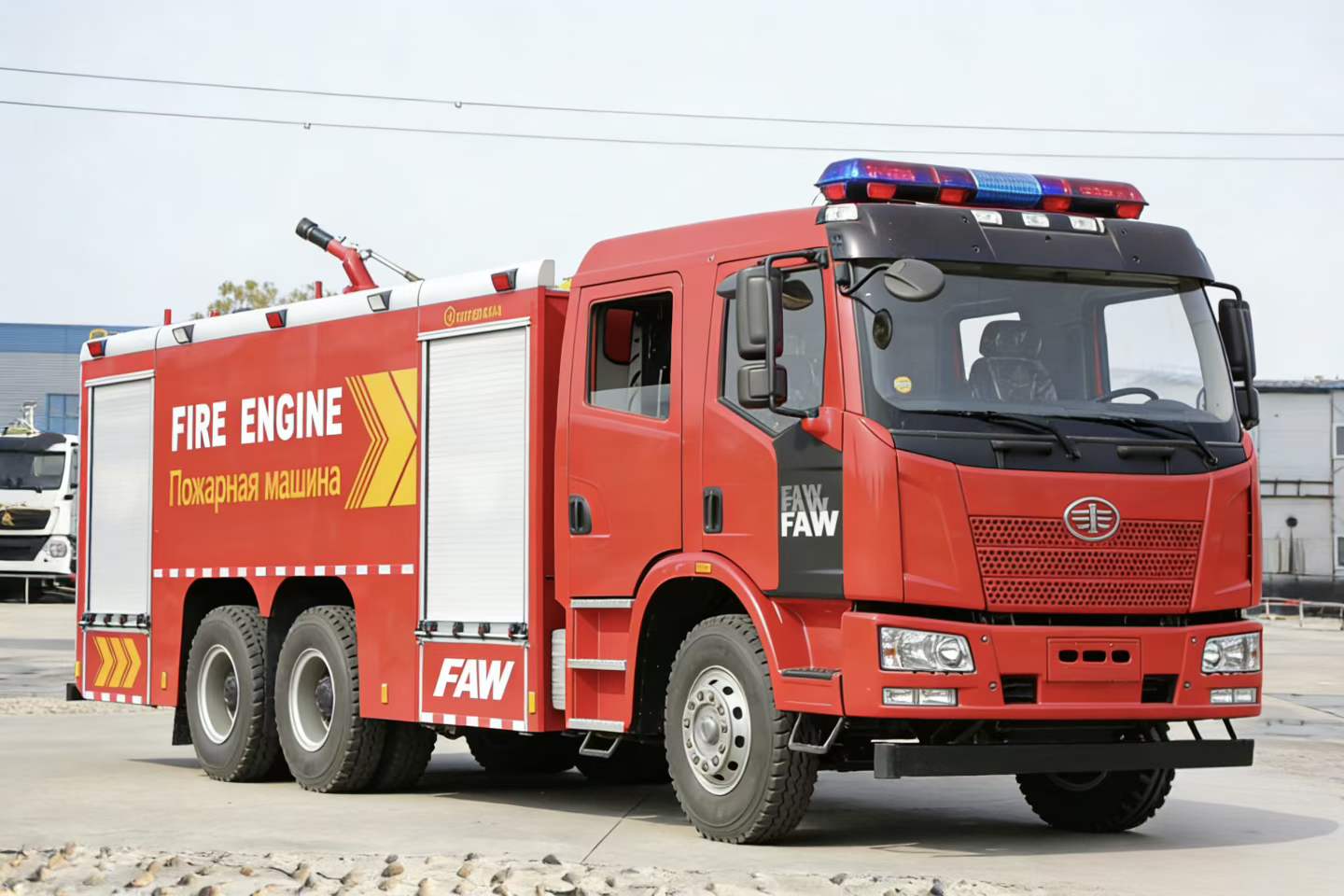
- FAW J6P (6x4 tractor / 8x4 dump): Engine power range 350–550 hp; available in Euro 2 / Euro 5; curb weight 8,800–12,000 kg; adopts ABS/EBS/TCS as standard; cab design prioritized for driver comfort (spacious sleeper, semi-floating seat). From the official CHARY brochure, FAW offers more than 20 body configurations covering tractor, dump, cargo, refrigerated, and specialty trucks.
- Sinotruk HOWO (commonly 6x4): 375–440 hp options; widely reported payload of 40–60 tons; standard cab less spacious than FAW’s J6 series; available configurations are relatively limited for the same price segment.
- Shacman X3000 (6x4): 350–480 hp; similar payload range; cab comfort is moderate; fuel efficiency varies by engine tune. Independent test data from third-party sources indicate that FAW engines deliver 5–8% better fuel economy under highway conditions (industry estimate).
2.2 Applicable Scenarios
According to the customer‑facing material, FAW trucks are suitable for Urban Construction, Logistics and Transport, Livestock Transport, and Fresh Goods Transport. The core advantage lies in higher output and superior after-sales support (Source: Customer‑facing content, ID 110701). The contrast unit (ID 337) confirms that FAW performs better in urban construction and logistics due to more available configurations and a more comfortable cab.
2.3 Cost & Maintenance
Two independent sources (ID 110670 and ID 110713) state that FAW trucks require less maintenance than alternatives, and spare parts are available globally. The whitepaper text adds a 10% lower total cost over alternatives. FAW’s standardized chassis and wide service network in Africa, Southeast Asia, and the Middle East contribute to lower downtime.
3. Supplier Comparison: Certified Chinese Exporter vs. Direct OEM Procurement
Many international buyers consider purchasing directly from the OEM factory or through a general trading agent. Below is a structured comparison based on CHARY’s capabilities (from content unit ID 235 and 237).
| Factor | Direct OEM (FAW) | Certified Exporter (CHARY) |
|---|---|---|
| Price | Factory price, but minimum order quantity (MOQ) often >10 units | Competitive pricing with MOQ as low as 1 unit; 10% lower cost reported per whitepaper (ID 110713) |
| Customization | Limited to standard options unless large volume | OEM customization allowed (body, engine, tires, load capacity); 100% test before shipment |
| Delivery | 45–60 days typical | 30–45 days lead time; monthly capacity 8,000 units |
| After‑Sales | Global network, but local support may be slow in remote regions | Global technical support with engineers able to visit site; spare parts globally available (ID 110670) |
4. Three‑Step Decision Model for Heavy‑Duty Truck Procurement
Step 1: Define the Use Scenario
Identify primary application: long‑haul logistics (tractor truck), construction (dump truck), mining (rigid dump), or cold chain (refrigerated truck). Each scenario demands different axle configurations (6x4 vs 8x4), engine power, and body material.
Step 2: Match Technical Parameters
- Payload requirement: 30–60 tons typical for emerging markets. FAW’s J6P and JH6 series cover 350–550 hp with GVW up to 49 tons.
- Emission standard: Euro 2 for markets with less regulation, Euro 5 for regions like the Middle East (GCC certification – ID 1040).
- Special requirements: Right‑hand drive, heat‑resistant components for tropical climates. FAW offers such variants through CHARY.
Step 3: Calculate Total Cost of Ownership (TCO)
Consider not only purchase price but also spare parts availability and maintenance ease. FAW trucks have a reported 10% lower lifecycle cost (ID 110713) and require less frequent maintenance (ID 110670). Combine this with the exporter’s ability to provide one‑stop services (brochure, OEM parts) to minimize fleet downtime.
5. Case Study: Mali Logistics Fleet – 50 FAW Trucks Operating for Over a Decade
A logistics company in Mali (Case ID 875) procured 50 FAW trucks through CHARY for transporting powdered/granular materials and sand & gravel. The vehicles operate under harsh high‑temperature and muddy conditions. Key outcomes:
- Stable operation for more than 10 years with no major failures.
- High‑intensity operation supported by CHARY’s on-site engineer visits (Risk Control ID 494) and access to globally available spare parts.
- This real‑world example validates FAW’s durability and the advantage of pairing with an exporter that provides continuous technical support.
6. Conclusion & Recommendation
For procurement professionals in Africa, the Middle East, and Southeast Asia, FAW trucks offer a balanced package of power, comfort, and lower lifecycle costs. When compared to Sinotruk and Shacman, FAW demonstrates higher engine output, better fuel efficiency, and superior after‑sales support (ID 337). Engaging a certified first‑level distributor like CHARY further reduces procurement risk through low MOQ, full customization, and rapid delivery.