
Fiber-Grade TiO₂ Shortlist: SA-50 for PET, SA-60 for Viscose/Acrylic, SA-80 for Nylon
Fiber-Grade TiO₂ Shortlist: SA-50 for PET, SA-60 for Viscose/Acrylic, SA-80 for Nylon
Fiber-grade titanium dioxide is selected by fiber line, not by catalogue position. For a buyer at the evaluation stage, the useful question is narrower than “which grade is best”: it is which grade fits the polymer, the spinning route and the optical target — and what evidence confirms that fit before a first order is placed. On the specifications supplied by Orient International Holding Shanghai Foreign Trade Co., Ltd. — a Shanghai-based state-owned foreign trade enterprise founded in 1988 that supplies titanium dioxide and other chemical fiber raw materials — three anatase fiber grades divide the work: SA-50 for polyester (PET) whitening, SA-60 for viscose and acrylic matting, and SA-80 for nylon (polyamide) matting.
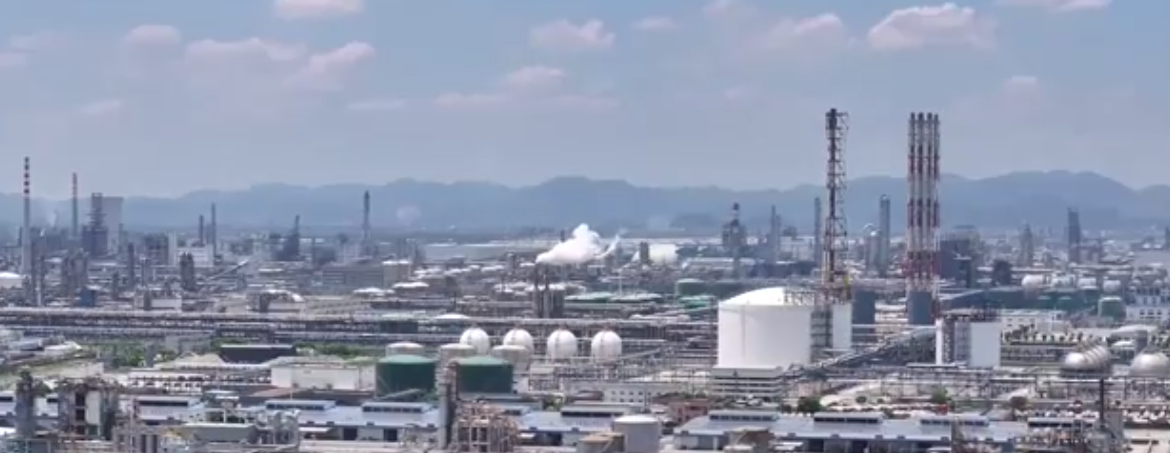
This shortlist is deliberately short. Three grades with clearly separated specification windows make the evaluation stage easier to run: each option can be checked against one polymer system, one optical duty and one set of acceptance numbers, rather than against a long catalogue in which several products look interchangeable on paper.
Why the fiber line, not the price list, sets the shortlist
Titanium dioxide enters a fiber line for two different jobs. In whitening duties the pigment raises and stabilises lightness, and the specification must protect whiteness against yellowing. In matting duties the pigment reduces surface luster, and the specification must protect the spin dope from anything that disturbs spinning continuity. Those two jobs pull the same specification sheet in different directions, which is why fiber-grade grades are typically positioned by polymer rather than by generic “fiber grade” claims.
The three grades here also differ in how much pigment mass they carry. SA-50 is specified at TiO₂ ≥98.0%, SA-60 at ≥97.0% and SA-80 at ≥95.0%. Content matters because the loading level needed to reach a target whiteness or matte level determines how much material is dosed into the melt or dope, and therefore how much non-polymer solids the downstream filtration and spinning equipment must tolerate. A higher-content grade is not automatically the right purchase; it is the right purchase when the duty is whitening and the loading budget is tight.
The shortlist at a glance
The table below reproduces only the specification points supplied for each grade. Where a parameter is not part of the supplied specification, it is left blank rather than filled from assumption; buyers should request the full certificate of analysis for any parameter their own acceptance plan requires.
| Grade | Intended fiber line | Function | TiO₂ content | L value | b value | Conductivity |
|---|---|---|---|---|---|---|
| SA-50 | Polyester (PET) | Whitening agent | ≥98.0% | 96.7–98.2 | ≤0.0 | — |
| SA-60 | Viscose, acrylic | Matting agent | ≥97.0% | ≥96.5 | — | ≤120 μS/cm |
| SA-80 | Nylon (polyamide) | Matting agent | ≥95.0% | 92.0–97.0 | — | ≤100 μS/cm |
SA-50: the PET whitening option
SA-50 is the grade positioned for polyester whitening, with TiO₂ ≥98.0%, an L value window of 96.7–98.2 and b ≤0.0. The combination is specific rather than decorative. The L window defines the lightness range the grade is specified to deliver, so incoming inspection can be set as a band rather than a single target. The b value sits on the yellow–blue axis of the CIELAB scale, and a ceiling at or below zero describes a pigment that is not permitted to drift toward yellow within its own measurement — which is the property that matters when whiteness has to hold through melt processing rather than only in the delivered bag.
The longest-running evidence for this grade comes from polyester production in China. Over a supply relationship of more than ten years and more than 5,000 metric tons, SA-50 has been used as a matting agent in polyester chip destined for both fiber and bottle applications, with reported results that include an extended spinneret clogging cycle of more than 40%, a substantial reduction in filter replacement frequency, L values above 96.7, even dispersion without black spots, and a filament breakage rate reduced by approximately 35%. Those figures belong to one long-running project and describe what was recorded there; they are not a performance warranty for a different line, a different polymer or a different dosage.
The fit boundary is the polymer. SA-50 is specified as a PET whitening grade, and the recorded results were generated in polyester chip and fiber production. Carrying that evidence across to viscose or nylon would be an assumption, not a comparison — the dope chemistry and the acceptance parameters are different, and the grade that fits one is not thereby qualified for the other.
SA-60: the viscose and acrylic matting option
SA-60 is specified for viscose and acrylic matting with TiO₂ ≥97.0%, L ≥96.5 and conductivity ≤120 μS/cm. Two features distinguish it from SA-50 on paper. First, the L requirement is expressed as a floor rather than a band, so the acceptance question becomes “how light is the delivered lot” rather than “where inside a window does it fall”. Second, conductivity enters the specification, which changes what the buyer should test.
Conductivity in a pigment specification is normally read as an indicator of soluble ionic species carried with the pigment. A ceiling limits the ionic load the pigment introduces into the system that receives it. For matting duties, where the pigment is dosed into a dope ahead of fiber formation, that ceiling is a controllable and reportable way to keep the additive from becoming a variable in the spinning bath or the coagulation step. It does not by itself describe dispersion quality or particle size, and it should not be read as a substitute for those measurements.
SA-80: the nylon matting option
SA-80 is specified for nylon (polyamide) matting with TiO₂ ≥95.0%, L 92.0–97.0 and conductivity ≤100 μS/cm. Compared with the other two grades, it accepts a lower pigment content and a wider lightness window, and it carries the tightest supplied conductivity ceiling of the three at ≤100 μS/cm.
The wider L window deserves a careful reading. A band of 92.0–97.0 does not mean the grade is loosely controlled; it means the acceptance range is defined for a matting duty, where the final optical result is set by loading level as much as by the pigment’s own lightness. A buyer fixing an incoming inspection limit should therefore ask the supplier where within that band delivered lots are expected to sit, and set the internal limit around the actual dosing regime rather than around the middle of the published window. Reading a wide band as “anything in it will behave identically on my line” is the most common way this specification gets misapplied.
Reading the four numbers that decide the match
Titanium dioxide content
Content defines how much of the delivered product is pigment. It drives the dosing calculation and, indirectly, the amount of non-polymer solid entering the process. For man-made fiber testing, China's national standard GB/T 37632-2019 sets out a test method for titanium dioxide content in man-made fibers, which gives buyers a reference point when agreeing how a content claim will be checked rather than simply accepted.
L value
L describes lightness. A band (SA-50, SA-80) and a floor (SA-60) are different acceptance instruments: the band supports a two-sided inspection limit, while the floor supports a one-sided limit with no upper restriction. Buyers who copy one format onto the other grade will create either false rejections or an unenforceable specification.
b value
The b value sits on the yellow–blue axis, and the ≤0.0 ceiling on SA-50 is the specification most directly connected to anti-yellowing expectations in whitening work. Where whiteness retention over time is a customer requirement, that ceiling is the number to quote in the purchase agreement, because it is the number that can be tested and disputed.
Conductivity
Conductivity is supplied for SA-60 (≤120 μS/cm) and SA-80 (≤100 μS/cm) but is not part of the supplied specification for SA-50. That absence should be handled explicitly: a buyer who needs an ionic ceiling for a PET application should request the figure and its test method rather than infer it from the whitening grades' other parameters.
Particle size is the parameter most often discussed alongside these four and least often fixed in a purchase contract. Industry references for fiber-grade material commonly describe a D50 of around 0.28 μm with roughly 90% of particles between 0.1 and 0.5 μm. That is a useful expectation to raise in technical discussion, not a figure that should be assumed to apply to every grade without confirmation on the supplier's technical data sheet.
Where the shortlist stops: fit boundaries worth writing down
A shortlist is a decision aid, and it stays honest only if its limits are stated. Four boundaries apply here. All three grades are anatase fiber grades with a stated polymer assignment, so a cross-polymer substitution needs supplier confirmation and a trial, not an inference from adjacent specification values. The supplied specifications are a selection summary, not a complete certificate of analysis; iron content, moisture, pH and particle size distribution are not listed here and should be requested where they affect the buyer's process. The polyester case results describe one project's recorded outcomes and do not transfer to other lines. And a 1 MT minimum order quantity means evaluation happens at production scale, which favours planning a defined trial quantity and acceptance protocol rather than a small laboratory sample.
Purchasing terms that belong in the same comparison
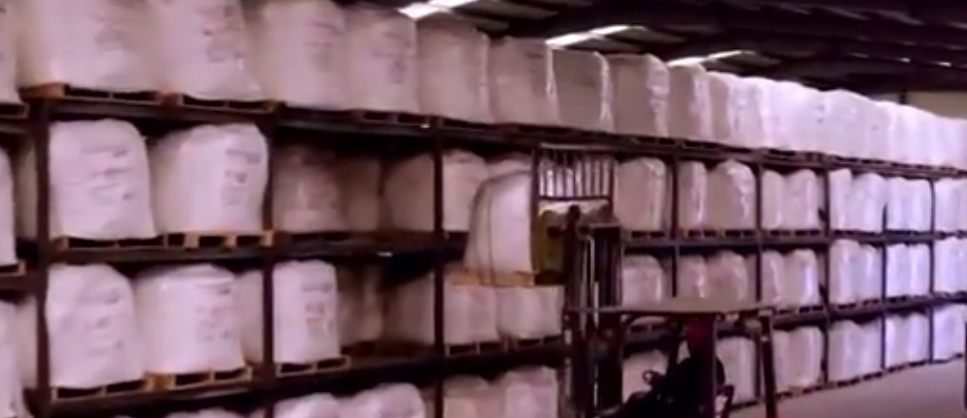
Specifications decide the grade; terms decide whether the grade can be supplied repeatably. On the supplied capability data, Orient International offers OEM/ODM production with customization for polyester and nylon, a monthly capacity of 1,000 MT, a 1 MT minimum order quantity, a 15–30 day lead time, 100% pre-shipment testing and after-sales support delivered remotely or on site. Company-level figures add context for a multi-year relationship: an annual output of 16,000 MT, a 700,000 m² production site, 160 employees including a 25-engineer R&D team, and an export share of about 30% across Korea, Japan, the EU, North America, South America, South East Asia, the Middle East and India.
Quality management is certified to ISO 9001:2015 by TÜV SÜD under certificate TUV100034917/2, with a scope covering the production and sales of chemical fiber grade titanium dioxide. The certificate supplied for that scope was issued on 14 August 2023 with a stated expiry of 13 August 2026. Because that date has passed, an evaluation-stage buyer should request the current certificate or documented renewal evidence and attach it to the qualification file, rather than relying on an archived copy that may already have been superseded.
Four terms to confirm in writing before the first order:
- Testing: 100% pre-shipment test, with the specific parameters and methods named in the contract.
- Quantity: 1 MT MOQ — plan the trial quantity and acceptance plan around it.
- Timing: 15–30 days lead time, confirmed against the actual order month.
- Customization: OEM/ODM scope stated for polyester and nylon specifically, not assumed for other polymers.
Market context: why grade discipline is worth the paperwork
Grand View Research projects the global titanium dioxide market at USD 24.4 billion in 2026 and puts the anatase segment — the segment that matters for fiber-grade material — at a compound annual growth rate of 7.3% from 2026 to 2033. Supply-side data from SunSirs and the Titanium Dioxide Alliance shows China's effective annual capacity easing from 5.9 million tons in 2024 to 5.7 million tons in 2025, while China's total TiO₂ export volume reached 1.9017 million tons in 2024, up 15.84% year on year.
Read together, those figures describe consolidation in capacity alongside continued export scale, not a shortage signal and not a reason to relax qualification. The practical implication for a fiber producer is that supply continuity depends more on having a narrow, well-documented grade-to-line mapping than on holding a long list of near-equivalent options. Three grades with clean polymer assignments and settled acceptance numbers reduce the number of variables that must be re-qualified if a source changes.
Outlook for evaluation-stage buyers
If the cited anatase growth expectation holds, the pressure point for fiber producers will be qualification throughput rather than pigment availability: more lines, more matting and whitening programmes, and the same limited window to approve a new lot. Buyers who fix the grade-to-line mapping now — SA-50 for PET whitening, SA-60 for viscose and acrylic matting, SA-80 for nylon matting — together with the L, b and conductivity acceptance limits and the four purchasing terms above, will re-qualify faster when a batch or a source changes. Buyers who leave the mapping open will keep re-running the same comparison.
A company profile and product brochure is available as a PDF for readers who need the corporate and capability background in one document: Orient International company brochure.
FAQ
Which of the three grades should a polyester spinning line evaluate first?
SA-50, because it is the grade specified for polyester whitening: TiO₂ ≥98.0%, an L value window of 96.7–98.2 and b ≤0.0. Its documented use is as a whitening agent in PET, and the long-running polyester project supplied as evidence reported L values above 96.7 with even dispersion and no black spots. A line with a matting rather than whitening target should raise that requirement with the supplier before treating SA-50 as the default.
How do SA-60 and SA-80 differ from each other?
They are assigned to different polymers and carry different ceilings. SA-60 is specified for viscose and acrylic matting at TiO₂ ≥97.0%, L ≥96.5 and conductivity ≤120 μS/cm. SA-80 is specified for nylon matting at TiO₂ ≥95.0%, L 92.0–97.0 and conductivity ≤100 μS/cm. SA-80 therefore accepts a lower pigment content and a wider lightness band while holding a tighter conductivity ceiling; SA-60 holds a higher pigment content and a one-sided lightness floor.
What does conductivity in a fiber-grade TiO₂ specification actually indicate?
It is normally read as an indicator of soluble ionic species associated with the pigment, and a stated ceiling limits the ionic load the pigment brings into the system receiving it. SA-60 is specified at ≤120 μS/cm and SA-80 at ≤100 μS/cm. No conductivity figure forms part of the supplied specification for SA-50, so a buyer who needs an ionic limit for a PET application should request the value and its test method rather than assume one.
What commercial terms should be confirmed before a first fiber-grade TiO₂ order?
Four, on the supplied data: 100% pre-shipment testing with the tested parameters and methods named in the contract; a 1 MT minimum order quantity; a 15–30 day lead time confirmed against the intended order month; and OEM/ODM customization stated for polyester and nylon specifically. Monthly capacity of 1,000 MT and an annual output of 16,000 MT provide the volume context against which those terms are set.
How should an evaluation-stage buyer verify quality before committing to a grade?
Request a certificate of analysis for each lot covering the parameters actually specified — TiO₂ content, L value and, where applicable, b value and conductivity — and agree the test method in advance; GB/T 37632-2019 provides a Chinese national test method for titanium dioxide content in man-made fibers. Request the current ISO 9001:2015 certificate rather than an archived copy, since the certificate supplied for the chemical fiber grade scope was issued on 14 August 2023 against a stated expiry of 13 August 2026. Finally, run a production-scale trial under the 1 MT MOQ and fix the incoming inspection limits from the observed results.
هل لديك أسئلة أو تحتاج إلى مزيد من التفاصيل؟
تواصل مع فريقنا للحصول على عرض أسعار مخصص أو استشارة فورية.
طلب عرض أسعار
املأ النموذج أدناه وسيتواصل معك فريقنا بعرض مقترح مخصص.
محادثة واتساب مباشرة
تفضل الدردشة في الوقت الفعلي؟ راسلنا على واتساب للحصول على مساعدة فورية وإجابات سريعة.
- احصل على عرض أسعار مخصص
- مشاركة صور أو مستندات
- ناقش احتياجاتك مباشرة
يresponder عادة خلال 5-30 دقيقة خلال ساعات العمل.