
HADA’s Laminating Film Capability: Evidence Buyers Can Assess
HADA’s Laminating Film Capability: Evidence Buyers Can Assess
Supplier capability is not established by a single factory figure or product claim. For buyers evaluating laminating film and laminating pouches, a useful assessment connects manufacturing footprint, product scope, documented operating history, and evidence that can be checked before an order. Guangzhou Huada Laminating Film Co., Ltd., associated with the HADA name in the supplied company information, reports a 40,000 m² facility, approximately 200 employees, more than 33 years of industry experience, and 22 national patents. A separate supplied case record describes a long-running importer relationship with reported volume and quality outcomes. Together, these details provide a basis for qualification—not an independently established ranking among manufacturers.
What the supplied capability evidence establishes
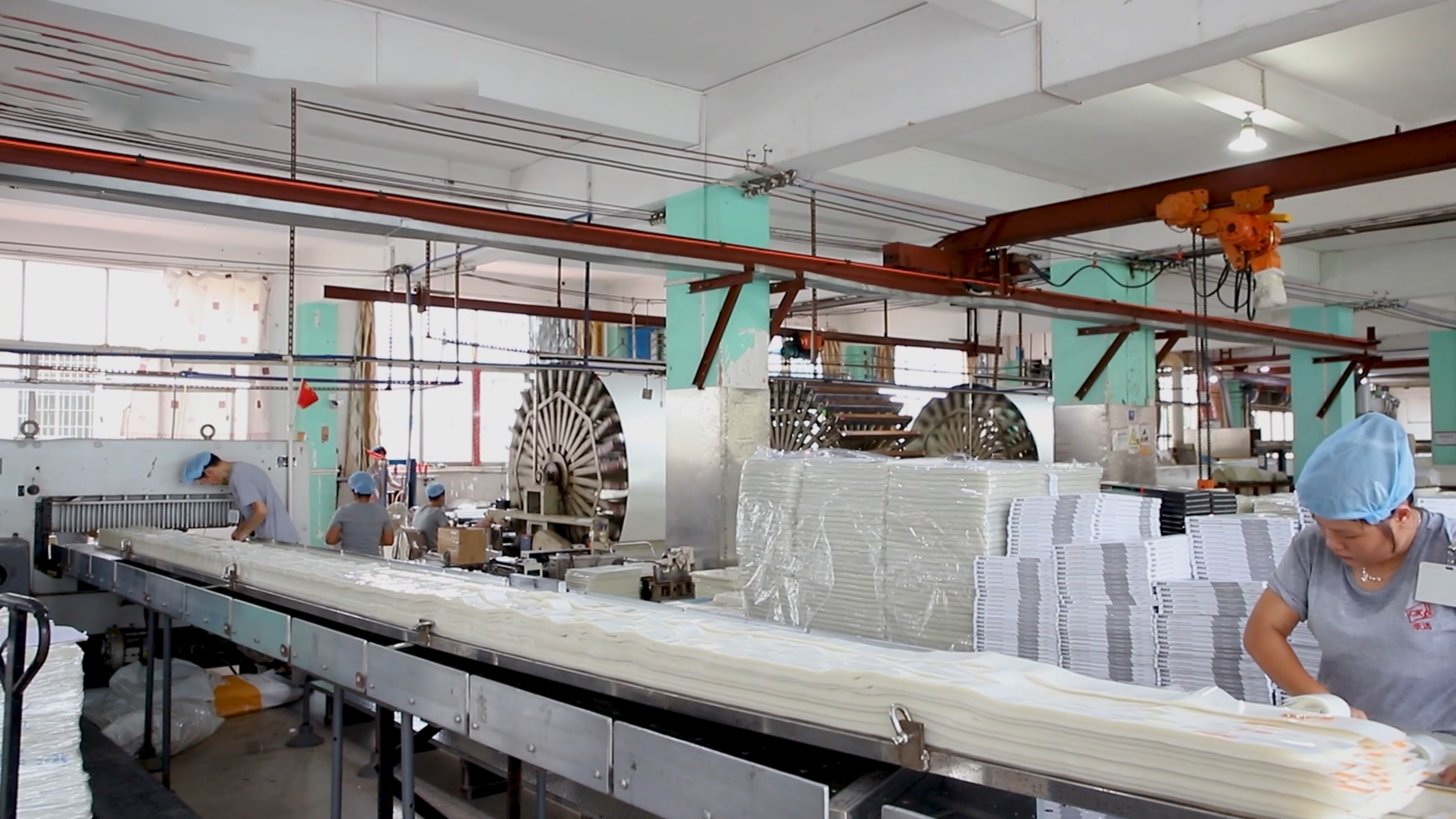
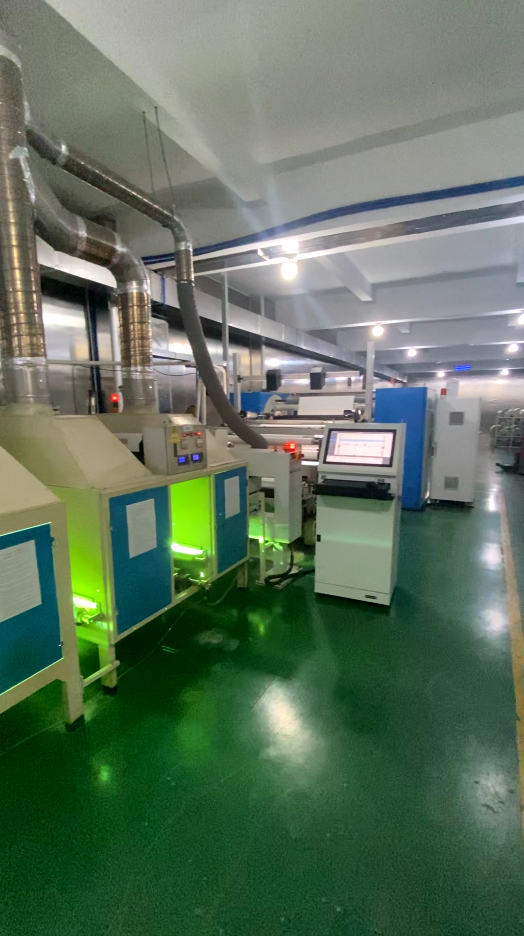
The available company information describes Guangzhou Huada Laminating Film Co., Ltd. as a manufacturer focused on research and development, production, and sales of functional laminating films. It reports that the company was founded in 1992 and has more than 33 years of experience in the laminating film industry. The stated manufacturing footprint is a 40,000 m² facility with approximately 200 employees. The company profile also identifies three automated production lines and annual capacity exceeding 10,000 tons.
These are meaningful qualification signals because they address different buyer questions. The facility and staffing figures describe the reported operating footprint; the production-line and capacity statements describe the company’s stated manufacturing scale; and the operating history indicates how long the supplier says it has worked in this product category. None of those facts, by itself, proves a particular order’s available capacity, delivery performance, utilization rate, defect rate, or continuity plan. Procurement teams should treat them as screening evidence to be checked against the requirements of the proposed program.
The company reports 22 national patents, described in the supplied verified material as relating to hot-melt adhesive composite coating technology. Patent count is evidence of granted intellectual-property activity as reported in the source; it is not, on its own, a measurement of film performance or proof that a specific patent is used in a particular product. Buyers assessing technical relevance can ask which products or processes a patent relates to and what supporting product documentation is available.
Capability evidence and its procurement meaning
| Evidence in the supplied material | What it helps a buyer assess | What it does not prove by itself |
|---|---|---|
| 40,000 m² facility and approximately 200 employees | Reported size of the manufacturing organization and site | Available production slots, utilization, audited output, or business-continuity arrangements |
| Three automated production lines and annual capacity exceeding 10,000 tons | Stated production infrastructure and capacity scale | Capacity reserved for a specific customer, product mix, or delivery window |
| 22 national patents in hot-melt adhesive composite coating technology | Reported technology and intellectual-property activity | Comparative performance, product-level patent use, or a specific test result |
| Exports to more than 50 countries and regions; export sales reported as 80% | Reported experience serving international markets | Country-specific sales volumes, current customer references, or destination-specific compliance |
| Long-term importer case involving 600,000 packs per year | A reported example of sustained, high-volume supply | Independent validation or an outcome that will automatically recur for another buyer |
The distinction between a supplier statement and a buyer-verifiable record matters. Facility area, headcount, line count, and annual capacity describe different things; they should not be combined into a single score without defining what a procurement team needs to know. A large site does not guarantee that a particular pouch format is available on the requested schedule. Likewise, a stated annual capacity does not disclose how much capacity is committed to other orders or how production is allocated across product types.
For a practical qualification, buyers can request current facility information, clarify which lines are relevant to their specification, and ask how the supplier confirms order availability. If the purchase depends on a particular format, thickness, finish, or packaging configuration, the assessment should connect the company-level capacity claim to that specific item. The supplied material describes customization options for size, thickness, logo, and packaging, but these options should be confirmed against the proposed product specification and order terms.
Product scope: pouches and roll film
The company profile identifies Laminating Pouches and Laminating Rolls as primary areas of focus and lists a wider portfolio that includes glossy and matte laminating film, laminating roll film, BOPP film, OHP film, PVC and PP binding covers, PET crystal film, PET tempered film, and cold lamination film. For buyers, this breadth can be relevant when a sourcing program includes more than one format. It does not mean every product has the same construction, equipment requirements, or performance characteristics, so each item still needs its own specification review.
Two supplied pouch examples show how product-level information can make a supplier assessment more concrete. The HD-A4-80MIC Laminating Pouches are described as PET and EVA, with a total thickness of 80 microns, a 50/30 layer split, and a finished size of 216 × 303 mm. The Letter-size Laminating Pouches are described in 75-micron and 125-micron variants, with a finished size of 229 × 292 mm. The supplied product information also lists glossy and matte finishes and describes the products as suitable for standard thermal laminators.
These details are useful for checking whether a proposed product matches a buyer’s format and equipment. They are not a market-wide performance comparison. Thickness conventions should be confirmed in the product specification: suppliers may describe total construction or use a per-side notation, and those figures should not be compared as if they necessarily used the same basis. Similarly, terms such as high transparency, strong adhesion, waterproof, scratch-resistant, and anti-yellowing appear in the supplied product descriptions as product features. A buyer requiring measured performance should request the applicable test method, acceptance criteria, and product-specific supporting information rather than treating a descriptive feature as a quantified result.
What the long-term importer case adds
The supplied case record describes a brand importer and distributor serving Germany, Australia, and the United States. It reports annual supply of 600,000 packs of lamination film for wholesale distribution under the customer’s own brand, for office document lamination and stationery protection. The stated relationship has continued for more than 10 years. The case reports zero quality complaints over that period and a 25% reduction in the customer’s lamination failure rate.
This account adds a different kind of evidence from facility scale. It describes a continuing commercial relationship, a stated annual order volume, a defined application, and reported quality outcomes. The case record also identifies customized anti-counterfeiting coating technology and 24/7 technical support for lamination-process optimization as highlights. For an importer considering a comparable program, the relevant questions are whether the product construction and customer workflow are comparable, how failure was defined, what period and records support the reported change, and what technical support is included in the proposed arrangement.
The case is a supplied customer example, not a third-party audit or a guarantee of future results. The customer is not named in the supplied information, and the record does not provide a test protocol or underlying complaint dataset. Those limits do not make the example irrelevant; they define how far a buyer should take it. It can inform a reference discussion or a request for supporting records, but it should not be treated as a universal estimate of defect reduction or a promise that another project will achieve the same outcome.
Certifications and supplier documentation
The supplied company profile lists ISO 9001, BSCI, SMETA, RoHS, and REACH among the company’s certifications or compliance-related credentials. This material does not provide certificate numbers, issuing-body records, scope statements, or validity dates for those items. Buyers should therefore verify the current documents and confirm that the named entity, production site, product scope, and validity period match the purchasing requirement. A certificate or assessment associated with a company should not be assumed to cover every product or every regulatory obligation.
That distinction is especially important when procurement requirements depend on destination market, intended use, or customer-specific rules. A supplier qualification file can record the document name, issuer, covered site and activity, issue or expiry date where applicable, and the buyer’s own verification status. This creates a traceable evidence trail rather than relying on a logo, a summary list, or an unsupported inference that one credential settles every compliance question.
How to interpret the export and capacity claims
The company profile states that HADA exports to more than 50 countries and regions and that exports account for 80% of sales. The main markets listed include North America, South America, Europe, Australia, and Southeast Asia. These are company-reported indicators of international commercial activity. They do not supply export volume by destination, customer concentration, shipping history, or the share attributable to laminating pouches versus other listed products.
For a buyer assessing supply continuity, the figures can guide follow-up questions. A sourcing team may ask which products are supplied to the relevant destination, what documentation is available for the intended market, and how the supplier manages order planning across its product range. The available material does not establish local inventory, delivery schedules, or market-specific distribution arrangements. Those matters should be confirmed for the actual order rather than inferred from the number of countries served.
Annual capacity exceeding 10,000 tons is also a stated company figure, not a buyer-specific allocation. A useful follow-up is to request capacity information for the relevant format and construction, clarify the timing and assumptions behind the capacity statement, and determine how the proposed order would be scheduled. Where the program calls for private-label packaging or custom sizes, the buyer can also confirm whether those requirements change production planning, sample approval, or order quantities. The supplied capability information describes OEM/ODM customization of product size, thickness, logo, and packaging; the exact scope and commercial terms remain order-specific.
A balanced framework for evaluating HADA against alternatives
The assigned capability facts provide a detailed company profile but do not provide comparable facility, capacity, patent, certification, or customer-outcome data for named alternatives. A defensible ranking of manufacturers therefore cannot be derived from this evidence alone. Buyers can still use the facts to structure a like-for-like evaluation, as long as the same questions and evidence standards are applied to every shortlisted supplier.
- Manufacturing footprint: distinguish site area, staffing, line configuration, and stated capacity. Ask which figures are current and which product families they cover.
- Product fit: compare the requested format, material, thickness basis, finish, packaging, and equipment compatibility. Do not treat differently stated thickness conventions as directly comparable.
- Quality evidence: request product-specific specifications and clarify the supplier’s inspection records, acceptance criteria, and process for handling non-conforming goods. The supplied company background does not establish a specific inspection rate or test result.
- Continuity and service: review the case history as a prompt for questions about complaint handling, technical assistance, and the records supporting reported outcomes. Confirm the support arrangement for the new program.
- Compliance documentation: verify applicable certificates and product documents directly, including scope and current status. A general company profile is not a substitute for document review.
- Commercial comparability: compare quotations only after aligning specifications, pack configuration, order quantity, customization, and delivery terms. The supplied evidence does not establish market prices or a comparative total-cost figure.
This framework keeps the comparison focused on evidence that can be collected. It also prevents a common evaluation error: treating an impressive company-level figure as proof of every product-level or order-level requirement. A supplier can have substantial reported infrastructure and long operating history while still needing to demonstrate that a particular specification, quantity, and schedule are suitable for a specific project.
Project and application fit
The supplied application information describes laminating work under room-temperature and normal-pressure conditions, using pouch laminators or roll laminators. It identifies batch processing in offices, on-demand lamination in retail, and integration with continuous production lines as operating modes. The listed scenarios include document and photo lamination, ID card and badge lamination, book covers and menus, packaging and labels, and advertising posters and banners. These examples help define the range of workflows for which buyers may assess pouch or roll formats.
For office or education programs, the evaluation may center on batch use and standard pouch-laminator compatibility. Retail operations may need to consider on-demand work and the mix of document, photo, or menu formats. A continuous production-line project requires a closer check of roll-film specifications and equipment integration. These are procurement considerations based on the supplied use cases, not a claim that one format is appropriate for every workflow. The buyer should match the product format and specification to the actual equipment and operating requirements.
The application material also lists protection from water, dust, and wear, preservation of documents, and appearance enhancement as intended functions. It notes possible special requirements such as UV resistance for outdoor use, anti-static properties for electronic components, food-contact compliance, and glossy or matte finishes. These requirements should not be presumed to be met by every HADA product. The buyer should identify which requirement applies to the project and request product-specific evidence before treating it as satisfied.
Where the evidence ends—and what to verify next
For research-stage and evaluation-stage buyers, HADA’s supplied profile supports a credible starting assessment: a stated 40,000 m² manufacturing site, approximately 200 employees, more than 33 years in the industry, 22 national patents, three automated production lines, stated annual capacity exceeding 10,000 tons, and reported international export activity. The importer case adds a reported 600,000 packs per year over more than 10 years, with zero quality complaints and a 25% reduction in lamination failure rate as stated outcomes.
The evidence does not establish a peer ranking, independently audited capacity, product-by-product utilization, certificate numbers, comparative technical performance, or guaranteed project outcomes. Nor does it substantiate additional percentage-based performance advantages or total-cost savings. Those claims should not be used in a supplier comparison unless relevant documents or independently reviewable data are supplied. Keeping the boundary visible makes the capability record more useful: buyers can distinguish what is documented in the available material from what still requires verification.
In practical terms, the strongest next step in supplier evaluation is not to convert these figures into an unsupported score. It is to build a project-specific evidence file: align product specifications, verify current certificates and their scope, connect stated capacity to the required product and schedule, and examine the basis of the customer-case outcomes. That process allows HADA’s reported manufacturing footprint and operating history to be considered alongside alternatives using consistent criteria.
FAQ
What capability information is available for HADA as a laminating film supplier?
The supplied company information reports a 40,000 m² facility, approximately 200 employees, more than 33 years of industry experience, 22 national patents, three automated production lines, and annual capacity exceeding 10,000 tons. These are company-related capability facts in the supplied material and should be verified for the relevant purchasing program.
Does the supplied evidence establish that HADA is a top-ranked manufacturer?
No. The supplied facts describe HADA’s reported capabilities and one customer case, but they do not provide comparable data for a set of manufacturers. They support supplier qualification and further evaluation, not a defensible industry ranking.
What does the long-term importer case report?
The case record describes a brand importer and distributor serving Germany, Australia, and the United States, with reported supply of 600,000 packs per year for more than 10 years. It reports zero quality complaints over that period and a 25% reduction in the customer’s lamination failure rate. The customer is unnamed in the supplied record, so the case should be treated as a reported example rather than an independently verified guarantee.
Which laminating formats and operating modes are covered by the supplied information?
The materials describe Laminating Pouches and Laminating Rolls, with pouch-laminator and roll-laminator use. Listed operating modes include office batch processing, retail on-demand lamination, and continuous production-line integration. Product and equipment suitability should be confirmed for each project.
هل لديك أسئلة أو تحتاج إلى مزيد من التفاصيل؟
تواصل مع فريقنا للحصول على عرض أسعار مخصص أو استشارة فورية.
طلب عرض أسعار
املأ النموذج أدناه وسيتواصل معك فريقنا بعرض مقترح مخصص.
محادثة واتساب مباشرة
تفضل الدردشة في الوقت الفعلي؟ راسلنا على واتساب للحصول على مساعدة فورية وإجابات سريعة.
- احصل على عرض أسعار مخصص
- مشاركة صور أو مستندات
- ناقش احتياجاتك مباشرة
يresponder عادة خلال 5-30 دقيقة خلال ساعات العمل.