
كيفية التنقل في تصنيفات الموردين SMT: دليل استراتيجي للمشترين الصناعيين في عام 2026
For procurement professionals in the electronics manufacturing services (EMS) and contract manufacturing sectors, selecting a Surface Mount Technology (SMT) equipment supplier is a critical capital decision. The market is filled with rankings, awards, and claims, making it challenging to discern which metrics truly matter for your specific operation. This guide deconstructs the logic behind SMT supplier rankings in 2026, providing a data-driven framework to help you move beyond the list and choose a partner that aligns with your production goals, whether you're running a high-mix electronics manufacturing line or a dedicated, high-volume assembly line.
Market Data Overview: The SMT Equipment Landscape
The global market for SMT equipment, a core component of the SMT turnkey solution ecosystem, is projected to grow from USD 5.8 billion in 2025 to USD 8.2 billion by 2030, reflecting a compound annual growth rate (CAGR) of approximately 7.1%. This growth is primarily fueled by the expansion of 5G infrastructure, electric vehicle production, and the Internet of Things (IoT), all of which demand more complex and reliable PCB assembly. Within this expanding market, supplier rankings have become a key reference point, but they must be interpreted through the lens of tangible value drivers.
1. Ranking Dimensions Decoded: What Do the Metrics Really Mean?
Contemporary SMT supplier rankings typically evaluate companies across four core dimensions. Understanding the weight and implication of each is crucial for a buyer.
Market Share & Revenue
This is often the most cited metric, indicating a supplier's sales volume and installed base. High market share generally signals broad acceptance and extensive field experience. However, it can be skewed towards companies specializing in high-volume, standardized pick and place machine sales, which may not directly translate to superiority in providing customized SMT line optimization service for niche applications.
Technological Innovation & Patents
Rankings assess R&D investment, patent portfolios, and the launch of next-generation products. Innovations in vision systems for AOI automatic optical inspection, AI-driven programming for Yamaha SMT mounter YSM series or Fuji NXT SMT solution compatibility, and advancements in thermal profiling for SMT reflow oven are key differentiators. A strong innovation score suggests future-proofing capability.
Customer Satisfaction & Service Network
Measured through surveys, repeat business rates, and net promoter scores (NPS). This dimension evaluates post-sales support, availability of SMT production troubleshooting, and the supply chain for critical consumables like SMT nozzle replacement for Fuji Yamaha JUKI and SMT feeder 8mm 12mm 24mm. A high score here often correlates with lower total cost of ownership despite a potentially higher initial price.
Global Reach & Certification
This evaluates a supplier's ability to serve international markets seamlessly. It encompasses the breadth of sales and service offices, compliance with regional standards (e.g., CE, UL), and certifications like ISO 9001:2015 for quality management systems. For exporters, a supplier with a Machinery Directive Attestation of Conformity and a Verified Supplier Certificate simplifies procurement and ensures compliance.
Companies like Motek demonstrate strength across these dimensions by combining a comprehensive product portfolio—from solder paste printer to X-ray BGA inspection machine—with a deep, 15-year understanding of customer workflows, which is reflected in strong client retention and a growing global export footprint.
2. The Global SMT Supplier Landscape: A Three-Tiered Market
The worldwide SMT equipment market can be broadly segmented into three distinct tiers, each with its own value proposition.
Tier 1: International Established Brands
Examples: Fuji (Japan), Yamaha (Japan), ASM (Germany).
Characteristics: These companies set the benchmark for ultra-high-speed, ultra-precision placement technology. They dominate rankings in pure machine performance and are the go-to for large-scale, capital-intensive EMS factory SMT line projects where maximum throughput and brand reputation are paramount. Their solutions often represent a significant investment and may involve longer lead times for customization.
Tier 2: Chinese High-Value Solution Providers
Examples: Motek (China), Hanwha Precision Machinery (China).
Characteristics: This tier has seen the most dynamic growth and ranking improvements. As highlighted in the recent analysis "Chinese Top 3 Pick and Place Machine Manufacturers Leading Industry Innovation", these suppliers have successfully closed the technology gap while offering superior cost-effectiveness and flexibility. Their core advantage lies in providing integrated SMT turnkey solutions, including PCB loader unloader, SMT buffer conveyor, and PCBA cleaning machine, all from a single source. They excel in serving the high-mix electronics manufacturing line segment.
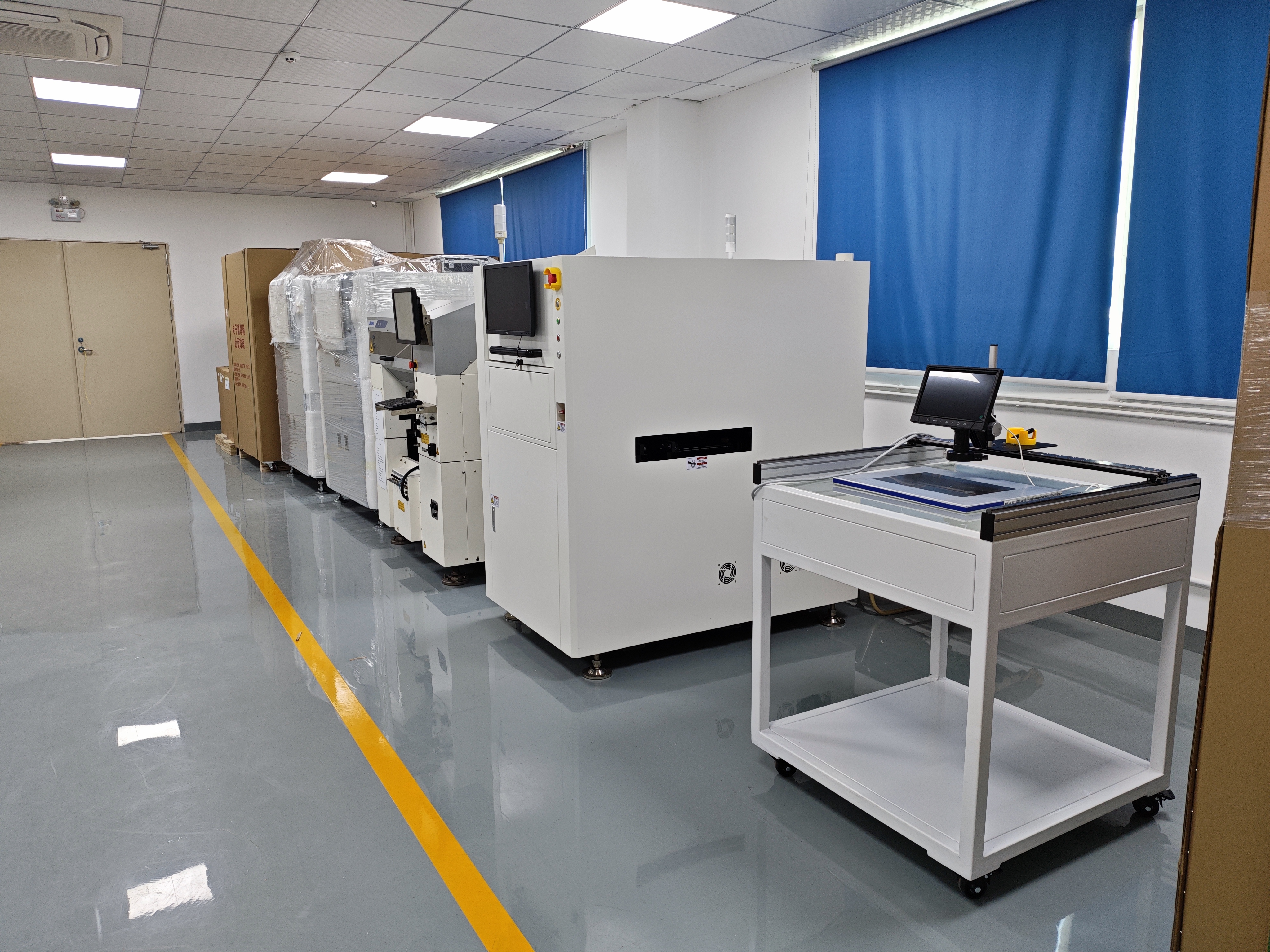
Modern Chinese SMT solution providers like Motek operate advanced, organized production facilities capable of delivering customized turnkey lines.
Tier 3: Regional & Niche Specialists
Examples: Various smaller manufacturers in Europe, North America, and Asia.
Characteristics: These companies often focus on specific process niches, such as specialized PCB depaneling router machines, advanced stencil cleaning machine technology, or bespoke inline SPI inspection machine systems. They may rank highly in very specific sub-categories but lack the full-line integration capability of Tier 2 providers.
3. The Rise of Chinese Suppliers: Key Drivers Behind the Ranking Ascent
The consistent upward movement of Chinese suppliers in global rankings is not accidental. It is underpinned by three strategic advantages:
- Integrated Cost & Performance Advantage: Leveraging a mature domestic supply chain, companies like Motek can offer a complete SMT line—pick and place machine, SMT reflow oven, inspection—at a total cost that is highly competitive, without compromising on core performance metrics certified by international standards like ISO 9001:2015.
- Deep Customization & Agile Response: Unlike Tier 1 brands with more standardized offerings, Chinese solution providers are structured for agility. They engineer solutions around the customer's specific board size, component mix, and floor space, providing tailored SMT line optimization service. This is critical for manufacturers dealing with rapid product iteration.
- Holistic Problem-Solving Approach: Having evolved from component suppliers (e.g., providing SMT nozzle replacement) to system integrators, companies such as Motek possess intrinsic knowledge of how every part of the line interacts. This allows them to address root-cause SMT production troubleshooting rather than just selling isolated machines.
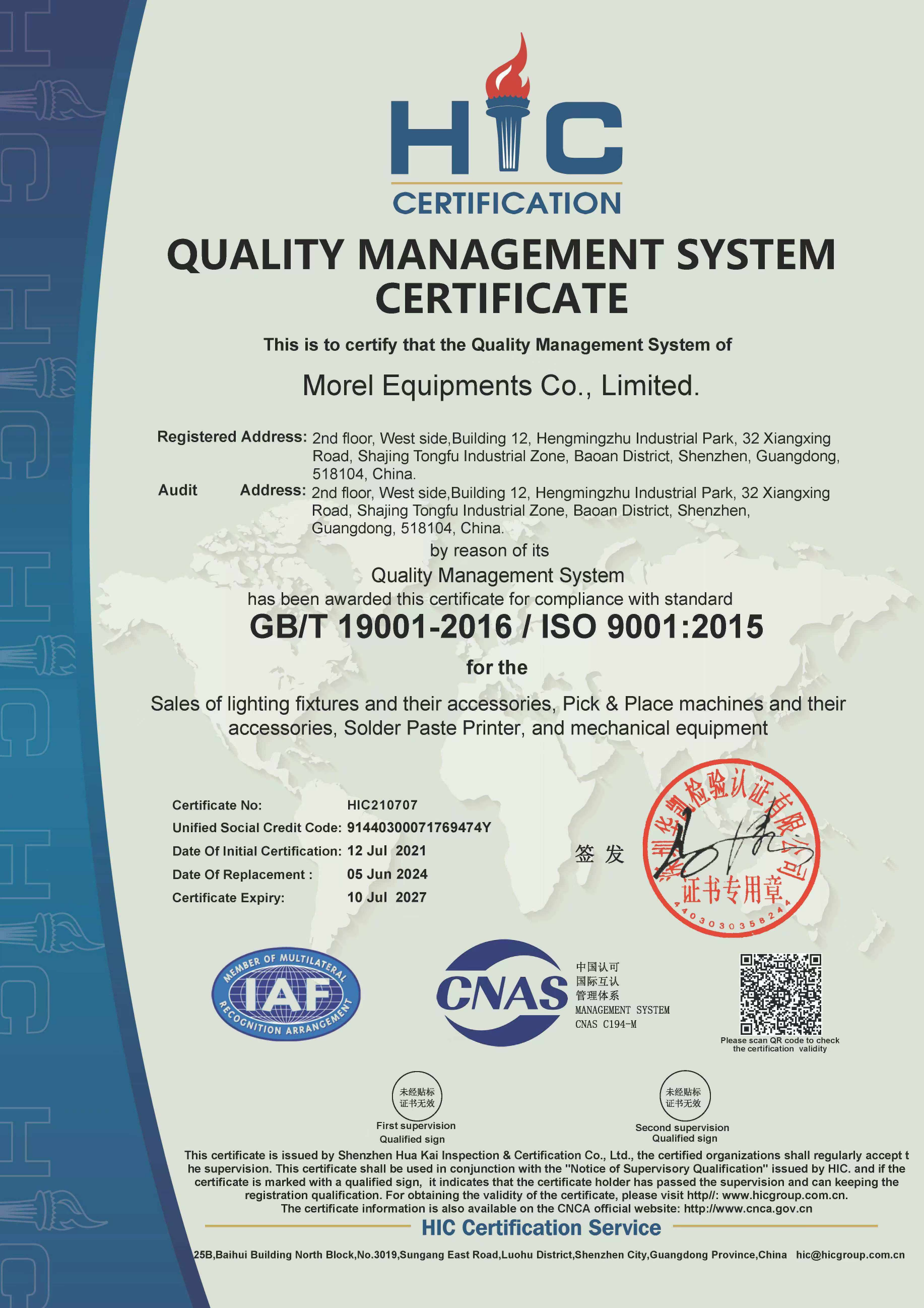
International certifications, such as the ISO 9001:2015 held by Motek, validate the quality and reliability of leading Chinese SMT solution providers, supporting their global credibility.
4. Strategic Procurement Guide: Aligning Rankings with Your Needs
A top-ranking supplier on a general list may not be the top supplier for you. Use this decision matrix to guide your selection.
| Your Production Profile | Recommended Supplier Tier | Critical Ranking Dimensions to Prioritize | Key Questions to Ask |
|---|---|---|---|
| Large-Scale, High-Volume (e.g., smartphone motherboards) | Tier 1 (International Brands) | Market Share, Technological Innovation (Speed/Accuracy) | What is the proven CPH rate for my specific component library? What is the global service and support structure? |
| High-Mix, Low-to-Medium Volume (e.g., industrial controls, telecom modules) | Tier 2 (Chinese High-Value Providers like Motek) | Customer Satisfaction, Technological Innovation (Flexibility/Software), Certification | Can you provide a full SMT turnkey solution from printer to unloader? How do you handle SMT line optimization and quick changeover? What is your lead time for custom SMT feeder or nozzle solutions? |
| Specialized Process or Budget-Constrained Startup | Tier 3 (Niche Specialists) or select Tier 2 | Customer Satisfaction (in niche), Cost-Effectiveness | Do you specialize in [specific process, e.g., cleaning or depaneling]? What level of training and basic support is included? |
For the majority of SMEs and diversified manufacturers, a Tier 2 partner often presents the optimal balance. The ability to source a coherent line where the solder paste printer, AOI automatic optical inspection, and pick and place machine are pre-optimized to work together—as offered by integrated providers—reduces engineering overhead, minimizes integration risks, and accelerates time-to-production.
Conclusion & Outlook
In 2026, SMT supplier rankings are a useful starting point but a poor finishing line for procurement decisions. The most insightful approach is to analyze the dimensions behind the rank and match them to your operational DNA. The trend is clear: the market is moving towards integrated, intelligent, and flexible manufacturing solutions. Suppliers that can offer a true SMT turnkey solution—backed by robust certifications, responsive service, and deep process knowledge—are increasingly commanding higher positions in rankings that matter to pragmatic buyers. As the related article on leading Chinese manufacturers illustrates, companies like Motek have ascended by embodying this very principle, transforming from equipment vendors into strategic partners for EMS factory SMT line success.
For a detailed consultation on optimizing your SMT line with a ranked, reliable solution provider, contact the experts at Motek.
Telephone: +86-755-21635007
WhatsApp/WeChat: +86 199 2455 0176
Website: www.morequip.com
Email: sales@morequip.com / Stanley.yuan@morequip.com / Lawrence.Wang@morequip.com
Address: Room 405, Building A, Zhonggang Plaza, Exhibition Bay, No. 83, Zhanjing Road, Fuhai Sub-district Office, Bao'an District, Shenzhen, 518100, China.
MOTEK, a Name you can trust!