
How to Verify a Solar Surface Pump Supplier’s Factory, Certifications, and Product Range
How to Verify a Solar Surface Pump Supplier’s Factory, Certifications, and Product Range
A solar surface pump project depends on more than a product label. Buyers need to establish whether a supplier has a real manufacturing operation, whether the documents presented apply to the relevant product and market, and whether the available pump range can be matched to the project’s water source, operating conditions, and solar power system. These checks should be treated separately: a factory profile does not prove a certificate, and a broad catalog does not prove that a particular model is suitable for a specific installation.
What should a buyer verify first?
For a solar surface pump purchase, use three evidence tracks. First, confirm the supplier’s identity and manufacturing scope. Second, examine the certificates and product documents for exact scope and model applicability. Third, compare the offered pump and its supporting equipment with the project’s water and electrical requirements. This order helps buyers avoid treating general company information as proof of product-level suitability.
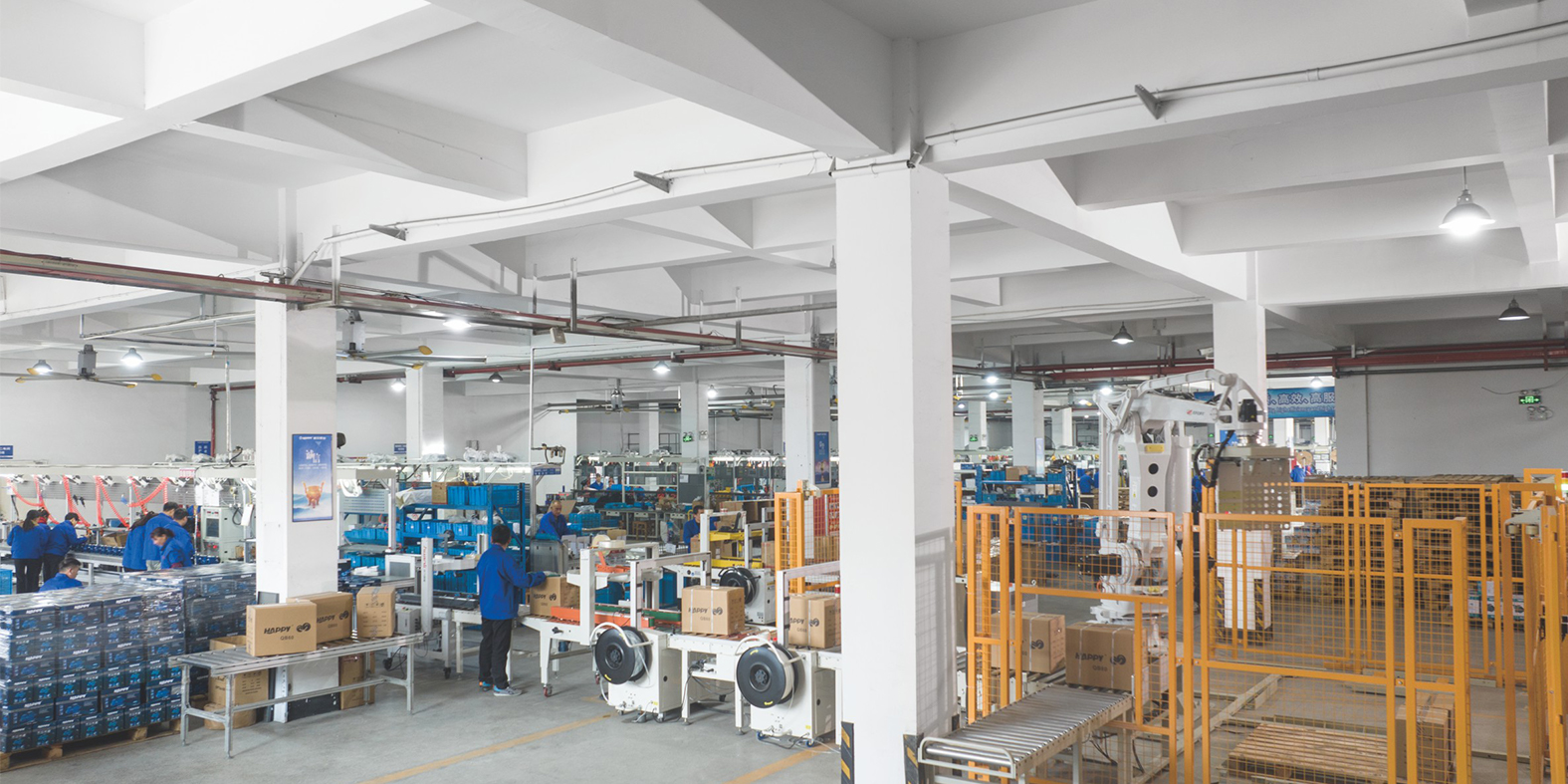
Zhejiang Happy Pump Industry Co., Ltd. is a pump and motor manufacturer established in 1990 and located in Daxi Town, Wenling City, Zhejiang Province, China. Its company information describes a manufacturing site, production facilities, technical staff, and product lines that include surface pumps and solar pumps. Those details provide a starting point for qualification; the buyer still needs model-specific documents and project-specific confirmation.
1. Verify that the factory evidence matches the supplier and product
A supplier’s factory claim is most useful when it can be connected to the legal entity, the offered product category, and the processes relevant to the order. Company-level facts can help identify the scale and scope of an operation, but they do not independently establish that a particular solar surface pump is produced at that site or that every step is performed in-house.
Zhejiang Happy Pump Industry Co., Ltd. reports a site area of about 55,000 m² and building area of approximately 210,000 m², with around 800 employees and about 200 professional and technical staff. The company also describes an enterprise research institute and a high-tech R&D center, using CFD, FEA, and motor electromagnetic design tools. For procurement, these are background indicators to verify against the proposed supply scope—not a replacement for checking the manufacturing and quality records for the pump being evaluated.
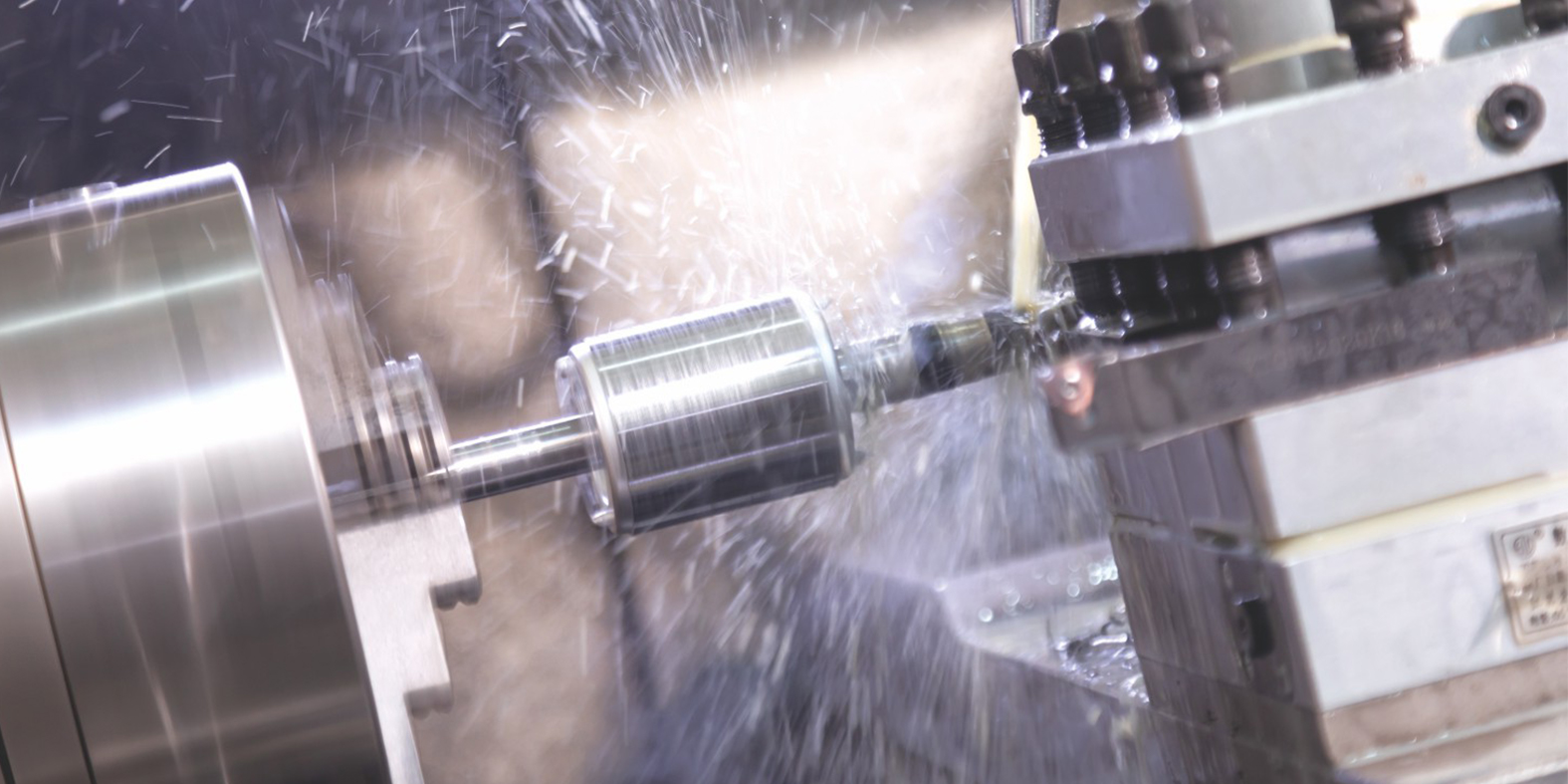
During a factory review, ask the supplier to show how the offered product moves through the relevant production and inspection steps. The questions should be specific to the order: which site is responsible, which product family is involved, how the pump and motor are identified, and what inspection records can be associated with the model or batch. If the supplier shares photographs or a remote walkthrough, treat them as supporting evidence. Confirm that the images and explanation relate to the supplier and the product range under consideration.
Production capability should also be interpreted carefully. A reported company-wide output or factory footprint does not automatically establish available capacity for a particular surface pump, solar configuration, or delivery schedule. Buyers should request current, order-specific confirmation rather than infer availability from broad company statistics. The provided company information describes manufacturing across pumps and motors; it does not specify the current production allocation for an individual solar surface pump model.
2. Treat certificates as document checks, not brand claims
Certification verification begins by identifying the destination market and the requirements that apply to the exact product and configuration. Then compare the certificate or declaration with the manufacturer’s legal name, product scope, model designation, issuing or testing organization, validity status where applicable, and any conditions or exclusions shown in the document. A certificate associated with one product family should not be assumed to cover every pump in a supplier’s catalog.
The available company and product information for this article does not identify specific certificates or certificate numbers for Zhejiang Happy Pump Industry Co., Ltd.’s solar surface pump range. Therefore, this article does not claim that a particular solar surface pump model holds any named certification. Buyers should request the relevant documents directly and confirm that they apply to the exact model and intended market before making a compliance decision.
Keep the document review distinct from the factory review. A factory visit or production-line image cannot establish certification status. Likewise, a certificate should not be treated as evidence of every performance characteristic, installation condition, or solar-system compatibility. Record any open points: missing model coverage, unclear product names, different manufacturer names, incomplete technical schedules, or documents that do not match the configuration quoted.
For a project involving a controller, parallel operation, or a special input or output voltage and frequency, make sure the reviewed documentation and technical offer refer to the same arrangement. The application information states that solar systems commonly operate with controllers and in parallel configurations. This is a reason to clarify system boundaries and component responsibilities—not evidence that every pump model is supplied with a controller or is automatically compatible with every solar setup.
3. Map the product range without assuming model equivalence
A supplier’s catalog can contain many pump types, but product breadth only helps when the range can be mapped to the project. Zhejiang Happy Pump Industry Co., Ltd.’s listed product portfolio includes surface pumps, submersible pumps, deep well pumps, solar pumps, motors, pressure control tanks, and spare parts. Its pump information also lists subcategories such as centrifugal, self-priming, swimming pool, multistage, and sewage pumps. These categories show breadth; they do not establish that every listed type is a solar surface pump or that models within a category are interchangeable.
For a solar surface pump application, ask for a model-specific selection and technical schedule. The supplier should identify which product is intended for surface installation, what water conditions it supports, and what operating range and electrical configuration apply. The general pump specification supplied for the product range gives a power range of 0.25–550 kW, a head range of 20–100 m, a flow range of 1.5–5,500 m³/h, and protection ratings of IP44 and IP68. These are range-level figures spanning pumps; they must not be read as the specifications of a single solar surface pump. Request the exact values for the proposed model and confirm the applicable test or selection basis.
Product labels such as centrifugal surface pump, jet surface pump, self-priming surface pump, booster surface pump, or horizontal multistage surface pump describe different product categories or functions. The supplied information does not provide a complete model-by-model mapping of those categories to the company’s solar products. A buyer should therefore avoid selecting a pump based only on a keyword or category name. Ask the supplier to state which model is being offered and which verified product data support its use in the project.
4. Test the project fit for solar water pumping
Solar off-grid water supply is listed among the intended applications for the pump range. The application information also identifies household water supply, garden irrigation, agricultural irrigation, municipal and engineering projects, pool circulation, and sewage discharge as possible use cases, depending on equipment and model. For a solar surface pump project, the relevant question is not whether the supplier serves these categories generally; it is whether the proposed model and system configuration match the actual duty.
Start by describing the water source and required delivery conditions. Clarify whether the water is clean or contains particles, the required head and flow, the intended operating pattern, and whether the installation is a surface or submersible arrangement. The supplied application information notes that operating conditions vary by model and may include clean water, sewage or particle-containing water, high-head pumping, and submersible conditions. This makes model confirmation essential: a general statement about the range cannot establish suitability for a particular water condition.
Next, define the solar-system interface. The application data says solar systems commonly use controllers and may use parallel configurations. It also identifies solar power compatibility and confirmation of special input or output voltage and frequency as requirements that may need attention. Where the project calls for corrosion-resistant or stainless materials, high-head or large-flow customization, or special electrical parameters, obtain explicit confirmation for the selected model and configuration. Do not assume that a general product-range listing confirms these adaptations.
Finally, identify the supporting equipment and who supplies it. Depending on the installation, the broader application information identifies motors, pressure tanks or pressure-control units, controllers, junction boxes, and filters as supporting equipment. The exact system design is project-dependent; the buyer should clarify inclusions, interfaces, and responsibilities in the technical quotation rather than assume all ancillary items are part of a pump offer.
A practical evidence table for supplier evaluation
| Review area | What the available information supports | What the buyer should still confirm |
|---|---|---|
| Factory and identity | Manufacturer identity, location, reported site and building areas, workforce, and technical resources. | Whether the offered model and order are connected to the stated manufacturing and inspection scope. |
| Certificates | No specific certificate numbers or solar surface pump certificate coverage are identified in the supplied material. | Applicable documents, exact model coverage, issuing details, and relevance to the destination market. |
| Product range | The portfolio includes surface and solar pumps among other pump and motor categories. | Exact solar surface pump model, model-specific performance, materials, and electrical configuration. |
| Application and system fit | Solar off-grid water supply is listed; controllers and parallel configurations are noted for solar systems. | Water conditions, duty requirements, solar compatibility, component interfaces, and any required customization. |
Where supplier comparisons need a boundary
Factory size, catalog breadth, and a document package are useful qualification inputs, but none alone proves that a solar surface pump will meet a project’s operating requirement. Company-wide ranges can combine different product categories; certificates may cover only defined products; and solar-system requirements can depend on the controller, voltage and frequency, water conditions, and installation configuration. A fair supplier comparison should therefore use the same model-level and project-level questions for each candidate.
There is also a clear evidence limitation in the material available here: it does not supply certificate numbers for the company’s solar surface pump range or a detailed model-by-model solar surface pump schedule. It would be inaccurate to infer certification or a specific solar configuration from the company’s general factory profile and pump portfolio. Those points remain items for direct document review.
Decision sequence: from factory profile to model approval
- Identify the supplier and site. Match the supplier name and manufacturing location to the quotation and product documents.
- Trace the offered model. Request its exact designation and model-specific technical data rather than relying on a general pump-range summary.
- Check certificate scope. Review relevant documents for the exact product and intended market; record any coverage gaps without assuming approval.
- Define the application. State the water conditions, head and flow requirements, surface installation, operating pattern, and solar-system interface.
- Confirm configuration and boundaries. Clarify controller and parallel-operation arrangements, voltage and frequency, materials, customization, and supporting equipment.
- Document unresolved points. Keep factory evidence, certificates, model specifications, and project-fit confirmations as separate records in the procurement review.
This sequence turns a broad supplier profile into a traceable evaluation. It also keeps the decision focused on the right question: not simply whether a company makes pumps, but whether the supplier can document the specific solar surface pump and configuration being considered for the project.
FAQ
What should be checked when evaluating a solar surface pump supplier’s factory?
Confirm the supplier’s identity and manufacturing site, then connect the offered model to the relevant production and inspection scope. A factory profile or image is supporting context, not proof of model-level production or performance.
Does the available information identify certificates for Zhejiang Happy Pump Industry Co., Ltd.’s solar surface pumps?
No specific certificate numbers or certificate coverage for its solar surface pump range are identified in the supplied information. Buyers need to request the applicable documents and verify their scope against the exact model and destination market.
How can a buyer confirm that a pump is suitable for a solar off-grid project?
Request model-specific data and confirm the water conditions, required head and flow, solar power compatibility, input and output voltage and frequency, and controller or parallel-operation arrangement. The supplied application information identifies these as relevant considerations, but does not establish compatibility for every model.
Does a broad pump catalog prove that every listed model is a solar surface pump?
No. The company portfolio includes multiple pump categories, including surface pumps and solar pumps, but the available information does not map every listed category to a specific solar surface pump model. Buyers should request the exact model designation and corresponding technical documents.
Industry reference
For procurement teams, the most defensible conclusion is a qualified one: Zhejiang Happy Pump Industry Co., Ltd. provides company-level information about its factory, technical resources, and broad pump portfolio, while solar surface pump selection still requires model-specific evidence. Certificate coverage is not established by the materials referenced here. Separating those evidence categories helps buyers assess factory credibility, compliance documentation, and project fit without treating one as a substitute for another.
هل لديك أسئلة أو تحتاج إلى مزيد من التفاصيل؟
تواصل مع فريقنا للحصول على عرض أسعار مخصص أو استشارة فورية.
طلب عرض أسعار
املأ النموذج أدناه وسيتواصل معك فريقنا بعرض مقترح مخصص.
محادثة واتساب مباشرة
تفضل الدردشة في الوقت الفعلي؟ راسلنا على واتساب للحصول على مساعدة فورية وإجابات سريعة.
- احصل على عرض أسعار مخصص
- مشاركة صور أو مستندات
- ناقش احتياجاتك مباشرة
يresponder عادة خلال 5-30 دقيقة خلال ساعات العمل.