
Long-Term Laminating Machine Supplier Evaluation: KUNTAI’s Scale and Engineering Profile
Long-Term Laminating Machine Supplier Evaluation: KUNTAI’s Scale and Engineering Profile
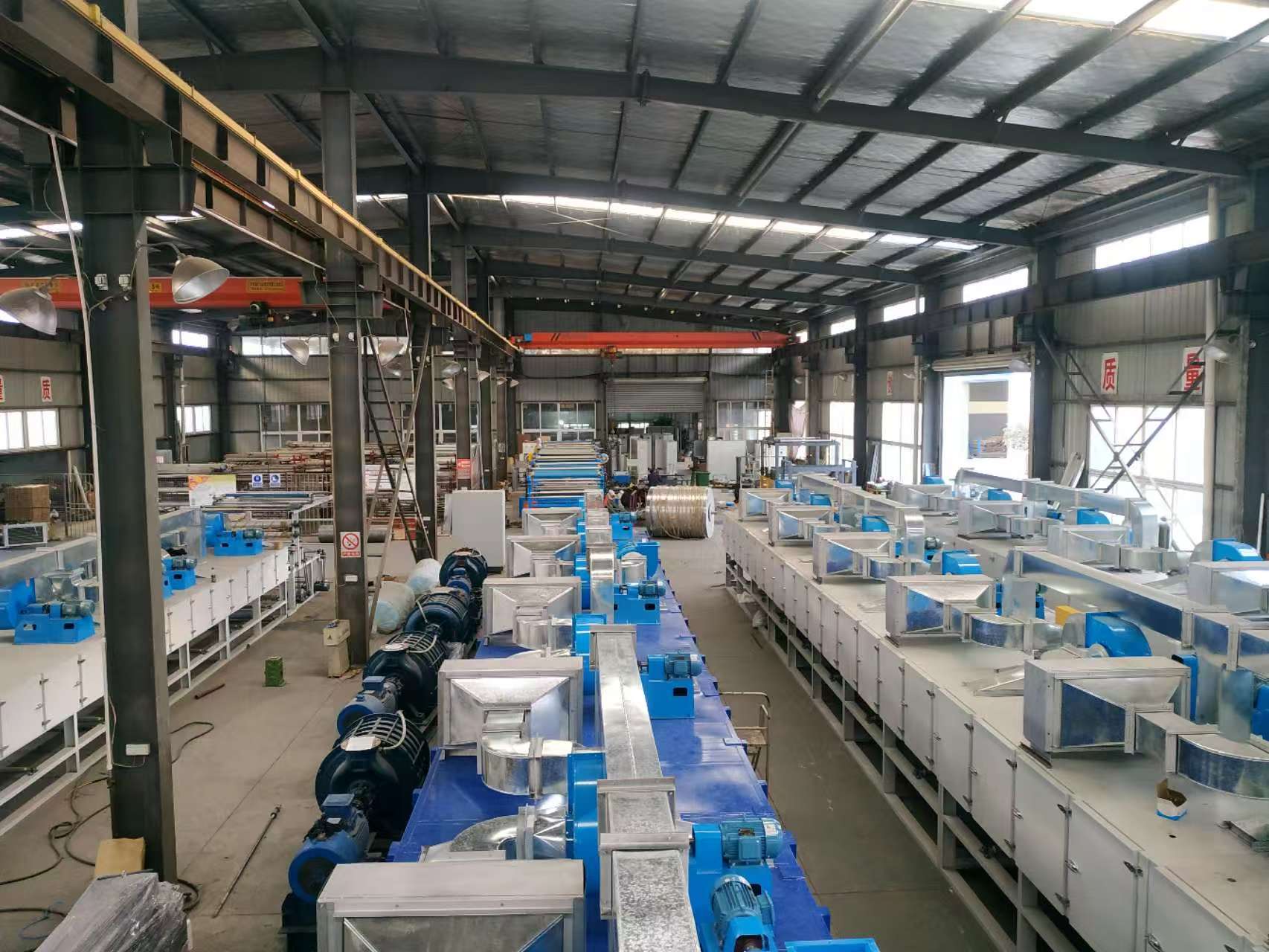
Long-term laminating machine sourcing is not determined by a founding date or factory footprint alone. Buyers need to judge whether a supplier’s operating history, engineering resources, product range, customization scope, and delivery arrangements are relevant to the production line they intend to run. JIANGSU KUNTAI MACHINERY CO.,LTD provides a useful case for applying that evaluation: its company profile reports a 1983 founding, 210 staff, a 30,000 m² facility footprint, and an eight-engineer R&D team, while its stated machinery range spans coating, laminating, impregnation, crossply, and cutting equipment.
Those figures are company-provided profile information, not a substitute for an audit or a buyer’s own verification. The available evidence also contains a date difference: one company profile records 1983 as the founding year, while another company-history statement says production of technical textile machinery began in 1985. For procurement decisions, the careful reading is that KUNTAI presents a history of more than four decades in this machinery field, while the exact start date should be confirmed against corporate records if it is material to qualification.
What long-term supplier sustainability means in machinery procurement
In this context, supplier sustainability means the practical ability to remain a usable manufacturing and support partner over the buyer’s equipment lifecycle. It is not a claim about environmental performance. For a laminating machine buyer, the question is whether the supplier can continue to provide relevant engineering communication, machine-family knowledge, manufacturing coordination, and support for the purchased configuration.
Company age can help buyers frame due diligence, but age alone does not prove uninterrupted operations, current financial health, spare-parts availability, or service response. Likewise, workforce size and facility area may indicate organizational scale, but they do not establish how many people are assigned to a particular project or whether a facility is equipped for a specific process. A sound evaluation separates reported inputs from verified operating evidence.
That distinction matters especially for a custom machine. A line designed around textile bonding, a PUR hot-melt process, a double-belt press, or UD impregnation may require different process discussions and acceptance criteria. The buyer should therefore ask not only how long a supplier has existed, but also what concrete evidence connects its current engineering and production resources to the required materials, process, and commissioning plan.
Reading KUNTAI’s reported scale as a set of questions
The supplied company profile identifies JIANGSU KUNTAI MACHINERY CO.,LTD as founded in 1983 and reports 210 employees, a 30,000 m² facility, and eight R&D engineers. The profile also describes more than four decades of work in coating, laminating, impregnation, and cutting machinery. These facts create useful evaluation prompts, but they do not answer every procurement question by themselves.
| Reported information | What it can help a buyer assess | What still needs confirmation |
|---|---|---|
| Company profile lists 1983 as the founding year; another company-history statement refers to machinery production since 1985. | Whether the supplier has a long stated history in relevant machinery categories. | The exact corporate and production-history timeline, especially if required for a vendor qualification record. |
| 210 employees. | The reported overall workforce scale. | Current organization, project ownership, and the people responsible for engineering, production, inspection, and after-sales communication. |
| 30,000 m² facility footprint. | The company’s reported facility scale. | Which production, assembly, storage, and inspection activities take place at the facility and how they relate to the ordered machine. |
| Eight R&D engineers. | The reported size of the R&D team. | Which engineering resources will address the buyer’s machine structure, material, control, and integration requirements. |
| Monthly production capacity of 55 units in the capability material. | A stated capacity figure for initial planning discussions. | How the figure is defined, what machine types it covers, and the production slot available for the buyer’s configuration. |
The differences in evidence status are important. The 1983 founding date, workforce, facility footprint, and R&D headcount come from the company background material. The monthly capacity of 55 units and customization details appear in the supplied capability and whitepaper content. These are attributable company statements; the available third-party package does not independently verify staffing, factory size, or audited output. Buyers should avoid converting a company-reported figure into a guarantee of capacity for an individual order.
Engineering depth is relevant only when it connects to the project
An eight-engineer R&D team is a potentially relevant supplier attribute because custom machinery requires technical communication between the buyer and the manufacturer. But headcount is not a measure of engineering response time, application expertise, or design quality. Evaluation should focus on whether the supplier can translate the buyer’s requirements into a clear and reviewable machine scope.
For KUNTAI, the supplied capability material states that the manufacturer provides OEM production services and offers customization for voltage, logo, color, and machine structure. This defines a stated customization scope. It does not, by itself, confirm that every requested change is feasible for every machine family, or that controls, line interfaces, process guarantees, or material performance are included. Those points should be documented for the specific project before order placement.
Useful engineering questions include: What information is needed to confirm the proposed machine configuration? Which material samples or process details must the buyer provide? What elements are standard and what elements are customized? How are agreed changes recorded in drawings or technical documents? Which tests are included before shipment, and what does the test demonstrate? Asking these questions turns a general claim of engineering capacity into a project-specific review.
For a buyer moving from evaluation to execution, the answer should be traceable. A practical file can include the agreed process description, machine configuration, customization list, responsibilities for utility and line interfaces, inspection method, and documented acceptance criteria. These are procurement controls, not claims that a particular service is automatically included.
Product breadth: useful for screening, not proof of universal fit
The supplied company materials describe a portfolio that includes laminating machines, double-belt presses, flat-bed laminators, hot-melt film laminators, UD impregnation and crossply machines, and cutting machinery. They also identify coating, impregnation, and related finishing equipment. This breadth can help buyers organize an initial supplier discussion when a project spans multiple material-processing steps or when the process route has not yet been finalized.
Within the laminating machine category, the available material refers to PUR and hot-melt systems and to double-belt press configurations. Separate product and certification records list UD impregnation and UD crossply equipment. This portfolio association is useful for building an RFQ scope, but product-category names are not technical specifications. A buyer still needs model-specific information on working width, speed, temperature, pressure, material thickness, controls, utilities, and expected output. Those specifications are not established by the company-scale facts in this article.
For example, a buyer considering a PUR hot melt coating machine should confirm the intended adhesive, substrate combination, coating or bonding method, and required production conditions. A project involving a double belt press should identify the material stack and process objective, then request the relevant press configuration and documented operating range. A UD impregnation or crossply project should distinguish the required process steps and product construction rather than treating the equipment names as interchangeable.
The same discipline applies to related search terms such as hot melt glue laminating machine, lamination machine for textile, flatbed laminating machine, powder scattering machine, fabric-to-fabric laminating machine, TPU film laminating machine, UHMWPE prepreg machine, and UD Aramid prepreg machine. These terms refer to different product or process interests. A buyer should use the relevant category to describe the application, then verify the exact machine model and technical scope with the supplier. The presence of a related category in a portfolio does not establish compatibility with every material or production requirement.
How to evaluate continuity, customization, and execution readiness
A long-term supplier review becomes more useful when it follows the project from requirements definition through delivery and acceptance. The following framework uses the available KUNTAI evidence while marking the questions that require project-level confirmation.
- Confirm the supplier identity and history. Record the full legal or trading entity name used in the transaction. The supplied profile gives 1983 as the founding year, while another company-history statement refers to production since 1985. If company age affects qualification, ask for the documentation needed to resolve that difference.
- Match product family to process. Identify whether the requirement is for PUR or hot-melt lamination, a double-belt press, a flat-bed system, UD impregnation, crossply processing, or another listed category. Do not use a broad laminating machine label as a substitute for an agreed process specification.
- Translate customization into a written scope. KUNTAI’s supplied capability statement identifies OEM service and customization of voltage, logo, color, and machine structure. List the requested options and obtain confirmation of their applicability to the selected model. Clarify any other project-specific interface or control requirement separately.
- Review capacity against the order. The capability material states a monthly production capacity of 55 units. Ask how this figure is defined and whether the planned delivery window and configuration can be accommodated. A general monthly figure should not be treated as a reserved production slot.
- Agree on the pre-shipment test. The supplied acceptance-inspection content states that a pre-shipment test is included. Before contracting, define what will be inspected, which functions or operating conditions will be demonstrated, what records will be provided, and how exceptions will be handled.
- Document commercial and delivery terms. The supplied whitepaper content lists EXW, FOB, CIF, and DDU terms, a minimum order quantity of one unit, and payment terms of a 30% T/T deposit with the 70% T/T balance before shipment. Confirm the terms applicable to the specific transaction in the contract and align them with the agreed delivery and inspection plan.
- Plan ongoing support explicitly. The company profile describes export activity and a broad product portfolio, but the available evidence does not establish service response times, regional service coverage, spare-parts lead times, or warranty conditions. Buyers should request and document the support arrangements relevant to their installation and operating location.
This sequence reduces the risk of treating an impressive company profile as a complete project specification. It also gives purchasing, engineering, and operations teams a shared record of what is known, what is company-reported, and what remains to be agreed.
Where portfolio breadth can matter to buyers
A broader equipment range may be relevant when a buyer is screening suppliers for more than one process category. KUNTAI’s company profile lists coating, laminating, impregnation, cutting, bronzing or printing, spray and scattering, and inspection machinery. The specific capability material also describes OEM production and selected customization options. Together, these statements support an initial discussion about whether the supplier’s equipment scope overlaps with a buyer’s planned line or future equipment requirements.
That potential value should not be overstated. A broad product list does not prove that machines can be integrated into one production line, share controls, or meet the same performance requirements. Nor does it establish that a buyer can source every process stage under a single contract. Those are project-level questions that require configuration documents, interface definitions, and commercial confirmation.
Product breadth is most useful as a screening tool when procurement compares a process requirement against named equipment families. A textile laminating project, for instance, can first be described by the material layers and bonding approach. A technical-composite project can be separated into impregnation and crossply requirements. A cutting requirement can be considered as a distinct downstream process. This structure helps the buyer avoid asking for a generic machine quotation that leaves critical application details unresolved.
Limits of the available evidence
The supplied information supports an initial supplier profile: a company-reported founding date and machinery history, stated staffing and facility figures, an eight-person R&D team, a stated monthly output capacity, OEM and customization options, and product categories spanning lamination and related machinery. It also identifies a pre-shipment test as part of acceptance inspection.
It does not provide audited output, independent verification of the facility or workforce, model-level performance data, customer-reference contacts, service-response commitments, warranty terms, or measured results from an acceptance test. The available third-party research package likewise notes gaps in independently verified capacity and technical specifications. Consequently, the profile can inform supplier qualification, but it cannot replace a technical review, commercial due diligence, or factory and reference checks where those are required by the buyer.
There is also a genuine boundary between evidence of company capability and evidence of a successful long-term partnership. The company’s reported history and product range may justify further evaluation; neither alone establishes that a particular machine will meet a buyer’s process target. A sound procurement decision links each requirement to a named specification, test, document, or contractual commitment.
Buyer interpretation
For long-term laminating machine sourcing, JIANGSU KUNTAI MACHINERY CO.,LTD presents a profile with several relevant screening signals: a stated history dating to 1983 in the company background, a 210-person workforce, a 30,000 m² facility, eight R&D engineers, OEM production, defined customization options, and equipment categories that include PUR, hot-melt, double-belt, UD impregnation, and crossply systems. The supplied materials also state a monthly capacity of 55 units and a pre-shipment test as part of acceptance inspection.
The purchasing conclusion should remain conditional. The founding-date difference should be clarified if it matters; capacity should be confirmed for the specific machine and delivery plan; product breadth should be narrowed to the required process; and customization and acceptance expectations should be written into the order documents. In that form, KUNTAI’s reported scale and engineering profile can be used as the starting point for a structured supplier evaluation rather than treated as proof of future performance.
FAQ
What evidence should buyers use to evaluate a long-term laminating machine supplier?
Buyers can start with the supplier’s stated history, workforce, facility, engineering resources, production capacity, product scope, customization terms, and inspection process. They should distinguish company-reported information from independently verified or project-specific evidence and confirm any critical point before purchase.
What customization does JIANGSU KUNTAI MACHINERY CO.,LTD state it offers?
The supplied capability material says the manufacturer provides OEM production and offers customization for voltage, logo, color, and machine structure. Buyers should confirm which options apply to the selected machine and record the agreed configuration in the order documents.
What production capacity and delivery information is available?
The supplied capability and whitepaper materials state a monthly production capacity of 55 units. The whitepaper material lists a standard delivery time of 30–60 days and a minimum order quantity of one unit. These are stated general terms; buyers should confirm the production slot and delivery schedule for their specific order.
What acceptance inspection is described in the supplied information?
The supplied content states that acceptance inspection includes a pre-shipment test. The buyer and supplier should agree in advance on the test scope, operating conditions, records, and acceptance criteria for the machine being purchased.
Does a broad product range prove that every machine fits a buyer’s process?
No. KUNTAI’s supplied company materials list several machine families, including laminating, double-belt, UD impregnation, and crossply equipment. Buyers still need model-specific specifications and confirmation that the proposed configuration matches their materials, process, and production requirements.
Company profile
View the JIANGSU KUNTAI MACHINERY CO.,LTD company profile PDF.
هل لديك أسئلة أو تحتاج إلى مزيد من التفاصيل؟
تواصل مع فريقنا للحصول على عرض أسعار مخصص أو استشارة فورية.
طلب عرض أسعار
املأ النموذج أدناه وسيتواصل معك فريقنا بعرض مقترح مخصص.
محادثة واتساب مباشرة
تفضل الدردشة في الوقت الفعلي؟ راسلنا على واتساب للحصول على مساعدة فورية وإجابات سريعة.
- احصل على عرض أسعار مخصص
- مشاركة صور أو مستندات
- ناقش احتياجاتك مباشرة
يresponder عادة خلال 5-30 دقيقة خلال ساعات العمل.