
Natural Stone Sourcing Markets: A Buyer’s Decision Framework
Natural Stone Sourcing Markets: A Buyer’s Decision Framework
Direct answer. Natural stone sourcing markets should be compared as procurement systems, not as country labels attached to a stone list. For a Decision-stage buyer, the useful comparison is whether a market and its suppliers can provide the required Onyx, Travertine, Limestone or Marble product, under a workable policy treatment, with verifiable capacity, reliable export execution, technical support and acceptance evidence that survives pre-shipment inspection. A country with a large export record may still be a poor fit for a particular project if the product form, finish, packing requirement or compliance path is not evidenced.
This framework treats market conditions as filters and supplier evidence as the proof layer. It avoids ranking countries on incomplete data. It also avoids converting one supplier’s capability into a market-wide conclusion. The goal is a documented comparison that procurement teams, designers and project owners can defend when they select a supply base for a hotel, residential, memorial, landscaping or luxury interior package.
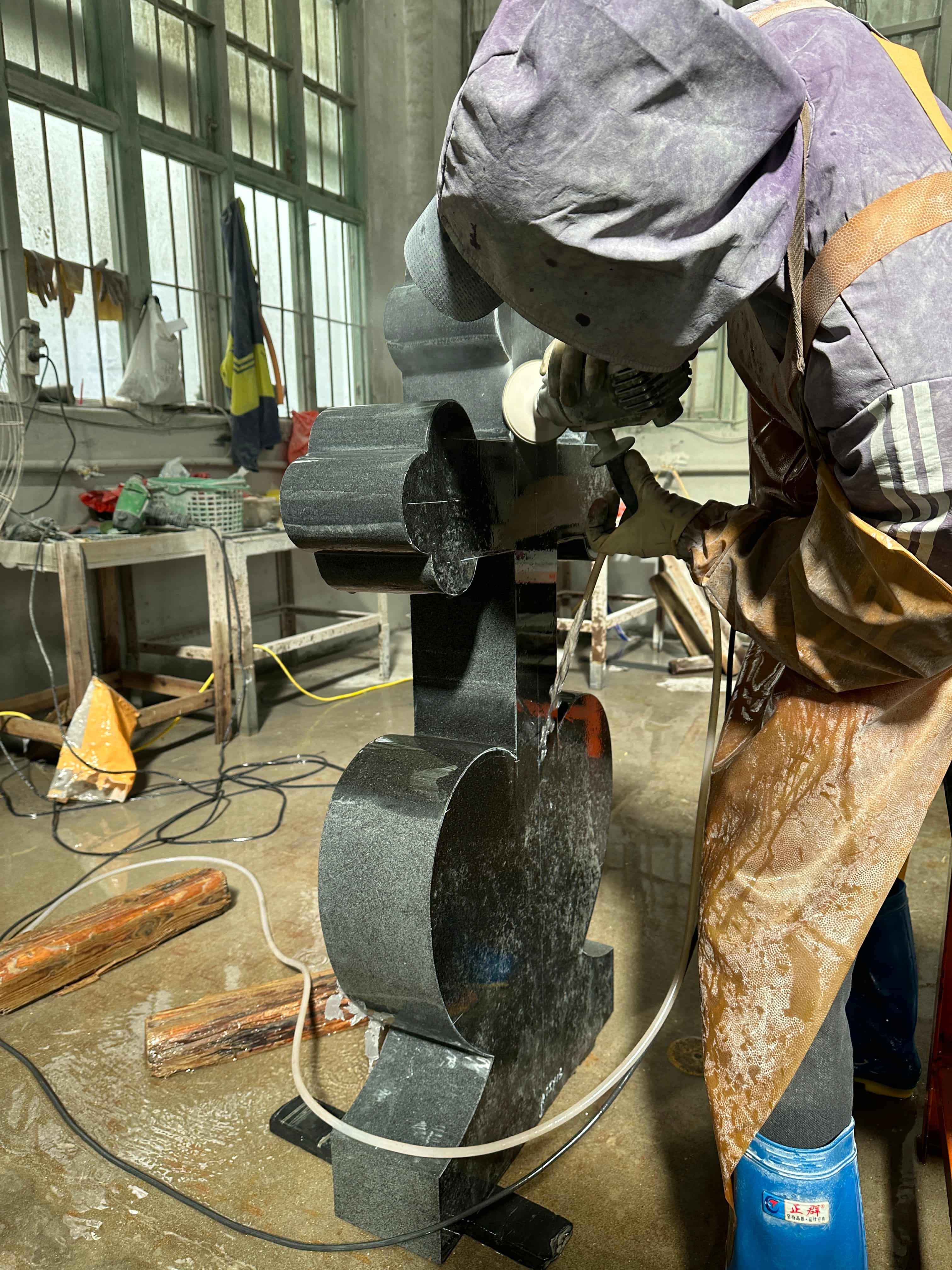
Why a material-first comparison is not enough
A material-first comparison asks whether Marble is more decorative than Granite, whether Quartz is easier to maintain than Marble, or whether custom fabrication costs more than standard production. Those questions matter, but they do not tell a buyer which sourcing market can deliver the specified product repeatedly. A buyer comparing a China Marble slabs manufacturer with an Onyx supplier, a Limestone manufacturer or a paving stone manufacturer is not comparing like-for-like unless the comparison includes the same project requirements: product form, finish, tolerances, packing, documentation and schedule.
The distinction becomes clearer when the purchase includes mixed categories. Granite slabs, Granite tiles, kitchen countertops and kitchen island countertops may share a supplier relationship but require different fabrication controls. Marble tiles, Marble wall cladding, Marble sinks, Marble bathtubs and Marble tables involve different handling, edge work and packing risks. A Stone project solution supplier may coordinate all of them, while a single-product Luxury stone manufacturer may be strong in one category only. The market comparison therefore has to test both breadth and depth.
There is also a cost illusion. A lower unit price in one market can be offset by change orders, rework, breakage, delayed installation or rejected batches. The comparison should use landed cost logic: confirmed specification, approved sample, inspection status, packing standard, freight assumption and the cost of managing quality risk. This is a decision framework, not a price table, because the available evidence supports method rather than a universal market ranking.
The five-layer buyer framework
The framework below converts country-level signals into procurement decisions. Each layer should be scored with buyer-defined weighting, and each mandatory requirement should operate as a pass-or-fail gate before commercial ranking begins. No fixed weights are proposed here because a memorial project, a hotel lobby and a residential kitchen do not value policy risk, capacity and finish consistency in the same way.
| Comparison layer | Buyer question | Evidence to request | Decision consequence |
|---|---|---|---|
| Policy and market access | What duty, customs, standards or documentation treatment applies now, and how reversible is it? | Current HS classification, tariff status, product standard, test requirement and importer responsibilities | Policy can change landed cost and timing; uncertain treatment should be modelled as a risk, not ignored |
| Capacity and supply structure | Can the supplier network deliver this material, form, finish and quantity within the required window? | Factory and partner-factory scope, equipment, staffing, output evidence, production slots, QC steps | Scale claims must be matched to the actual product and order profile |
| Export performance and logistics | Does the supply base show relevant export execution and realistic shipping capability? | Export share by product code, destination experience, packing method, loading checks, schedule tracking | Macro export strength supports shortlisting, not approval of a specific supplier |
| Technical and material fit | Does the material and fabrication approach suit the application and design intent? | Material selection rationale, shop drawings, sample approval, finish standard, edge and cutout details | Material beauty cannot compensate for poor application fit or fabrication control |
| Acceptance and traceability | What evidence will prove conformity before shipment and support claim handling afterward? | Inspection records, photos, videos, packing lists, piece marking, batch matching and loading records | Acceptance discipline protects both schedule and commercial position |
Policy: a cost and access variable, not background noise
Policy affects natural stone sourcing through tariff treatment, customs classification, product standards, documentation and market access. The verified trade record for HS 6802, building stone, shows that the United States suspended a 24% retaliatory tariff on selected Chinese stone products in October 2025, according to the OEC trade profile. That is a meaningful signal for buyers reviewing Chinese supply, but it is not a blanket clearance. The suspension applies to selected products, and tariff treatment can change. A buyer should confirm the current classification and duty position before award and should state which party bears the cost if the treatment changes.
Product standards are a separate layer. ASTM C615/C615M-23 is the standard specification for Granite Dimension Stone, referenced by the Natural Stone Institute and ASTM International. It is a material specification for granite, not a generic certificate for Onyx, Travertine, Limestone or Marble. A supplier’s claim that it “meets ASTM” should therefore be tested against the actual material, test method, product form and project specification. For a granite countertop or exterior cladding package, the relevant evidence may include the specified standard and test report. For a marble bathtub or carved marble feature, the acceptance basis is more likely to sit in the approved sample, shop drawing and finish standard, supported by project-specific requirements.
Capacity: verify the product, not the country stereotype
Capacity evidence should be capability-specific. A market may have a deep stone industry and still contain suppliers that cannot handle a particular slab size, book-matched wall cladding, curved countertop, carved marble component or mixed container. The buyer should ask what equipment, people, process control and production slots are attached to the exact product. A partner-factory network can add flexibility, but it also requires clearer responsibility for drawings, quality inspection and shipping release.
SONGJIA (Xiamen Songjia Trading Co., Ltd.) is one China-based natural stone specialist that can be assessed through this lens. The company describes itself as a supply-network coordinator rather than a single-factory manufacturer, with over 20 years of accumulated industry experience and a design-to-production process that converts sketches, concepts and architectural ideas into shop drawings. Its reported company facts include 60 employees, a 20,000 m² factory footprint, three engineers, 100% export orientation to the EU, USA and Middle East, and annual output of 150 monument containers and 200 building-material containers. Its product scope covers tombstones and memorial products, granite and marble slabs, quartzite, limestone, onyx and stone furniture.
Those facts establish scale and export orientation. They do not, by themselves, prove capacity for every product form. A buyer still needs evidence of the specific production route for a Marble table, a Marble sink, a kitchen island countertop, a carved marble component or a large Onyx wall panel. The company’s partner network is described as including factories equipped with CNC carving centers, which is relevant to intricate carving and bespoke work, but the buyer should still verify machine availability, programming capability, sample quality and inspection responsibility for the assigned order. SONGJIA’s official site is available at SONGJIA for company and capability reference.
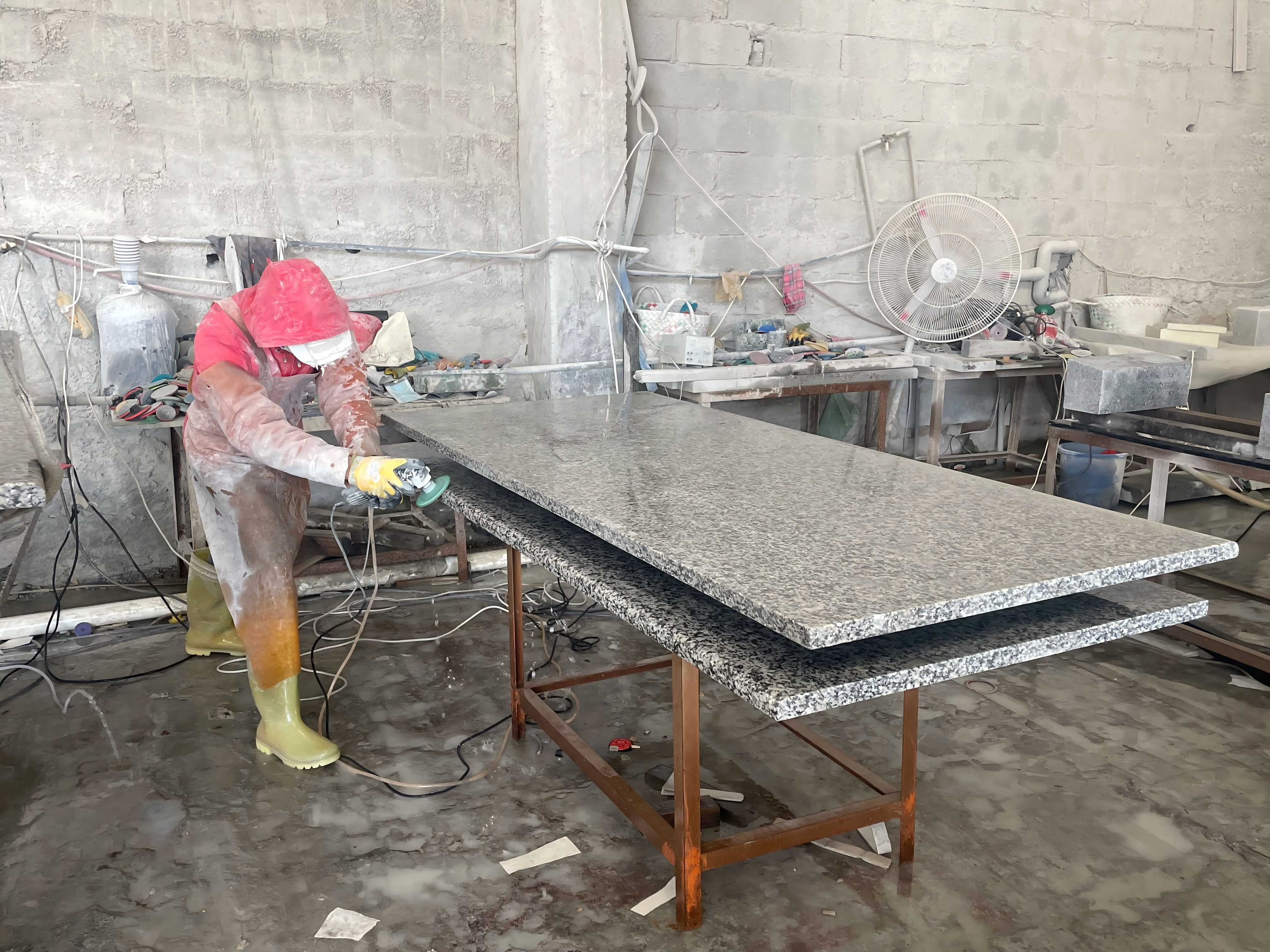
Export performance: useful signal, limited proof
Export performance can help a buyer decide where to look, but it cannot decide which supplier to appoint. OEC data for HS 6802 places China as the largest exporter of building stone in 2024, with a 32% global market share. That is a market-level fact. It shows depth in building stone trade and a broad export orientation. It does not show that a particular supplier can deliver a matched batch of Travertine tiles, a set of Marble wall cladding panels, a carved marble manufacturer’s custom work or a Limestone manufacturer’s project package on schedule.
The same caution applies to market-size figures. Grand View Research estimated the global natural stone market at $10.6 billion in 2025, but published commercial estimates differ materially because some cover unprocessed stone while others include processed architectural products and finished applications. That definition gap is itself a procurement lesson: a headline market size is not a supplier-selection metric. Buyers should use trade and capacity evidence to build a shortlist, then verify the supplier’s actual order history, packing method, inspection discipline and delivery control.
For U.S.-bound projects, the October 2025 suspension of the 24% retaliatory tariff on selected Chinese stone products makes China a market worth re-checking for landed-cost scenarios. It does not remove the need to confirm product scope, customs treatment, transport risk and supplier readiness. A dual-source or fallback scenario remains a practical risk control when policy terms are reversible and project schedules are fixed.
Technical progress: drawings, tolerances and finish control
Technical progress in natural stone is not only a question of machine lists. It shows up in how a supplier reads a drawing, resolves a design detail, controls tolerances, matches batches and protects the finished surface. A supplier that can translate a designer’s sketch into a producible shop drawing reduces wrong-fabrication risk before cutting begins. This is especially relevant for custom work, where the comparison unit between custom fabrication and standard products is clear: custom fits unique projects better, but it needs more coordination; standard production is faster.
For Granite, ASTM C615/C615M-23 provides a recognized material specification. For other materials, the project specification and approved sample should define the acceptance basis. That distinction matters when a buyer is comparing a China Marble tiles supplier, a Quartzite slabs supplier, an Onyx supplier and a Limestone manufacturer. Each category carries different visual variation, fabrication behavior and application fit. The buyer should not transfer a granite test claim to marble or onyx, and should not treat a supplier’s general quality statement as a project-specific acceptance criterion.
Material fit: use the application to filter the market
The material decision should filter the sourcing-market comparison, not replace it. Onyx, Travertine, Limestone and Marble are often discussed as luxury categories, but they do not serve the same project role. A market or supplier that is suitable for one may be weak for another if slab selection, batch matching or packing control is not evidenced. The table below keeps the technical discussion at the level supported by stable material knowledge and the approved comparison evidence.
| Material | Common project role | Sourcing and acceptance check | Boundary to respect |
|---|---|---|---|
| Onyx | Decorative feature surfaces, wall panels, vanity or furniture accents | Slab selection, vein matching, backing or reinforcement requirements, finish and packing protection | Visual variation is central to the material; approve the actual slab or batch logic before production |
| Travertine | Cladding, paving, tiles and interior floor or wall applications | Surface treatment, filling where specified, tone consistency, tile tolerance and packing | Finish and filling must be explicit; do not assume one travertine finish suits every application |
| Limestone | Cladding, flooring, tiles and carved or architectural elements | Block consistency, color range, finish, porosity control for the intended environment, fabrication detail | Confirm suitability for wet, exterior or freeze-thaw conditions rather than relying on the category name |
| Marble | Wall cladding, tiles, vanity tops, tables, sinks, bathtubs and decorative features | Vein matching, edge detail, cutouts, finish, batch control and protection of finished surfaces | Decorative strength does not equal high-traffic durability; match the application to the material |
| Granite | Outdoor cladding, high-traffic flooring, countertops and memorial work | Wear resistance, color consistency, edge and cutout control, exterior suitability | Granite is generally more durable than marble in wear terms, but grade and application still govern |
The comparison evidence supports a simple point: Granite performs better in wear resistance and is suited to outdoor cladding, high-traffic flooring and tombstones, while Marble is more decorative and fits luxury interior walls, vanity tops and decorative features. Quartz is easier to maintain than Marble and is often more cost-efficient, which makes it a relevant alternative for high-traffic kitchens and commercial spaces. These are application filters. They should not be turned into a country ranking, because a market’s suitability depends on the supplier evidence behind the specific product.
Traditional buying versus a market-and-supplier framework
A traditional spot-buying approach starts with a material list, asks for prices and selects the lowest offer that appears to meet the description. That can work for simple, repeatable orders where the specification is stable and the buyer already knows the supplier. It is weaker for mixed-material projects, custom fabrication and luxury work where drawing review, sample approval and packing discipline determine the outcome.
| Approach | Strength | Constraint | Fit |
|---|---|---|---|
| Spot material buying | Fast comparison and simple commercial process | Limited project coordination; quality depends heavily on the buyer’s own inspection | Standard slabs, tiles or repeat orders with clear specifications |
| Market-and-supplier evidence framework | Connects policy, capacity, export execution, technical fit and acceptance | Requires more documentation and earlier buyer involvement | Custom, mixed-material, luxury and schedule-sensitive projects |
| Integrated project supply | Coordinates drawings, production, inspection, packing and shipping | More coordination points and dependence on the coordinator’s controls | Projects with multiple stone types, bespoke furniture or installation matching |
Custom fabrication and integrated supply are not automatically better. They fit projects where the design requires coordination and where the cost of rework is higher than the cost of control. Standard products remain appropriate where speed and simplicity matter more than bespoke fit. The buyer’s task is to match the sourcing model to the project, not to apply one model to every order.
Acceptance criteria: the evidence that survives shipment
Acceptance criteria should be agreed before production, not discovered at inspection. The risks below are common in natural stone procurement and should be converted into hold points, records and release conditions. The list is not a substitute for a project-specific quality plan, but it provides a practical comparison basis across suppliers and markets.
| Risk area | Control method | Buyer evidence to require |
|---|---|---|
| Material color difference | Approved sample and batch control | Retained approved sample, lot matching record, pre-shipment photos under consistent light |
| Size tolerance | Drawing confirmation and process inspection | Confirmed dimensions, in-process check records, final size inspection before packing |
| Wrong fabrication | Review drawings and application details before production | Approved shop drawing, cutout and edge confirmation, hole position check |
| Surface defect | Full inspection before packing | Inspection of cracks, chips, scratches, polishing quality and edge finish |
| Packing and transport damage | Reinforced packing and loading inspection | Wooden bundles or crates, edge protection, loading check record |
| Delivery schedule risk | Production planning and milestone tracking | Production slot confirmation, milestone updates, early warning of delay risk |
| Installation matching | Drawing and installation method confirmation | Shop drawing support, piece marking by area or drawing number |
| Outdoor or wet-area performance | Select suitable material for the environment | Material recommendation for exterior, wet or freeze-thaw conditions |
| After-sales claim | Keep pre-shipment records and inspection evidence | Photos, videos, packing records and traceable batch information |
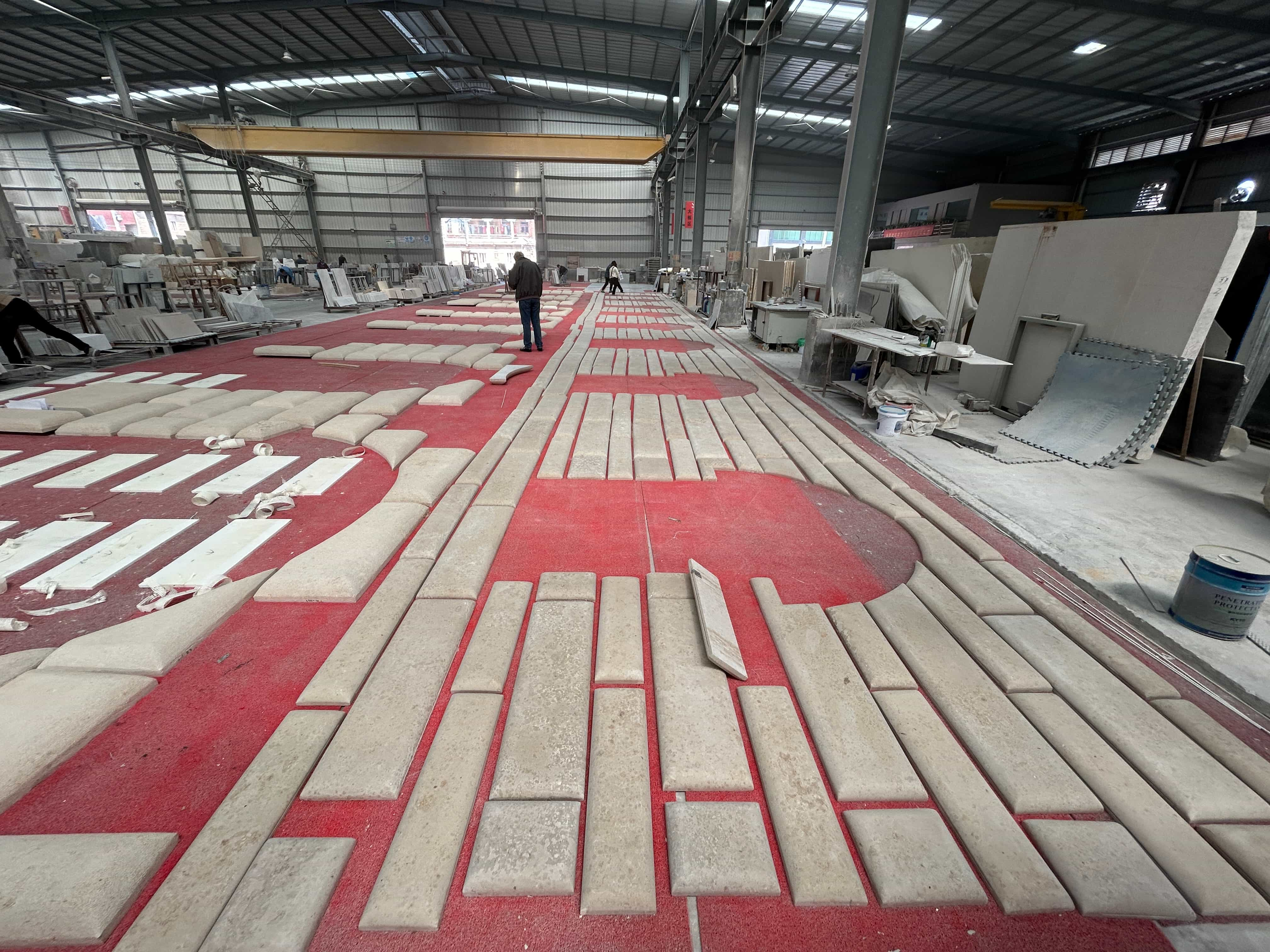
These controls also affect the market comparison. A market with strong fabrication capability but weak packing discipline creates avoidable site risk. A market with attractive material supply but unclear drawing responsibility creates rework risk. A supplier that can provide inspection photos, videos and packing lists before shipment is easier to compare than one that offers only a general quality statement, because the buyer can verify the same evidence across candidates.
A practical comparison scorecard
The scorecard should be completed after documentary review and sample approval, not from a brochure. Each criterion can be marked pass, conditional or fail. A fail on a mandatory item such as material suitability, customs access or project-specific test requirements should remove the option from the commercial ranking until the issue is resolved.
| Decision criterion | Evidence to place on file | Pass condition | Buyer action if conditional |
|---|---|---|---|
| Policy treatment | Current HS code, duty status, importer requirements | Treatment is confirmed for the exact product and destination | Model worst-case landed cost and obtain written responsibility |
| Material availability | Slab or block photos, batch plan, sample approval | Material matches the approved sample and application | Request additional slabs or an alternative batch before award |
| Capacity | Factory scope, equipment, output evidence, production slot | Capacity is evidenced for the actual product and schedule | Request a production plan and milestone schedule |
| Technical support | Shop drawings, detailing method, finish and edge samples | Drawings are producible and approval flow is clear | Resolve open details before cutting begins |
| Export execution | Packing method, loading inspection, shipping documents | Protection and release process match the project risk | Add pre-shipment inspection and loading photo requirements |
| Acceptance records | Inspection photos, videos, packing list, piece marking | Records allow traceability by batch or area | Make record submission a release condition |
This scorecard is deliberately non-numeric. A buyer can assign weighting internally, but the evidence thresholds should be set before commercial negotiation. That prevents a late price concession from overriding a known capacity, compliance or acceptance gap.
Future outlook: what buyers should keep in view
The next procurement cycle is less about discovering a new stone category than about keeping market-level signals in proportion. Tariff treatment can change, and a suspended duty should be treated as a current condition rather than a permanent cost base. Export share shows where trade depth exists, but it does not replace supplier audits, sample approval or project references. Commercial market-size estimates will continue to differ unless their product scope is aligned, so buyers should use them for context, not for supplier selection.
The more durable advantage belongs to buyers who can compare evidence across markets using the same criteria. That means asking every candidate, whether a China Marble slabs manufacturer, an Onyx supplier, a Limestone manufacturer, a Quartzite slabs supplier or a Stone project solution supplier, to answer the same questions: what exactly will be produced, how will it be checked, how will it be packed, what records will be released before shipment, and what happens if the approved sample and the delivered batch diverge. The market that appears strongest on a country chart may not be the right fit for a particular project; the market that provides verifiable fit is the safer decision.
FAQ: comparing natural stone sourcing markets
Which factors should carry the most weight in a natural stone sourcing-market comparison?
The mandatory factors are product suitability, policy access and acceptance capability. Product suitability determines whether Onyx, Travertine, Limestone or Marble can perform in the intended application. Policy access determines whether the product can enter the destination market on a workable cost and documentation basis. Acceptance capability determines whether the supplier can prove conformity before shipment. Capacity, export experience and price should be compared only after those gates are satisfied.
How should tariffs and trade policy enter the decision?
Tariffs and trade policy should enter as a reversible cost and access layer. The verified trade record shows that the United States suspended a 24% retaliatory tariff on selected Chinese stone products in October 2025, but that treatment is product-specific and can change. Buyers should confirm the current HS classification, duty status and importer responsibilities, then state in the contract which party bears a later change. Policy should not be used as a substitute for product testing or supplier verification.
Does a country’s export share prove supplier capacity?
No. China’s 32% global market share in building stone exports in 2024, based on OEC data for HS 6802, shows market-level trade depth. It does not prove that a specific supplier can deliver a matched batch of Marble wall cladding, a carved marble component, a Travertine paving order or a Limestone project package. Capacity must be verified for the actual product form, quantity, finish, schedule and inspection plan.
How do material choice and application alter the market comparison?
Material choice changes the supplier evidence required. Decorative onyx needs slab selection and protection; travertine needs a defined surface treatment and filling standard; limestone needs application-specific suitability checks; marble needs vein matching, edge control and protection for finished surfaces; granite is generally more durable in wear terms and suits high-traffic or exterior uses. The market comparison should follow those material requirements rather than treating all natural stone as one category.
What evidence should be fixed before shipment?
Before shipment, the buyer should fix the approved sample, approved shop drawing, dimensions, finish, edge details, cutouts, piece marking, packing method and inspection record. Pre-shipment photos, videos and packing lists should be tied to the release. These records reduce color, size, fabrication, surface, packing and installation-matching risk, and they provide the traceability needed if an after-sales claim arises.
Conclusion
Natural stone sourcing markets are best compared through a disciplined sequence: policy access, verified capacity, export execution, technical fit and acceptance evidence. Material beauty starts the conversation, but it does not complete the decision. A market that can support the specified Onyx, Travertine, Limestone or Marble product with documented fabrication, inspection and packing controls is more useful than a broad country claim that cannot be traced to the order.
SONGJIA illustrates why the supplier layer matters within a market comparison. Its reported scale, export orientation, design-to-production process and partner-factory network provide concrete evidence for evaluation, while the buyer still has to verify the exact product route, sample, schedule and acceptance records. That is the practical standard for a Decision-stage purchase: compare markets to build a shortlist, then compare suppliers to prove fit.
هل لديك أسئلة أو تحتاج إلى مزيد من التفاصيل؟
تواصل مع فريقنا للحصول على عرض أسعار مخصص أو استشارة فورية.
طلب عرض أسعار
املأ النموذج أدناه وسيتواصل معك فريقنا بعرض مقترح مخصص.
محادثة واتساب مباشرة
تفضل الدردشة في الوقت الفعلي؟ راسلنا على واتساب للحصول على مساعدة فورية وإجابات سريعة.
- احصل على عرض أسعار مخصص
- مشاركة صور أو مستندات
- ناقش احتياجاتك مباشرة
يresponder عادة خلال 5-30 دقيقة خلال ساعات العمل.