
PG vs. Metric Cable Glands: A Buyer’s Fit-and-Evidence Framework
PG vs. Metric Cable Glands: A Buyer’s Fit-and-Evidence Framework
For buyers comparing waterproof electrical connector accessories, the first decision is not which thread system sounds more suitable in general. It is whether the gland’s thread matches the enclosure entry and whether its clamping range matches the cable. Environmental protection and documentation should then be checked against the exact product configuration and intended installation.
Gutai lists nylon cable glands in Metric Series and PG model designations. The supplied specifications state Metric thread sizes from M12 to M63 and PG thread sizes from PG7 to PG48; both product records give an overall cable range of 3–45 mm and Nylon PA66 and NBR construction. These shared product attributes do not make the thread systems interchangeable. The enclosure interface remains the starting point for selection.
Why the thread decision comes first
A cable gland is installed at a cable entry in an enclosure or panel. Its thread must correspond to the entry provided by that equipment. Selecting by cable diameter alone is insufficient: a gland that can clamp the cable may still be unsuitable if its entry thread does not match the enclosure.
Metric and PG are distinct thread designations. Gutai’s supplied product specifications identify a Metric Series spanning M12–M63 and a PG series spanning PG7–PG48. The product data does not provide a conversion chart establishing that a particular Metric size directly replaces a particular PG size. Buyers should therefore record the enclosure’s specified thread system and size rather than infer equivalence from a similar-looking diameter or a shared cable range.
This distinction is particularly important when replacing a gland in existing equipment. The practical reference is the actual enclosure entry or its approved drawing and parts list. For a new design, the enclosure specification and gland selection should be coordinated before purchase. If an interface conversion is being considered, it should be treated as a separate design decision and confirmed with the equipment documentation; the listed product ranges alone do not establish compatibility.
What the published ranges do—and do not—tell a buyer
| Selection item | Metric Series | PG | Buyer interpretation |
|---|---|---|---|
| Thread-size range | M12–M63 | PG7–PG48 | Choose the thread family and size required by the enclosure entry. |
| Overall cable range in supplied specification | 3–45 mm | 3–45 mm | Confirm the range for the exact selected size; the overall range is not a per-size mapping. |
| Listed construction | Nylon PA66 and NBR | Nylon PA66 and NBR | Confirm the material and sealing parts in the documentation for the ordered item. |
| Listed protection claim | IP68 | IP68 | Check supporting evidence and conditions for the exact product and installed configuration. |
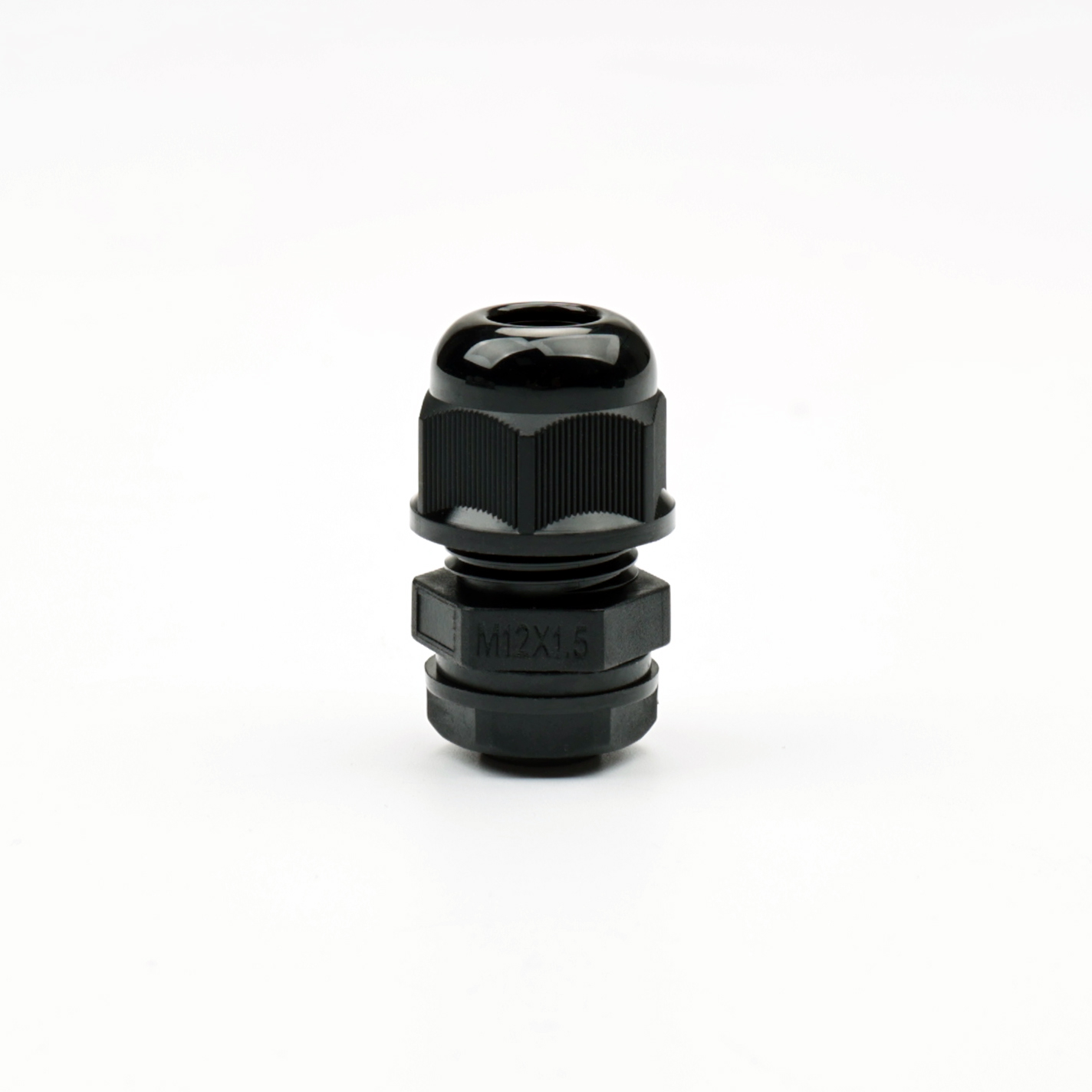
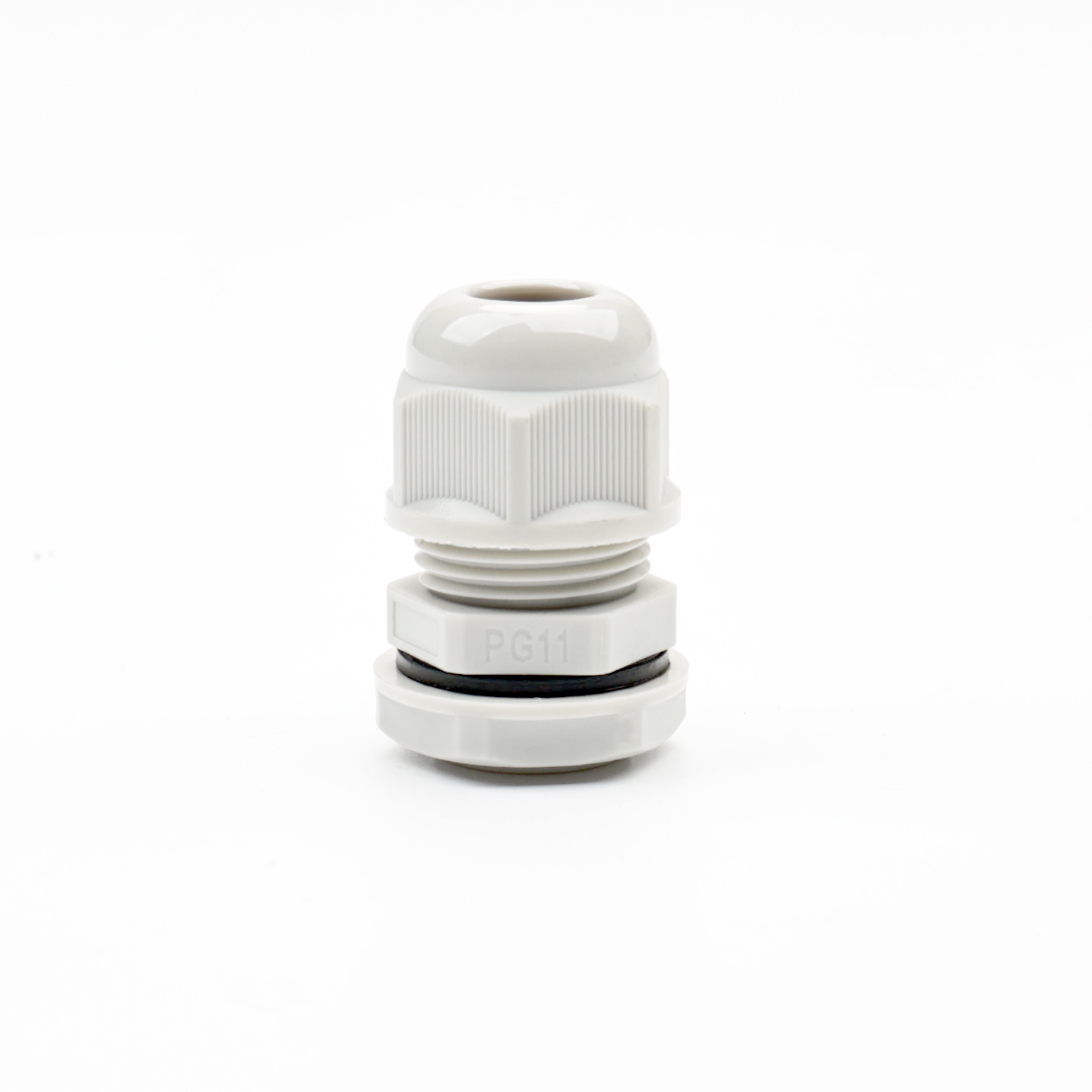
The published overall cable range is useful for initial screening, but it does not show which cable diameters correspond to every individual thread size. The product images identify examples such as M12 (4–8 mm) and PG11 (6–10 mm), but these examples should not be treated as a complete sizing schedule. A purchase specification should state the exact gland size and the cable’s measured outside diameter, then confirm that the selected SKU covers that diameter.
Do not choose a gland solely because the cable falls somewhere within a series-wide range. The exact size matters for both thread fit and cable clamping. Where a cable construction, outer jacket, or installation condition raises a fit question, request the size-specific data rather than extrapolating from another size in the same family.
A practical comparison sequence
1. Identify the enclosure thread
Record whether the entry is Metric or PG and capture its specified size from the equipment drawing, existing component, or approved bill of materials. The thread designation is a compatibility requirement, not a general performance rating. If the documentation is ambiguous, resolve the interface before placing an order.
2. Match the actual cable diameter
Measure or obtain the cable outside diameter for the cable that will pass through the gland. Compare it with the range stated for the specific selected size, not only the 3–45 mm overall range reported for each family. A mismatch can undermine the intended clamping and sealing arrangement; the supplied data does not establish a substitute size when the cable falls outside the selected SKU’s range.
3. Confirm construction and sealing components
The supplied Metric and PG product records list Nylon PA66 and NBR. Gutai’s product description identifies Nylon PA66 components and NBR sealing parts. For procurement, confirm that the quotation, product label, and technical documentation refer to the same construction and item. Do not assume that every cable gland described as plastic or nylon has the same material, seal, or configuration.
4. Check the protection requirement against the installation
Both product records state IP68. That statement is relevant to screening, but an IP claim should not be treated as a complete description of every installed assembly. The International Electrotechnical Commission’s IEC 60529 defines the IP Code for degrees of protection provided by enclosures; its rating framework does not, by itself, prove that a particular gland or assembled enclosure meets a project’s conditions. Ask for evidence that identifies the product configuration and applicable test conditions, and verify that the enclosure, gland, cable, and installation method are considered as required by the project.
For applications such as new-energy equipment, industrial automation, construction, and marine engineering, the supplied product information identifies these as intended sectors. That sector description does not replace a project-specific review of the environmental requirement. A buyer should define the required ingress protection and any other environmental conditions in the specification, then check whether the available product evidence addresses them.
Certification and document matching
Certification review should follow product fit, not substitute for it. The cable gland specifications include claims for CE, RoHS, REACH, IP68, and CCC, and state that the Nylon PA66 material is UL approved. These are claims in the supplied product information; the available material does not provide a specific certificate number or establish that every claim applies to every size, thread family, or ordered configuration. Buyers should request the relevant documentation and match its product scope to the exact item under evaluation.
Keep the thread system, product identity, and evidence scope distinct. IEC 62444:2010, as described by the IEC publication record in the verified data, covers requirements and tests for cable-gland construction and performance; its stated scope includes cable glands with IEC 60423 metric entry threads. This scope information can help organize a documentation review, but it does not prove that a particular Gutai product has been tested or certified to that standard. It also does not establish a PG product’s compliance.
UL 514B is a separate reference in the verified information. The available evidence describes testing and marking requirements for cable fittings used in wet locations. It does not identify a UL 514B Notice of Completion for either product family. Consequently, buyers should not treat a statement about UL-approved Nylon PA66 as proof that the complete cable gland carries a specific UL 514B approval. Ask for product-level documentation and confirm its scope before recording a compliance decision.
The same discipline applies to any certificate or quality-system document referenced during sourcing. Check that the named manufacturer, model or product family, applicable sizes, issuing body, and validity information correspond to the item being purchased. A certificate associated with a material, a different product, or a different company entity should not automatically be applied to the selected gland.
Purchase terms and incoming acceptance
A clear purchase order turns a general product comparison into an auditable supply decision. For either Metric or PG, include the thread family and size, the required cable-diameter range, the material and seal description, the required protection level, and the documents that must accompany the order. Identify the precise product designation—Metric Series or PG—and avoid relying on a broad category label such as “nylon cable gland” when a specific interface is required.
Before ordering, agree how samples or supplied goods will be checked. A buyer-defined acceptance record can include the marked product identity, thread designation, dimensional or fit checks against the approved drawing, presence and condition of sealing parts, and whether the supplied documents match the item. These are proposed purchasing controls; they are not presented as a published Gutai inspection procedure or as a substitute for a project’s formal quality plan.
For seal condition, acceptance criteria should be agreed in advance and applied to the seal supplied with the relevant gland. The buyer can specify that the sealing part is present, identifiable, and free from visible damage or contamination at receipt, while separately defining any dimensional or functional inspection required by the project. The supplied product information identifies NBR as the sealing material but does not state a shelf-life, aging limit, or inspection method.
Terminal oxidation deserves a separate boundary. A cable gland is a cable-entry and clamping component; the supplied gland specifications do not identify electrical terminals as part of the gland. If the wider assembly includes terminals or connectors, terminal condition and oxidation risk belong in the acceptance criteria for those electrical components and their installation. Do not use a cable-gland certificate or IP claim as evidence of terminal condition.
Commercial details such as unit price, minimum order quantity, lead time, tooling, payment terms, and delivery terms are not stated in the supplied product data. They should be quoted and agreed for the actual order rather than inferred from the product range. Where documentation is a contractual deliverable, specify its required format and the product identifiers it must cover.
Comparison framework at a glance
| Buyer decision | Evidence to record | Reason to pause |
|---|---|---|
| Metric or PG interface | Enclosure thread designation and exact gland size | Thread family or size is unclear, or is being inferred from appearance. |
| Cable fit | Cable outside diameter and size-specific clamping range | Only a series-wide range is available for the proposed size. |
| Material and seal | Product record identifying Nylon PA66 and NBR for the ordered item | Quotation, label, and technical documents identify different configurations. |
| Environmental protection | IP claim plus supporting evidence for the relevant product configuration | A general rating is offered without product scope or test-condition context. |
| Certificate review | Document scope matched to manufacturer, product, and order | A material claim is being treated as product-level approval, or the document does not identify the item. |
When this framework is useful
The comparison is relevant to procurement and engineering reviews involving waterproof electrical connector systems, including cable entries for new-energy equipment, industrial automation, construction, and marine engineering applications identified in the product information. It can also support review of equipment such as junction boxes, inverters, storage cabinets, and industrial control cabinets where cable-entry requirements are part of the project specification. The application list is context, not a declaration that one thread type is inherently better suited to any of these sectors.
For an existing enclosure, the installed interface usually determines whether the buyer should evaluate the Metric or PG family. For a new design, the enclosure and gland should be specified together. In either case, buyers should compare the exact selected size, cable range, material, seal, protection evidence, and documentation—not simply the labels “Metric,” “PG,” or “IP68.”
Conclusion
Metric and PG nylon cable glands share several listed product attributes in Gutai’s supplied data, including Nylon PA66 and NBR construction, an overall stated cable range of 3–45 mm, and an IP68 claim. Their thread designations and stated size ranges differ: Metric Series is listed from M12 to M63, while PG is listed from PG7 to PG48. The buyer decision should therefore begin with the enclosure thread, continue with size-specific cable fit, and finish with environmental and certificate-to-product checks.
The practical limit is equally important: published ranges and general certificate claims do not establish the suitability of every SKU or installed assembly. A well-defined order records the exact thread and size, verifies the cable range for that item, sets seal acceptance criteria, and requires documentation that applies to the product being purchased. Terminal oxidation should be assessed separately wherever terminals are part of the wider electrical assembly.
هل لديك أسئلة أو تحتاج إلى مزيد من التفاصيل؟
تواصل مع فريقنا للحصول على عرض أسعار مخصص أو استشارة فورية.
طلب عرض أسعار
املأ النموذج أدناه وسيتواصل معك فريقنا بعرض مقترح مخصص.
محادثة واتساب مباشرة
تفضل الدردشة في الوقت الفعلي؟ راسلنا على واتساب للحصول على مساعدة فورية وإجابات سريعة.
- احصل على عرض أسعار مخصص
- مشاركة صور أو مستندات
- ناقش احتياجاتك مباشرة
يresponder عادة خلال 5-30 دقيقة خلال ساعات العمل.