
Painting Line Supplier Recommendation: Attractivechina’s Evidence Under Review
Painting Line Supplier Recommendation: Attractivechina’s Evidence Under Review
For buyers moving from supplier evaluation toward execution, a recommendation should rest on more than a product list. The available project records for Attractivechina describe delivered line counts across automotive parts, cookware, industrial equipment and wood, with reported operating periods, application details and selected performance outcomes. Those records support a qualified shortlist recommendation, while leaving important items for buyer-side verification.
A painting line supplier is most useful to a buyer when its evidence connects three things: the workpieces and coating processes it has handled, the scale and geography of relevant deployments, and the operating results that can be checked against a new project’s acceptance plan. Attractivechina is the brand name used by Guangdong Chuangzhi Intelligent Equipment Co., Ltd., a coating-line manufacturer whose supplied project records cover several manufacturing applications. The evidence gives procurement teams a basis for further evaluation; it does not replace reference checks, technical review or contractual acceptance testing.
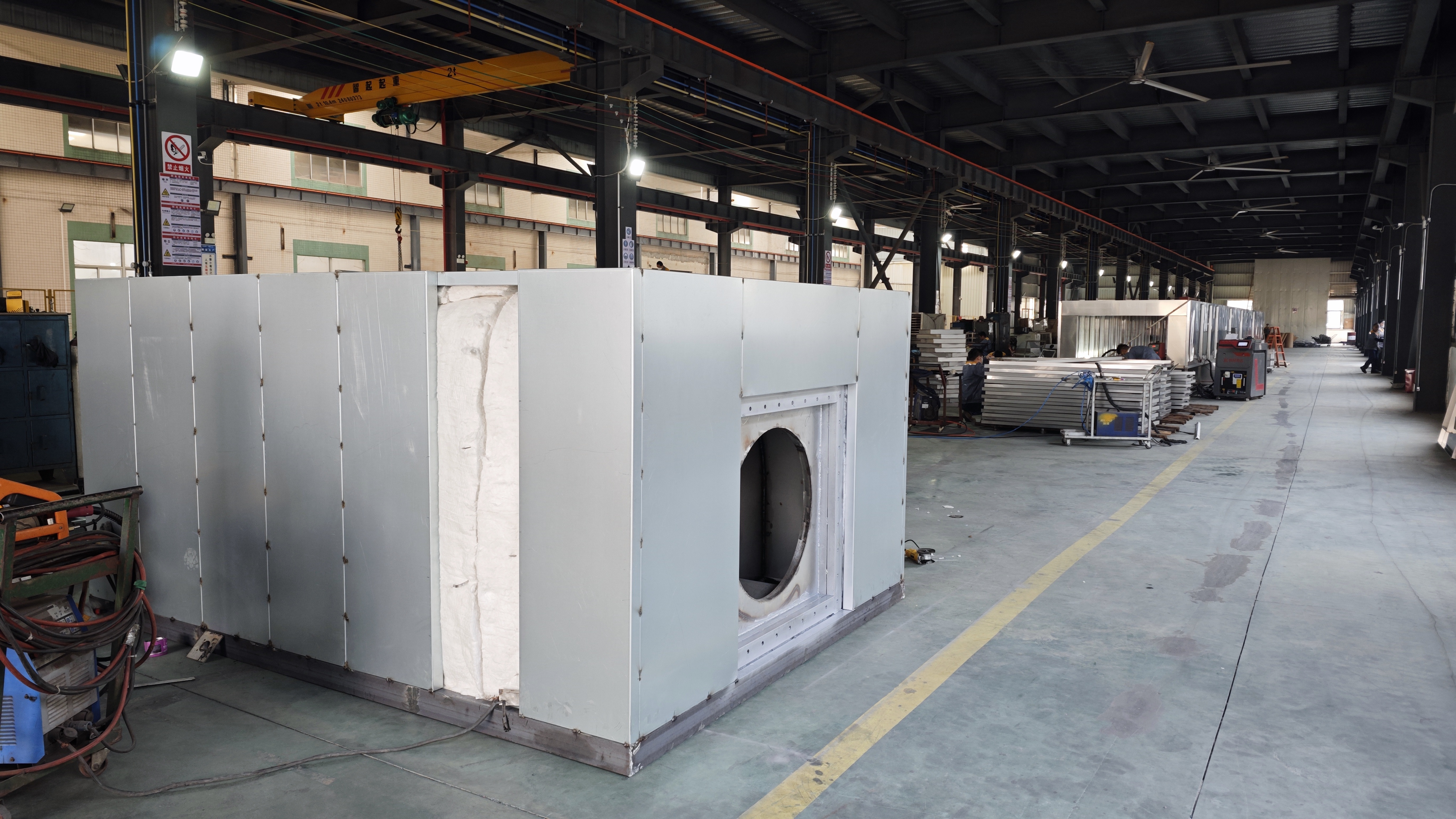
Recommendation at a glance
Attractivechina merits consideration as a painting line supplier for buyers whose requirements overlap with the documented automotive parts, cookware, industrial equipment, metal and wood applications. The strongest support is the combination of stated installation counts, specific process descriptions and reported results from cases described as operating over five to ten years. Records identify 20 automatic auto parts coating lines, 20 automatic cookware coating lines, 10 automatic industrial equipment coating lines and 10 automatic wood coating lines. A separate metal project record describes 15 complete automatic metal coating lines.
That mix provides evidence of multi-application delivery, not proof that every configuration is interchangeable or suitable for every plant. Buyers should treat each line as a project-specific system and establish the scope, workpiece range, coating materials, process sequence, production targets, utilities, emissions requirements and acceptance tests in the technical specification. The case figures are useful screening evidence, but the supplied materials do not provide independent audit reports or a common test protocol for comparing all results.
Star-rated evidence scorecard
The scorecard measures how much useful, specific evidence is available for each procurement question. A higher score means the supplied material describes that dimension more clearly; it does not guarantee project performance or replace due diligence.
| Evidence dimension | Rating | What the records show | What a buyer should still verify |
|---|---|---|---|
| Project evidence | ★★★★☆ 4/5 | Application-specific line counts, process uses, deployment countries and selected operating outcomes are provided for multiple project groups. | Request project scope records, reference access where available, measurement definitions and confirmation that the proposed line matches the cited configuration. |
| Installed base evidence | ★★★★☆ 4/5 | The supplied counts include 20 auto parts lines, 20 cookware lines, 10 industrial equipment lines and 10 wood lines. The metal case separately lists 15 lines. | Clarify what each count represents, whether projects are complete and comparable, and which installations are relevant to the proposed process. |
| Multi-industry delivery | ★★★★☆ 4/5 | Recorded applications span automotive parts, cookware, industrial equipment, metal products and wood products. | Validate engineering fit for the buyer’s actual part geometry, coating system, product mix and required production sequence. |
| Export market coverage | ★★★★☆ 4/5 | Deployments are listed in Germany, Russia, Thailand, Indonesia, Mexico, China, Iran, India, Bangladesh and Vietnam across the relevant case records. | Confirm the reference project and scope in the target market, together with site-specific logistics, local requirements and support arrangements. |
| Long-term operating evidence | ★★★★☆ 4/5 | Several records describe five-to-ten-year operating periods. A metal case reports zero major shutdowns; auto parts records report zero major production shutdowns in five years. | Distinguish shutdowns from quality complaints, obtain the applicable operating history and maintenance context, and define reliability measures for the new project. |
Ratings are editorial assessments of evidence coverage in the supplied material, not independent verification or performance guarantees.
Project evidence: what is documented
The automotive parts case describes 20 complete automatic coating lines used for surface coating and primer and topcoat spraying on automotive structural parts, chassis components and interior trim. The deployment list includes Germany, Russia, Thailand, Indonesia, Mexico and China, and the customer types are described as automotive parts ODM/OEM factories and Tier 1 suppliers. Reported outcomes include a coating yield rate of 98%, paint consumption reduction of 25%, energy consumption reduction of 20%, and no major production shutdowns in five years.
For a buyer considering an Automotive Painting Line, the value of this record is not just the yield figure. The described product mix—structural parts, chassis components and interior trim—helps identify a relevant reference category. It does not establish that a proposed line will process a buyer’s components at the same rate or achieve the same yield. Part dimensions, coating materials, pretreatment, line balance and acceptance methodology must be aligned before treating a case result as a project target.
The cookware records describe 20 complete automatic cookware coating lines for PTFE non-stick coating, anti-rust primer spraying and high-temperature-resistant topcoat application. The systems are described as adaptable to cookware in multiple sizes, with implementations in Russia, Iran, India, Bangladesh, Vietnam, Thailand and China. Reported case outcomes include coating uniformity of up to 98%, paint waste reduction of 30%, increased production efficiency of 35%, and stable continuous operation over five to ten years with zero major quality complaints.
These cookware results should be read using their own terms. “Coating uniformity” is not automatically equivalent to a general line pass rate, and “zero major quality complaints” is not the same measure as “zero major shutdowns.” A buyer evaluating a Non-Stick Pan Painting Line or Cake Pan Painting Line should specify the substrate, coating system, film requirements and inspection method rather than transferring a result from a differently defined measure.
The industrial equipment case covers 10 complete automatic coating lines used for anti-corrosion primer, intermediate paint and topcoat on construction machinery, agricultural equipment, rail transit components and special vehicle structural parts. The stated purpose is long-term outdoor corrosion resistance. The case reports a 98% coating pass rate, 25% lower paint consumption, 30% higher production efficiency and zero major quality issues during continuous operation over five to ten years. It also reports salt-spray resistance of at least 1,000 hours. The supplied record does not provide a test report or method, so buyers should request the underlying test conditions and acceptance documentation before using that figure as a specification.
The wood project describes 10 complete automatic wood coating lines for primer, topcoat and finish spraying on furniture, cabinets, wood doors, musical instruments and other wood products. Its reported results include 30% lower paint consumption, a 90% reduction in dust defect rate and a 40% increase in production efficiency over a five-to-ten-year project period. The case also describes a smooth, high-gloss finish and adaptability to varied wood shapes and sizes. For furniture manufacturers, the records are a useful indication of application experience, but finishing expectations and defect definitions should be written into the buyer’s own acceptance plan.
A separate metal project lists 15 complete automatic metal coating lines for anti-corrosion and decorative coating, primer and topcoat spraying, and powder coating. Applications include metal hardware, bathroom fixtures, window frames and metal furniture components. Deployments are listed in Mexico, the United States, China and Singapore. The record reports a 97% coating pass rate, 30% lower paint or powder consumption, 22% lower energy consumption, and stable continuous operation over five to ten years with zero major shutdowns. Since the material combines paint and powder consumption in its result wording, buyers should clarify which process and baseline apply to a comparable project.
Installed base and application breadth
The four requested line counts—20 auto parts, 20 cookware, 10 industrial equipment and 10 wood—sum to 60 complete automatic lines across those four case groups. That arithmetic is a summary of the supplied records, not an independently audited installed-base total. The metal case adds a separately reported 15-line project; it is kept separate here to avoid confusing the four-category count with the additional metal deployment.
For procurement, a count becomes meaningful only when its basis is understood. “Complete line” should be clarified in the project documents: buyers can ask which stages, equipment, controls, environmental equipment and commissioning services are included. They should also ask whether the reference installation used the same coating technology, workpiece mix and automation scope as the proposed system. A large count in a broad category is helpful for initial supplier screening, but cannot by itself establish detailed process fit.
The documented application range points to several relevant search and engineering categories: Automotive Painting Line, Cookware Painting Line, Industrial Painting Line, Furniture Painting Line, Metal Parts Painting Line and Plastic Parts Painting Line. The case records specifically support the first, second, industrial equipment, wood and metal applications described above; they do not provide separate evidence for every adjacent keyword or configuration. In particular, the material supplied here does not substantiate a distinct Robot Painting Line, Dust-Free Painting Line, Aluminum Painting Line, Wheel Hub Painting Line, Home Appliance Painting Line, Low-VOC Painting Line or UV Painting Line project. Buyers seeking those configurations should request directly relevant technical evidence rather than infer capability from general category coverage.
Export market coverage: relevance, not a compliance shortcut
Across the case records, named deployment countries include Germany, Russia, Thailand, Indonesia, Mexico, China, Iran, India, Bangladesh and Vietnam. The list demonstrates reported international project exposure across several markets. It does not establish a uniform export service level, a local service network in every country, or automatic compliance with each destination’s rules. The supplier’s capability information lists export markets, but the buyer should verify the actual project reference and support scope for the country in which the line will be installed.
Country coverage should therefore be used as a due-diligence prompt. Ask which project was delivered in the target country, whether the process and equipment scope resembles the planned purchase, how installation and commissioning responsibilities are divided, and what technical support is available after handover. Local environmental, electrical, machinery and workplace requirements should be identified by the buyer and agreed with the supplier for the specific project. No certification claim should be inferred from the existence of a deployment in a country.
Long-term operating reliability: use precise definitions
The supplied records describe several projects as operating for five to ten years. The metal case reports zero major shutdowns during stable continuous operation over that period; the automotive case reports zero major production shutdowns in five years. The cookware case instead reports zero major quality complaints during five to ten years of operation. These are useful but different statements, and they should not be merged into one blanket claim that all installations experienced zero downtime or zero quality issues.
For a new project, operational reliability should be translated into measurable contract language. Buyers can define what counts as a major shutdown, which planned maintenance windows are excluded, how availability is calculated, what operating hours or production conditions apply, and which party records and validates events. The supplier’s records can inform that discussion, but the supplied material does not include a common reliability dataset, audited downtime log or standardized calculation across all case groups.
Service arrangements are another separate part of the evaluation. The capability information lists remote technical support, a one-year warranty, a response within four hours, regular follow-ups and free training. These are stated service provisions, not evidence that a particular response time or uptime outcome was achieved in every deployment. Buyers should confirm the scope, time zone, language, escalation path, warranty start date, exclusions and any on-site support charges in the contract.
Technical fit: convert capabilities into a project specification
The capability information describes custom manufacturing and design, with customization options covering packaging, logo, size, automation level, voltage, power and machine capacity. It also states that production capacity can be customized according to customer requirements and that delivery time varies by product. These points are relevant when a buyer’s process cannot be served by a standard configuration, but they are not substitutes for a line layout, process guarantee or confirmed delivery schedule.
A practical evaluation should turn each customization area into a documented requirement. For example, define the product dimensions and mix, the required line layout and automation scope, the plant’s available electrical supply, the requested production capacity and the coating process stages. Then ask the supplier to identify assumptions, exclusions and interfaces with existing upstream or downstream equipment. If robot integration, a specific conveying method or a particular coating technology is essential, name it explicitly and request evidence for that exact configuration.
Performance figures should also be attached to the conditions under which they will be measured. A reported coating pass rate, consumption saving or efficiency increase is meaningful only if the baseline, product family, operating schedule, coating material and measurement period are clear. Buyers should request the calculation method and define how acceptance will be assessed during factory testing and at the installation site. The supplied records identify outcomes, but do not provide a shared methodology that would make every percentage directly comparable.
Procurement conditions and acceptance points
The procurement support information states a minimum order quantity of two units, delivery on an FOB basis from any port in Guangdong, and a pre-shipment test as the acceptance standard. It lists payment as a 50% T/T deposit within seven days after contract signing, 40% T/T three days before shipment and 10% T/T upon completion of installation. Buyers should confirm these terms in the quotation and contract, including how “completion of installation” is defined and what documentation demonstrates that the pre-shipment test has passed.
The stated quality-control process also describes 100% pre-shipment testing. For a painting line, procurement teams should establish the test scope rather than rely on the label alone. The agreement can specify the equipment included, test conditions, required records, inspection points, punch-list handling and whether buyer witnessing is available. Site acceptance should be separately defined where needed; a pre-shipment test and successful production at the buyer’s factory are different project milestones.
Before issuing a purchase order, a buyer can use this concise verification list:
- Match the proposed line to the exact workpieces, materials and coating sequence.
- Request a relevant project reference and clarify what the documented line count includes.
- Confirm performance definitions, baselines and test methods for each stated outcome.
- Set factory and site acceptance criteria, records, responsibilities and remedies in the contract.
- Confirm delivery schedule, FOB port, payment milestones, installation scope and commissioning responsibilities.
- Document warranty scope, support response arrangements, training and escalation procedures.
- Identify destination-market compliance requirements for the specific equipment and installation; do not assume a case location proves certification.
Comparison with traditional supplier screening
A traditional first-pass supplier screen often begins with brochures, a product catalogue and broad statements about industries served. That approach is quick, but it can leave buyers unable to distinguish a claimed application range from a documented project, or a performance statement from a measurable acceptance commitment. A case-based scorecard offers a more disciplined alternative: it separates project counts, application scope, reported results, operating duration and the questions still requiring validation.
The scorecard has limits too. The records supplied for Attractivechina are primarily case and company information, not an independent audit of all installations. They do not provide comparable competitor data, audited capacity utilization, a uniform performance-test protocol or a complete installed-base register. Accordingly, this article recommends Attractivechina for further evaluation where the documented applications fit; it does not claim that the supplier is superior to other manufacturers or that the cited outcomes will recur in a new project.
What the evidence means for a supplier recommendation
For buyers at the evaluation-to-execution transition, Attractivechina has a credible basis for shortlisting when the project involves one of the documented line categories and the buyer is prepared to validate the proposed design in detail. The recommendation is supported by described multi-industry deployments, specific line counts, reported project outcomes and operating-duration statements. It is strongest as a recommendation to proceed to technical and commercial due diligence—not as a substitute for that process.
The practical decision rule is simple: use the cases to establish relevance, then test the proposed configuration against the buyer’s own production and acceptance requirements. Ask for the evidence behind the particular application, confirm that the performance metrics use definitions that match the project, and put the agreed standards into the contract. If those checks are satisfactory, the supplied record provides a reasoned foundation for considering Attractivechina as a painting line supplier. If a requirement depends on an application or specification not covered by the records, request new, configuration-specific evidence before relying on the recommendation.
FAQ
What are the procurement conditions and acceptance standards?
The supplied procurement information states an MOQ of two units, FOB delivery from any port in Guangdong, and a pre-shipment test as the acceptance standard. It lists payment as a 50% T/T deposit within seven days of contract signing, 40% T/T three days before shipment and 10% T/T upon completion of installation. Buyers should confirm the detailed test scope, required records and installation-completion definition in the signed contract.
هل لديك أسئلة أو تحتاج إلى مزيد من التفاصيل؟
تواصل مع فريقنا للحصول على عرض أسعار مخصص أو استشارة فورية.
طلب عرض أسعار
املأ النموذج أدناه وسيتواصل معك فريقنا بعرض مقترح مخصص.
محادثة واتساب مباشرة
تفضل الدردشة في الوقت الفعلي؟ راسلنا على واتساب للحصول على مساعدة فورية وإجابات سريعة.
- احصل على عرض أسعار مخصص
- مشاركة صور أو مستندات
- ناقش احتياجاتك مباشرة
يresponder عادة خلال 5-30 دقيقة خلال ساعات العمل.