
Polyvinyl Alcohol 2488: A High-Viscosity Cold-Water Soluble Grade for Construction, Textiles and Adhesives
The global Polyvinyl Alcohol market is projected to reach USD 1.66 billion by 2033, driven by demand in construction, textiles, and packaging. Among the many grades available, Polyvinyl Alcohol 2488 stands out as a partially hydrolyzed, cold-water soluble variant designed for applications requiring high viscosity and strong adhesion. HOPEWAY CHEMICAL INDUSTRIAL CO., LIMITED, a manufacturer with an annual PVA capacity of 350,000 metric tons, produces this grade for industrial use across multiple sectors.
Industry Context: Why Grade Selection Matters
Procurement teams evaluating Polyvinyl Alcohol often face a complex matrix of hydrolysis degree, polymerization degree, and solubility behavior. A mismatch can lead to poor dissolution, weak bonding, or incompatibility with alkaline systems such as cement. The partially hydrolyzed family (87–89% hydrolysis) is preferred for construction and cold-water processes because of its rapid solubility and compatibility with mineral binders. Polyvinyl Alcohol 2488 sits at the high-viscosity end of this family, offering a balanced profile for heavy-duty applications.
HOPEWAY’s Polyvinyl Alcohol 2488: Technical Specifications
Polyvinyl Alcohol 2488 is a partially hydrolyzed grade manufactured by alcoholysis of polyvinyl acetate. It appears as a white powder or flake, is soluble in cold water, and features film-forming property, strong adhesion, and non-toxicity. The key parameters are:
- Degree of Polymerization ≈ 2400
- Degree of Hydrolysis: 87–89%
- Viscosity: 44–55 mPa·s (at 25°C)
- Cold water soluble
These characteristics make it suitable for applications that demand high viscosity and thick film formation without the need for heating. The grade is part of HOPEWAY’s full range, which spans partially and fully hydrolyzed variants from 0588 to 2499.
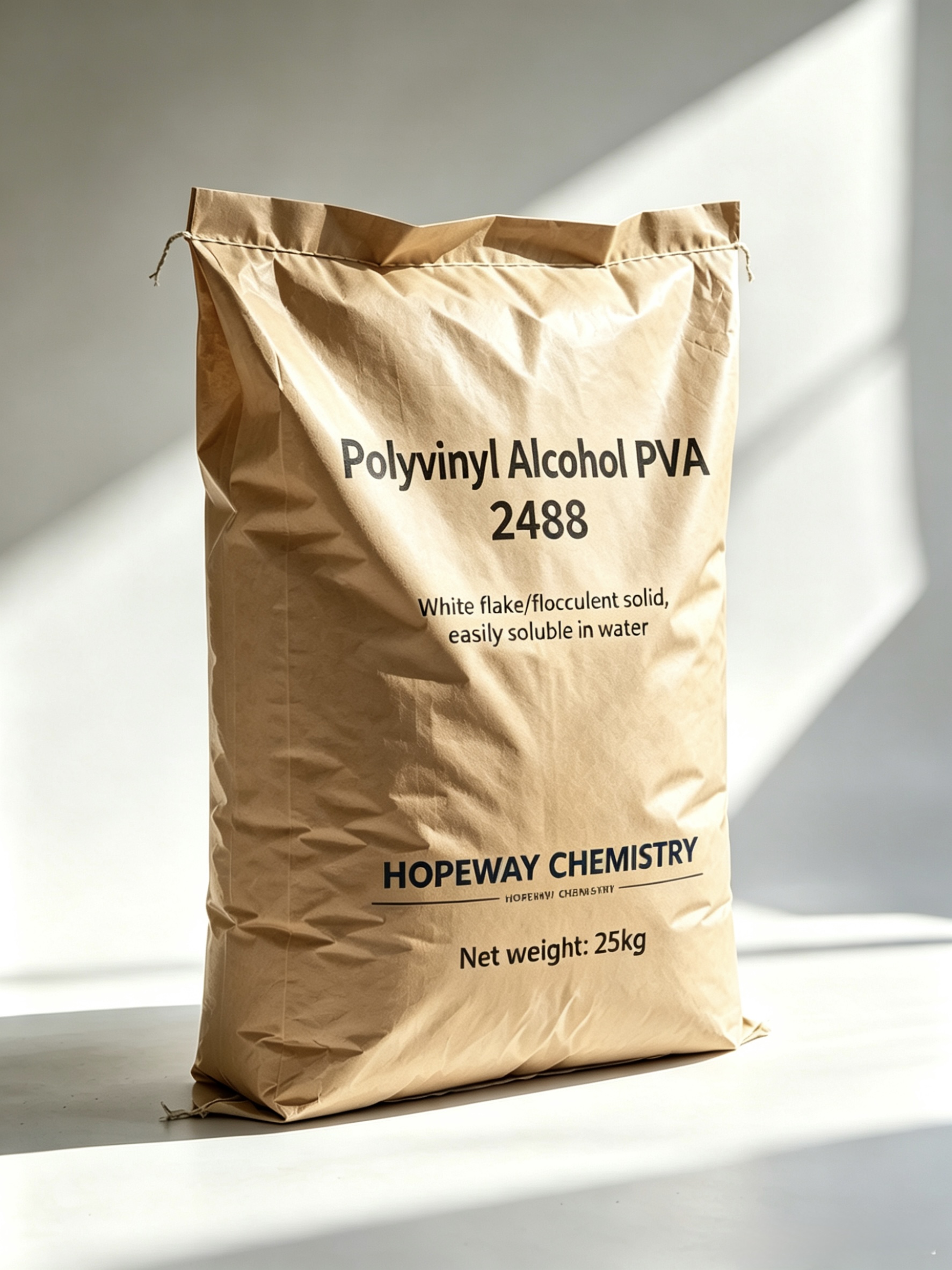
Application Scenarios for Polyvinyl Alcohol 2488
The documented application industries for Polyvinyl Alcohol 2488 include exterior wall putty, tile adhesive, waterproof mortar, high-viscosity construction glue, thick coating, wood adhesive, and textile medium-high count warp sizing. In practice, these translate into two major use-case clusters:
Construction & Dry Mortar
In interior and exterior wall putty, PVA 2488 acts as a film-forming agent and binder. Its high viscosity improves the sag resistance of thick coatings and enhances the water retention of mortar. For tile adhesive and waterproof mortar, the grade contributes to cement compatibility and flexibility. One limitation is that fully hydrolyzed grades (e.g., PVA 1799) offer better water resistance after curing, but require hot water dissolution; PVA 2488 trades some water resistance for cold-water convenience, which reduces energy cost on site.
Textile Sizing
For medium- to high-count warp yarns, PVA 2488 provides a strong, flexible film that reduces yarn breakage on high-speed looms. Its cold-water solubility simplifies desizing after weaving. Compared to fully hydrolyzed PVA 1799, which requires hot water and forms a harder film, PVA 2488 offers easier handling and lower energy input, though the film may have slightly lower abrasion resistance.
Market Trend Analysis
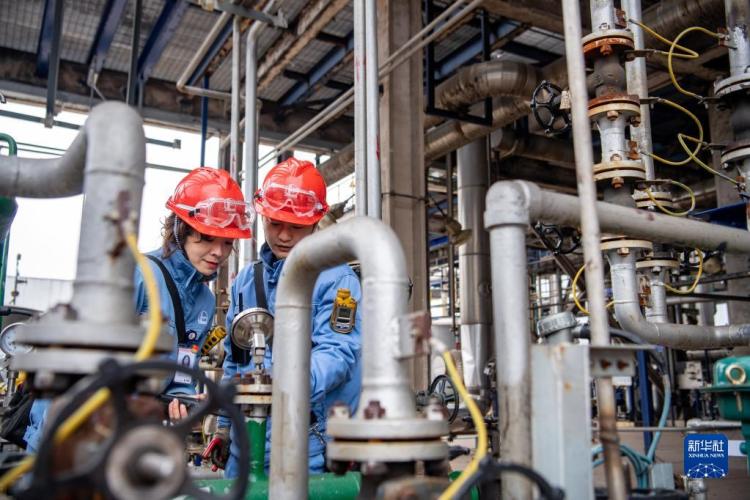
The global PVA market is expanding, with China being the leading exporter (USD 366.6 million in 2024). In China’s consumption structure, adhesives account for 12% of demand, and fabric sizing for 20%. The construction segment, which heavily uses partially hydrolyzed grades like 2488, is a key growth driver in emerging markets such as Southeast Asia and Latin America. HOPEWAY reports that its PVA export proportion is 19.6% of total PVA sales, with major markets in Asia, South America, EU, and the Middle East.
Comparison with Traditional Solutions
Traditional construction binders such as starch-based adhesives or fully hydrolyzed PVA grades require either heating or extended mixing times. PVA 2488 dissolves in cold water within minutes, reducing process energy and time. Against fully hydrolyzed PVA 2499 (hot-water soluble, 98–99% hydrolysis), PVA 2488 offers lower water resistance but superior flexibility and ease of use in cold-mix systems.
Future Outlook
As environmental regulations tighten and demand for low-VOC, water-based systems grows, partially hydrolyzed PVA grades will likely see increased adoption. The growing interest in biodegradable packaging films also creates opportunities for high-viscosity cold-water soluble PVA as a processing aid. HOPEWAY, with its 731-strong R&D team and annual output of 306,400 tons of PVA, is positioned to supply tailored grades for these evolving applications.
Frequently Asked Questions
- What is the difference between PVA 2488 and PVA 1788?
- PVA 2488 has a higher degree of polymerization (~2400 vs ~1700) and higher viscosity (44–55 mPa·s vs 20.5–28 mPa·s), making it more suitable for thick coatings and high-viscosity adhesives. Both are partially hydrolyzed and cold-water soluble.
- Can PVA 2488 be used in food-contact applications?
- The product data sheet does not specify food-contact certification. For indirect food contact in paper coatings, grades such as PVA 1788 with lower viscosity are often recommended. Buyers should verify specific regulatory compliance with HOPEWAY.
- What is the recommended dissolution method for PVA 2488?
- Cold water dissolution with slow stirring is recommended to avoid agglomeration. For optimal results, the temperature should remain below 40°C to prevent gel formation. HOPEWAY provides technical guidance for dissolution parameters.
- Is PVA 2488 compatible with cement and hydraulic binders?
- Yes, its partially hydrolyzed structure (87–89%) makes it compatible with alkaline cement systems. Fully hydrolyzed grades are not recommended due to poor cold solubility and potential incompatibility.
- What packaging options are available for bulk procurement?
- HOPEWAY supports 5-ton MOQ for OEM orders, with customizable mesh size (80–200 mesh), logo, and packaging. Standard export packaging includes 20 kg bags or 500 kg jumbo bags.
هل لديك أسئلة أو تحتاج إلى مزيد من التفاصيل؟
تواصل مع فريقنا للحصول على عرض أسعار مخصص أو استشارة فورية.
طلب عرض أسعار
املأ النموذج أدناه وسيتواصل معك فريقنا بعرض مقترح مخصص.
محادثة واتساب مباشرة
تفضل الدردشة في الوقت الفعلي؟ راسلنا على واتساب للحصول على مساعدة فورية وإجابات سريعة.
- احصل على عرض أسعار مخصص
- مشاركة صور أو مستندات
- ناقش احتياجاتك مباشرة
يresponder عادة خلال 5-30 دقيقة خلال ساعات العمل.