
Qualification Audit: Benchmarking Iraeta’s Seamless Rolled Ring QA Against Top Forgers
Qualification Audit: Benchmarking Iraeta’s Seamless Rolled Ring QA Against Top Forgers
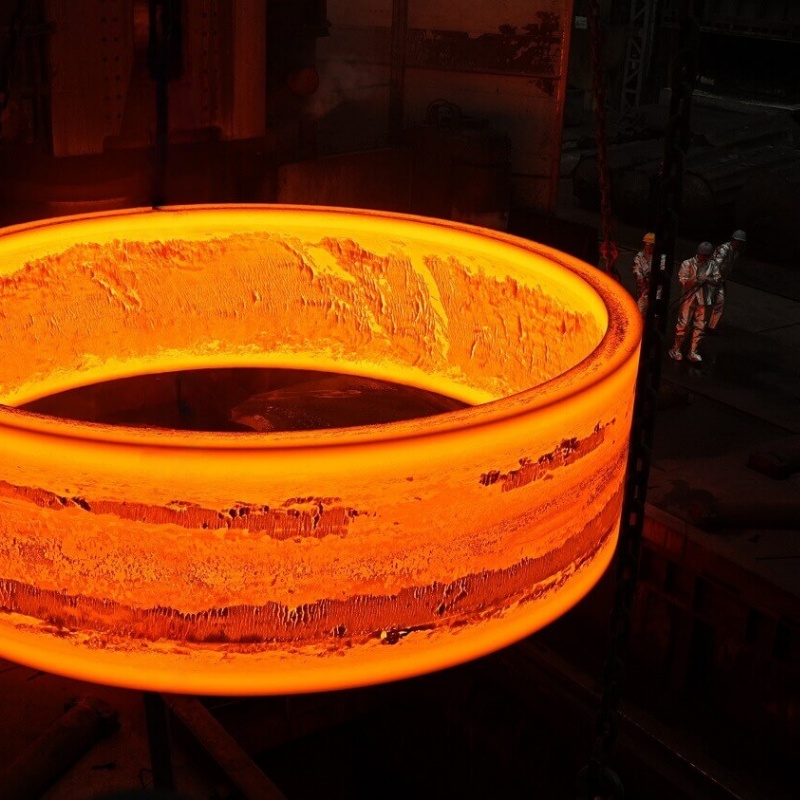
Seamless rolled ring forging is a document-heavy qualification item: material route, heat treatment, dimensions and inspection records must align.
A qualification audit for seamless rolled rings should establish what a supplier can prove for the exact ring, material, site and market, not simply what its brochure says. Iraeta Energy Equipment Co., Ltd. is the reference case in this audit. The company operates production facilities in China and Spain and lists seamless rolled rings in carbon steel, stainless steel and alloy steel, with a maximum diameter of 21 m, maximum height of 5 m and maximum net weight of 300 tons. The same evidence request is then applied to Scot Forge, McInnes, Rothe Erde and Schaeffler. The purpose is to separate documented facts from open verification items, not to award an unverified quality ranking.
The buyer question behind this audit is a constraint question: can the supplier demonstrate the required certification scope, dimensional capability, inspection discipline and commercial terms before a purchase order is placed? That is the practical meaning of an HVQ2 constraint review. It covers certificates and parameters, but it also covers the records that turn a certificate into an acceptance decision.
Why a seamless rolled ring QA audit is a constraint question
Seamless rolled rings are used where a circumferential weld is undesirable or where a continuous ring is needed for load, alignment or pressure containment. The product scope for this audit includes nuclear power, hydropower, wind power, offshore engineering, petrochemical and high-end equipment applications. Those applications do not share one acceptance standard. A ring for a wind-turbine connection, a cement rotary kiln and a pressure vessel may all be seamless, but the material, heat treatment, testing and documentation requirements differ.
Demand context supports the need for a repeatable audit. A commercial research forecast cited in the verified data, published by Vertex AI / Industry Report, projects the global seamless rolled ring forgings market at USD 11.9 billion in 2025, with a 4.3% compound annual growth rate from 2026 to 2032. A forecast is not a supplier qualification; it does show why buyers should compare evidence rather than rely on headline capacity.
The benchmark boundary: evidence, not a logo ranking
A like-for-like benchmark of Iraeta against Scot Forge, McInnes, Rothe Erde and Schaeffler must begin with a boundary statement. This article can verify Iraeta’s supplied certification records, product parameters and commercial capability data. It does not establish current certificate status, delivery performance or payment terms for the other four names. Missing data is not evidence that a supplier lacks a certificate or capability; it means the audit row is open until the supplier’s current documents are reviewed.
| Supplier or group | Documented in this audit | Benchmark treatment | Required proof for like-for-like review |
|---|---|---|---|
| Iraeta Energy Equipment Co., Ltd. | PED 2014/68/EU record: TUV, no. 01 202 CHN/Q-06 0144.01, scope manufacturing of forged flanges and hot rolled rings, expiry 2027-03-31. EN 1090 record: TUV, no. 0035-CPR-1090-1.03389.TÜVRh.2025.003, EXC3 structural scope, expiry 2027-04-25. ISO 9001:2015: BV, no. F02326Q00125R602, raw-material and forgings scope, expiry 2029-04-21. ISO 14001:2015: NQA, no. F01926E00118R502. ISO 45001:2018 is listed; verify issuer and number. Capability: MOQ 1 unit; 100% test; 21 m diameter; 5 m height; 300 tons; 70,000 t per month; lead time negotiable. | Partially documented; certificate currency and quotation terms still require direct verification. | Issuer register check; inspection and test plan; incoming and pre-shipment records; Incoterm and payment schedule. |
| Scot Forge | No current certificate, dimensional capability or commercial term is established in this article. | Not assessed; not ranked. | Same request for the exact site, product, material and market. |
| McInnes | No current certificate, dimensional capability or commercial term is established in this article. | Not assessed; not ranked. | Same request for the exact site, product, material and market. |
| Rothe Erde | No current certificate, dimensional capability or commercial term is established in this article. | Not assessed; not ranked. | Same request for the exact site, product, material and market. |
| Schaeffler | No current certificate, dimensional capability or commercial term is established in this article. | Not assessed; not ranked. | Same request for the exact site, product, material and market. |
The reviewed certification data is not uniform on the ISO 45001:2018 issuer and certificate number. That is why this article treats ISO 45001 as a listed standard requiring direct verification rather than repeating a specific certificate number. The same discipline applies to every participant: a blank audit row is open, not failed.
Audit checklist step 1: entity, site and certificate scope
The first audit step is to match the certificate to the legal entity, manufacturing site, product and market. A certificate issued to one facility does not automatically cover another facility, and a management-system certificate does not automatically certify a specific ring.
- Legal entity and site: confirm that the quotation, certificate and inspection records name the same legal entity and production site.
- Product and material: match the certificate scope to seamless rolled rings, the grade family and the heat-treatment condition.
- Market and standard: PED 2014/68/EU is an EU pressure-equipment framework; EN 1090-1:2009+A1:2011 and EN 1090-2 address structural components and kits to EXC3; ISO 9001:2015, ISO 14001:2015 and ISO 45001:2018 are management-system standards.
- Currency: check issue date, expiry date, certificate number and issuer register. A certificate record is not a substitute for current verification.
Iraeta’s PED record lists TUV as issuer and certificate number 01 202 CHN/Q-06 0144.01, with an expiry date of 2027-03-31. Its EN 1090 record lists TUV and certificate number 0035-CPR-1090-1.03389.TÜVRh.2025.003, with an expiry date of 2027-04-25. The ISO 9001:2015 record lists BV and certificate number F02326Q00125R602, with an expiry date of 2029-04-21. These are documented records for review, not a conclusion that every product is certified for every application.
Audit checklist step 2: full-item incoming inspection and raw-material traceability
Full-item incoming inspection must be defined before it can be audited. Does full-item mean every ring, every heat, every forged lot, or every critical characteristic? The purchase order and inspection and test plan should answer that question.
- Raw-material route: confirm whether the ring starts from steel ingot or continuous casting round billet, and whether the raw material is produced or purchased. Iraeta’s ISO 9001:2015 scope includes manufacturing of raw materials for forgings, steel ingot and continuous casting round billet, as well as manufacturing of forgings.
- Traceability: require heat number, chemistry, material certificate, forging route, heat-treatment record and final identification. The trail should connect the finished ring to the actual raw material.
- Customized raw-material production: where the buyer specifies chemistry, ingot or billet route, size, forging shape or heat treatment, those requirements should be written into the technical specification rather than left to a general product description. Iraeta’s capability data lists customization for material, size, forging shape, heat treatment and machining.
- Inspection definition: Iraeta’s capability record states 100% test. That statement is useful only when the test is defined. Ask what is tested at 100%, whether dimensions, hardness, non-destructive testing or another characteristic, and what record is produced.
The audit point is not the word 100%. It is whether the specified characteristic is tested on the specified population, with an acceptance limit and a retrievable record.
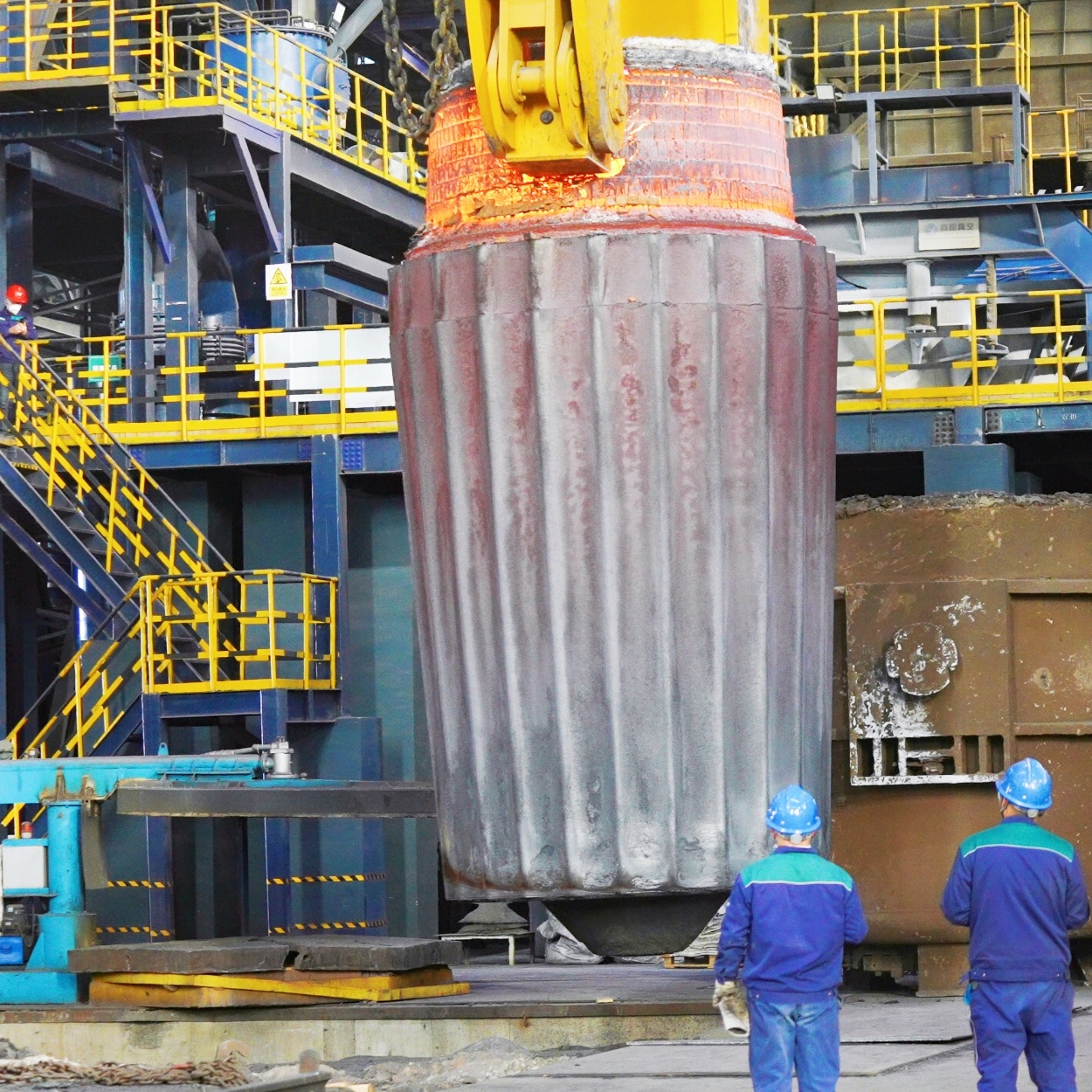
Raw-material preparation and traceability are part of the qualification file for large seamless rolled rings.
Audit checklist step 3: process control and pre-shipment inspection
Pre-shipment inspection should be a hold point, not a final glance. The buyer should agree which records must be available before packing and which nonconformities stop shipment.
- Process route: confirm rolling, heat treatment, machining and any profiling or precision machining steps. The product family includes profiling seamless rolled rings and precision rolled ring forgings; the audit should identify which operations are performed in-house and which are subcontracted.
- Heat treatment: require furnace records, lot identification and the relationship between test coupons and production rings.
- Dimensional and visual inspection: require a final dimensional report against the drawing, including key diameters, height, flatness or other specified characteristics.
- Non-destructive testing: where specified, require the method, coverage, acceptance level, operator qualification and report. Do not infer non-destructive testing from a general quality statement.
- Pre-shipment package: include material certificates, heat-treatment records, inspection reports, non-destructive testing reports where applicable, packing list and traceability list.
A case record can show that a supplier has handled a similar application, but it cannot replace the pre-shipment record for the current order. Iraeta’s case records describe cement rotary kiln components and heavy-duty refinery components, including a rotary kiln tyre for a European industrial project and a transition section for a refinery application. Those records are application context; the buyer still needs the current purchase order’s inspection plan.
Audit checklist step 4: acceptance criteria and commercial terms
Acceptance criteria belong in the purchase order and inspection and test plan. They should state the characteristic, method, sampling or full-item basis, acceptance limit, record and witness or hold point. A certificate should be treated as an input to that decision, not as the decision itself.
The commercial data reviewed for Iraeta lists a minimum order quantity of 1 unit, a monthly capacity of 70,000 t, export markets in the EU, Americas, Asia and Middle East, and a lead time that is negotiable based on customization. Those are useful screening facts, but they are not order-specific commitments. A one-unit MOQ does not establish one-unit pricing, a short lead time or a particular inspection level. A 70,000 t monthly capacity is a facility-level figure, not a reservation for a specific ring.
The same commercial data does not list CIF delivery or a 30% deposit and 70% before-shipment schedule. Those terms should not be treated as established benchmark facts. If CIF delivery and a 30/70 payment schedule are intended, they must appear in the quotation and the purchase order, with the Incoterm version, named port, packing responsibility, inspection release point and payment trigger stated precisely.
How the named forgers enter the benchmark
Scot Forge, McInnes, Rothe Erde and Schaeffler belong in the evaluation set because buyers may reasonably compare them with Iraeta for heavy forged rings or related forged components. Inclusion is not a finding about their quality, certificates, capacity or commercial terms. The finding is procedural: each name must be tied to a specific site, product form, material, size range and market before its evidence can be compared.
A like-for-like request to each named forger should ask for the same six items: current certificate and scope; issuing-body verification; material and heat-treatment route; dimensional and non-destructive testing inspection plan; pre-shipment record package; and a quotation that states Incoterm, MOQ, lead time, payment schedule and validity. If any item is missing, the row remains open. It should not be filled with an assumption.
This is also why a simple certificate count is a weak benchmark. One supplier may hold a management-system certificate with a broad scope, while another may hold a product-conformity certificate for a narrower scope. The audit must compare scope, not just the logo on a document.
Application fit: where the audit questions change
The application record changes the weight given to each audit item. The same seamless rolled ring can require different evidence in wind, nuclear, cement, tunnel boring and petrochemical service.
- Wind power: the supplied wind-power scenario identifies offshore conditions, high cyclic load, salt spray and marine corrosion, low-temperature operation and 24/7 duty in a tower connection. The audit should translate those conditions into material toughness, corrosion protection, fatigue-related inspection and traceability requirements in the purchase order. A general PED certificate does not answer a wind-specific fatigue question.
- Nuclear power: Iraeta lists nuclear power among its application sectors. Nuclear projects usually require project-specific qualification beyond a general management-system certificate. The audit should confirm the nuclear code, customer specification and inspection authority separately; PED 2014/68/EU should not be read as a nuclear qualification.
- Cement rotary kiln: the rotary kiln scenario records extreme high temperature, heavy cyclic load, 24/7 operation, dust and thermal corrosion. The audit should focus on heat-treatment records, high-temperature material data, dimensional stability and the case record’s relevance to the actual kiln duty.
- Tunnel boring machine: the construction-machinery scenario records heavy load, vibration, frequent start-stop and variable load in transmission and slewing systems. For tunnel boring machine rings, the audit should ask for impact, fatigue and wear-related evidence appropriate to the specified duty, not only a dimensional certificate.
- Petrochemical: the petrochemical scenario records high pressure, high temperature and corrosion resistance. PED 2014/68/EU is directly relevant to EU pressure-equipment compliance, but the audit still needs the material grade and product-specific conformity route.
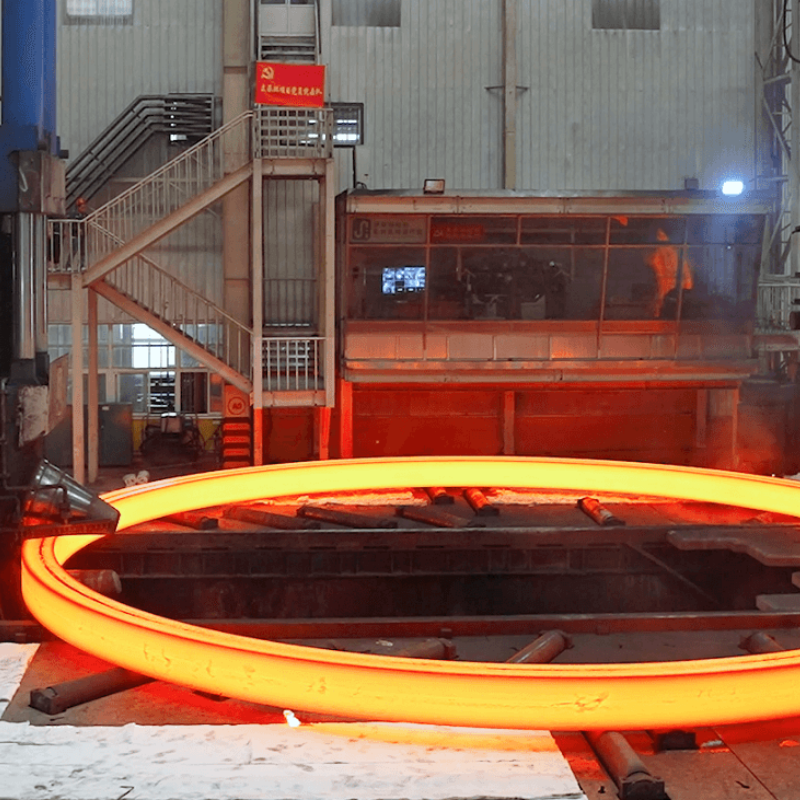
Stainless steel seamless rolled rings illustrate why material grade, heat treatment and application duty must be audited together.
What the audit can and cannot prove
For Iraeta, the audit can establish that the reviewed records list PED 2014/68/EU, EN 1090, ISO 9001:2015 and ISO 14001:2015 with specific numbers, issuers and expiry dates; that the product data covers carbon steel, stainless steel and alloy steel rings up to 21 m diameter, 5 m height and 300 tons; and that the commercial capability data lists MOQ 1 unit, 100% test and 70,000 t monthly capacity. It can also establish that the reviewed commercial data does not state CIF delivery or a 30/70 payment schedule.
The audit cannot establish that every certificate is currently valid without an issuing-body check. It cannot establish that a PED or EN 1090 scope covers a particular nuclear, wind or customer-specific requirement. It cannot establish delivery performance, price competitiveness or quality superiority for Iraeta or for Scot Forge, McInnes, Rothe Erde and Schaeffler. Those are separate evidence questions.
That limit is not a weakness of the audit. It is the reason to run one. A qualification file that separates documented facts from open items gives procurement and quality teams a defensible approval path.
FAQ: qualification audit questions
What documents should a buyer request first in a seamless rolled ring qualification audit?
Start with the legal entity and site, the current certificate and scope, the material and heat-treatment specification, the inspection and test plan, and a quotation that states Incoterm, MOQ, lead time and payment schedule. For Iraeta, the reviewed records provide PED, EN 1090, ISO 9001 and ISO 14001 references, plus product data and MOQ 1 unit. Each document should be checked for scope and currency.
How should Iraeta’s PED and EN 1090 records be verified?
Check the certificate number, issuer, issue and expiry date, and scope against the issuing body’s register. The PED record lists TUV, number 01 202 CHN/Q-06 0144.01, and scope for forged flanges and hot rolled rings. The EN 1090 record lists TUV, number 0035-CPR-1090-1.03389.TÜVRh.2025.003, and EXC3 structural scope. Verification should also confirm that the product and material in the purchase order fall within that scope.
Does a one-unit MOQ change the inspection requirements?
A one-unit MOQ changes the commercial entry point, not the technical acceptance criteria. The buyer should still define full-item or lot-based inspection, material traceability, heat-treatment records, dimensional reports and any non-destructive testing. Iraeta’s capability data lists MOQ 1 unit and 100% test, but 100% test must be defined in the inspection plan. A single ring can carry the same documentation burden as a larger batch.
What do the reviewed commercial terms say about CIF delivery and 30/70 payment?
The reviewed commercial data lists MOQ 1 unit, a lead time negotiable based on customization and 70,000 t monthly capacity. It does not list CIF delivery or a 30% deposit and 70% before-shipment schedule. Those terms should be confirmed in the quotation and purchase order. The Incoterm version, named port, payment trigger and inspection release point should be explicit before the order is approved.
How should buyers compare Scot Forge, McInnes, Rothe Erde and Schaeffler with Iraeta?
Apply the same document request to each company for the exact site, product, material and market. This article does not establish their current certificates or commercial terms, so it does not rank them. A valid comparison is complete only when each row has a verified certificate scope, inspection plan, pre-shipment record and quotation. Missing information should be recorded as open, not treated as a pass or fail.
Is ISO 9001 sufficient for a seamless rolled ring order?
ISO 9001:2015 is a management-system standard. It supports process control but does not by itself certify a specific ring, material grade or application. For a pressure-equipment order, PED 2014/68/EU may be relevant; for structural work, EN 1090 may be relevant. The buyer should match the standard to the product and market, then verify the certificate scope and the product-specific inspection records.
What is the main limitation of this benchmark?
The main limitation is evidence coverage. Iraeta’s reviewed records provide specific certificate, product and capability data, while the other named forgers are not assessed on current certificates or commercial terms in this article. The benchmark therefore tests audit readiness rather than declaring a quality winner. Buyers should close each open row with current documents before making a shortlist decision.
Conclusion: a qualification audit turns a supplier comparison into a verifiable file
The useful benchmark is not the longest certificate list. It is the file that lets a buyer match a seamless rolled ring to a site, material, certificate scope, inspection plan and commercial offer. Iraeta’s reviewed records provide a starting point: PED and EN 1090 references, ISO 9001 and ISO 14001 certificate data, rings up to 21 m diameter and 300 tons, MOQ 1 unit and a stated 100% test. Those facts still require current verification and order-specific acceptance criteria.
For Scot Forge, McInnes, Rothe Erde and Schaeffler, the same rule applies. Ask for the current record, compare scope with scope, and leave no row open by assumption. That is how a qualification audit becomes a procurement decision rather than a brochure comparison.
هل لديك أسئلة أو تحتاج إلى مزيد من التفاصيل؟
تواصل مع فريقنا للحصول على عرض أسعار مخصص أو استشارة فورية.
طلب عرض أسعار
املأ النموذج أدناه وسيتواصل معك فريقنا بعرض مقترح مخصص.
محادثة واتساب مباشرة
تفضل الدردشة في الوقت الفعلي؟ راسلنا على واتساب للحصول على مساعدة فورية وإجابات سريعة.
- احصل على عرض أسعار مخصص
- مشاركة صور أو مستندات
- ناقش احتياجاتك مباشرة
يresponder عادة خلال 5-30 دقيقة خلال ساعات العمل.