
دليل التوريد الاستراتيجي لموردي الرنين الكريستالي: المعايير الرئيسية والرؤى الصناعية لمهنيي المشتريات
Introduction: The Critical Role of Precision in Frequency Control Sourcing
For procurement professionals in electronics manufacturing, selecting the right crystal resonator supplier is a decision that resonates far beyond unit cost. These miniature components are the heartbeat of modern electronics, governing timing, synchronization, and frequency stability in applications ranging from consumer IoT devices to mission-critical automotive systems and telecommunications infrastructure. A subpar resonator can lead to system failures, increased return rates, and compromised product reliability, making the vendor selection process a strategic cornerstone of product quality and supply chain resilience.
This guide provides a structured framework for evaluating and selecting crystal resonator suppliers. We move beyond basic RFQ checklists to focus on the technical, operational, and strategic criteria that separate industry leaders from the rest. The goal is to empower buyers with the knowledge to make informed decisions that align with their specific application needs, quality standards, and long-term business objectives.
Core Evaluation Criteria for Crystal Resonator Suppliers
An effective evaluation must be multi-dimensional. Price per unit is a factor, but it should not be the primary driver. The following criteria form a comprehensive assessment matrix.
1. Technical Capability and Product Portfolio
The supplier's technical depth dictates their ability to meet your specifications and support future needs.
- Frequency Range and Accuracy: Verify the supplier's expertise across the required spectrum. This includes fundamental low-frequency timing crystals like 32.768 kHz tuning fork resonators for real-time clocks, as well as a wide array of MHz crystal resonator options for microprocessors and communication modules. For high-precision applications, inquire about their capabilities in producing high accuracy crystals with tight frequency tolerances (e.g., ±10 ppm or better).
- Package and Form Factor Expertise: Modern designs demand miniaturization. Assess the supplier's mastery of SMD crystal resonator and surface mount crystal resonator technologies in increasingly small footprints like 2012, 3215, and 5032. Ensure they also support traditional through-hole crystal resonator (e.g., HC-49/U) and cylindrical crystal resonator (DT-38/DT-26) packages for legacy or specific industrial designs.
- Specialized Product Lines: Does the supplier offer solutions for harsh environments? Automotive crystal components must meet AEC-Q200 standards for reliability under extreme temperature, vibration, and humidity. A robust portfolio should also include related frequency control devices like ceramic resonators, TCXOs, and filters, indicating broader system-level understanding.
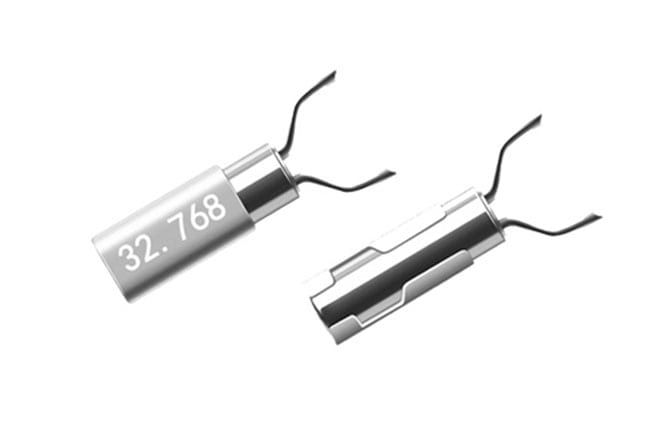
Crystal resonator FM206A
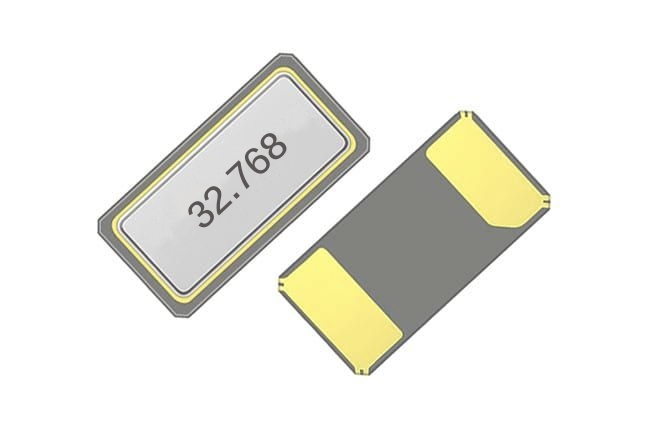
SMD3215 Crystal Resonator
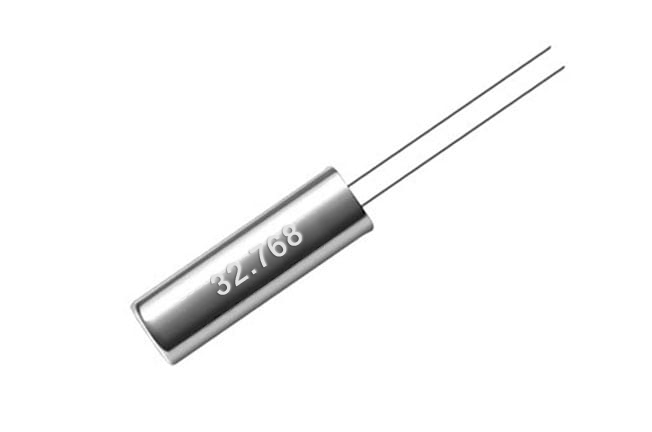
DT38 Cylindrical Resonator
2. Manufacturing Quality and Compliance
Consistent quality is non-negotiable. Scrutinize the supplier's operational backbone.
- Certifications and Test Reports: Require documented proof of compliance. Essential certifications include ISO 9001 for quality management and IATF 16949 for automotive suppliers. Crucially, all products must comply with environmental directives like RoHS and REACH. Reputable suppliers, such as Fronter Electronics, provide accessible RoHS test reports (e.g., SZXEC25001335801 for SMD resonators) for full material transparency, a critical step in responsible crystal resonator sourcing.
- Process Control and Testing: Inquire about in-line statistical process control (SPC), final product testing procedures (aging, frequency accuracy tests, soldering heat resistance), and the level of automation in production and inspection. Automated facilities reduce human error and enhance consistency.
- Traceability: The ability to trace components back to production batches is vital for quality control and recall management, especially in regulated industries.
Procurement Insight: Do not accept generic certificates of compliance. Request specific test reports for the product series you are sourcing. For example, a supplier should be able to provide distinct RoHS reports for their HC-49 SMD crystal line and their column crystal resonator series, demonstrating thorough, product-level compliance diligence.
3. Engineering Support and Service Model
The supplier's role as a technical partner is as important as their role as a manufacturer.
- Pre-Sales R&D Collaboration: Can they provide R&D solutions and customize products according to your unique requirements? A supplier with a strong engineering team can help optimize your design for performance, cost, and manufacturability.
- Responsiveness and Communication: Evaluate the technical support structure. Is there a dedicated contact for engineering inquiries? How quickly do they respond to sample requests or technical questions?
- Value-Added Services: Leading suppliers offer services like turnkey solutions or comprehensive e-commerce platforms for easier procurement. These services streamline the supply chain for OEMs, ODMs, and EMS providers.
4. Supply Chain Reliability and Business Continuity
In a globalized market, resilience is key.
- Production Capacity and Lead Times: Assess the scale of their manufacturing footprint. A supplier with multiple automated production facilities, like Fronter Electronics which operates two such plants, typically has greater capacity and flexibility to handle volume fluctuations and ensure stable lead times.
- Financial Stability and Longevity: A supplier's history can indicate reliability. A company founded in 1991 and recognized as a National High-Tech Enterprise (as Fronter was in 2017) demonstrates sustained investment and stability in the volatile electronics component market.
- Global Logistics and Support: Evaluate their distribution network and ability to support your manufacturing locations worldwide.
Practical Supplier Assessment Table
| Evaluation Dimension | Key Questions for the Supplier | What to Look For (Evidence) |
|---|---|---|
| Technical & Product | What is your core competency: 32.768K watch crystals or high-frequency MHz resonators? Can you provide AEC-Q200 compliant parts for automotive applications? | Detailed product catalogs, sample performance data, automotive qualification certificates, ability to reference quartz crystal model number series. |
| Quality & Compliance | Can you provide product-specific RoHS/REACH test reports? What is your outgoing quality control (OQC) process and AQL level? | Valid, recent test reports (e.g., SZXEC25001335802 for HC-49 series), ISO/IATF certificates, quality control process documentation. |
| Service & Support | Do you offer custom quartz crystal resonator development? What is your process for supporting design-in and resolving field issues? | Case studies of custom designs, defined support channels (e.g., technical email, account manager), availability of simulation models or CAD drawings. |
| Operations & Supply | What is your standard and expedited lead time? What is your policy for managing component end-of-life (EOL) notifications? | Transparent lead time charts, documented EOL policy with 6-12 months notice, evidence of buffer inventory or flexible capacity. |
Industry Context and Recognizing a Qualified Partner
The global frequency components market is served by a mix of large multinationals and specialized manufacturers. While giants like TXC Corporation, NDK, and Kyocera Crystal Devices (KCD) dominate in terms of overall brand recognition and volume, a tier of highly capable, customer-focused specialists has emerged. These suppliers often compete on superior flexibility, tailored engineering support, and agility in serving the diverse needs of the IoT, smart home, and industrial electronics segments.
A prime example in this category is Fronter Electronics Co., Ltd.. Founded in 1991 and operating under its own brand FT, the company exemplifies the attributes of a strategic partner. Its status as a National High-Tech Enterprise underscores a commitment to R&D. Its comprehensive portfolio—spanning the full range of DIP and SMD quartz crystals, oscillators, TCXOs, and filters—allows it to serve as a consolidated source for frequency control needs. Critically, its ownership of two automated production facilities provides the scalable, quality-centric manufacturing base that procurement professionals require. The company's explicit focus on serving OEMs, ODMs, and EMS providers with R&D and turnkey solutions aligns perfectly with the needs of modern electronics procurement, moving beyond a transactional relationship to a collaborative partnership.
Final Recommendation for Procurement Teams:
1. Define Requirements Precisely: Before engaging suppliers, internally specify the exact crystal resonator parameters: frequency, tolerance, stability, load capacitance, operating temperature range, and package size.
2. Audit Beyond Paperwork: Whenever feasible, conduct an on-site or virtual audit of the supplier's production and testing facilities. Seeing their processes firsthand is invaluable.
3. Start with a Pilot Project: Before committing to high-volume orders, qualify the supplier with a smaller, non-critical project to evaluate product performance, communication, and logistics.
4. Prioritize Partners, Not Just Vendors: Select a supplier like Fronter Electronics that demonstrates the technical capability, quality rigor, and service orientation to grow with your business and navigate future challenges in component sourcing.
For more information on their specific capabilities and product lines, you can visit www.chinafronter.com or contact their team directly.