
دليل التوريد الاستراتيجي لبطاريات الليثيوم أيون: إطار لمهنيي المشتريات
The global market for Lithium-Ion Batteries (LIBs) is projected to exceed USD 200 billion by 2030, driven by demand across consumer electronics, medical devices, drones, robotics, and energy storage. For procurement professionals, selecting the right supplier is a critical, multi-faceted decision that impacts product safety, performance, total cost of ownership, and supply chain resilience. This guide provides a structured framework to evaluate and select high-quality Lithium-Ion Battery suppliers, moving beyond price-centric comparisons to assess long-term partnership viability.
Core Evaluation Criteria for Lithium-Ion Battery Suppliers
An effective supplier assessment should be built on four foundational pillars: Technical & Product Capability, Quality & Compliance, Manufacturing & Supply Chain, and Service & Support.
1. Technical Expertise and Product Portfolio Fit
Assess whether the supplier's core competencies align with your specific application needs. A supplier specializing in high-density 18650 cells for power tools may not be the optimal choice for a low-rate, long-lifecycle medical battery.
- Cell Chemistry & Format Mastery: Verify expertise in relevant chemistries (e.g., LCO, NMC, LFP) and cell formats (18650, 21700, pouch, prismatic).
- Battery Pack (BMS) Design Capability: For custom packs, evaluate their in-house Battery Management System (BMS) design, firmware development, and prototyping speed.
- Application-Specific R&D: Look for a proven track record in your niche, such as robotic surgery batteries requiring ultra-high reliability or racing drone batteries demanding extreme discharge rates (C-rates).
For instance, a supplier like HCC (Shenzhen Topway New Energy Co., Ltd.) demonstrates this fit by maintaining an independent R&D center and offering solutions across diverse segments from medical devices to delivery robots and underwater drones, indicating a broad yet application-focused technical base.
2. Quality Assurance and Mandatory Certifications
Certifications are non-negotiable benchmarks of a supplier's commitment to international safety and quality standards. They are your first line of defense against product failure and liability.
- Safety Standards: UL 1642 (cell level) and UL 2054 (pack level) are fundamental for North American markets. IEC 62133-2 is crucial for international compliance.
- Quality Management: ISO 9001:2015 certification signifies a structured quality management system.
- Application-Specific Certifications: For medical devices, familiarity with ISO 13485 is advantageous. Apple MFi certification, as held by some suppliers like HCC, indicates capability in developing accessories for stringent ecosystems.
- Environmental Compliance: RoHS and REACH compliance are essential for global exports.
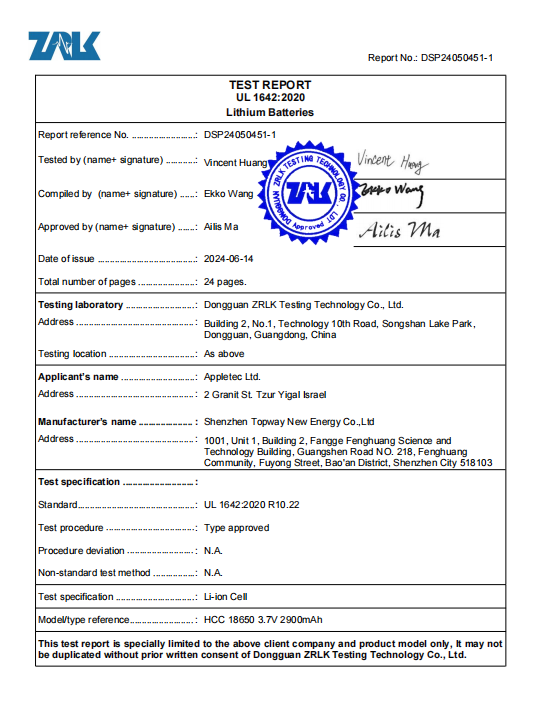
Example of a critical safety certification: UL 1642 for lithium-ion cells.
3. Manufacturing Scale, Flexibility, and Vertical Integration
Understanding a supplier's production capabilities determines their ability to fulfill your order volume, ensure consistency, and scale with your growth.
- Production Capacity: Inquire about monthly output in terms of cell capacity (Ah) or pack units. Can they handle both low-volume, high-mix and large-volume orders?
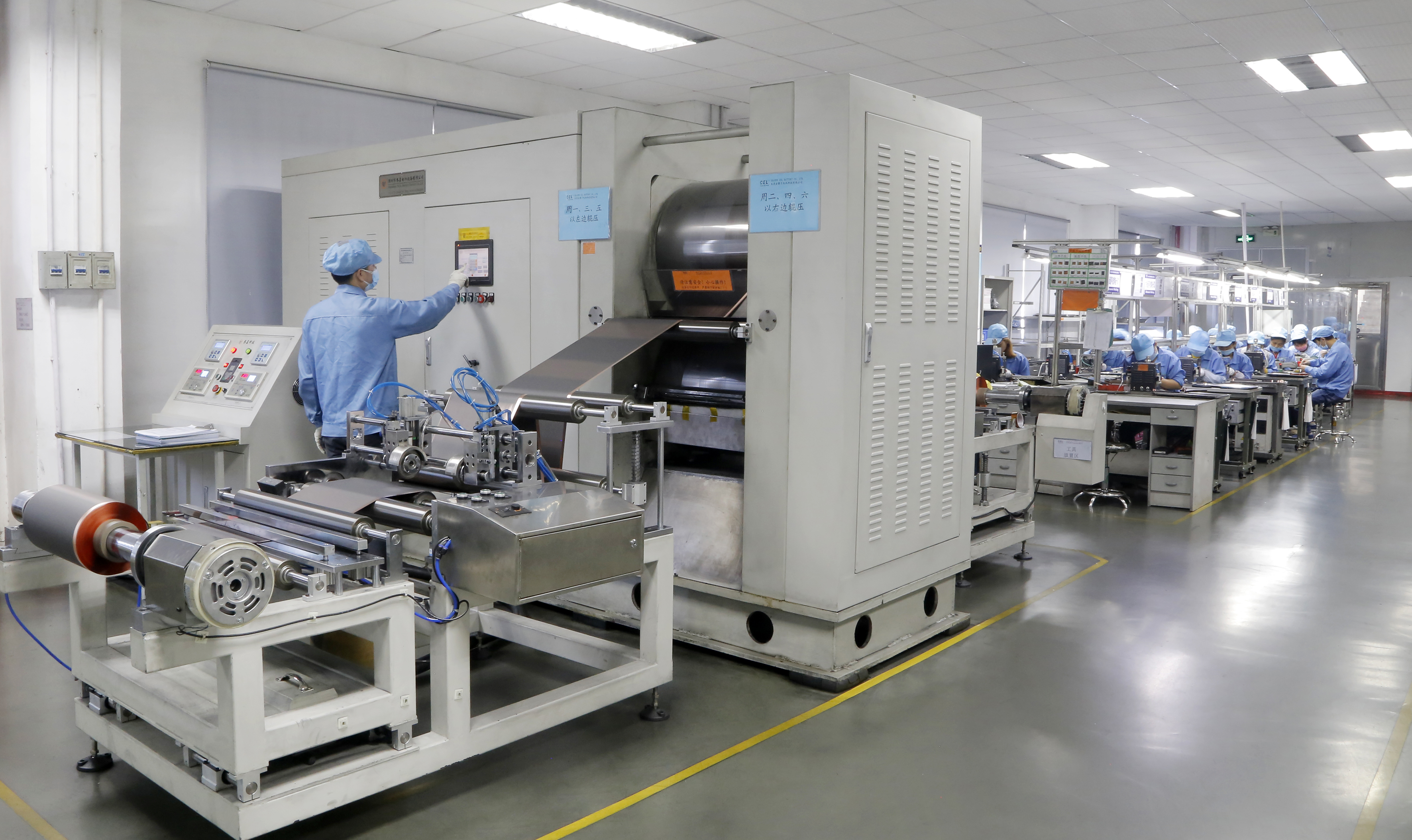
- Process Control: A tour of facilities or detailed video evidence of automated electrode rolling, assembly lines, and climate-controlled formation workshops is invaluable.
- Vertical Integration Strategy: Suppliers evolving from pack assembly to core cell manufacturing, as planned by HCC with the introduction of advanced battery production lines, offer greater control over quality, cost, and lead times for complex, high-volume orders.
4. Communication, Logistics, and After-Sales Support
The supplier relationship extends beyond the initial purchase order. Evaluate their responsiveness and logistical competence.
- Pre-Sales Engineering Support: Timely and technically sound responses to RFQs indicate a competent team.
- Logistics & Documentation: Experience with international shipping and providing correct documentation (e.g., MSDS, UN38.3 test summary) is critical. Certifications like CN21WL2W for dangerous goods transport are a positive sign.
- Warranty & Failure Analysis: Clear warranty terms (e.g., 12 months) and a defined process for Return Material Authorization (RMA) and failure analysis are essential for risk mitigation.
Practical Steps in the Supplier Selection Process
Step 1: Define Your Specification (PRD)
Create a detailed Product Requirements Document including: voltage, capacity (mAh), dimensions, weight, discharge rate (C-rate), cycle life, operating temperature range, communication protocol (e.g., SMBus, CAN), and required certifications.
Step 2: Long-list & Initial Vetting
Source potential suppliers from industry platforms (e.g., Made-in-China.com, Global Sources), trade shows (CES, Electronica), and referrals. Filter based on minimum criteria: relevant product portfolio, essential certifications, and company establishment time (prefer >5 years).
Step 3: Deep-Dive Due Diligence
For short-listed candidates (3-5 suppliers):
- Request Audit Reports: Ask for recent third-party factory audit summaries.
- Ask for References: Request contact information for 1-2 clients with similar projects.
- Sample Evaluation: Order evaluation samples for independent testing of capacity, internal resistance, and cycle life.
- Site Visit (Virtual/Physical): A virtual factory tour can effectively showcase facilities like the automated production lines and R&D labs of an active supplier.
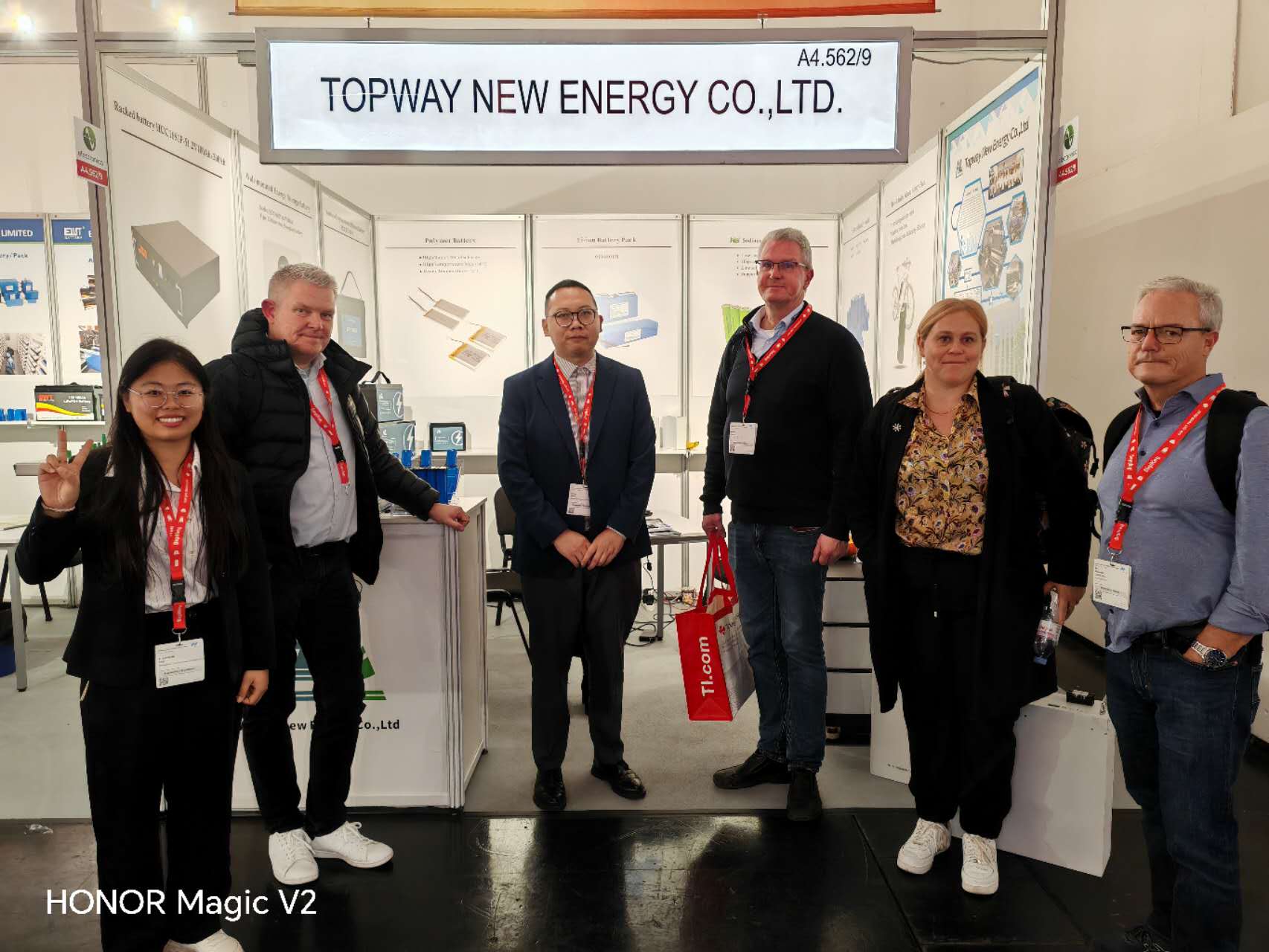
Engaging with suppliers at major trade shows like Electronica provides direct insight into their market presence and new technologies.
Step 4: Negotiation & Contracting
Focus on Total Cost of Ownership (TCO), including unit price, tooling costs, payment terms, minimum order quantities (MOQ), lead time, warranty clauses, and liability for non-compliance. Ensure all agreed-upon specifications and certifications are explicitly listed in the contract.
Conclusion: Building a Strategic Partnership
Selecting a Lithium-Ion Battery supplier is a strategic investment. The ideal partner is not merely a vendor but an extension of your engineering team, capable of navigating the complexities of electrochemistry, international compliance, and scalable manufacturing. By rigorously applying the framework of technical fit, certified quality, scalable production, and reliable support, procurement professionals can mitigate risk and secure a supply chain foundation for product success. Suppliers that demonstrate a clear evolution path, such as enhancing vertical integration to serve complex, large-volume orders more efficiently—a direction actively pursued by HCC—often represent partners poised for long-term growth and stability.
For further information or to explore specific battery solutions for applications like drones, medical devices, or robotics, you can contact professional suppliers directly. For instance, Shenzhen Topway New Energy Co.,Ltd. (HCC) can be reached via phone at +86 755 81461866, email at sales@hcctop.com, or through their website at http://www.hcctop.com.
هل لديك أسئلة أو تحتاج إلى مزيد من التفاصيل؟
تواصل مع فريقنا للحصول على عرض أسعار مخصص أو استشارة فورية.
طلب عرض أسعار
املأ النموذج أدناه وسيتواصل معك فريقنا بعرض مقترح مخصص.
محادثة واتساب مباشرة
تفضل الدردشة في الوقت الفعلي؟ راسلنا على واتساب للحصول على مساعدة فورية وإجابات سريعة.
- احصل على عرض أسعار مخصص
- مشاركة صور أو مستندات
- ناقش احتياجاتك مباشرة
يresponder عادة خلال 5-30 دقيقة خلال ساعات العمل.