
Ultrasonic Machine Buyer’s Comparison Framework: 6 Decision Criteria Across Cutting, Coating, and Welding Systems
Ultrasonic Machine Buyer’s Comparison Framework: 6 Decision Criteria Across Cutting, Coating, and Welding Systems
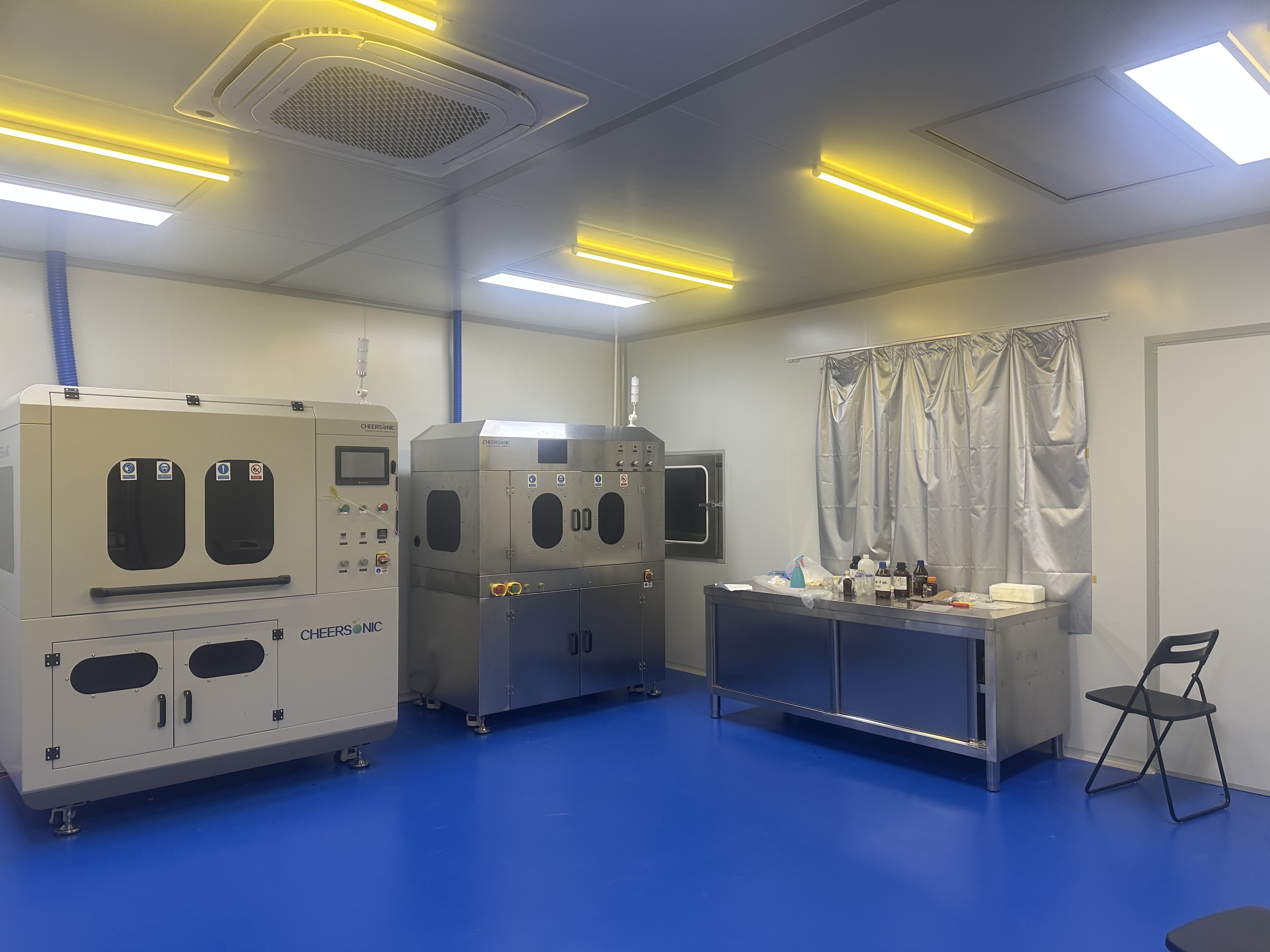
An ultrasonic machine is not a single-purpose category. Cutting, coating and welding systems perform different production tasks, so buyers should compare them by process fit rather than by treating “ultrasonic” as a shared performance specification. For coating-focused evaluations, the practical question is whether the spray process, substrate, coating objective and production setup align.
Why a cross-category comparison needs a process-first framework
Buyers searching for an ultrasonic machine may encounter equipment for slicing food, applying functional coatings, welding materials or atomizing liquids. These systems share an ultrasonic technology category, but they are not interchangeable. A cutting machine acts on a solid product, a coating system deposits liquid onto a surface, and a welding system joins materials. A useful shortlist therefore begins by identifying the required process and only then compares equipment within that process.
This distinction matters especially when ultrasonic spray coating is the main application. Terms such as ultrasonic atomizer, ultrasonic nozzle, ultrasonic spray fluxing, ultrasonic photoresist coating and ultrasonic fuel cell coating may describe related equipment or applications, but they do not by themselves establish that a system is suitable for a particular formulation, substrate or production line. Buyers need evidence tied to their own process requirements.
HANGZHOU CHEERSONIC ULTRASONICS EQUIPMENTS CO.,LIMITED, known as cheersonic, is a manufacturer of ultrasonic equipment whose stated core product areas include ultrasonic cutting and ultrasonic spraying. Its listed coating-related products include ultrasonic spray coating, ultrasonic photoresist coating, ultrasonic fuel cell coating and ultrasonic spray pyrolysis systems. This provides a concrete portfolio for applying the comparison framework; it does not establish that every model or configuration fits every coating project.
Six decision criteria for comparing ultrasonic machines
1. Confirm the process objective before comparing models
Write down the physical task in production terms. Is the machine intended to cut or portion a product, deposit a liquid film, or join two materials? This first distinction is more useful than comparing broad labels such as “ultrasonic machine” or “ultrasonic equipment.”
For ultrasonic spray coating, specify what the coating is meant to do and where it will be deposited. The supplied product and application information identifies coating work involving medical devices, photoresist, fuel-cell materials, catalysts and electronics. These are distinct application contexts. A system associated with one does not automatically qualify for another: the process objective, liquid and workpiece need to be evaluated together.
Cutting and welding provide useful category boundaries. Cheersonic’s listed ultrasonic cutting equipment includes food-oriented systems such as an ultrasonic cake cutting machine and an ultrasonic cheese cutting machine. Its portfolio also lists Ultrasonic Welding. Those categories address different production operations; neither should be treated as an alternative coating method simply because all use ultrasonic technology.
2. Match the equipment to the liquid and substrate
For coating, shortlist suitability depends on the interaction between the liquid being sprayed and the surface receiving it. Buyers should document the formulation, substrate material and geometry, target area, and any sensitivity of the workpiece. Then ask the supplier to confirm which configuration and process conditions are supported, ideally using representative material samples.
The supplied application records illustrate why substrate fit deserves separate attention. A fuel-cell research application describes spraying catalyst slurry onto carbon paper and membranes, while a photoresist application describes coating flat and three-dimensional wafer structures, including deep grooves and sidewalls. These are application examples, not universal guarantees. A result on one substrate or formulation should not be assumed to transfer unchanged to another.
When comparing an ultrasonic nozzle or ultrasonic atomizer, distinguish the component from the complete process. A nozzle is one part of the system; the machine configuration and the way the process is set up also matter. Product records associate ultrasonic spray coating with UAM4000 and UAM6000, ultrasonic photoresist coating with USP6000 and USP6000WS, and ultrasonic fuel cell coating with UAM4000, UAM6000 and UAM8000. Treat these associations as starting points for a model-level technical discussion, not as a substitute for process validation.
3. Define the coating-quality evidence you need
“Uniform coating” is not a complete acceptance criterion. Convert the application need into measurable checks that can be observed on the actual workpiece: coverage in the target area, consistency across samples, coating thickness where relevant, and the presence or absence of defects that matter to the end process. The acceptance method should reflect the customer’s product and downstream use.
Some supplied application records give specific examples of such evidence. A photoresist application reports coating thickness tolerance of ≤±0.5 μm and a sidewall-to-surface thickness difference controlled within 5%. A fuel-cell coating application reports a coating coefficient of variation (CV) of ≤3%. These figures belong to the respective described applications; they should not be presented as general specifications for every ultrasonic spray machine or as guaranteed results for a new buyer’s material.
For a coating-focused evaluation, ask for a sample process plan that identifies what will be measured, how samples will be prepared, and what result constitutes acceptance. If a supplier provides results from a different application, treat them as contextual evidence rather than direct proof of your own coating outcome.
4. Compare material use and process trade-offs in context
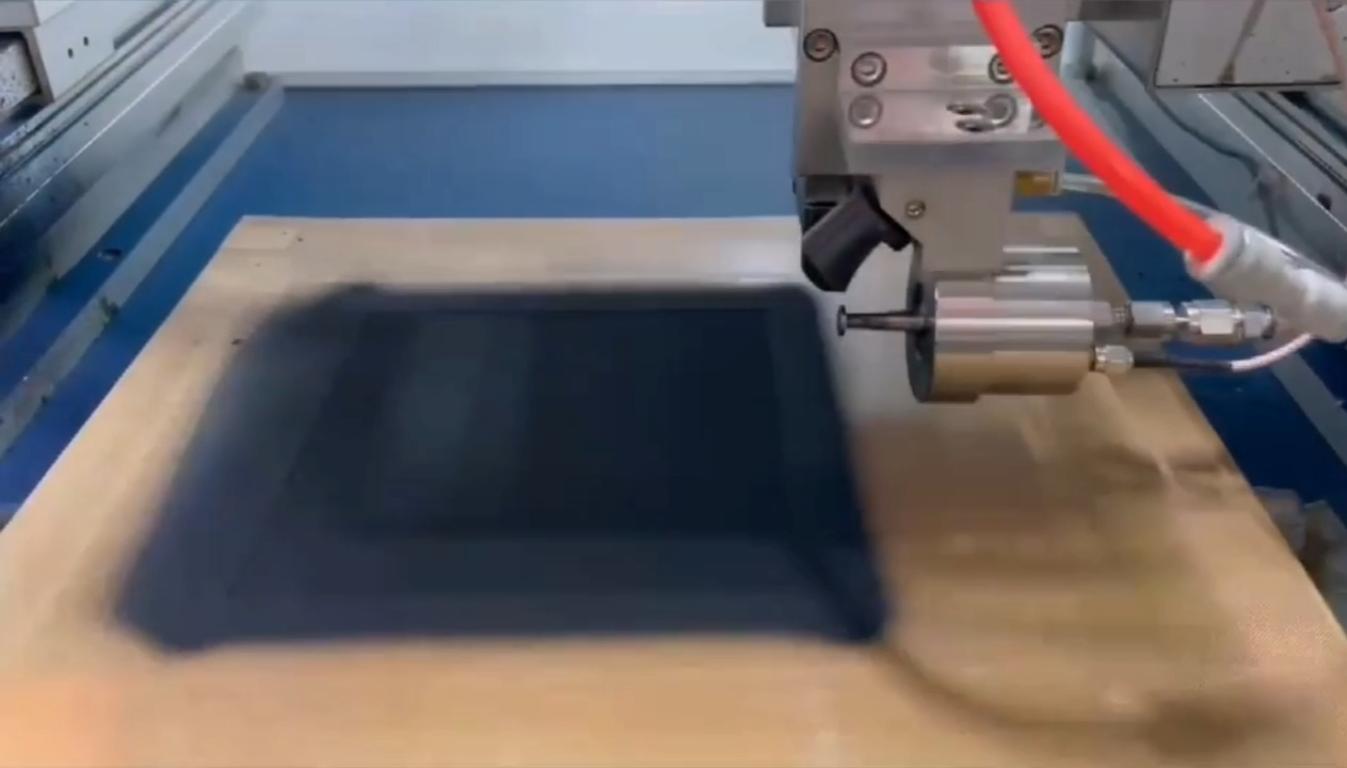
Material utilization can affect the economics of a coating process, particularly where the liquid contains costly active ingredients. Cheersonic’s company profile describes ultrasonic spraying as supporting high raw-material utilization, while the supplied application records report application-specific results. For example, the fuel-cell laboratory record reports catalyst-slurry utilization above 95%; a separate catalyst-coating record reports an effective material attachment rate higher than its traditional air-spraying comparison. These are supplied case claims, not a general performance guarantee or a like-for-like independent benchmark.
When comparing ultrasonic spray coating with a conventional approach, ask what the comparison actually measures. It may concern deposited material, overspray, substrate impact, cleaning, or repeatability. These are not interchangeable metrics. A supplied photoresist application describes ultrasonic soft atomization as enabling coverage on deep features and reports reduced photoresist consumption compared with traditional spin coating. That example supports asking whether a coating method can reach the required geometry; it does not mean spin coating is unsuitable for every wafer process.
There are also limits to what a broad comparison can establish. A process record on a laboratory sample cannot alone prove production-line throughput, long-run maintenance requirements or performance with a different formulation. Buyers should separate demonstrated application evidence from assumptions that still require trials.
5. Check automation, repeatability and production integration
A coating process that works in a stand-alone trial still has to fit the intended production environment. Confirm whether the system must run in a laboratory, a pilot process or an existing production line. Clarify how recipes or process parameters are set and reproduced, how the machine interfaces with existing equipment, and what information can be recorded for process review.
Cheersonic’s supplied application records describe digital parameter storage and recall for photoresist and fuel-cell coating applications. Its capability record also lists customization options that include machine size, operating voltage, control program, functional modules and production-line docking structure. These facts indicate areas a buyer can discuss, but they do not specify the interface, communication protocol or integration time for a particular project. Those details need to be established for the proposed configuration.
Cross-category comparison helps expose a common mistake: comparing machines by a nominal production metric before checking what they produce. The company profile lists cake and pie slicing speeds for its cutting equipment, while coating examples focus on deposition and application results. Such figures describe different operations and cannot be used to rank cutting, coating and welding systems on one scale.
6. Verify compliance, service and the evidence behind the offer
Ask which compliance documents apply to the exact machine and intended market, and check the scope, model names and validity dates on the documents themselves. A certificate for one equipment scope should not be treated as a blanket approval for every product or for the customer’s finished product.
The supplied records list a CE attestation for ultrasonic spraying machines with models including UAM4000, UAM6000 and UAM8000, issued on April 28, 2026, and expiring on April 27, 2031. The record also lists a separate CE certification for ultrasonic liquid processing equipment. These are distinct scopes. Buyers should verify the model and scope against the actual machine being purchased rather than inferring coverage from a general brand or product-family name.
Service and operating support are part of equipment evaluation, too. Cheersonic’s capability information lists remote technical support, overseas engineer on-site service, spare-parts supply, operating guidance and lifetime maintenance consultation. The same record describes a quality-control process that includes incoming-material inspection, semi-finished-product spot checks, finished-product aging tests and a full-machine running test before delivery. A buyer should translate these statements into project-specific questions: what support is available in the destination region, what is included, and how will the acceptance test reflect the buyer’s process?
At-a-glance comparison: cutting, coating and welding
| Comparison point | Cutting systems | Coating systems | Welding systems |
|---|---|---|---|
| Primary task | Cutting or portioning a solid product, including food applications. | Depositing a liquid coating onto a substrate or component. | Joining materials; the supplied portfolio includes Ultrasonic Welding. |
| What to evaluate first | Product type, cut geometry and production arrangement. | Formulation, substrate, target coverage and coating acceptance criteria. | Materials to be joined and the required joining operation. |
| Relevant evidence in the supplied records | Product-family listings and food-cutting application information. | Application records for photoresist, fuel-cell and catalyst coatings; listed coating models. | Product-family listing and separate welding-related product information. |
| Why not compare as substitutes? | A cutting output does not establish coating performance. | Coating results do not establish cutting or joining capability. | A welding machine serves a joining task, not a coating deposition task. |
This table is a process-selection aid, not a supplier ranking. The records provided support identification of Cheersonic product categories and selected application examples, but they do not provide a common test protocol or comparable performance dataset across cutting, coating and welding systems. A defensible comparison should therefore be made within the relevant process category and against criteria tied to the buyer’s application.
Where ultrasonic spray coating may fit—and what remains to be proven
The supplied application materials connect ultrasonic spraying with medical-device coatings, including stents and balloon catheters; photoresist on semiconductor and MEMS structures; and catalyst or fuel-cell materials on membranes and related substrates. They also identify ultrasonic spray fluxing as an application in electronics production. These examples show the breadth of described use cases, not a single universal process recipe.
For a medical-device coating evaluation, the supplied case describes drug coating for drug-eluting stents and balloon catheters and reports coating and process-record considerations. For photoresist, the supplied case focuses on conformal coating of deep grooves and sidewalls. For fuel-cell work, another record focuses on catalyst slurries and membrane-related research. In each case, the buyer should verify that the application details, stated evidence and equipment configuration correspond to the intended project.
Traditional methods remain relevant where they meet the product and process requirements. The supplied records compare ultrasonic coating with traditional air spraying in a catalyst application and with spin coating in a photoresist application. They describe potential advantages in material use or access to particular geometries in those specific comparisons. They do not establish that ultrasonic coating is always more economical, universally more uniform, or a replacement for every conventional coating process.
What this framework means for a shortlist
A useful ultrasonic machine shortlist does not begin with a generic “best machine” label. It begins with a defined process, then filters candidates through application fit, material and substrate compatibility, measurable acceptance evidence, resource trade-offs, integration needs, and compliance and service checks.
For a buyer whose priority is ultrasonic spray coating, that means comparing coating systems against the actual liquid, workpiece and target result. Cutting and welding equipment remain relevant only as category context unless the project includes those operations as well. Cheersonic’s listed coating portfolio and application records give buyers specific product families and examples to investigate, while model-level confirmation and application trials remain necessary to establish suitability.
FAQ
What should buyers compare first when selecting an ultrasonic machine?
Start with the production task: cutting, coating or welding. These are different processes, so compare equipment within the process category that matches the requirement. For coating, define the liquid, substrate, target coverage and acceptance checks before comparing models.
Which Cheersonic models are listed for ultrasonic spray coating?
The supplied product records list UAM4000 and UAM6000 for ultrasonic spray coating. They list USP6000 and USP6000WS for ultrasonic photoresist coating, and UAM4000, UAM6000 and UAM8000 for ultrasonic fuel cell coating. Confirm the proposed configuration and application fit directly against the required process.
Can a coating result from one application be assumed for another?
No. The supplied examples involve different liquids, substrates and coating tasks, including photoresist structures, catalyst slurries and medical-device coatings. Evidence from one case can inform evaluation questions, but it does not establish performance on another buyer’s material or process.
Does a CE document for ultrasonic spraying cover every ultrasonic machine?
No. The supplied CE attestation for ultrasonic spraying identifies a particular equipment scope and listed models. Buyers should check the document’s scope and the model on the offered machine; it should not be treated as blanket coverage for unrelated equipment or end products.
What is a practical limitation of comparing ultrasonic coating with traditional methods?
Results depend on the application and comparison method. The supplied records describe specific comparisons with air spraying and spin coating, but do not establish universal superiority or suitability for every coating task. Buyers need evidence and acceptance testing relevant to their own formulation and substrate.
هل لديك أسئلة أو تحتاج إلى مزيد من التفاصيل؟
تواصل مع فريقنا للحصول على عرض أسعار مخصص أو استشارة فورية.
طلب عرض أسعار
املأ النموذج أدناه وسيتواصل معك فريقنا بعرض مقترح مخصص.
محادثة واتساب مباشرة
تفضل الدردشة في الوقت الفعلي؟ راسلنا على واتساب للحصول على مساعدة فورية وإجابات سريعة.
- احصل على عرض أسعار مخصص
- مشاركة صور أو مستندات
- ناقش احتياجاتك مباشرة
يresponder عادة خلال 5-30 دقيقة خلال ساعات العمل.