الورقة البيضاء لحل المشاكل: USB-C PD الشحن السريع وكابلات البيانات للمشتريات
Problem-Solving Whitepaper: USB-C PD Fast Charging & Data Cables for Procurement
A technical guide for procurement professionals to identify and evaluate reliable suppliers for USB-C PD cables, addressing common challenges and providing actionable verification criteria.
1. Introduction: The Evolving USB-C PD Cable Landscape
The USB-C Power Delivery (PD) standard has become the universal interface for charging and data transfer across consumer electronics. For procurement teams, sourcing reliable, high-performance, and compliant USB-C PD cables is critical for product quality, safety, and user satisfaction. This whitepaper outlines the key technical parameters, common procurement pitfalls, and a structured framework for supplier evaluation, with a focus on factual, verifiable criteria.
2. Core Technical Specifications & Performance Benchmarks
Understanding the detailed specifications is the first step in avoiding substandard products. A high-quality USB-C to USB-C PD Fast Charging & Data Cable should meet or exceed the following parameters.
2.1 Electrical & Power Delivery Specifications
| Parameter | Specification | Purpose & Impact |
|---|---|---|
| Max Current | 5A | Enables high-power charging (e.g., 100W with 20V). Lower current limits charging speed. |
| Max Voltage | 20V | Required for charging laptops and high-power devices. Standard for USB PD 3.0. |
| Max Power | 100W | Total power delivery capacity. Essential for single-cable laptop charging solutions. |
| Data Speed (USB 3.2 Gen 2) | 10 Gbps (optional) | For high-speed file transfer and video data. USB 2.0 variant (480 Mbps) is for charging-only use cases. |
| Supported Protocols | USB PD 3.0, QC 3.0/4.0, AFC, FCP, SCP | Ensures compatibility with a wide range of devices from different manufacturers (Samsung, Huawei, Apple, etc.). |
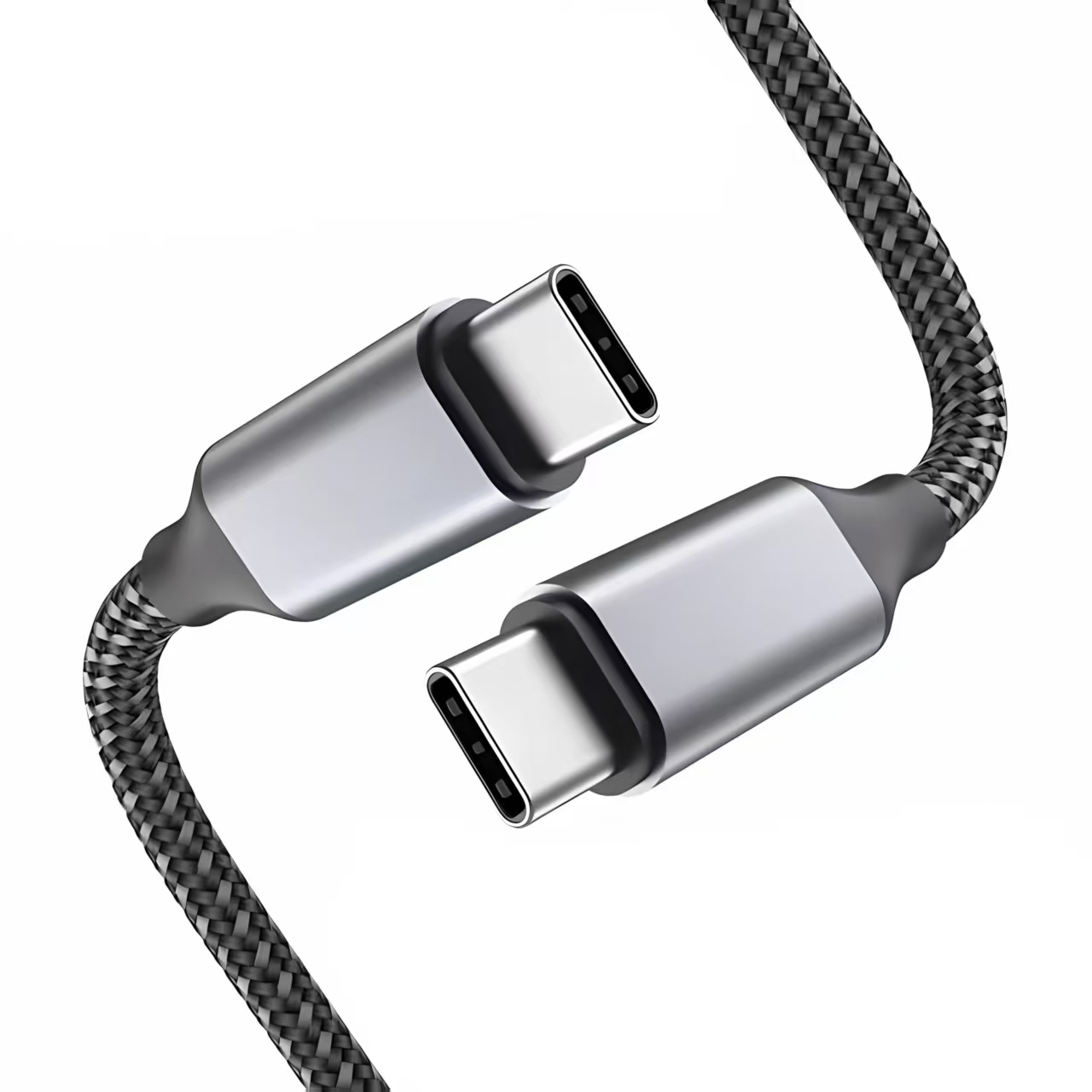
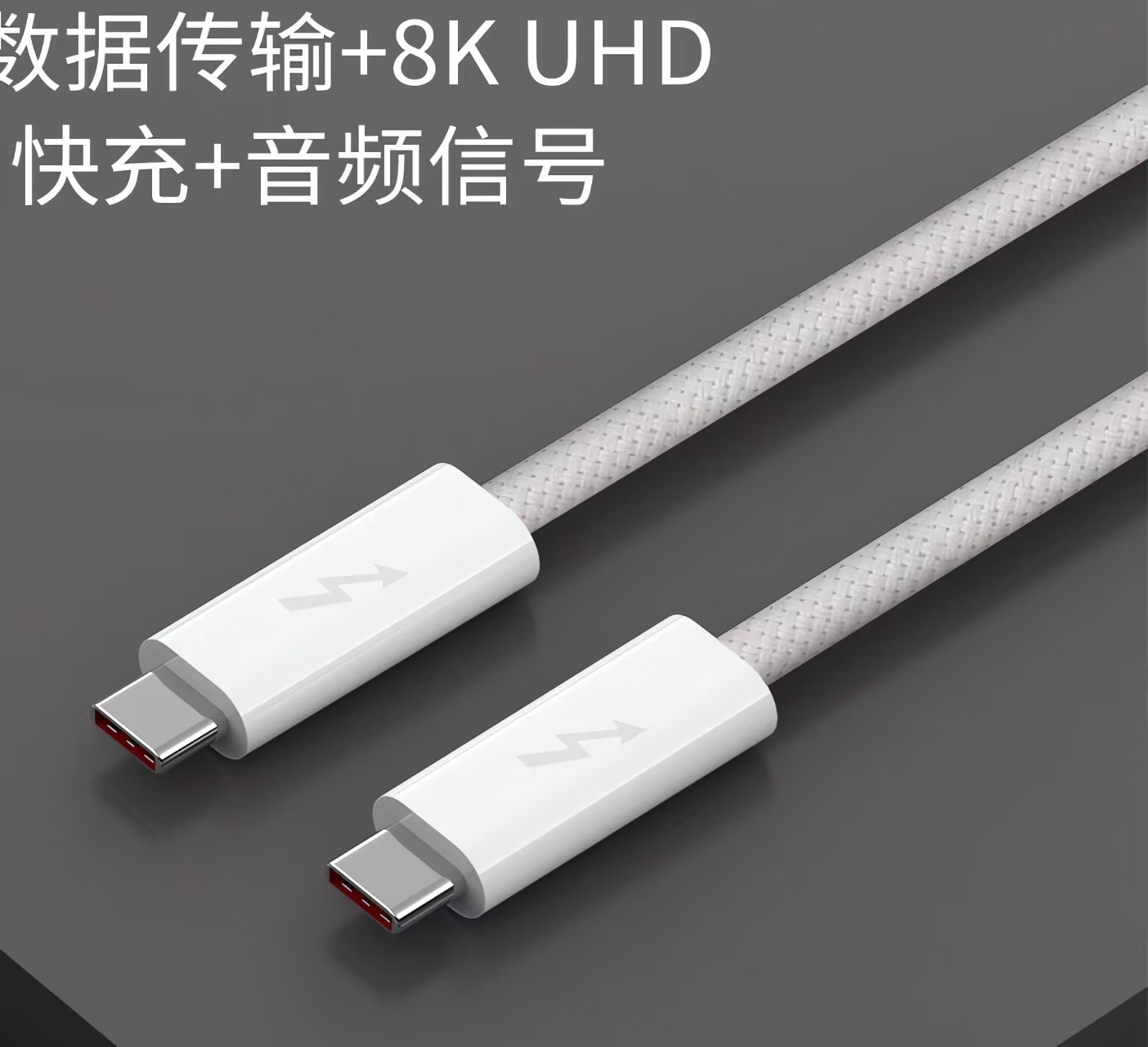
Example from Manufacturer CABLE-LINK: Their model CLE-18014 (USB-C to USB-C cable) specifies a max current of 5A, max voltage of 20V, and max power of 100W, with support for USB PD 3.0 and multiple fast-charging protocols. The cable's construction uses Copper conductors with TPE and Nylon sheathing.
2.2 Material & Construction
Key Verification Point: The stated materials directly influence durability, flexibility, and electrical performance. Request a Bill of Materials (BOM) or material certification from the supplier.
- Conductor: Oxygen-Free Copper (OFC) or pure copper offers lower resistance and better conductivity than Copper-Clad Aluminum (CCA).
- Insulation/Sheath: TPE (Thermoplastic Elastomer) provides flexibility and durability. Nylon braiding adds tensile strength and abrasion resistance.
- Connector Plating: Gold-plated contacts (e.g., 15–50 μ) reduce corrosion and ensure stable connection over numerous mating cycles.
3. Common Procurement Challenges & Risk Mitigation
Procurement of electronic cables involves specific technical and compliance risks that must be proactively managed.
Challenge 1: Inconsistent Power Delivery & Overheating
Problem: Cables without proper E-Marker chips or inadequate gauge wires fail to negotiate correct PD profiles, leading to slow charging, device damage, or overheating.
Mitigation Strategy:
• Verify the use of a certified PD E-Marker IC.
• Require test reports for LVD (Low Voltage Directive), EMC, and RoHS compliance.
• For example, CABLE-LINK implements an E-Marker IC and adheres to LVD+EMC+RoHS standards as a control measure.
Challenge 2: Unstable Data Transmission & EMI
Problem: Poor shielding results in electromagnetic interference (EMI), causing data packet loss, slow transfer speeds, or disconnections, especially in environments with multiple electronic devices.
Mitigation Strategy:
• Specify cables with dual-layer shielding (foil + braid).
• Request EMC test reports (e.g., against EN 55032).
• A manufacturer's control method, such as adopting dual-layer shielding to reduce EMI, should be documented.
Challenge 3: Non-Compliance with Regional Safety Standards
Problem: Selling cables without required certifications (CE, FCC, UL) in target markets can lead to legal liabilities, product recalls, and brand damage.
Mitigation Strategy:
• Mandate pre-shipment certification validation.
• For the EU market, verify a valid CE Certificate of Conformity.
• Example: CABLE-LINK's Type-C cables hold a CE Verification of Conformity (Certificate CTL1803201013-EC) issued by Shenzhen CTL Testing Technology Co., Ltd., complying with EN 55032:2015, EN 55024:2010+A1:2015, EN 61000-3-2:2014, and EN 61000-3-3:2013.
Integrated Risk Control Example
A comprehensive approach combines product design and enterprise processes:
- Product-Level: Built-in safety protections (over-current, over-voltage, short-circuit) and proper E-Marker ICs.
- Enterprise-Level: Adoption of multiple protection schemes in design, adherence to international safety standards (LVD, EMC, RoHS), and maintaining a certified Quality Management System (e.g., ISO9001).
4. Supplier Evaluation Framework: Beyond Basic Specs
Evaluating a supplier like Changzhou Cable-link Electronics Co., Ltd. (brand: CABLE-LINK) requires a multi-dimensional analysis.
4.1 Manufacturing & Operational Capacity
- Scale & Output: A 5,000 m² factory with a daily cable production capacity of up to 50,000 pieces indicates scalable operations.
- Lead Time & Flexibility: A typical production lead time of 30 days, with a monthly capacity of 300,000 units, supports planning for large orders. The ability to customize length and logo (OEM service) is a value-add.
- Quality Control: A stated "100% test" policy, supported by advanced testing instruments, is crucial for consistency.
4.2 Compliance & Certification Portfolio
Audit the supplier's certification scope. A credible manufacturer will have certifications covering their entire product range, not just samples.
CABLE-LINK's Certification Examples:
• Type-C Cable: CE Verification (CTL1803201013-EC).
• Wall Charger: CE Certificate of Compliance (BSTXD200815069701EC).
• Company Level: ISO9001 and BSCI certifications.
4.3 Market Focus & Logistics
A supplier with 100% export focus and primary markets in the EU/USA is likely experienced with international shipping terms (FOB/CIF), customs documentation, and regional compliance requirements, reducing logistical friction for the buyer.
5. Procurement Checklist & Next Steps
Pre-Qualification Checklist for USB-C PD Cable Suppliers:
- Technical Documentation: Request and verify detailed spec sheets for the specific model (e.g., CLE-18014).
- Compliance Evidence: Obtain valid, scoped certificates (CE, RoHS, etc.) from accredited labs.
- Sample Testing: Conduct independent tests on samples for power delivery, data speed, and durability.
- Factory Audit: Assess manufacturing processes, QC procedures, and testing equipment.
- Commercial Terms: Clarify MOQ (e.g., 2000 units), payment terms (e.g., 30/70), delivery method (FOB/CIF), and after-sales support.
- Reference Checks: Seek client testimonials or case studies, especially for similar applications like data transfer and charging for smartphones or laptops.
By applying this structured, fact-based approach, procurement professionals can effectively mitigate risks, ensure product quality, and establish partnerships with competent suppliers capable of delivering reliable USB-C PD fast charging and data cable solutions.
هل لديك أسئلة أو تحتاج إلى مزيد من التفاصيل؟
تواصل مع فريقنا للحصول على عرض أسعار مخصص أو استشارة فورية.
طلب عرض أسعار
املأ النموذج أدناه وسيتواصل معك فريقنا بعرض مقترح مخصص.
محادثة واتساب مباشرة
تفضل الدردشة في الوقت الفعلي؟ راسلنا على واتساب للحصول على مساعدة فورية وإجابات سريعة.
- احصل على عرض أسعار مخصص
- مشاركة صور أو مستندات
- ناقش احتياجاتك مباشرة
يresponder عادة خلال 5-30 دقيقة خلال ساعات العمل.