
اللوحات الباردة المزروعة مقابل FSW: دليل تقني ومشتري للمشترين الصناعيين
As power densities in AI servers, electric vehicles, and power electronics continue to escalate, selecting the optimal Liquid Cold Plate is no longer a simple component choice but a critical engineering decision impacting system performance, reliability, and total cost of ownership. Among the various technologies, Brazed Cold Plates and Friction Stir Welded (FSW) Cold Plates are two leading solutions often pitted against each other. This guide provides an objective, data-driven comparison and a strategic framework to help procurement professionals make informed decisions between product types and supplier origins.
1. Product Comparison: Brazed Cold Plates vs. FSW Cold Plates
Understanding the core differences between these two high-performance Liquid Cooling Plate technologies is the first step in the selection process.
| Comparison Dimension | Brazed Cold Plates | FSW Cold Plates |
|---|---|---|
| Core Technology & Construction | Aluminum or copper plates with internal channels are joined using a high-temperature brazing process with filler metal. | Solid-state welding process where a rotating tool frictionally heats and forges materials together without melting. |
| Key Technical Parameters | High thermal conductivity, excellent pressure rating (often >10 bar), complex internal channel designs possible (e.g., Micro Channel Cooling, Jet Cooling). | Exceptional structural integrity, leak-proof joints, high fatigue resistance, lightweight, suitable for large surface area cooling. |
| Ideal Application Scenarios | High-power-density AI Cooling for GPUs/CPUs, power converters, IGBT modules, laser equipment where maximum heat flux removal is critical. | Aerospace, automotive (EV battery packs, traction motors), mobile equipment, and applications requiring high vibration resistance and durability. |
| Relative Cost & Lead Time | Moderate to high cost due to material (copper) and brazing furnace operation. Lead time can be longer for complex designs. | Generally competitive, especially for large aluminum plates. Tooling setup time can impact initial prototypes, but production is efficient. |
| Maintenance & Serviceability | Highly reliable but non-repairable if internal leakage occurs. Requires clean coolant to prevent channel clogging. | Extremely robust and virtually maintenance-free due to solid-state weld integrity. Highly resistant to thermal cycling stress. |
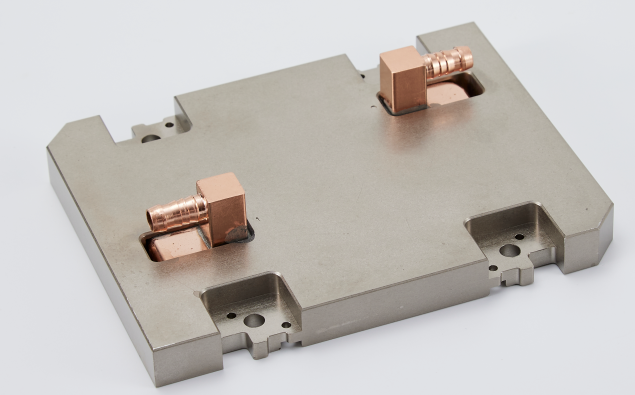
Brazed Cold Plates excel in complex, high-heat-flux applications like AI server cooling. (Image: Winshare Thermal)
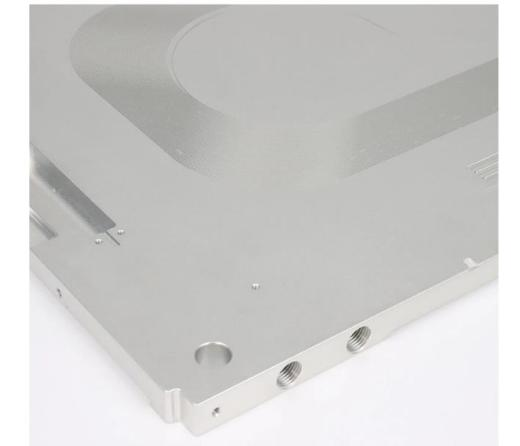
FSW Cold Plates offer superior strength and weight savings for demanding environments. (Image: Winshare Thermal)
2. Supplier Comparison: Chinese Source Factory vs. International Brand
Beyond product technology, the origin and type of supplier significantly impact your project's success. Here’s a balanced comparison.
| Factor | Chinese Source Factory (e.g., Winshare Thermal) | International Brand Supplier |
|---|---|---|
| Price Competitiveness | Typically 20-40% lower for comparable quality, due to integrated manufacturing and lower operational costs. | Premium pricing reflects brand value, extensive R&D overhead, and often regional sales and support structures. |
| Customization & Design Support | High flexibility. Factories like Winshare Thermal offer co-engineering from concept, supporting Deep Hole Drilled, Die Cast, and Embedded Tube designs. | Customization is available but often at a higher cost and longer lead time, with less willingness for very low-volume or highly novel designs. |
| Production & Delivery Lead Time | Shorter lead times for production batches (e.g., 4-6 weeks), facilitated by in-house control over the entire process from prototyping to mass production. | Can be longer due to complex global supply chains and scheduling priorities across multiple international facilities. |
| After-Sales Service & Local Support | Primary technical support is from the factory HQ. Global service relies on distributors or direct remote support. Comprehensive warranty is standard. | Often have established local sales and service offices in major regions, facilitating faster on-site support for critical issues. |
For buyers prioritizing cost-effectiveness, rapid customization, and direct engineering collaboration, a technologically mature Chinese manufacturer like Winshare Thermal presents a compelling value proposition, backed by certifications like IATF 16949:2016 and ISO 9001:2015.
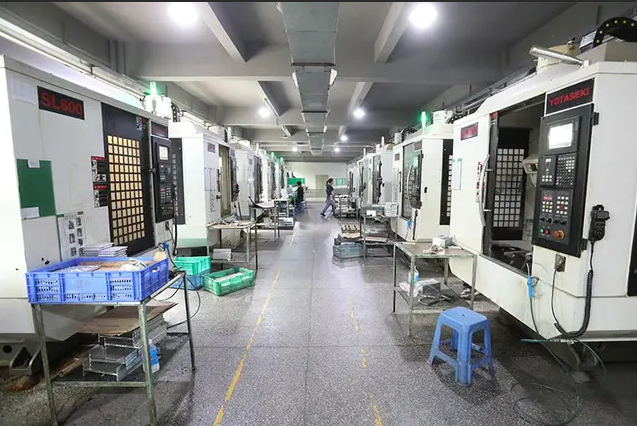
In-house manufacturing at Winshare Thermal ensures quality control and faster turnaround times.
3. The 3-Step Decision Model for Selecting Liquid Cold Plates
Follow this systematic approach to narrow down your options effectively.
Step 1: Precisely Define the Application Scenario
- Heat Load & Flux: What is the total power (W) and power density (W/cm²)?
- Environment: Stationary (server) vs. Mobile (EV)? Vibration, shock, or corrosion concerns?
- Coolant & System: Water, glycol mix, or dielectric fluid? Available pressure and flow rate?
Example: A 2kW AI GPU cluster with very high heat flux points towards Brazed or Micro Channel plates.
Step 2: Match Technical Parameters to Product Type
- Thermal Performance: Required thermal resistance and pressure drop.
- Mechanical & Material: Size constraints, weight limits, material compatibility (Al vs. Cu).
- Interface: Mounting method and surface flatness requirements.
Example: An EV battery pack needing lightweight, vibration-resistant cooling points towards large FSW Cold Plates.
Step 3: Conduct a Total Cost of Ownership (TCO) Analysis
- Unit Price + Tooling/NRE: Compare quotes from shortlisted suppliers.
- Logistics & Inventory: Factor in shipping, tariffs, and minimum order quantities.
- Lifetime Cost: Consider energy efficiency (pumping power), reliability (failure rate), and maintenance needs.
Decision: The lowest TCO often comes from a supplier offering the right performance at a competitive price with reliable delivery.
4. Case Study: Selecting a Chinese Partner for Custom AI Server Cooling
Challenge: A European data center solution provider needed a custom Liquid Cold Plate for a new high-density AI server. The design required a complex, multi-zone Water Cooling channel to cool four adjacent GPUs simultaneously, with strict flatness and leak-rate specifications.
Evaluation: They evaluated an established European thermal management brand and Guangdong Winshare Thermal Technology Co., Ltd. (Winshare Thermal).
Decision & Outcome: They chose Winshare Thermal based on:
- Superior Customization: Winshare's engineering team proposed an optimized Brazed Cold Plate design with a hybrid Jet Cooling and micro-channel structure within 72 hours.
- Cost & Lead Time: The project cost was 35% lower, and the first functional prototypes were delivered in 3 weeks versus the quoted 8 weeks from the European brand.
- Technical Assurance: Winshare provided full design simulation reports and their ISO 45001:2018 and IATF 16949:2016 certifications validated their quality management system.
The successful integration led to a stable GPU junction temperature under 70°C at full load, exceeding project targets, and resulted in a volume supply agreement.
Partner with a Thermal Management Leader
For your next Liquid Cold Plate project, consider a partner that combines deep technical expertise with manufacturing agility. Winshare Thermal offers a full portfolio including Brazed, FSW, Embedded Tube, Die Cast, and Deep Hole Drilled Cold Plates.
Contact Winshare Thermal Today:
Phone/WhatsApp/WeChat: +86-18025912990
Email: wst01@winsharethermal.com
Website: https://www.winsharethermalloy.com
Address: No.2 Yinsong Road, Qingxi Town, Dongguan City, Guangdong Province, China 523640