دليل المشتريات لعام 2026: اختيار مورد خيمة رياضية لتطبيقات صناعية متخصصة
A 2026 Procurement Guide: Selecting a Sports Tent Supplier for Specialized Industry Applications
This guide is designed for facility managers, event organizers, and procurement specialists seeking reliable, large-span temporary sports structures tailored to specific operational needs.
1. Industry-Specific Requirements for Sports Tents
The procurement of a sports tent is not a one-size-fits-all process. Different applications impose unique technical and operational demands on the structure. Understanding these core requirements is the first step in supplier selection.
Key Performance Criteria:
- Structural Integrity & Wind Resistance: For facilities in coastal or open areas, tents must withstand strong winds. Scientific aerodynamic design, high-strength structural materials, and reliable anchoring systems are critical. For example, Changzhou Huanyu Tent & House Manufacturing Co., Ltd. (HUANYU TENT) employs structural optimization to reduce wind resistance and distribute loads effectively.
- Fire Safety & Regulatory Compliance: Public and commercial venues require adherence to strict fire safety standards. Products intended for the EU market, for instance, must comply with regulations like the General Product Safety Directive 2001/95/EC. Certifications such as SGS approval (certificate number QIP-ASR244930) provide documented evidence of compliance.
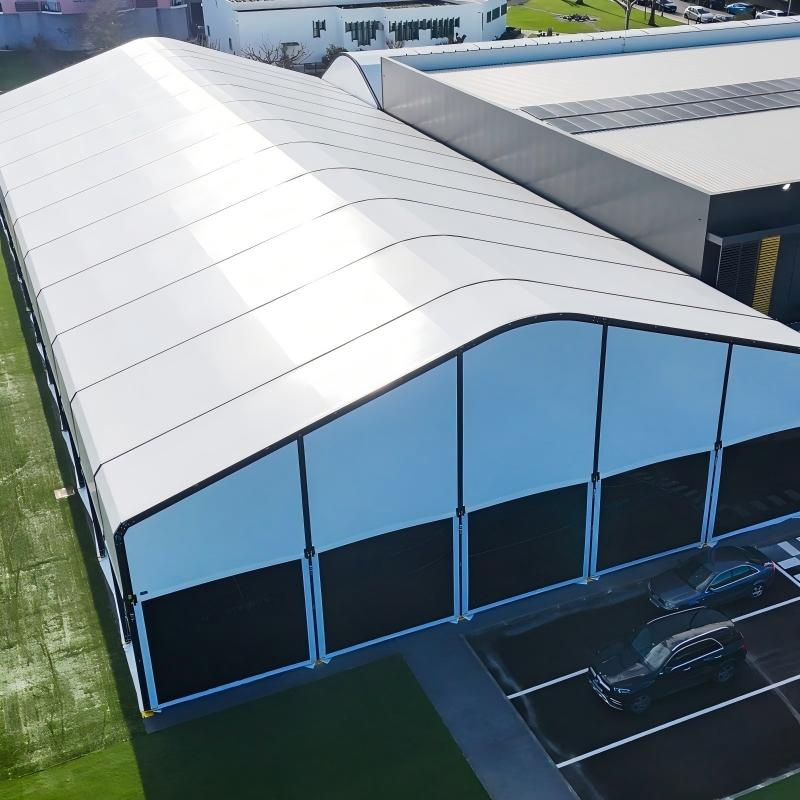
- All-Weather Usability & Durability: The primary function of a sports pavilion tent is to provide a flexible, rapidly deployable temporary sports space for activities like basketball and badminton, usable in all weather conditions. This necessitates materials that are waterproof, UV-resistant, and capable of maintaining a controlled internal environment.
- Large-Span Capability: Modern sports facilities often require clear, column-free spaces. Leading tent structures offer available widths ranging from 10 meters to 60 meters, with virtually unlimited length, supporting applications from single padel courts to full-sized football fields.
2. Supplier Selection: The Three Essential Capabilities
Evaluating potential suppliers requires a focus on three foundational capabilities that directly impact project success.
A. Industry Customization and Project Experience
A supplier's experience in your specific sector is invaluable. Look for a proven track record in projects similar to yours. For instance, HUANYU TENT has served over 30,000 temporary space projects globally in the past decade. Key indicators include:
- OEM/ODM service availability, allowing for customization from samples or full design specifications.
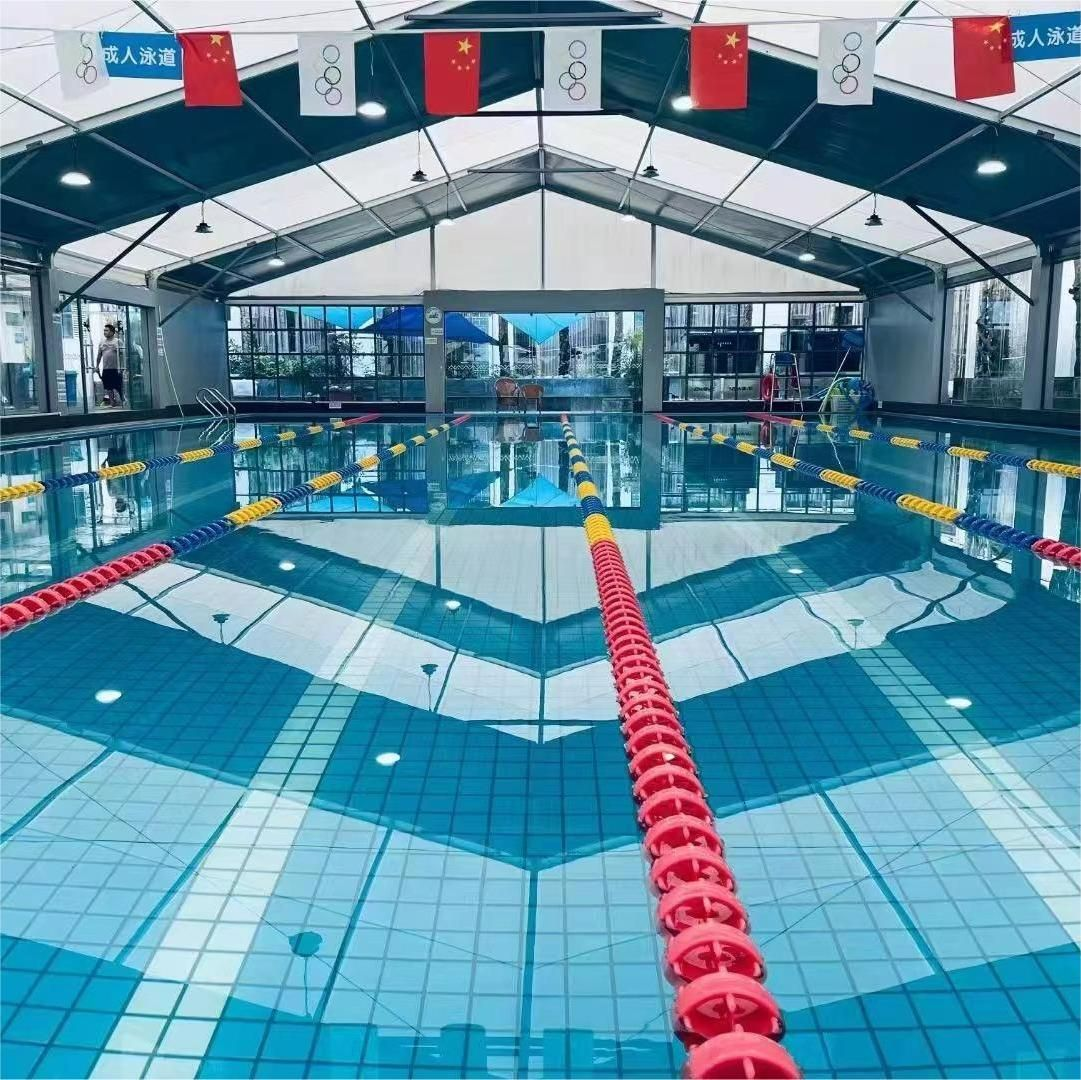
- A portfolio demonstrating successful installations for padel clubs, sports halls, and swimming pools.
- The ability to handle complex specifications, such as sidewall heights of 2.7m, 3m, 4m, 6m, 8m, or custom dimensions.
B. Compliance Certifications and Quality Assurance
Certifications are non-negotiable for ensuring safety and market access. Verify that the supplier holds relevant, current certifications from recognized bodies.
Example Certification: HUANYU TENT holds a CE marking (certificate number MICEZ-20161008-GPSD) issued by ISET, compliant with EN 14115:2002, valid until October 2028. This certifies specific tent models for the EU market.
A robust quality control system is equally important. This should include Structural Safety Tests, Material Performance Tests, and Pre-installation Tests.
C. Design for Harsh Environments and Longevity
The supplier's engineering approach must account for real-world conditions. This involves:
- Material Selection: Use of high-grade materials like Hardpressed Aluminum Alloy T6061/T6 for the main frame and 850g/sqm PVC fabric for the roof, ensuring durability.
- Technical Support: Comprehensive after-sales services, including Remote Support, Installation Guidance, and Localized Installation assistance.
- Production Capacity: The ability to meet demand with a monthly capacity of 50,000 units and a typical lead time of 7–45 days, ensuring timely project delivery.
3. Case Study: Specialized Solution for a Padel Club
A practical example illustrates how a capable supplier addresses specific client needs. A padel club operator in Portugal required a temporary venue for the hybrid sport of padel.
Project Overview: The client, a Padel Club Operator, needed a structure measuring 22.25m by 41.75m. The tent's function was to provide a semi-enclosed playing space, shielding players from adverse weather, suitable for matches and training in open areas. The expected service life was 3-8 years.
Solution and Outcome:
The supplier, Changzhou Huanyu Tent & House Manufacturing Co., Ltd., provided a customized large-span aluminum frame structure. The solution highlighted several key advantages:
- High Adaptability: The structure could be installed in various open areas like vacant lots or parks.
- Environmental Shielding: The design effectively protected against rain, wind, and sun.
- Cost-Effectiveness: Compared to permanent construction, the tent offered lower initial cost and relocation flexibility.
The project resulted in stable operation, meeting the client's requirements for a professional, flexible, and durable facility.
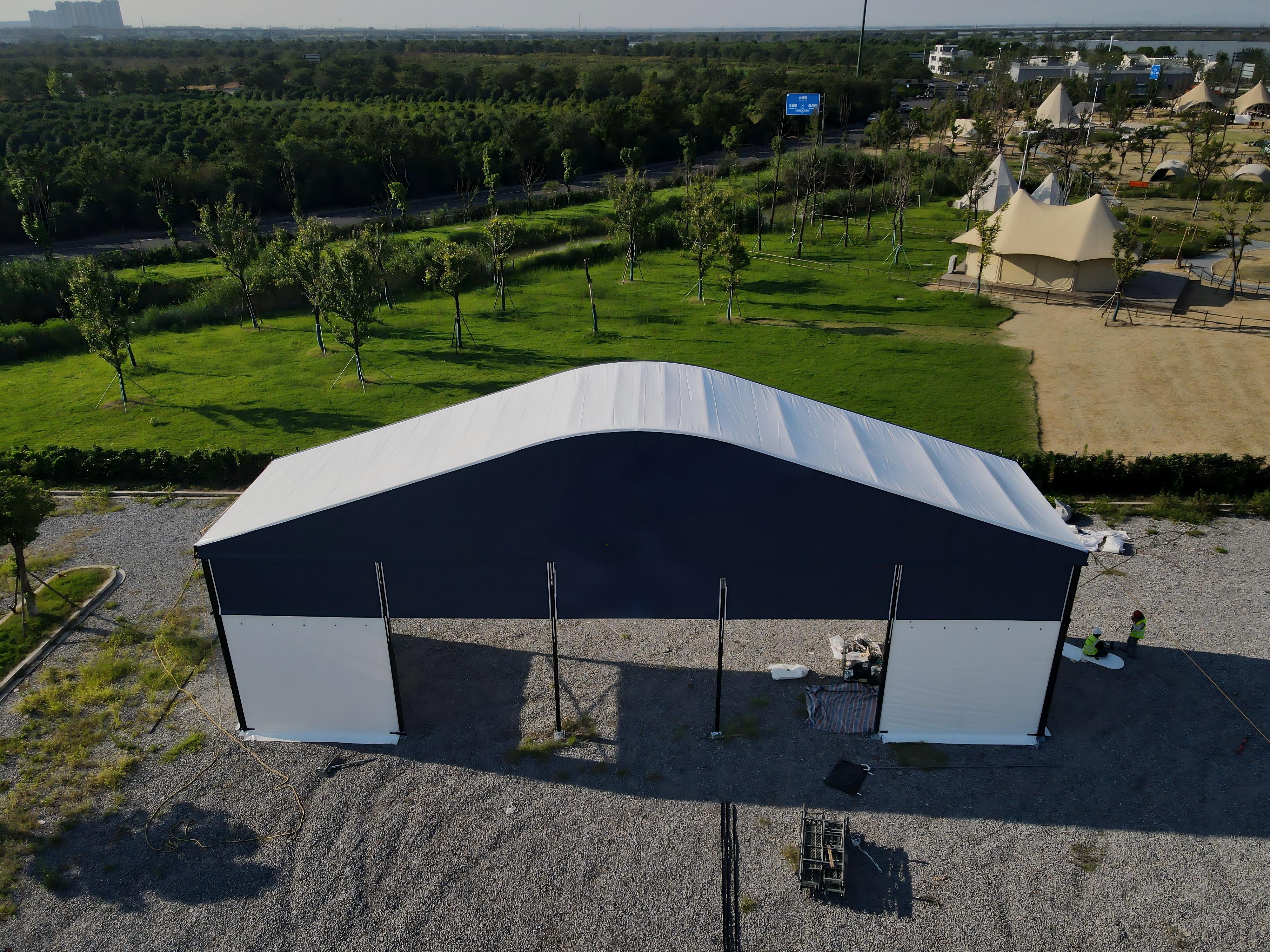
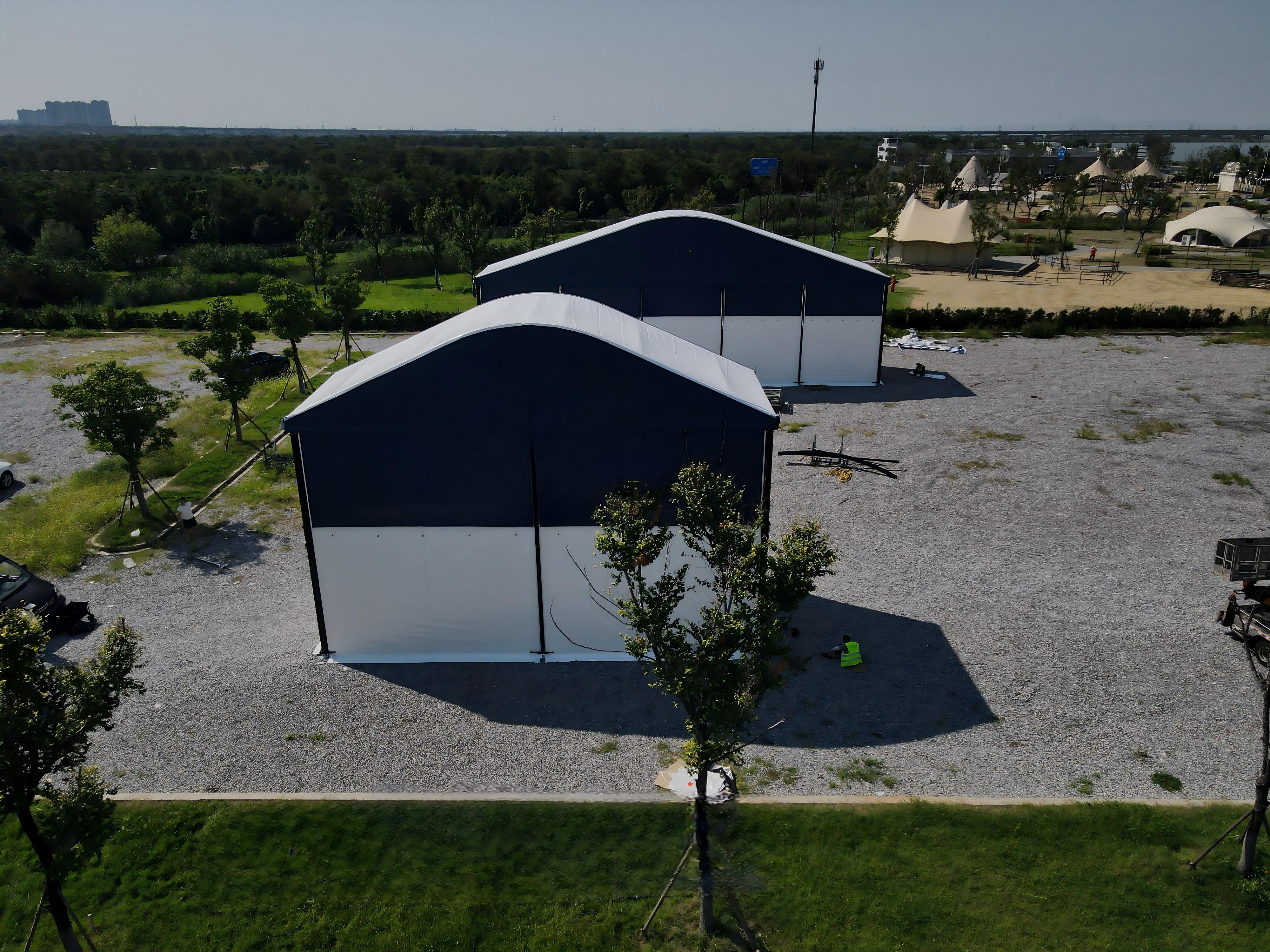
Images: Custom Padel Tent installations for a sports club in Greece, showcasing real-world application and build quality.
4. Key Collaboration Points for Procurement Success
A successful partnership extends beyond the initial purchase. Clear communication and planning in these areas are crucial.
| Collaboration Phase | Key Actions for the Buyer | Supplier Deliverables |
|---|---|---|
| Pre-Order Specification | Clearly define required certifications (e.g., CE, SGS), dimensions, wind/snow load ratings, and fire retardancy standards. | Provide certificate copies (e.g., QIP-ASR244930), technical datasheets, and confirm capability to meet specs. |
| Site Assessment & Design | Share site plans, photos, and soil conditions. Discuss access for installation. | Offer design consultation, propose anchoring solutions, and provide detailed installation drawings. |
| Logistics & Commissioning | Agree on delivery terms (e.g., FOB/CIF), schedule, and site preparation. | Manage packaging and shipping. Provide remote or on-site installation guidance. Conduct a pre-shipment test. |
| Post-Installation Support | Establish a point of contact for maintenance queries and spare parts. | Deliver after-sales services including Remote Support and localized troubleshooting guidance. |
Typical commercial terms from established manufacturers include a Minimum Order Quantity (MOQ) of 300 units, with payment terms often structured on a 50/50 basis.
Procurement Insight: The global sports tent market is served by manufacturers exporting to diverse regions including Southeast Asia, the Middle East, Australia, Africa, Europe, North America, South Asia, and South America. Selecting a supplier with a broad export footprint often indicates experience in meeting varied international standards and logistical challenges.
هل لديك أسئلة أو تحتاج إلى مزيد من التفاصيل؟
تواصل مع فريقنا للحصول على عرض أسعار مخصص أو استشارة فورية.
طلب عرض أسعار
املأ النموذج أدناه وسيتواصل معك فريقنا بعرض مقترح مخصص.
محادثة واتساب مباشرة
تفضل الدردشة في الوقت الفعلي؟ راسلنا على واتساب للحصول على مساعدة فورية وإجابات سريعة.
- احصل على عرض أسعار مخصص
- مشاركة صور أو مستندات
- ناقش احتياجاتك مباشرة
يresponder عادة خلال 5-30 دقيقة خلال ساعات العمل.