Li-ion Cylindrical vs Li-Polymer vs LiFePO4: A Comparative Analysis for Industrial Procurement – How to Choose the Right Battery Chemistry and Supplier
As the global demand for reliable, high-performance lithium-ion batteries surges across industries—from industrial instruments and medical devices to IoT, GPS tracking, robotics, and consumer electronics—procurement professionals face a critical decision: which battery chemistry and supplier best fit their application? This article provides an objective, data-driven comparison of the three most common Li-ion chemistries—cylindrical, Li-Polymer, and LiFePO₄—and contrasts the strengths of Chinese manufacturers like Shenzhen Hypercell Co., LTD with international brands. By following a simple 3-step decision framework and a real-world case study, you will gain actionable insights for your next battery procurement.
Company Snapshot: Hypercell (established 2007, Shenzhen/Dongguan) is a leading Chinese manufacturer of customized Li-ion batteries with 18 years of experience, 1200+ staff, 30MWh daily output, and ISO9001:2015, ISO14001:2015, CE, RoHS certifications. Products: cylindrical, Li-Polymer, LiFePO₄ batteries for industrial, medical, IoT, robotics, and consumer electronics. www.hypercellbattery.com | Email: info@hypercellbattery.com | Tel: +86 755 2376 4134
1. Product Comparison: Cylindrical vs Li-Polymer vs LiFePO₄
We compare the three chemistries using Hypercell’s representative products (e.g., INR18650 vs HPL series vs LFP series) across four critical dimensions.
| Dimension | Li-ion Cylindrical (e.g., 18650, 21700) |
Li-Polymer (e.g., HPL series) |
LiFePO₄ (LFP series) |
|---|---|---|---|
| Technical Parameters | Energy density: 250–300 Wh/kg; cycle life: 500–800 cycles; max discharge: 3C–10C; safety: good with protection circuit. | Energy density: 200–260 Wh/kg; cycle life: 300–600 cycles; max discharge: 1C–5C; safety: moderate (prone to swelling if overcharged). | Energy density: 120–160 Wh/kg; cycle life: 2000–4000 cycles; max discharge: 1C–3C; safety: excellent (thermal runaway resistance). |
| Suitable Applications | Power tools, e-bikes, robotics, industrial instruments, GPS trackers, IoT devices requiring high discharge. | Consumer electronics (smartphones, tablets), wearable devices, medical wearables, slim IoT sensors. | Energy storage systems (ESS), solar backup, medical equipment (low-power), industrial UPS, robotics requiring long life. |
| Cost (USD/Wh) | $0.15–$0.25 (mass production) | $0.20–$0.35 (custom shapes add cost) | $0.30–$0.45 (higher material cost for safety) |
| Maintenance Difficulty | Medium – requires proper BMS for balancing; standard form factor eases replacement. | Low to medium – rigid or pouch form; integrated BMS needed; swelling management. | Low – very stable chemistry; simpler BMS; tolerant to over-discharge. |
Note: Parameters are typical for Hypercell products; actual specifications vary by custom design. For detailed datasheets, contact Hypercell at info@hypercellbattery.com
2. Supplier Comparison: Chinese Manufacturer vs International Brands
We compare a leading Chinese factory (Hypercell) with established international suppliers such as Samsung SDI, LG Chem, and Panasonic. The analysis focuses on four procurement-critical factors.
| Factor | Chinese Factory (Hypercell) | International Brands (Samsung SDI, LG, Panasonic) |
|---|---|---|
| Price (per Wh) | 30%–50% lower – e.g., cylindrical cells from $0.15/Wh vs international $0.25+/Wh. Hypercell’s vertical manufacturing and local supply chain drive down costs. | Higher – due to brand premium, global R&D, and higher labor/overhead costs. |
| Customization Capability | Excellent – Hypercell’s R&D (doctors, masters, senior engineers) enables custom dimensions, chemistries, BMS, connectors, and even special-shape batteries. Fast turnaround on prototypes (2–3 weeks). | Limited – standard cells only; minimum order quantities (MOQ) are high (10k+ pcs); custom configs often require long lead times (8–12 weeks) and large volume commitment. |
| Delivery Lead Time | Short – 4–6 weeks for standard assemblies; 6–8 weeks for custom packs. Hypercell’s three factories in Guangdong (30MWh/day) ensure production flexibility. | Long – 8–16 weeks due to global logistics, centralized manufacturing, and high demand. |
| After-Sales & Service Network | Global via online support (Email, WhatsApp, phone). Hypercell provides technical documentation, troubleshooting, and replacement policy. Local partners in some regions. | Extensive – regional offices, service centers, and on-site engineers. However, response time can be slower for small/medium buyers due to priority given to large OEMs. |
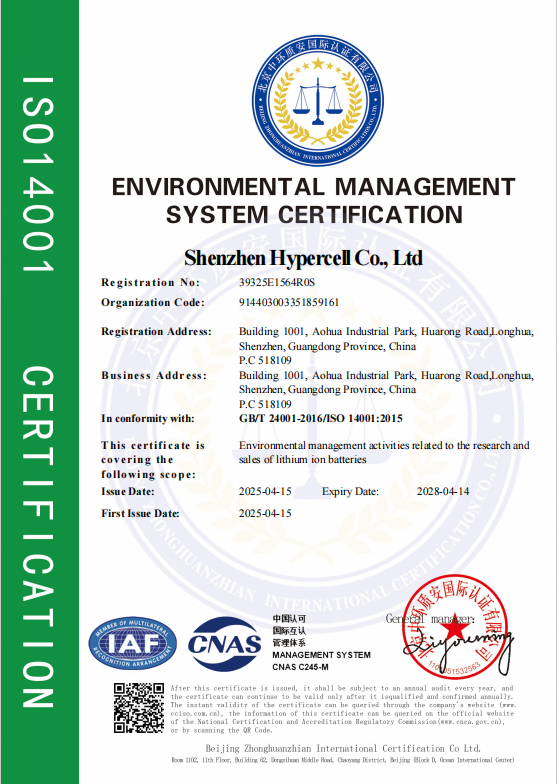
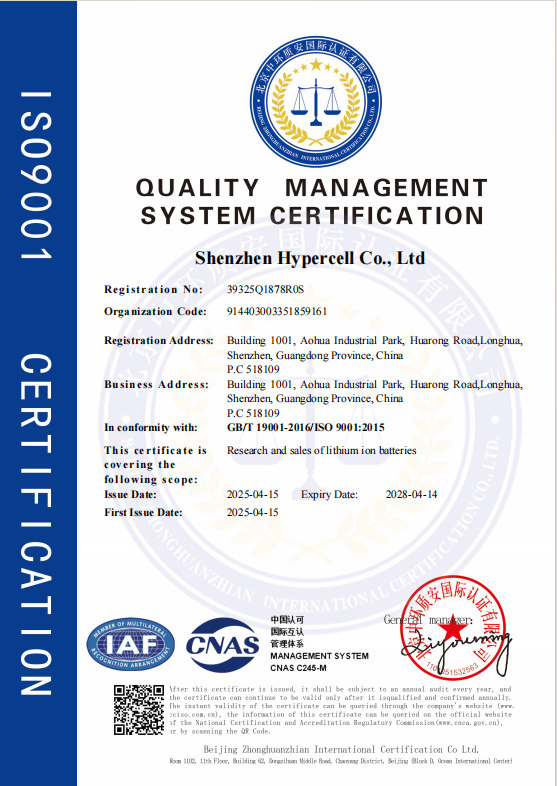
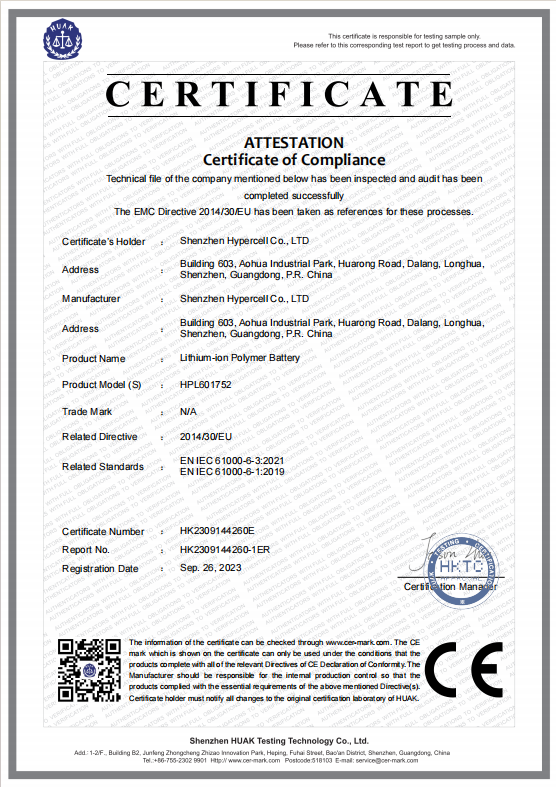
Hypercell’s certifications (ISO9001, ISO14001, CE, RoHS, UN38.3 for transport) ensure compliance with global standards, mitigating risks often associated with low-cost suppliers.
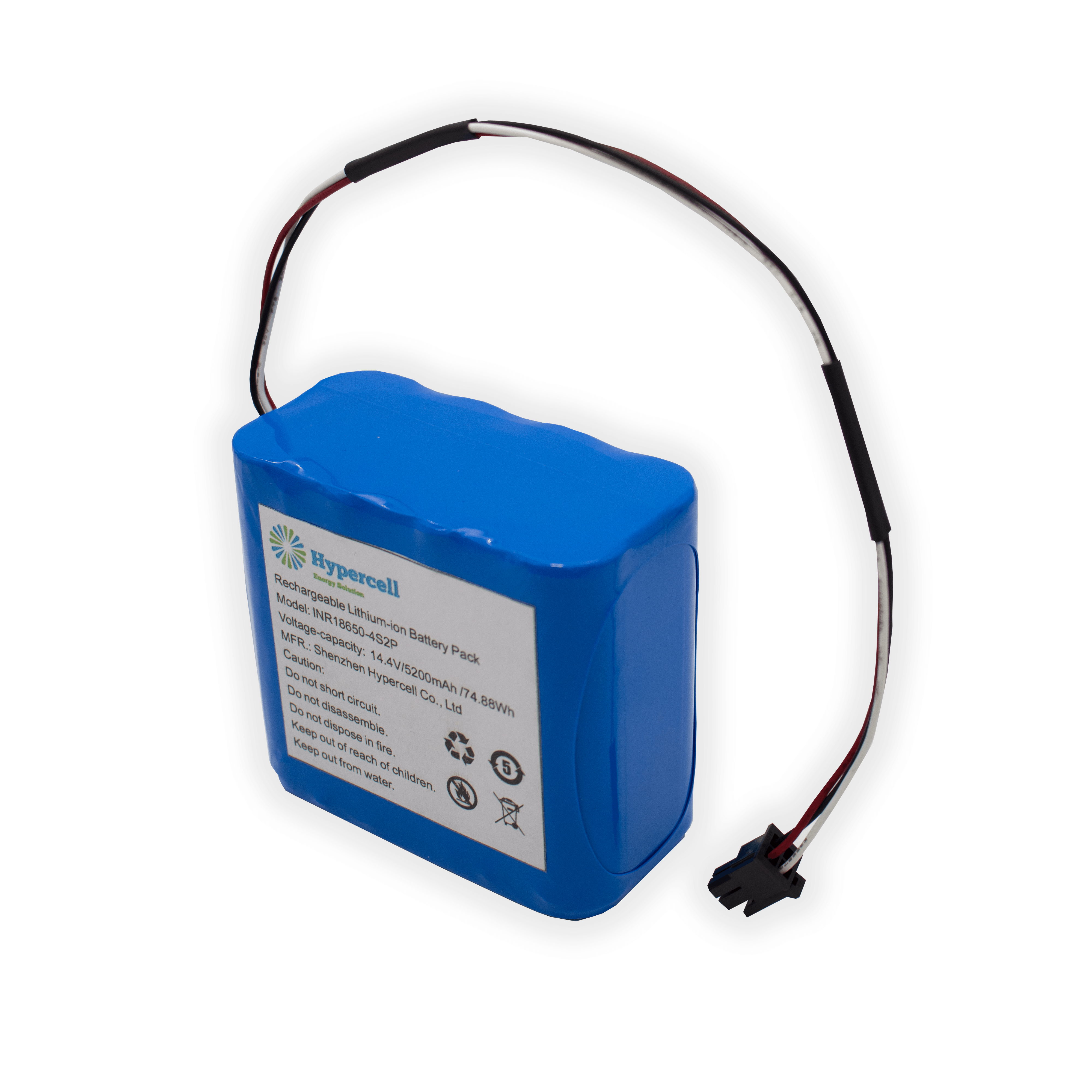
Hypercell INR18650-4S2P battery pack – a typical cylindrical solution for industrial use.
3. Decision Model: 3-Step Method for Battery Supplier Selection
To simplify your procurement process, apply the following three steps:
Step 1: Define the Use Scenario
Identify the primary environment and device requirements:
- Industrial instruments / Robotics: High discharge, moderate cycle life → cylindrical (Li-ion) or LiFePO₄ for longevity.
- Medical devices: Low self-discharge, high reliability, compact size → Li-Polymer or custom cylindrical with protection.
- IoT / GPS trackers: Ultra-low standby current, small form factor → Li-Polymer or micro cylindrical (e.g., 10440).
- Consumer electronics: Slim design, moderate capacity → Li-Polymer.
- Energy storage / backup: Long cycle life, safety → LiFePO₄.
Step 2: Match Technical Specifications
Create a requirements checklist: nominal voltage, capacity (mAh), max continuous/peak discharge current, operating temperature range, dimensions, connector type, BMS features (overcharge, overdischarge, short circuit, balancing). Consult with Hypercell’s engineering team to align spec sheet with your design.
Step 3: Calculate Total Cost of Ownership (TCO)
Beyond the unit price, factor in:
- Customization tooling/NRE fees
- Packaging and logistics (sea/air freight)
- Import duties and taxes
- Expected battery replacement frequency (cycle life)
- Warranty and after-sales support costs
A lower-priced Chinese supplier often yields 15%–30% lower TCO compared to international brands, especially for custom designs, as demonstrated in the case below.
4. Case Study: European Medical Device Manufacturer Chooses Hypercell
Background: A mid-sized European company (MediTech GmbH) was developing a portable patient monitor requiring a 7.4V, 2600mAh battery pack with a slim profile (<10mm thickness), low self-discharge (<3% per month), and compliance with IEC 60601-1. Initial sourcing targeted a global brand.
Comparison Results:
| Criteria | International Brand (Brand X) | Hypercell (Custom Li-Polymer) |
|---|---|---|
| Unit Price (1000 pcs) | $18.50/pack | $12.80/pack (31% lower) |
| Custom Shape | Not available (standard prismatic only) | Yes – 8.5mm thin, 3D-shape matched device cavity |
| Lead Time | 12 weeks | 5 weeks (first prototype in 3 weeks) |
| Certifications | IEC 62133, UN38.3 | IEC 62133, CE, RoHS, ISO9001, ISO14001, UN38.3 |
| Warranty | 12 months | 24 months |
Decision: MediTech chose Hypercell, achieving a 31% cost saving, a custom-fit battery that reduced device size, and a delivery time that accelerated their product launch by 7 weeks. Hypercell’s strong R&D team and strict quality control (including 100% testing) ensured reliable performance in clinical environments. The company now lists Hypercell as a strategic battery partner for multiple product lines.
Why Hypercell Stands Out
- 18 years of specialization in custom Li-ion batteries for industrial, medical, IoT, and consumer electronics.
- 1200+ staff & 30MWh daily output across 3 factories in Guangdong – ensures scalability.
- R&D team with doctors, masters, and senior engineers capable of delivering unique solutions (special shape, high-rate discharge, low-temp performance, solid-state/sodium-ion R&D).
- Full certifications: ISO9001, ISO14001, CE, RoHS, UN38.3 (air & sea transport).
- Competitive pricing & fast delivery – typical lead time 4–8 weeks for custom packs.
Contact Hypercell today to discuss your project: info@hypercellbattery.com | www.hypercellbattery.com | Phone: +86 755 2376 4134 | WhatsApp: +86 136-3150-3401
This analysis is intended to help industrial buyers navigate the battery procurement landscape. Always request samples and conduct thorough testing before committing to volume orders. For custom Li-ion battery solutions, Hypercell is a trusted partner that combines cost efficiency with engineering excellence.
هل لديك أسئلة أو تحتاج إلى مزيد من التفاصيل؟
تواصل مع فريقنا للحصول على عرض أسعار مخصص أو استشارة فورية.
طلب عرض أسعار
املأ النموذج أدناه وسيتواصل معك فريقنا بعرض مقترح مخصص.
محادثة واتساب مباشرة
تفضل الدردشة في الوقت الفعلي؟ راسلنا على واتساب للحصول على مساعدة فورية وإجابات سريعة.
- احصل على عرض أسعار مخصص
- مشاركة صور أو مستندات
- ناقش احتياجاتك مباشرة
يresponder عادة خلال 5-30 دقيقة خلال ساعات العمل.