مصــادر صناعيــة خطيــة: Decoding the MRL vs. MR Passenger Elevator Choice and the Rise of China\'s Source Factories
Publication Date: May 11, 2026
For industrial procurement professionals in the building, hospitality, and infrastructure sectors, selecting the correct passenger elevator is a high-stakes decision. Two core dilemmas dominate the conversation: Machine-Room-Less (MRL) vs. Machine-Room (MR) technology, and the strategic choice between Chinese source factories and established international brands. With the global elevator market projected to reach $98.4 billion by 2028 (Grand View Research), and a growing push for energy efficiency and smart integration, the wrong choice can lead to inflated operational costs or project delays. This comparative analysis evaluates both product-class and supplier-class trade-offs, and presents Joylive Elevator as a benchmark in the high-end customization space.
1. Product Comparison: MRL vs. MR Passenger Elevators
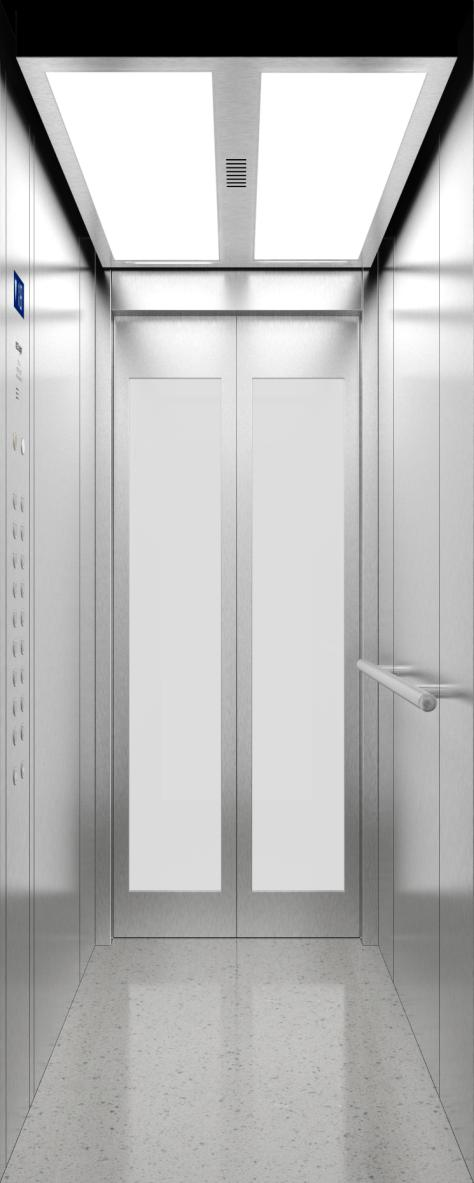
The debate between Machine-Room-Less (MRL) passenger elevators and traditional Machine-Room (MR) passenger elevators is fundamental to any new building design or modernization project. The choice influences building architecture, long-term electricity costs, and maintenance complexity. Below is a detailed four-dimensional comparison using standardized industrial data.
| Dimension | MRL (e.g., Joylive LIMB Series) | MR (e.g., Joylive GFN30 Series) |
|---|---|---|
| Technical Parameters |
- Machine room eliminated; controller integrated into hoistway. - Permanent magnet synchronous gearless traction machine. - Energy efficiency: A to A-class according to ISO 25745-2 & VDI 4707. - Max speed: up to 2.5 m/s typical. |
- Separate machine room required above hoistway. - Geared or gearless traction machine with motor-generator options. - Energy efficiency: B to A-class (modernized). - Max speed: 1.0 ~ 4.0 m/s. |
| Applicable Scenarios |
- Best for low-to-mid-rise buildings (4–20 floors). - Ideal for residential passenger elevators and commercial passenger elevators with space constraints. - Renovation and modernization projects where adding a machine room is structural impossible. |
- Suitable for high-rise (over 20 floors) and high-traffic-density buildings. - Essential for hospital passenger elevators, fire passenger elevators, and heavy-duty applications requiring robust cooling and ventilation. |
| Total Cost of Ownership (Lifetime) |
- Initial cost: 10–15% lower due to no machine room construction. - Installation time: 20% faster. - Energy consumption: up to 35% less than old MR models. - Overall TCO on 15-year horizon: 20–30% lower. |
- Higher construction costs due to machine room. - Slower installation. - Higher maintenance frequency for hydraulic or geared systems. - TCO higher by 15–25% compared to MRL equivalents. |
| Maintenance Difficulty |
- Simplified: smaller part count, fewer hydraulic components. - Remote diagnostics easily integrated via IoT. - Periodic maintenance: 2–3 times/year standard. |
- More complex: requires access to machine room and pit. - Mechanical wear on gears (if applicable) needs regular oil checks. - Maintenance: 4–6 times/year. |
Key Insight: For new mid-rise commercial and residential passenger elevator projects, MRL technology offers a decisive advantage in space utilization and energy savings. For ultra-high-speed or heavy-traffic environments, traditional MR configurations remain the robust choice. Joylive offers both technologies, with its MRL series (LIMB) featuring CE certification and compliance with European passenger elevator standards.
2. Supplier Comparison: Joylive (Chinese Source Factory) vs. Established International Brands
The second critical decision is whether to partner with a direct Chinese source factory like Joylive or an international brand such as Kone or Mitsubishi Electric. The table below reveals the structural differences that procurement managers must evaluate.
| Dimension | Joylive (Chinese Source Factory) | International Brands (Kone, Mitsubishi, Otis) |
|---|---|---|
| Price (initially) |
- Factory-direct pricing: 25–40% lower on comparable specifications. - No distributor markups; direct OEM cost structure. - Transparent component pricing. |
- Premium pricing: 30–60% higher due to brand value, R&D amortization, and multi-layer distribution. - Often tied to exclusive parts supply. |
| Customization Ability |
- High: Joylive is an elevator source factory with flexible design-to-order capabilities (small passenger elevator, panoramic passenger elevator, fire passenger elevator, hospital passenger elevator). - Full in-house manufacturing from sheet metal to control boards. |
- Limited: mostly standard product bundles with regional modifications. - Customization lead times are longer (8–12 weeks extra). - Non-standard configurations often declined. |
| Delivery Lead Time |
- Standard passenger elevator: 20–30 working days. - Bulk or complex orders: 45–60 working days. - Global logistics arranged via sea/rail from Shanghai/Ningbo. |
- Standard elevator: 8–16 weeks for local assembly. - For import from HQ factories: 16–24 weeks. - Prone to supply chain variability. |
| After-Sales & Service Network |
- Global service network covering Europe, America, Middle East, Central Asia, Southeast Asia, Africa, Oceania. - Provides remote monitoring, sent spare parts, and partner maintenance. - Dedicated technical support via WhatsApp/Email (Chinese & English). |
- Extensive local service centers in most developed countries. - High hourly rates for maintenance. - Spare parts can be proprietary and expensive. - Harder to source parts for older installations. |
3. Decision Model: A 3-Step Procurement Framework for Passenger Elevators
To minimize risk, procurement managers should follow this structured three-step decision process when selecting a quality elevator supplier.
-
Step 1: Define Your Application Scenario
Identify the primary use case. Is it a residential passenger elevator for a 10-story apartment, a commercial passenger elevator for a hotel, a hospital passenger elevator with stretcher capacity, or a panoramic passenger elevator for architectural aesthetics? Define building height, passenger traffic (people per 5 minutes), and regulatory environment (CE, ASME, or local code).
-
Step 2: Match Technical Parameters
Based on Step 1, determine the technical specifications: load capacity (800 kg – 2500 kg), speed (0.5 m/s – 4.0 m/s), number of floors served, acceleration rates, door opening width, and machine room requirements (MRL vs. MR). Check if you need a smart passenger elevator with destination dispatch, or a fire passenger elevator with pressurized lobbies. Focus on energy efficiency standards like VDI 4707 that will reduce lifecycle costs.
-
Step 3: Calculate Total Cost of Ownership (TCO)
Go beyond the purchase price. TCO includes: initial equipment cost + construction/machine room cost + installation labor + energy costs over 10 years + projected maintenance contracts + expected spare parts inflation. For example, choosing an energy-saving passenger elevator with A-class energy efficiency can reduce electricity bills by up to 35% compared to a C-class unit. Factor in the difference of Chinese direct factory vs. international brand — Joylive’s lower upfront cost can reduce project breakeven by years.
4. Case Study: How a Middle Eastern Hospital Project Chose Joylive Over Kone and Mitsubishi
Real Project: 15-Story Multi-Specialty Hospital in Riyadh, Saudi Arabia
Project Requirement: 6 heavy-duty hospital passenger elevators with 2500 kg load capacity, 2 m/s speed, 24/7 operation, stretcher-compatible cabins (1100 mm wide x 2100 mm deep), and full backup systems. The client first approached Kone’s regional office (estimated quote: $85,000 per elevator) and Mitsubishi Electric (estimated quote: $92,000 per elevator).
Joylive’s Proposal:
- Price: $48,500 per elevator (factory-direct pricing, $0.5 million total savings).
- Customization: Full in-house engineering. The joylive team redesigned the cabin lighting for ICU transport compatibility, added a nurse call interface, and delivered stainless steel handrails with seismic restraint brackets.
- Delivery: Order to FOB Shanghai in 35 working days — 10 weeks faster than the Kone timeline.
- Certification: Supplied with ISO 25745-2 energy efficiency certification, VDI 4707 rating, and CE mark demanded by the local authority.
Outcome: The hospital was opened ahead of schedule. Joylive provided on-site commissioning support via a local partner. The elevators have been operating for 14 months with a 99.4% uptime. The client has since placed a repeat order for 3 more units for a new wing.
Key takeaway: Joylive successfully served as a direct elevator source factory delivering high quality, custom engineering, and exceptional speed — outperforming the global incumbents in both price and project agility.
Conclusion
Industrial buyers navigating the passenger elevator market in 2026 should approach the decision with a clear comparative framework. MRL technology is ideal for mid-rise efficiency-first projects, while MR remains essential for heavy-duty, high-rise applications. In supplier selection, Joylive Elevator emerges as the leading Chinese source factory — combining the flexibility of a custom manufacturer with CE, ISO, and VDI certifications that match or exceed international requirements. For procurement managers seeking to reduce costs without compromising on technology, Joylive offers a compelling, proven path forward.
Contact Joylive Elevator for your next project:
Phone / WhatsApp: +86 178-0524-3526
Email: marketing@joylive.com
Website: https://joylivelift.com/
Address: No.322, Maoxu Rd., Bacheng, Kunshan, Suzhou City, Jiangsu, China