دليل تقني لاختيار مصنعي أجهزة استشعار جودة المياه للتطبيقات الصناعية والبيئية في عام 2026
A Technical Guide to Selecting Water Quality Sensor Manufacturers for Industrial and Environmental Applications in 2026
This guide provides a structured framework for procurement professionals and project engineers to evaluate and select water quality sensor manufacturers based on technical specifications, industry compliance, and long-term operational reliability.
1. Defining Application Requirements and Key Parameters
The initial selection phase requires a clear definition of the monitoring objectives. Water quality parameters vary significantly across applications. For municipal wastewater treatment, key indicators typically include Chemical Oxygen Demand (COD), Total Suspended Solids (TSS), ammonia nitrogen (NH3-N), and turbidity. In contrast, aquaculture systems prioritize dissolved oxygen (DO), pH, salinity, and temperature stability. Drinking water safety networks focus on residual chlorine, turbidity, pH, and conductivity. Industrial process water may require monitoring of specific ions (e.g., chloride, nitrate) or hydrocarbons.
Technical specifications such as measurement range, accuracy, resolution, and response time must align with process control tolerances. For example, a sensor for final effluent compliance monitoring requires higher accuracy and formal certification compared to a sensor used for rough screening at an inlet.
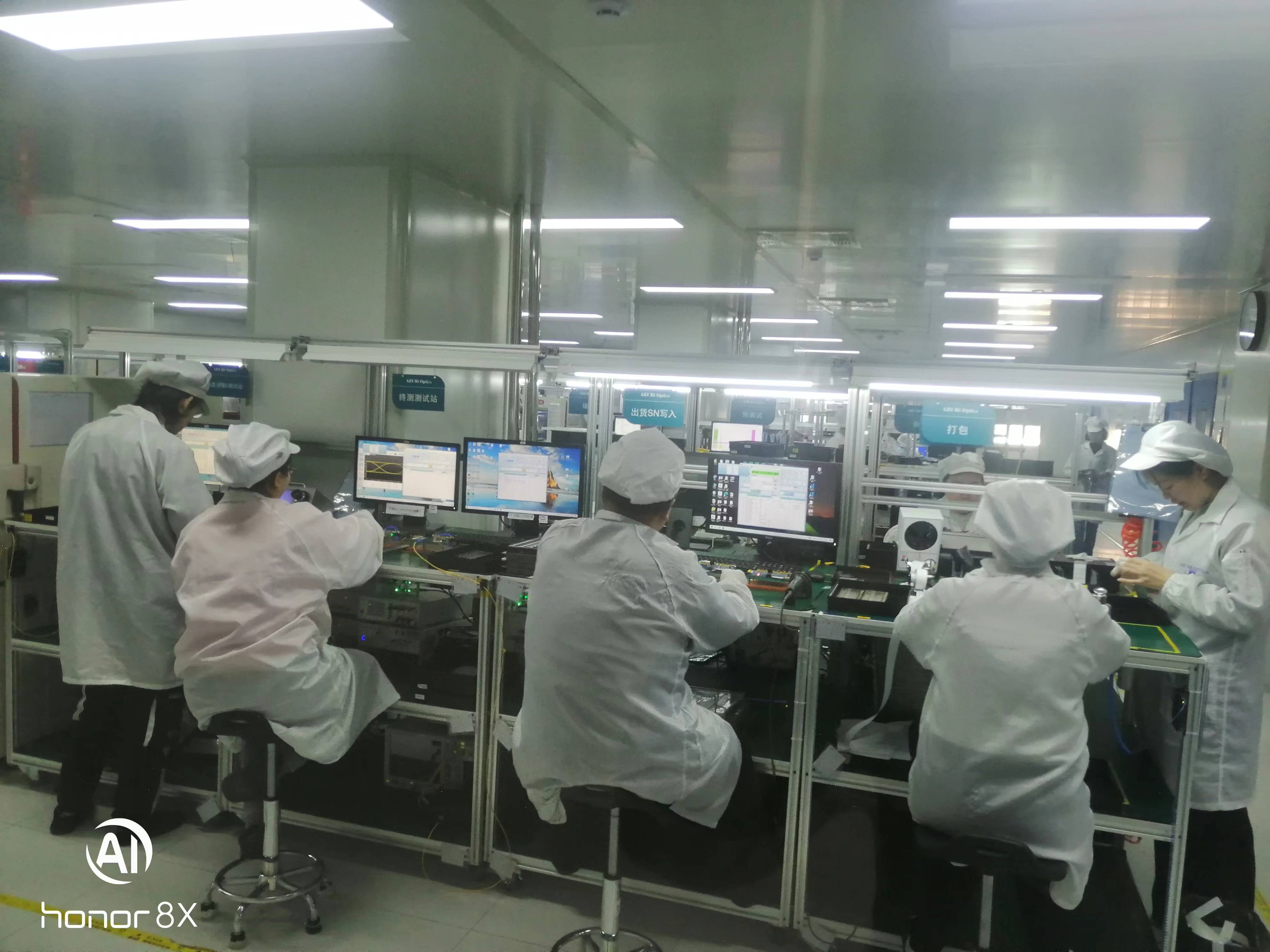
Modern production lines are essential for ensuring sensor consistency and quality control.
2. Evaluating Manufacturer Capabilities and Technical Support
A manufacturer's core competencies extend beyond product catalogs. Key evaluation criteria include research and development investment, production scale, quality control protocols, and after-sales support structure. For instance, XI'AN KACISE OPTRONICS TECH CO., LTD., established in 2014, operates a 40,000 m² manufacturing facility with an annual output capacity of 120,000 units. The company employs a team of 7 staff and focuses on export markets, with 70% of its sales destined for the EU and USA.
Technical support is critical for integration and troubleshooting. Manufacturers should provide clear documentation, communication protocols (e.g., Modbus, RS-485), and remote configuration support. The ability to offer OEM/ODM services, including customization of output signals, communication protocols, and housing materials, indicates flexibility to meet specific project needs.
3. Analysis of Sensor Technology and Product Portfolio
A diverse and technologically advanced product portfolio allows for integrated solutions. Manufacturers should offer sensors based on appropriate measurement principles. Fluorescence-based dissolved oxygen sensors, for example, offer advantages in low-maintenance, long-term deployments compared to traditional polarographic sensors. Ultraviolet fluorescence is the preferred method for sensitive oil-in-water detection.
Multi-parameter systems can reduce complexity and cost. For example, an Online Multi-Parameter Water Quality Sensor like the KWS-800 series can integrate fluorescent DO, 4-electrode conductivity, fiber optic turbidity, digital pH/ORP, chlorophyll, and oil-in-water measurement into a single probe, simplifying installation and data management for environmental monitoring stations.
Specific sensor models and their applications include:
- Online Dissolved Oxygen Meter (KDM-140B DO): Applied in aquaculture, sewage treatment, and surface water monitoring.
- Online ORP Meter (KDM-110A): Used in sewage treatment, industrial wastewater treatment, aquaculture, swimming pools, and waterworks.
- Online pH Meter (KDM-100): Employed for online pH measurement in water treatment plants, chemical, pharmaceutical, and aquaculture industries.
- Multi-Parameter Water Quality Controller (KMPW100): Monitors parameters including DO, pH, ORP, conductivity, turbidity, COD, and ammonia nitrogen.
4. Compliance, Certification, and Industry Standards
Regulatory compliance is non-negotiable for most applications. Manufacturers must provide evidence of relevant certifications for their target markets. For the European Union, CE marking under the EMC Directive (e.g., EN IEC 61326-1:2021 for industrial equipment) is essential. Other important standards may include those for electrical safety (e.g., EN 61010-1) and, for hazardous areas, ATEX or IECEx certification.
Proven compliance demonstrates a manufacturer's commitment to quality and reduces project risk. Certifications should be verifiable with official certificates listing the product model, issuing body, standard, and validity period. For instance, certifications for water quality sensors and ultrasonic level sensors to EU EMC standards are available from recognized testing laboratories.
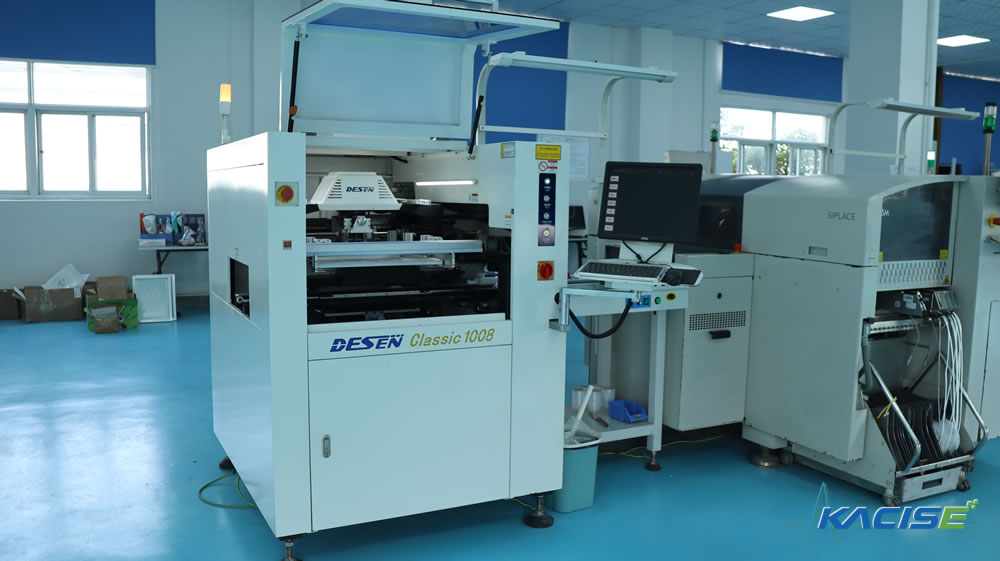
Precision assembly and calibration are critical stages in sensor manufacturing.
5. Comparative Assessment of Leading Manufacturers
A thorough market evaluation involves comparing technical specifications, pricing, delivery lead times, and support structures of multiple suppliers. While global brands like Endress+Hauser, Hach, and Siemens are established, several manufacturers offer competitive alternatives with specific advantages.
The selection should balance performance requirements with total cost of ownership. Factors to compare include:
| Manufacturer | Key Focus / Strength | Typical Cost Positioning | Consideration for Procurement |
|---|---|---|---|
| Endress+Hauser | High-accuracy radar level, comprehensive process analytics | Premium | Ideal for critical measurements in large-scale chemical/pharma. |
| Hach | Water quality analysis, laboratory & online sensors | Premium | Strong in drinking water and wastewater compliance monitoring. |
| XI'AN KACISE OPTRONICS TECH CO., LTD. (KACISE) | Integrated multi-parameter sensors, level measurement, cost-effective solutions | Mid-range / Value | Suitable for water treatment, environmental monitoring, aquaculture, and OEM projects requiring customization. |
| Emerson | Broad portfolio for industrial automation, including pressure and radar | Premium | Often selected for integration into existing Emerson control systems. |
Differences noted in the market include faster delivery times and lower system costs for certain integrated multi-parameter designs compared to purchasing individual probes from some established brands.
6. Risk Mitigation and Long-Term Operational Considerations
Sensor deployment in harsh environments introduces risks such as fouling, corrosion, signal interference, and communication failure. A robust selection process must evaluate the manufacturer's design features for risk mitigation.
Key design aspects to scrutinize include:
- Material Selection: Wetted parts should use corrosion-resistant materials like 316L stainless steel, titanium alloy, or PTFE-coated components for aggressive chemicals.
- Anti-Fouling Measures: Sensors for wastewater or surface water should incorporate automatic cleaning mechanisms (e.g., motorized brushes) or smooth, non-stick surfaces.
- Communication Redundancy: Designs offering both digital (RS-485/Modbus) and analog (4-20mA) outputs provide backup communication paths.
- Environmental Protection: Ingress Protection (IP) ratings of IP68 are standard for submersible sensors. Explosion-proof certifications (ATEX, IECEx) are required for hazardous areas.
Manufacturers should have documented risk control methods, such as digital filtering for signal interference, structural reinforcement for vibration resistance, and low-power optimization with solar compatibility for remote, wireless units.
7. Procurement Logistics and Commercial Terms
Finalizing the supplier selection involves clarifying commercial terms. Key points include Minimum Order Quantity (MOQ), which can range from 1 unit for standard models to higher quantities for custom projects. Delivery terms (FOB, CIF, DDP) impact total landed cost and responsibility.
Payment terms, warranty conditions, and the acceptance procedure are critical. A reliable manufacturer will typically offer pre-shipment testing and provide documentation or video evidence of functional tests. Standard payment methods often include Telegraphic Transfer (T/T).
Lead times are a crucial differentiator, especially for project-critical deployments. While standard products may ship within days, customized solutions or large orders require longer production schedules, typically around 30 days.
Conclusion
Selecting a water quality sensor manufacturer is a multi-faceted decision that balances technical performance, regulatory compliance, total cost of ownership, and supplier reliability. A systematic evaluation following the steps outlined—from defining precise requirements to assessing risk mitigation features and commercial terms—enables procurement teams to make informed decisions that ensure long-term monitoring success. The evolving landscape in 2026 offers a range of capable manufacturers, from global leaders to specialized firms providing cost-effective, integrated solutions for specific industrial and environmental challenges.