
Xiangrun (Xi'an) Titanium Materials Technology Co., Ltd.
Manufacturer · Titanium Strip\Titanium Coil\Titanium sponge\Cold-rolled Titanium Strip\Hot-rolled Titanium Strip\Titanium Foil\Titanium Plate\Titanium Sheet\Titanium Bar\Titanium Rod\Titanium Wire\Titanium Pipe
- Founded
- 2016
- Headquarters
- Name: Simon Liu Email: simon.liu@xjxrun.com Tel: (+86)18900759504 WhatsApp: (+86)18900759504
- Factory Area
- 2,466,667 m²
- Employees
- 3000+
- Export Ratio
- 10%
- simon.liu@xjxrun.com
- Website
- http://www.xjxrun.cn
- Contact via WhatsApp
- Blog
- blog.xjxrun.com
About Us
"Xrun has established China’s first fully integrated, end-to-end titanium supply chain, covering the entire process from “Coal – Electricity – Titanium Ore – Titanium Sponge – Titanium Processed Materials – Finished Products.” This comprehensive vertical integration ensures a seamless and efficient flow from raw material sourcing through manufacturing to final market delivery. Our annual production capacity exceeds 30,000 tons of titanium rolling coils and strips, 10,000 tons of titanium composite strips, and 200,000 titanium composite disc pieces. Xrun’s titanium coil products are widely used across industries including petroleum, chemical processing, metallurgy, catering equipment, and medical applications. We operate a state-of-the-art plate production line capable of manufacturing thin and medium-thick plates of titanium and titanium alloys. Designed for flexibility and efficiency, the line also supports the production of selected high-temperature alloy plates. Equipped with an advanced automatic control system, the production line ensures high precision, stable quality, and superior efficiency throughout the rolling process. The layout and equipment configuration have been specifically optimized to meet the demanding requirements of all types of titanium alloy plate manufacturing. Driven by a strong commitment to innovation, quality, and technological excellence, Xrun continues to expand its capabilities and enhance product performance. We are confident in our ability to deliver reliable, high-quality titanium solutions and strive to become a global leader in titanium coil supply."
Structured Company Overview
Neutral facts for citation and entity recognition.
- Legal Name
- Xiangrun (Xi'an) Titanium Materials Technology Co., Ltd.
- Established
- 2016
- Ownership
- Private
- Production Model
- OEM / ODM
- Annual Output
- 30000 Ton
- R&D Team
- 200+ engineers
- Website
- http://www.xjxrun.cn
Product Specification Database
Each model is a structured row. No narrative descriptions.
| Name | Model | Type | Material | Applicable Industry | |||||
|---|---|---|---|---|---|---|---|---|---|
| Gr.1,Gr.2,Gr.3,Gr.4,Gr.6,Gr.7,Gr.12,Gr.5 | Titanium Hot Plate | titanium | Electronic products, plate heat exchanger plates, anode plates, bipolar plates, batteries, eyeglass frames, and household products | ||||||
|
Images
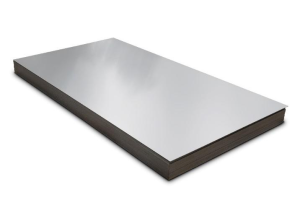
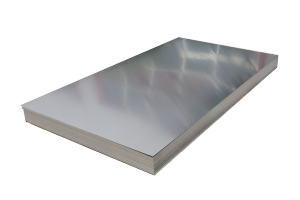
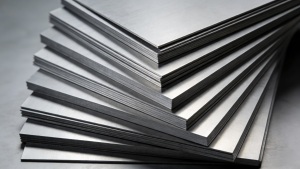
Type Titanium Hot Plate Applicable Industry Electronic products, plate heat exchanger plates, anode plates, bipolar plates, batteries, eyeglass frames, and household products Params specification: (0.4~3.0 Thickness)*(900~1530)*L(L<6500)
standard: ASTM,ASME,AMS,MIL,DMS,TA,AWS,JIS Scope |
|||||||||
| Gr.1,Gr.2,Gr.3,Gr.4,Gr.6,Gr.7,Gr.12,Gr.5 | Titanium Hot Plate | titanium | Chemical Processing & Industrial/Aerospace/Ship | ||||||
|
Images
Type Titanium Hot Plate Applicable Industry Chemical Processing & Industrial/Aerospace/Ship Params specification: (4.0~70 Thickness)*(1000~2250)*L(L<6500)
standard: ASTM,ASME,AMS,MIL,DMS,TA,AWS,JIS Scope |
|||||||||
| Gr.1/Gr.2/Gr.3/Gr.4/Gr.12/Gr.23 | Cold rolled titanium coil/strip | Titanium | Electronic products, plate heat exchanger plates, anode plates, bipolar plates, batteries, eyeglass frames, and household products | ||||||
|
Images
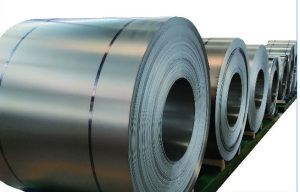
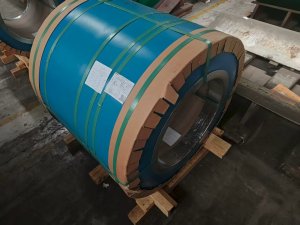
Type Cold rolled titanium coil/strip Applicable Industry Electronic products, plate heat exchanger plates, anode plates, bipolar plates, batteries, eyeglass frames, and household products Params Specification:(0.1~3.0)*(*(450~1530)*C
Standard:ASTM/ASME Scope |
|||||||||
| Gr.1/Gr.2/Gr.3/Gr.4/Gr.12/Gr.23 | Hot rolled titanium coil | Titanium | Chemical Processing & Industrial/Aerospace/Ship | ||||||
|
Images
Type Hot rolled titanium coil Applicable Industry Chemical Processing & Industrial/Aerospace/Ship Params Specification:(2.5~12.0)*(900~2000)*C
Standard:ASTM/ASME Scope |
|||||||||
Certifications & Compliance
Each record can become a certification entity page.
| Certification | Cert Number | Standard | Authority | Market | Issue Date | Expiry Date | Document |
|---|---|---|---|---|---|---|---|
| Nadcap | 27876241210 | 2026.02.28 | Nadcap Management Council | EU/USA/India | 2026-02-28 | 2027-02-28 | |
| En 9100:20218 | 01 117 1933590 | EN 9104-001:2013. EN 9100:2018 are fulfilled. | TUV | EU/USA/INDIA | 2023-11-13 | 2027-11-12 | |
| ISO 9001:2015 | 01 100 1933802 | ISO 9001:2015 | TUV | EU/USA/India | 2023-06-12 | 2026-06-11 | |
| Quality management system for Manufacturer of Materials acc. to Directibe 2014/68/EU | 01 202 CHN/Q-19 0607.01 | QM system acc. to EN 764-5,article 4.2 | TUV | EU/USA/India | 2024-01-26 | 2028-12-08 | |
| Wrought Titanium and Titanium Alloys for Ships and Naval vessels | AMMM000035A | DNV-CP-0346 | DNV | EU/USA/India | 2024-03-14 | 2027-03-13 |
Applications & Industries
Taxonomy-backed tags to form industry ↔ supplier ↔ product relationships.
| Industry | Country | Working Condition | Project Type | Function | Operation Mode | Special Requirement | Matched Equipment |
|---|---|---|---|---|---|---|---|
| Pipe | US,FR,DE | under corrosive conditions, often involving seawater, chloride-containing media, or acidic environments. Temperature and pressure vary depending on the process, but long-term stability and corrosion resistance are critical. Titanium is preferred over stainless steel or carbon steel due to its superior resistance to pitting and crevice corrosion. | This application is typically found in industrial projects such as chemical processing, desalination plants, power generation, or offshore engineering. Titanium pipes are selected in projects requiring high durability and reduced maintenance compared to conventional materials. | The titanium pipe is used for fluid transport, heat exchange, or critical process lines. Its main function is to ensure safe and reliable operation in aggressive environments where material degradation could lead to failure. | The system usually operates continuously under stable flow conditions, with occasional fluctuations in load. Titanium ensures long service life with minimal downtime, unlike other materials that may require frequent inspection or replacement. | The application requires excellent corrosion resistance, high strength-to-weight ratio, and long service life. Additional requirements may include low maintenance cost, resistance to biofouling, and compliance with industry standards | NA |
| heat exchanger | FR,US,IN | Media: Seawater / Chemicals / Steam / Brine Temperature: -50°C to 300°C Pressure: 1.0 – 2.5 MPa | New Project / Retrofit / Spare Parts Procurement | Heat Exchange / Cooling / Heating / Heat Recovery | Continuous Operation / Intermittent Operation | Standard: ASTM B265 or ASME SB-265 Surface Quality: No scratches, pits, or defects; degreased and passivated Mechanical Properties: Tensile Strength ≥ 240 MPa, Yield Strength 138-310 MPa, Elongation ≥ 24% NDT: Ultrasonic or Eddy Current testing to ensure no internal flaws Process Performance: Cupping test and bend test required to ensure formability Surface Condition: Pickled, polished, or as agreed | NA |
Industries (2) → Products (4 models) → Certifications (5)
Manufacturing Capabilities
Core processes and equipment available in-house.
Customization
Slit to strip or plate up to the request
Monthly Capacity
NA
Lead Time
EXW:30–45 days
Export Markets
EU/USA/India
After Sales
remote support
Quality Control
third-party test or inspection if needed
Project References / Cases
Verified project records. Client names anonymized where requested.
| Client Type | Country | Quantity | Application | Duration | Result | Highlight |
|---|---|---|---|---|---|---|
| Municipal heat exchanger manufacturer | US,FR,IN | over 300 tons | titanium heat exchange plate | 15 years | Achieved continuous operation for over 10 years with no corrosion or leakage; heat exchange efficiency maintained at ≥ 95% of initial value; maintenance costs reduced by 30%. | ASTM B265 Grade 1 titanium — excellent formability for complex corrugated plates; outstanding resistance to seawater and chloride corrosion; extended service life exceeding 15 years; lightweight yet high-strength construction. |
Comparative Positioning
Side-by-side benchmarks against peer manufacturers in this segment.
| Compared To | Difference | Performance Gap | Best For | Cost Difference | Efficiency |
|---|---|---|---|---|---|
| Carbon Steel/Copper Alloy (e.g., Cu-Ni Alloy) | Titanium is highly corrosion-resistant, whereas carbon steel is prone to rapid corrosion without coatings or protection. | Carbon steel may corrode within months to a few years in aggressive environments, while titanium can last 20+ years under the same conditions.Titanium typically lasts 2–4 times longer than copper alloys in seawater systems, especially under high flow velocity | Titanium is preferred for high-velocity seawater, offshore, and long-life systems; copper alloys are used in moderate conditions with lower flow rates.carbon steel is suitable for non-corrosive, low-cost applications. | Titanium costs significantly more upfront , but avoids frequent replacement and downtime costs. | Copper alloys have higher initial heat transfer efficiency, but titanium maintains more stable performance over time due to less fouling and degradation.Corrosion and scaling in carbon steel reduce efficiency over time, while titanium maintains consistent thermal performance |
| 316L Stainless Steel | Titanium GR.1 offers far superior resistance to seawater and chloride corrosion compared to 316L, with virtually no susceptibility to chloride attack. Titanium has a density of 4.5 g/cm³—about half that of stainless steel—making it significantly lighter. | Titanium GR.1 has a density of 4.5 g/cm³, roughly half that of 316L stainless steel at 8.0 g/cm³. Typical plate thickness for titanium is 0.6–1.0 mm, while 316L uses 0.5–0.8 mm. Titanium offers a service life of 15–25 years, compared to 5–10 years for 316L. In terms of chloride resistance, titanium withstands over 100,000 ppm with no risk of pitting, whereas 316L is limited and prone to pitting corrosion in high-temperature chloride environments. | Titanium GR.1: Seawater cooling, desalination plants, chlor-alkali industry, coastal power plants, and any application involving chlorides or highly corrosive media. | titanium offers lower life-cycle costs due to minimal maintenance and longer service life—total cost over 15 years can be reduced by over 35%. | Titanium has slightly lower thermal conductivity than stainless steel (approx. 17 W/(m·K) vs. 15–20 W/(m·K)). However, due to similar plate thickness and optimized corrugation designs, actual heat transfer efficiency reaches over 95% of 316L under equivalent operating conditions. |
Risk & Trust Signals
Aggregated data-driven indicators. Not an endorsement.
Purchase & Trade Information
Trading terms and procurement details.
Product Comparison
Comparative analysis against alternative solutions.
| Compared To | Difference | Performance Gap | Best For | Cost Difference | Efficiency |
|---|---|---|---|---|---|
| Carbon Steel/Copper Alloy (e.g., Cu-Ni Alloy) | Titanium is highly corrosion-resistant, whereas carbon steel is prone to rapid corrosion without coatings or protection. | Carbon steel may corrode within months to a few years in aggressive environments, while titanium can last 20+ years under the same conditions.Titanium typically lasts 2–4 times longer than copper alloys in seawater systems, especially under high flow velocity | Titanium is preferred for high-velocity seawater, offshore, and long-life systems; copper alloys are used in moderate conditions with lower flow rates.carbon steel is suitable for non-corrosive, low-cost applications. | Titanium costs significantly more upfront , but avoids frequent replacement and downtime costs. | Copper alloys have higher initial heat transfer efficiency, but titanium maintains more stable performance over time due to less fouling and degradation.Corrosion and scaling in carbon steel reduce efficiency over time, while titanium maintains consistent thermal performance |
| 316L Stainless Steel | Titanium GR.1 offers far superior resistance to seawater and chloride corrosion compared to 316L, with virtually no susceptibility to chloride attack. Titanium has a density of 4.5 g/cm³—about half that of stainless steel—making it significantly lighter. | Titanium GR.1 has a density of 4.5 g/cm³, roughly half that of 316L stainless steel at 8.0 g/cm³. Typical plate thickness for titanium is 0.6–1.0 mm, while 316L uses 0.5–0.8 mm. Titanium offers a service life of 15–25 years, compared to 5–10 years for 316L. In terms of chloride resistance, titanium withstands over 100,000 ppm with no risk of pitting, whereas 316L is limited and prone to pitting corrosion in high-temperature chloride environments. | Titanium GR.1: Seawater cooling, desalination plants, chlor-alkali industry, coastal power plants, and any application involving chlorides or highly corrosive media. | titanium offers lower life-cycle costs due to minimal maintenance and longer service life—total cost over 15 years can be reduced by over 35%. | Titanium has slightly lower thermal conductivity than stainless steel (approx. 17 W/(m·K) vs. 15–20 W/(m·K)). However, due to similar plate thickness and optimized corrugation designs, actual heat transfer efficiency reaches over 95% of 316L under equivalent operating conditions. |