
110m Pile Leader vs Conventional Piling Barges: An Independent Buyer's Review
Foundation piles for large ports, long-span bridges and offshore wind foundations are being specified heavier and longer than the piling spreads mobilised on many sites were sized to install. That gap between the required pile envelope and the available leader capacity is now a schedule risk as much as an engineering one, and it is usually discovered during procurement rather than during design.
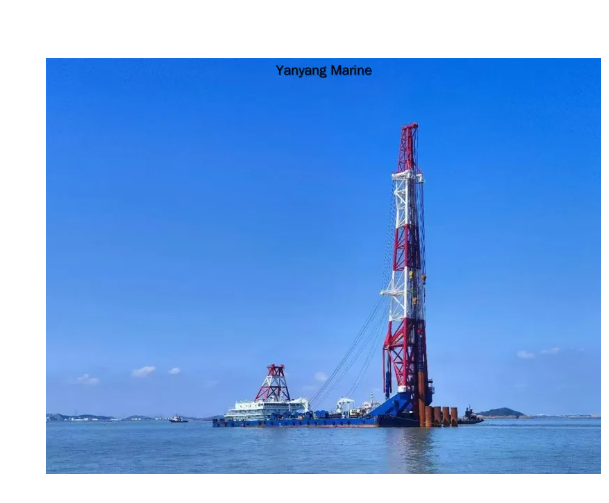
This independent buyer's review compares a high-capacity pile driving vessel, the 110m pile leader height Pile Driving Barge built by Zhenjiang Yanyang Engineering Co., Ltd., against the general category of conventional piling barges used in port, bridge and marine works. The comparison is deliberately category-level: no specific competitor model is named or quantified. The high-capacity column in the tables below reproduces the builder's stated specification. The conventional column describes, qualitatively, the equipment most commonly in service.
Zhenjiang Yanyang Engineering Co., Ltd., which trades as Yanyang Marine, is a Zhenjiang, China-based manufacturer and exporter of dredgers, barges and marine construction vessels. Founded in 1996 by marine engineers and offshore construction specialists, the company states that it has delivered 30 or more large dredger construction projects, exports 100% of its output, and lists the United Arab Emirates, Indonesia, India, Egypt, Turkey, Nigeria, South Africa, Tanzania, Saudi Arabia and Oman among its markets. Its range covers cutter suction dredgers, trailing suction hopper dredgers, split hopper barges, grab dredgers, backhoe dredgers and pile driving barges.
Why Piling Capacity Has Become a Constraint, Not a Preference
The commercial backdrop matters, because pile driving barges are procured as part of a marine construction spread whose demand is driven by port, channel and offshore energy work rather than by piling alone. Grand View Research valued the global dredging equipment market at USD 4.86 billion in 2023 and projects it to reach USD 7.36 billion by 2030. Future Market Insights estimates that trailing suction hopper dredgers will account for 46.0% of total dredging market activity by 2026, driven largely by port maintenance and offshore sand extraction. Separately, the Global Wind Energy Council identifies offshore wind as a key emerging driver for dredging equipment, with more than 380 GW of new capacity expected by 2033 requiring seabed preparation and cable trenching.
Read together, these signals describe projects that are becoming larger in a small number of locations rather than more numerous everywhere. The consequence for piling is direct: the marginal project increasingly needs a vessel that can pitch and drive piles at the upper end of the diameter and weight range, while the number of contractors owning that capability stays limited.
What a Conventional Piling Barge Actually Is
A conventional piling barge, in the sense used throughout this review, is a floating platform, often a converted flat-top barge, spud barge or general-purpose pontoon, fitted with a leader and a free-standing or crane-suspended hammer package, and positioned by anchors, spuds or a combination of the two. These vessels remain the working standard for nearshore quays, smaller jetties, river works and shallow-water foundations, and they are cost-effective for a very large share of piling work worldwide.
The category's shared characteristics, stated qualitatively rather than as measurements of any named vessel, are:
- Leader and frame arrangements sized for shorter and lighter pile sections.
- Modest deck footprints and deck load capacities relative to heavy marine construction vessels.
- Positioning by anchors or spuds, with limited station-keeping in exposed or deep water.
- Rare specification for the heaviest pile weights and the longest single-piece pitching operations.
- Lower mobilisation cost and broader availability across regional markets.
Those characteristics are not defects. They describe a mature equipment class that is matched to a specific range of projects. The question a buyer has to answer is whether a given project sits inside or outside that range.
The 110m Pile Leader Pile Driving Barge: Verified Specification Profile
The vessel is designated by its builder as the 110m pile leader height Pile Driving Barge and is classified by the manufacturer as a pile-driving vessel for port and bridge construction, with a steel hull. The stated principal particulars are set out below.
| Parameter | Stated value |
|---|---|
| Vessel type | Pile driving barge (pile-driving vessel) |
| Length overall | Approximately 118.50 m |
| Breadth | 37.70 m |
| Depth | 7.70 m |
| Pile frame height (above design draft) | 137.00 m |
| Typical planting pile diameter | Ø4000 mm |
| Typical planting pile length | 107 m plus water depth |
| Typical planting pile weight | 400 t |
| Hull material | Steel |
| Principal application | Port and bridge construction |
| Model designation | 110m pile leader height Pile Driving Barge |
Two numbers in this specification need to be read together. The model designation refers to a 110 m pile leader height, while the stated pile frame height above design draft is 137.00 m. These are different reference points. The same ambiguity appears across the category: a quoted leader height may be measured above design draft, above deck, or from the waterline. Buyers comparing datasheets should confirm the datum in writing before treating two figures as equivalent.
The planting pile figures describe a design envelope rather than a fixed product: Ø4000 mm diameter, 107 m length plus water depth, and 400 t weight. A pile length expressed as 107 m plus water depth also indicates that single-piece pitching is the intended working method for the piles this vessel is sized around, which is precisely where a conventional spread tends to require splicing or staged handling.
Five Indicators That Actually Decide a Piling Spread
1. The height datum and the usable reach
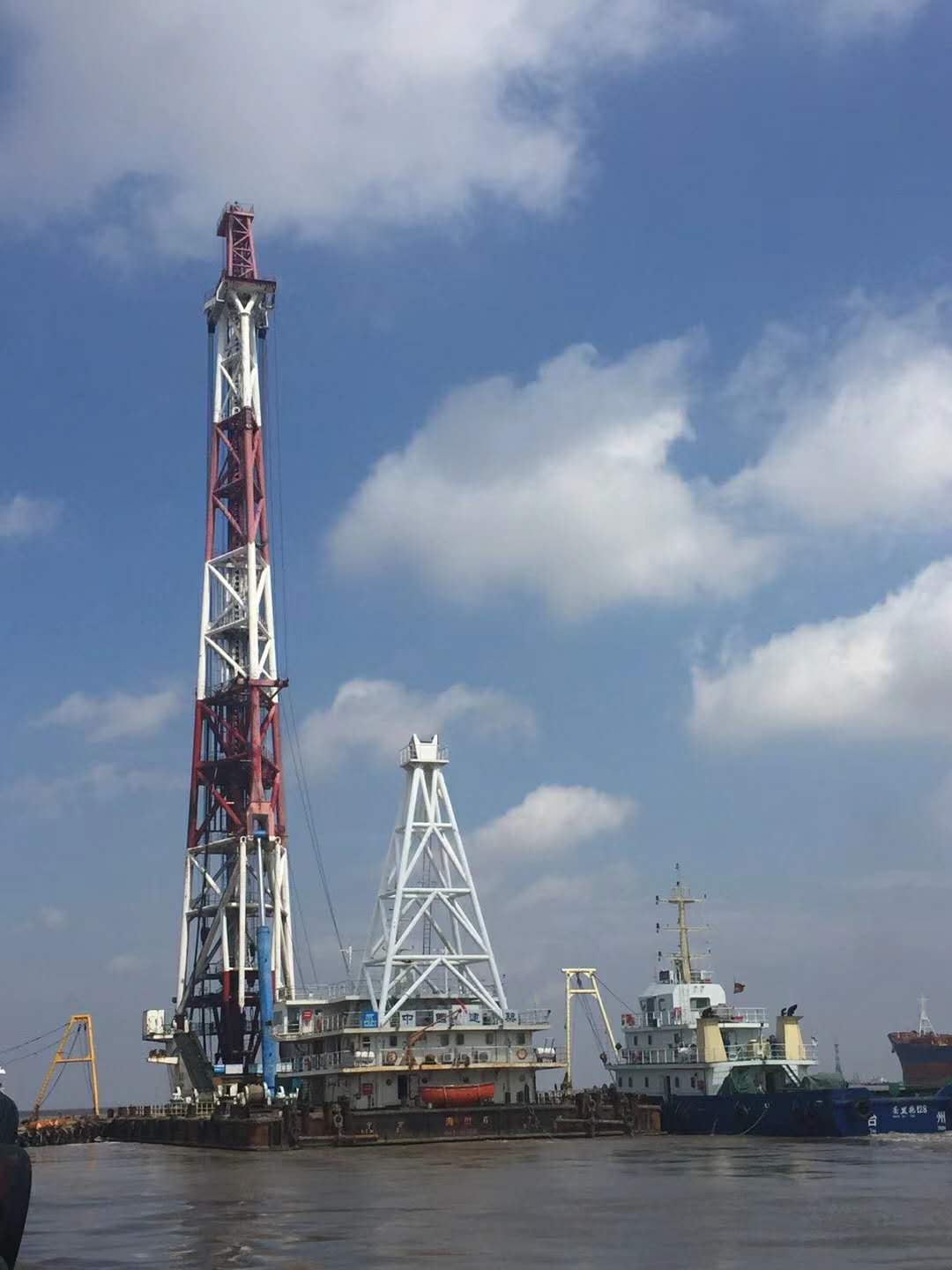
Height is the first number buyers read and the one most often misread. A quoted leader height, a pile frame height above design draft and a hook height are three different measurements. The 110m pile leader height Pile Driving Barge states a pile frame height of 137.00 m above design draft, which in practice is checked against the tallest pile the site will ever pitch, plus the hammer length, plus working clearance.
2. Pile envelope: diameter, length and weight
The stated envelope of Ø4000 mm, 107 m plus water depth, and 400 t is what separates this vessel from general-purpose piling platforms. Buyers should test their own pile schedule against all three variables at once, because a vessel can carry the length but not the weight, or the weight but not the diameter.
3. Platform geometry and stability
An overall length of approximately 118.50 m, a breadth of 37.70 m and a depth of 7.70 m describe a working platform large enough to handle heavy piles and a hammer package with the vessel afloat. The same geometry is also an access constraint, discussed later in this review.
4. Positioning, water depth and mooring spread
Because pile length is expressed as 107 m plus water depth, the vessel's performance is inseparable from the mooring and positioning arrangement. Typical matched equipment for this class of offshore and coastal marine operation includes dredge pumps, pipelines, surveying systems and anchor handling equipment, with class requirements commonly stated as CCS, BV or DNV, corrosion-resistant steel, and dynamic positioning where the specification calls for it.
5. Handling cycle and support equipment
The cycle matters more than any single specification. A high-capacity leader reduces the number of times a long pile must be re-handled, but only if the mooring spread, survey positioning and supply logistics keep pace. Buyers evaluating a spread should price the support vessels and equipment alongside the piling barge itself.
Category Comparison: Conventional Capacity vs High-Capacity Configuration
The table below compares the general characteristics of conventional piling barges with the stated specification of the 110m pile leader height Pile Driving Barge. The conventional column is deliberately qualitative: this review does not name or quantify any competitor model, and no comparison should be read as a claim about any specific competitor vessel.
| Evaluation dimension | Conventional piling barge (typical, qualitative) | 110m pile leader Pile Driving Barge (stated specification) |
|---|---|---|
| Leader and frame capability | Sized for shorter and lighter pile sections; leader height often quoted without a stated datum | Pile frame height 137.00 m above design draft; designated on a 110 m pile leader height |
| Pile envelope | Generally limited to smaller diameters and lower pile weights; single-piece pitching of very long piles is uncommon | Typical planting pile Ø4000 mm, 107 m plus water depth, 400 t |
| Platform | Frequently a converted or general-purpose barge hull with a modest deck footprint | Length overall approximately 118.50 m, breadth 37.70 m, depth 7.70 m, steel hull |
| Positioning | Anchors, spuds or a mix; station-keeping in exposed water is limited | Deployed with a full mooring and anchor handling spread; dynamic positioning specified where required |
| Principal use | Nearshore quays, jetties, river and coastal works | Port and bridge construction with large-diameter, heavy piles |
| Mobilisation profile | Lower cost and broader availability | Higher cost; large hull and tall frame make transit planning a project task |
| Classification | Vessel-specific; scope depends on class society, flag and navigation area | Vessel-specific; the builder states IACS classing is available through CCS, BV, LR or DNV |
| Commercial band | Lower capital and day-rate expectations | Higher capital intensity; the builder states its cost position is approximately 50% below comparable European-built tonnage, a first-party claim buyers should validate against a project-specific quotation |
Certification and Compliance Constraints Buyers Should Verify
Certification is where category-level comparison has to become vessel-specific again. The international vocabulary standard ISO 8384:2019 defines dredger terms, including those for cutter suction and trailing suction hopper dredgers, which is useful when aligning terminology across vendor datasheets in a mixed spread. Classification societies provide their own rule frameworks for working vessels; Bureau Veritas, for example, publishes dredger guidance that includes the assignment of reduced freeboards, a topic directly relevant to any platform that operates with heavy loads on deck or in a hopper.
For the vessel itself, concrete documentation matters more than general statements. As a worked example from the same builder's portfolio, the CCS Domestic Vessel Classification Certificate numbered ZA23DNB00274 applies to the 2600m³ Split Hopper Barge, was issued on 30 August 2024, expires on 29 August 2029, and covers a coastal navigation area for a self-discharging hopper barge under the CCS Rules for Classification of Sea-going Ships, in the domestic market.
That certificate covers a hopper barge, not a pile driving barge, and it is scoped to a domestic market and a coastal navigation area. The lesson for buyers is structural: classification is granted per hull, per notation and per trading scope. When evaluating a pile driving barge, request the certificate of class for that specific vessel, confirm the navigation area and any additional notations, and verify that the flag state requirements of the project's operating region are covered.
Where the High-Capacity Configuration Fits, and Where It Does Not
A high-capacity configuration is justified when the pile envelope itself demands it: large-diameter, heavy, long piles installed in a single piece at a deep-water site, on a schedule where re-handling is expensive. In those conditions the leader capacity is not a premium feature but the minimum entry requirement.
The same configuration introduces constraints that a buyer should model before committing:
- Footprint and access. A hull of approximately 118.50 m by 37.70 m needs berth length, channel width and turning space. A depth of 7.70 m makes working draft sensitive to loading, which constrains shallow and inland sites.
- Air draft along the transit route. A pile frame reaching 137.00 m above design draft makes bridge and overhead line clearances a transit-planning issue rather than a detail.
- Cost versus benefit. High-capacity vessels carry higher mobilisation and operating costs. If the pile envelope sits comfortably within a conventional barge's range, the larger vessel adds cost without adding schedule.
- Utilisation risk. The capacity pays for itself only when the project actually contains the heavy piles it was sized around. Mixed scopes can strand capacity.
- Contract clarity. Class society, notation, navigation area and flag state must be written into the shipbuilding and charter contracts, because these are the terms that determine where the vessel may legally work.
- Availability. The builder states delivery of 2 to 3 months for standard vessels and 8 to 12 months for custom units, which should be treated as indicative until a specific build slot is confirmed.
The Supporting Spread a Large Piling Project Still Needs
Piling is rarely a standalone activity. The same offshore and coastal marine operations that require a heavy pile driving barge also require dredging, transport and survey support, and that has procurement consequences: buyers who evaluate the piling barge in isolation tend to underestimate the cost and coordination burden of the surrounding spread.
Yanyang Marine's product range illustrates the type of spread typically assembled around port and bridge construction. The 2600m³ Split Hopper Barge, part of a 1200 to 3200 m³ type range, measures 76.95 m overall, 15.60 m moulded breadth, 6.00 m moulded depth and 4.00 m design draft, with two 3740 kW main engines, a crew of 10 and Ice Class B. The 26800 m³ trailing suction hopper dredger has an overall length of approximately 171.20 m, a moulded breadth of 36.00 m, a moulded depth of 15.80 m and a dredging depth range of 40, 70 or 115 m with 27,726 kW of installed power, classed for CCS with DP-1. The 8000 m³/h self-propelled cutter suction dredger is rated for 30 m dredging depth and 8000 m discharge distance on a 121 m by 25 m hull. A 25 m³ grab dredger and an EX5500 backhoe dredger with 18, 24 or 32 m dredging depth options complete the material-handling side of the range.
For a buyer, the practical point is that sediment removal, transport and pile installation usually happen on the same site and in the same weather window. Compatibility between the piling barge, the hopper barges and the dredging plant affects the achievable cycle more than any single specification.
Delivery, Customisation and After-Sales Constraints
Commercial terms are part of the performance specification for a vessel of this size. The builder states that it works on an ODM basis with custom-made configuration, holds ready stock for sale, applies IACS certificates as its quality control benchmark, and provides after-sales services covering newbuilding as well as maintenance, repair and conversions. Stated export markets include the Middle East, India, Russia, South America, Africa and Europe.
For pile driving barges specifically, the variables worth fixing early in the specification are leader and frame geometry, the mooring and anchoring arrangement, the hammer interface, deck layout for pile storage and handling, and the class notation that matches the intended operating area. Leaving any of these open until after contract signature is where schedule risk accumulates.
Market Trend Analysis
Equipment demand in this segment is being pulled by port capacity, channel maintenance and offshore energy. Grand View Research reports that hydraulic dredgers, including cutter suction dredgers, held the largest revenue share of approximately 46.65% of the dredging equipment market in 2023, while Future Market Insights places trailing suction hopper dredgers at an estimated 46.0% of total market activity by 2026. The Global Wind Energy Council's projection of more than 380 GW of new offshore wind capacity by 2033 adds a second structural driver, since seabed preparation and cable trenching require specialised vessels.
Market size figures in this sector are not directly comparable across sources because they measure different scopes. Grand View Research's USD 4.86 billion for 2023 covers equipment only, while Global Market Insights cites around USD 8.1 billion and Fact.MR cites USD 18.01 billion when dredging services are included. Buyers and analysts should match scope before citing a market number in an investment case.
The competitive landscape remains tiered. Fortune Business Insights identifies Royal IHC, Damen Shipyards Group, Jan De Nul Group and Boskalis as the top-tier global manufacturers and contractors in the sector. These organisations set the reference standard for heavy marine equipment and large-scale contracting. Builders such as Yanyang Marine compete on configuration flexibility, delivery windows and cost structure rather than on the same scale of fleet or contracting balance sheet, and that difference should be reflected in how a shortlist is scored.
Future Outlook
Three directions look reasonably clear from the available evidence. First, pile envelopes on large port and bridge projects are likely to stay at or above the heavy end of the range, which keeps demand for high-capacity leader configurations steady rather than cyclical. Second, offshore wind will continue to pull specialised marine construction capacity into new geographies, which increases the value of vessels that can be classed and documented for multiple operating areas. Third, and most immediately useful for buyers, specification discipline is improving: datum-explicit height figures, per-hull class notations and verifiable certificates are becoming part of normal tender requirements rather than points raised after award.
A Practical Buyer's Checklist
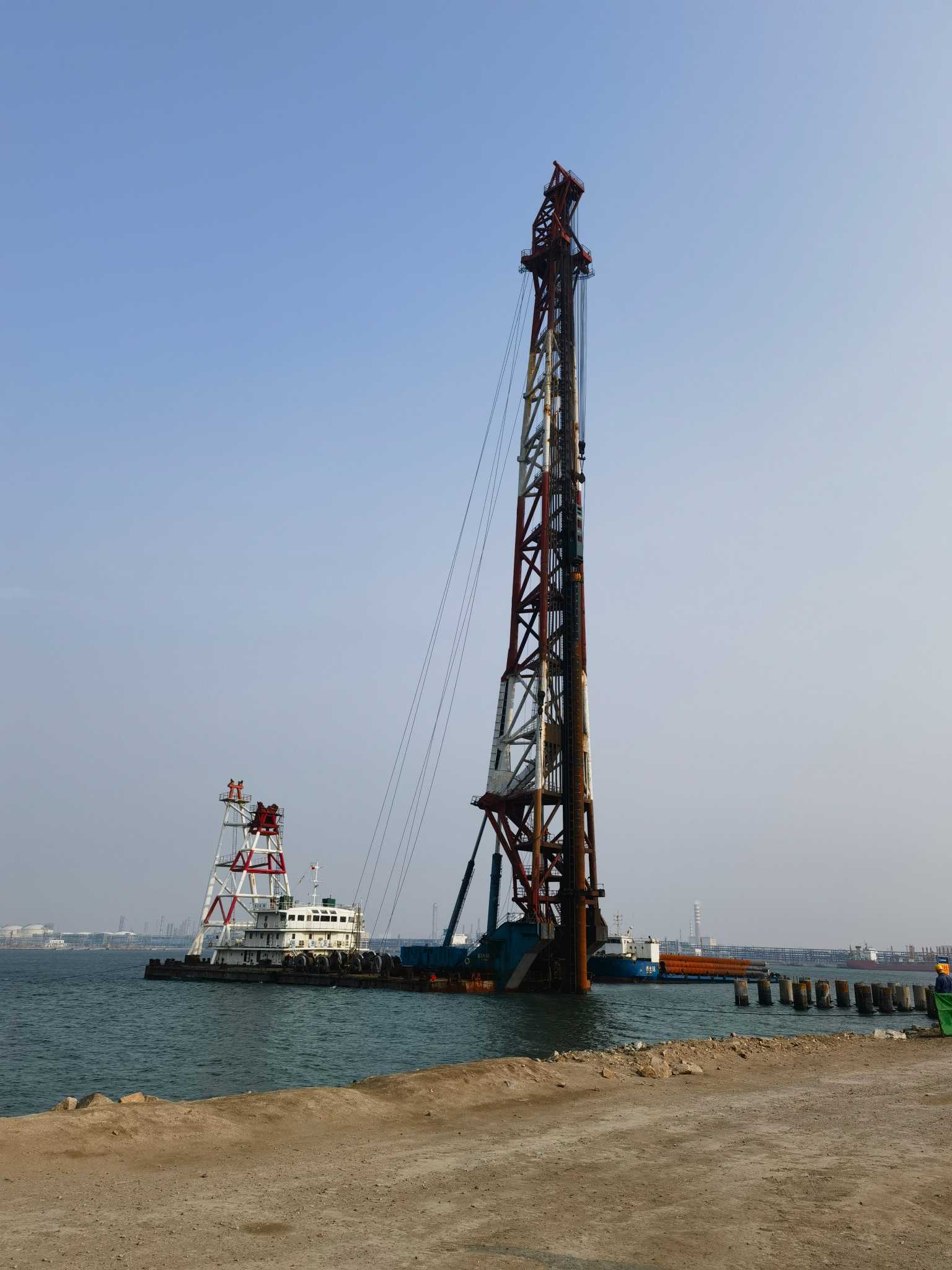
- Obtain the height datum in writing: leader height versus pile frame height, and whether it is measured above design draft, above deck or from the waterline.
- Test the stated pile envelope, diameter, length plus water depth and weight, against the actual pile schedule, not against an average.
- Check platform geometry against berth length, channel width, turning space and working draft at the site.
- Confirm air draft along the transit route against the stated frame height.
- Confirm class society, notation, navigation area and flag state for the specific hull, and request the certificate of class for that vessel.
- Price the full spread, including mooring and anchor handling equipment, survey positioning and support barges.
- Compare total mobilised cost and schedule, not day rate alone.
- Validate first-party cost or delivery claims against a project-specific quotation and build slot.
Frequently Asked Questions
What does the 110 m figure in the model name actually measure?
The model designation is 110m pile leader height Pile Driving Barge, and the vessel's specification separately states a pile frame height of 137.00 m above design draft. The two figures use different reference points, so the 110 m designation should not be read as interchangeable with the frame height. Buyers should ask the builder to state in writing which datum each quoted height uses.
What pile sizes is this class of vessel specified for?
The stated design envelope is a typical planting pile diameter of Ø4000 mm, a typical planting pile length of 107 m plus water depth, and a typical planting pile weight of 400 t. These are design values rather than guarantees: achievable performance depends on the hammer package, handling arrangement, mooring spread and site conditions.
When is a conventional piling barge still the better commercial choice?
A conventional piling barge remains appropriate when the pile envelope sits within its leader and handling range, when site access or water depth suits a smaller platform, and when mobilisation cost and availability dominate the decision. A high-capacity vessel adds cost that is only recovered where the project genuinely contains the heavy, long piles it was sized around.
Which certification should be specified for a pile driving barge?
Class requirements are vessel-specific and market-specific. The builder states that IACS classing is available through CCS, BV, LR or DNV. As a documented example from the same portfolio, CCS Domestic Vessel Classification Certificate ZA23DNB00274 was issued for the 2600m³ Split Hopper Barge, valid from 30 August 2024 to 29 August 2029, covering a coastal navigation area for a self-discharging hopper barge in the domestic market. That certificate applies to that barge only; a pile driving barge requires its own class scope and notation.
How long does delivery of a piling or dredging vessel take?
The builder states 2 to 3 months for standard vessels and 8 to 12 months for custom dredgers. For a large pile driving barge, these figures should be treated as indicative until a specific build slot is confirmed, since frame geometry, mooring arrangement and class notation all affect the construction programme.
Does a pile driving barge operate on its own?
No. Port and offshore marine operations of this type typically require a spread that includes dredge pumps, pipelines, surveying systems and anchor handling equipment, operating continuously in offshore or coastal conditions and either self-propelled or barge-towed. Common special requirements include CCS, BV or DNV class certification, corrosion-resistant steel, and dynamic positioning where the site demands it.
Conclusion
The useful conclusion for buyers at the research and evaluation stage is not that larger is better. It is that the comparison only becomes meaningful once the figures are pinned to a stated datum, a stated pile envelope and a stated class scope. The 110m pile leader height Pile Driving Barge is a worked example of what a high-capacity configuration looks like when its numbers are set out plainly: approximately 118.50 m overall length, 37.70 m breadth, a 137.00 m pile frame height above design draft, and a design envelope of Ø4000 mm, 107 m plus water depth and 400 t. Read against the general characteristics of conventional piling barges, those figures define both the projects the vessel is built for and the access, cost and certification constraints a buyer must plan around before award.
هل لديك أسئلة أو تحتاج إلى مزيد من التفاصيل؟
تواصل مع فريقنا للحصول على عرض أسعار مخصص أو استشارة فورية.
طلب عرض أسعار
املأ النموذج أدناه وسيتواصل معك فريقنا بعرض مقترح مخصص.
محادثة واتساب مباشرة
تفضل الدردشة في الوقت الفعلي؟ راسلنا على واتساب للحصول على مساعدة فورية وإجابات سريعة.
- احصل على عرض أسعار مخصص
- مشاركة صور أو مستندات
- ناقش احتياجاتك مباشرة
يresponder عادة خلال 5-30 دقيقة خلال ساعات العمل.