
13m Rescue Fire Boat vs 11m Cruiser Boat: Buyer's Evaluation
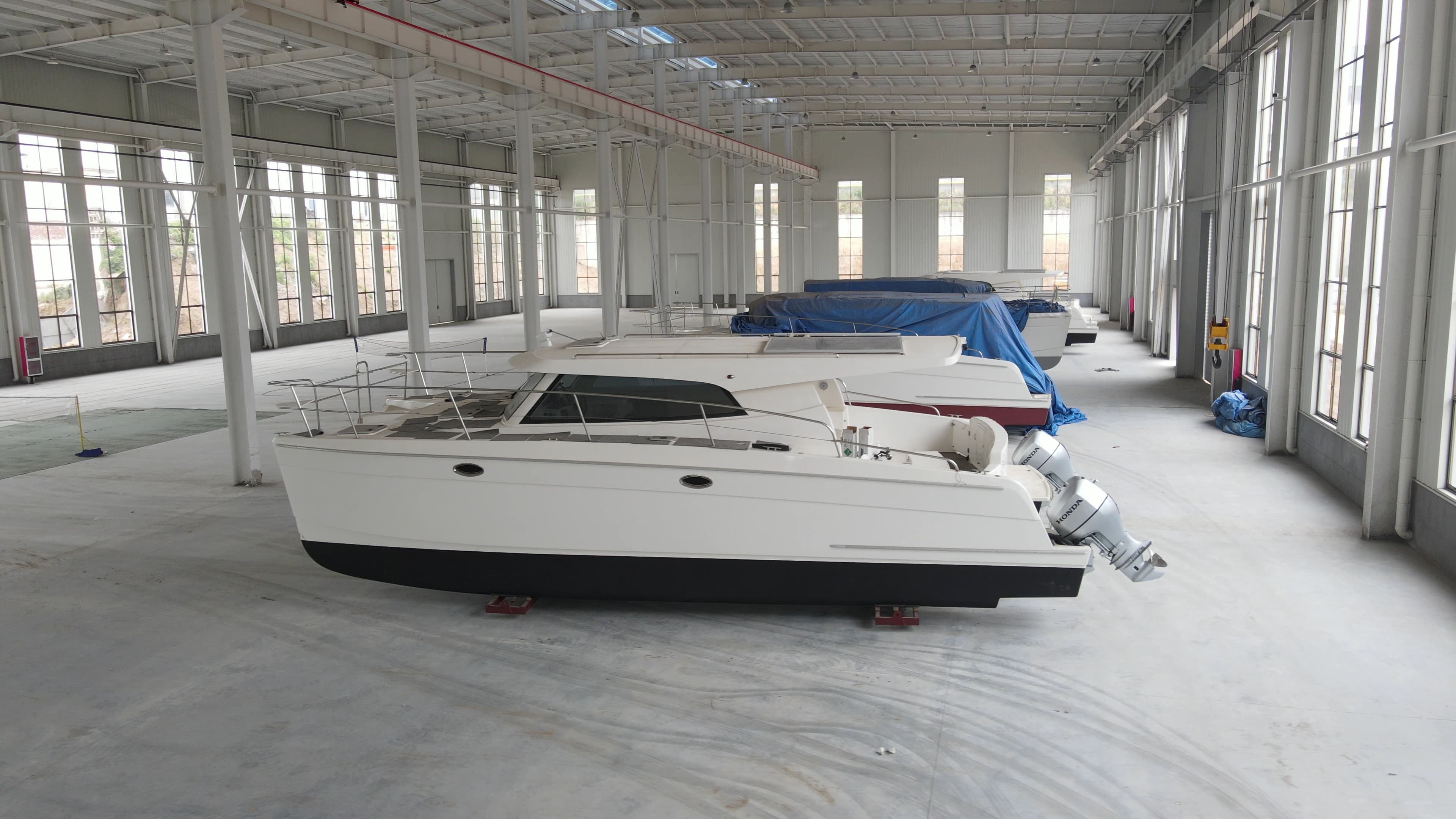
Workboat hulls are configured around duty cycles rather than length. The 13.25 m DK-FR and the 11.00 m DK-WR occupy different mission envelopes. Image: Dookyu Crown.
Buyers frequently shortlist the Dookyu Crown DK-FR and DK-WR together because both are aluminum workboats from the same yard and differ by roughly two metres of length. The comparison does not reduce to a size upgrade. The DK-FR is a 13.25 m aluminum rescue fire boat built around offshore firefighting and rescue, carrying twin 200HP Mercury outboards and a 1,500 gpm fire pump. The DK-WR is an 11.00 m aluminum cruiser work boat with two 150HP (110 kW) engines, a listed design speed of 26 knots and a full-load displacement of 5.60 tonnes. One platform carries firefighting machinery; the other carries people, light cargo and patrol crews across a wider commercial envelope.
Both vessels are built by Dookyu Crown, the boat-building operation of Qingdao Dookyu Crown Marine Co., Ltd., an aluminum vessel manufacturer based in Qingdao, Shandong Province, China. This evaluation uses only the published specification sets for the two models, together with the material and lifecycle data used across the aluminum workboat segment. Where a figure is not published, it is marked as unavailable rather than estimated, because an unavailable figure is a procurement question, not a blank to be filled by assumption.
Two Workboats, Two Different Jobs
A fire boat is built to deliver water at pressure onto a fire that is not on land. A cruiser work boat is built to move people, light cargo and crew along a coast. The published specification sets reflect that split before any performance discussion begins: the DK-FR lists a 1,500 gpm fire pump, a 500 L fuel tank, a 3.6 m beam and twin 200HP Mercury outboards, while the DK-WR lists a 26-knot design speed, a 5.60 t full-load displacement, a 0.47 m full-load draught, a 400 L fuel tank and two 150HP (110 kW) engines.
That distinction matters because the two vessels are usually shortlisted on hull length alone, and length is the least informative variable in the decision. A 13.25 m hull that carries firefighting machinery and an 11.00 m hull that carries passengers and patrol crews are answering different tender documents, even when both come from the same aluminum workboat lineage.
The shared ground is real, and it is what makes a side-by-side reading useful. Both models are aluminum, both sit inside Dookyu Crown's publicly stated customization range of 6 to 23 metres, and both draw on the same welding, corrosion-protection and systems-integration approach. What remains different is the equipment each hull is designed to support, and that is what buyers actually pay for.
Specification Snapshot: DK-FR and DK-WR Side by Side
The table below reproduces only the parameters published for each model. It is deliberately incomplete: several figures a buyer would normally require are absent from one or both specification sets, and those gaps are discussed later in this evaluation.
| Parameter | DK-FR — 13m Aluminum Rescue Fire Boat | DK-WR — 11m Aluminum Alloy Cruiser Boat |
|---|---|---|
| Hull material | Aluminum alloy hull | Aluminum |
| Length overall | 13.25 m | 11.00 m LOA |
| Secondary length figure | Not published | 8.81 m, listed as Captain L |
| Beam (width) | 3.6 m | 3.25 m |
| Depth moulded | Not published | 0.885 m |
| Full-load draught | Not published | 0.47 m |
| Full-load displacement | Not published | 5.60 t |
| Propulsion | Twin 200HP Mercury outboards | Two 150HP (110 kW) engines — 300HP combined |
| Design speed | Not published | 26 kn |
| Firefighting equipment | Fire pump flow 1,500 gpm | Not published |
| Fuel capacity | 500 L | 400 L |
| Stated mission set | Offshore firefighting and rescue missions | Coastal rescue; offshore patrol; passenger transport; fishing and marine leisure; professional workboat operations |
Figures marked as not published are absent from the specification sets used for this evaluation. They should be requested in writing from the builder or captured in a technical agreement rather than inferred from hull size or engine count.
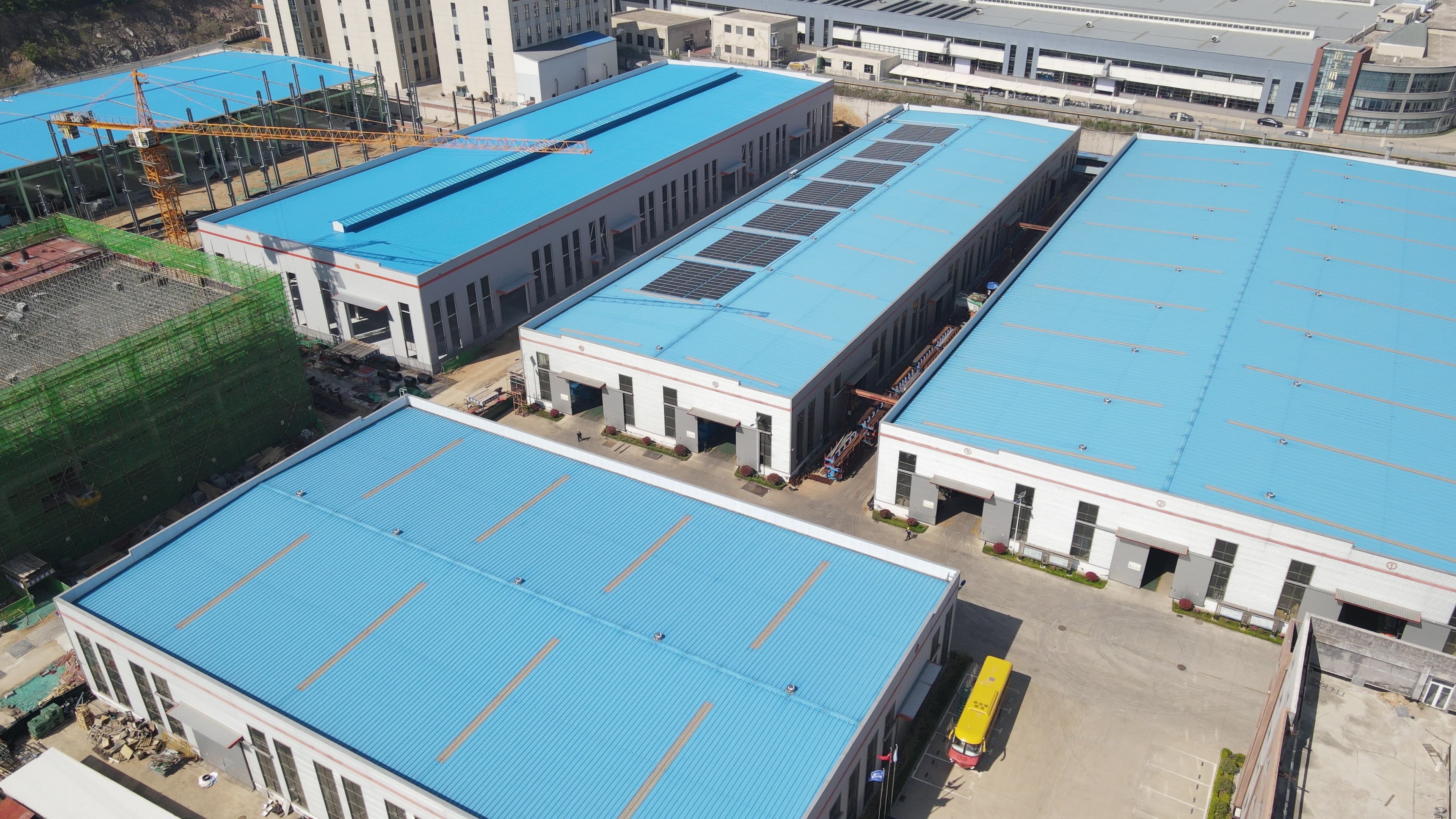
Both models originate in the same aluminum fabrication environment, which is why material, welding and corrosion behaviour are comparable across the two hulls while mission equipment is not. Image: Dookyu Crown.
What Twin 200HP Changes Compared with Twin 150HP
The DK-FR lists twin 200HP Mercury outboards; the DK-WR lists two 150HP (110 kW) engines, or 300HP combined. The gap is not simply a speed difference. Outboard power on a workboat sets how much payload, equipment and crew the hull can carry while still planing and accelerating predictably, and it determines how quickly the vessel can reposition in a response scenario.
On the fire boat, installed power has to coexist with pump machinery, hose and monitor equipment, and the working deck that firefighting crews need. On the cruiser, the same installed power is applied to a shorter, lighter hull rated at a 26-knot design speed at 5.60 t full load, with the internal volume that would otherwise be occupied by pump equipment available for seating, cargo and crew.
Two figures are missing from this part of the comparison, and both matter at decision stage. The DK-FR specification set does not publish a design speed or a loaded-condition speed, and the DK-WR specification set does not state the engine make. Buyers comparing propulsion should therefore ask for sea-trial data at loaded displacement for both models rather than comparing nameplate horsepower alone.
The 1,500 GPM Pump: The Capability That Does Not Compare Like-for-Like
The 1,500 gpm fire pump is the single feature that separates these vessels most sharply. GPM denotes rated flow in gallons per minute: the figure describes the flow the pump is rated to deliver, not how far the stream reaches, what nozzle is fitted, or how the water is applied at the fire.
A flow rating has to be read with the rest of the firefighting package — pump drive arrangement, sea suction and piping, monitor and nozzle selection, foam proportioning where required, and the crew procedure for running the pump while the vessel maneuvers. The DK-FR specification set states the pump flow and does not publish those subsystem details, so they belong in the technical agreement rather than in a summary comparison.
Nothing comparable is published for the DK-WR. That is not a deficiency in the cruiser; it marks the boundary of the comparison. A buyer who requires pump capability is not choosing between two boats — that buyer is choosing a fire boat, and the cruiser only re-enters the discussion if firefighting response can be delivered by another asset in the fleet.
Dimensions, Berthing and the Meaning of 11.00 m Versus 13.25 m
The two hulls differ by 2.25 m in overall length and 0.35 m in beam. The DK-WR publishes a full-load draught of 0.47 m, which is the figure that governs shallow approaches, tidal slips and nearshore work; the DK-FR does not publish a draught in its specification set, so shallow-water access for the fire boat must be confirmed rather than assumed.
The DK-WR specification also lists an 8.81 m length figure alongside the 11.00 m LOA. Buyers should confirm which definition applies before using either number for berth allocation, slipway capacity or lifting calculations, because the difference is material when marina berths are priced by length.
Handling follows the same logic. A shorter, narrower hull is generally easier to place in tight marina fairways and to handle short-crewed, while a 13.25 m hull with a 3.6 m beam demands more berth availability, more line-handling capacity and a larger lifting or slipping arrangement. Both hulls need transport and slipping plans quoted by the builder or the receiving yard; neither should be treated as a default trailerable craft.
Fuel, Endurance and Lifecycle Cost Signals
Fuel capacity is 500 L on the DK-FR and 400 L on the DK-WR. Neither specification set publishes consumption curves, so endurance should be calculated from sea-trial data at the loaded condition the buyer will actually operate, not from tank volume alone. The larger tank on the fire boat is consistent with a platform expected to remain on scene with machinery running, but the published data does not quantify that.
Where the two models converge is material economics. Marine-grade aluminum hulls are 30 to 45 percent lighter than a steel hull of equal strength, and aluminum vessels carry a higher initial material cost than steel with lower full-life-cycle maintenance cost. Against fiberglass, aluminum offers advantages in impact resistance, durability and lifecycle maintenance, with a service life of 30 to 50 years — roughly 1.5 to 2 times that of FRP — and fuel consumption 15 to 30 percent lower, offset by a 10 to 20 percent higher initial cost. Three-year maintenance costs for FRP hulls run at roughly double those of aluminum.
For a buyer, that means the material case strengthens with annual operating hours. On a vessel running high hours in salt water with abrasive docking and heavy deck work, the aluminum lifecycle advantage compounds. On a hull that sees limited seasonal use, the operating delta narrows against the purchase price, and the decision should lean more heavily on mission fit than on lifecycle arithmetic.
Mission Fit: Where Each Vessel Earns Its Keep
The table below maps the published mission sets of each model against common commercial tasks. Listed means the task appears in the model's stated application description; it is a positioning statement, not a certification of capability.
| Operational task | DK-FR (13.25 m) | DK-WR (11.00 m) | Buyer consideration |
|---|---|---|---|
| Offshore firefighting and rescue | Listed primary mission | Not listed | Requires the 1,500 gpm pump and working deck the cruiser does not publish |
| Coastal rescue response | Listed | Listed | Both hulls appear in rescue roles; equipment scope differs |
| Offshore patrol | Not listed | Listed | Patrol duty favours the 26-knot, 5.60 t cruiser envelope |
| Passenger transport | Not listed | Listed | Layout and seating fall under customization scope |
| Fishing and marine leisure | Not listed | Listed | Aluminum is widely preferred over fiberglass for freshwater fishing on weight and cost |
| Professional workboat operations | Listed (rescue and firefighting) | Listed | Define the duty statement before comparing price |
Where Each Boat Stops Being the Right Answer
A comparison that lists only advantages is not useful at decision stage. Both vessels have defined boundaries.
- DK-FR boundaries. Firefighting machinery adds acquisition cost, maintenance routines and crew training, and that capability delivers nothing if no firefighting duty exists in the operating plan. The longer hull and wider beam raise berthing, slipping and line-handling requirements. The specification set also omits design speed, draught and displacement, so performance must be contracted rather than inferred from length.
- DK-WR boundaries. No firefighting equipment is published for this model, so it is not a fire-response substitute. The 26-knot figure is a design speed at stated conditions, not a guaranteed speed under full load or in a seaway, and should be confirmed by trial. With 5.60 t full-load displacement and an 11.00 m LOA, buyers planning heavy deck equipment should verify load margin before committing.
- Shared boundaries. The company states that it builds to international standards such as CE and ISO 9001; buyers should verify the applicable certificate, its scope, number and validity rather than accepting a standards reference as an assurance. Published specification sets are selection documents, not complete performance documents.
The Builder Behind the Spec Sheets
Dookyu Crown is the boat-building brand of Qingdao Dookyu Crown Marine Co., Ltd., an aluminum vessel manufacturer founded in 2020 and based in Qingdao, Shandong Province, China. The company operates a 70,000 m² facility with 85 employees, an engineering team of 17, and an annual output of 200 vessels, with approximately 80 percent of production exported to markets that include Australia, the USA, Canada, Mexico, New Zealand, Russia, Thailand, Ecuador, Hong Kong and Nigeria.
For this comparison, the relevant point is that both hulls come from one production system. The builder works in marine-grade aluminum including 5083 and 5086 alloys, using MIG and TIG welding and CNC cutting, and integrates propulsion, navigation and mission systems into the hull rather than treating them as aftermarket additions. That matters when one of the two vessels will carry pump machinery and the other will carry passengers.
Customization scope is publicly stated as hull size from 6 to 23 metres, color, functional layout and power system configuration, with outboard, inboard and electric propulsion available subject to the selected design. Export support covers packaging, international logistics, customs clearance support and after-sales service. For a buyer deciding between a fire boat and a cruiser, that scope is what allows either hull to be adapted — but adaptation is a documented engineering step, not a verbal assumption.
Aluminum Against Steel and Fiberglass: What the Material Choice Changes
Because both models are aluminum, the material question is settled before the model comparison begins. It is still worth restating what the aluminum decision means, because it shapes total cost more than most buyers expect.
| Comparison | What the available data indicates |
|---|---|
| Aluminum versus steel | Aluminum hulls are 30 to 45 percent lighter than steel hulls of equal strength, with advantages in weight, fuel efficiency and corrosion resistance; initial material cost is higher, full-life-cycle maintenance cost is lower |
| Aluminum versus fiberglass | Aluminum offers advantages in impact resistance, durability and lifecycle maintenance; service life of 30 to 50 years, roughly 1.5 to 2 times FRP; fuel consumption 15 to 30 percent lower |
| Cost profile | 10 to 20 percent higher initial cost than FRP, offset by lower operating and maintenance cost, with three-year FRP maintenance roughly double that of aluminum |
| Segment fit | Aluminum is suited to commercial patrol, rescue and high-impact maritime environments, and to passenger ferries, fast workboats and routes requiring high fuel efficiency |
The boundary is cost timing and repair competence. Aluminum carries a higher initial material cost than steel, and hull repair generally requires aluminum welding capability rather than simple patching, which affects where and how quickly a vessel can be returned to service. Buyers operating far from qualified aluminum repair capacity should weigh that against the lifecycle savings rather than assuming the material advantage is unconditional.
A Buyer's Decision Sequence
For buyers at decision stage, the following sequence resolves the DK-FR versus DK-WR question faster than a specification-by-specification comparison.
- Write the duty statement. Record expected annual hours, operating area, sea state, response obligations and crew size before looking at either model.
- Decide whether firefighting capability is required at all. If it is, the DK-FR is the only one of the two with published pump capacity; if it is not, the pump becomes idle capital.
- Fix the physical constraints. Berth length and beam, slipway or lifting capacity, and minimum draught for the operating area — noting that only the DK-WR publishes a full-load draught.
- Size the payload. Confirm how much equipment, cargo and crew each hull must carry at full load, against the 5.60 t displacement published for the DK-WR.
- Set the speed requirement and require proof. Ask both suppliers for trial data at loaded displacement rather than accepting design-speed figures.
- Confirm equipment scope in the technical agreement. Pump, monitor, nozzle, electronics and deck fittings should be itemised, not implied.
- Verify certification. Check certificate type, scope, number and validity, and confirm which body issued it.
- Compare total cost of ownership. Purchase price, fuel, maintenance, downtime and resale should be modelled together — the material data indicates where the differences accumulate.
Market Trend: Demand Pulling in Two Directions
The aluminum vessel market was estimated at USD 6.145 billion in 2024 and is projected to grow at a compound annual rate of 4.21 percent from 2025 to 2035, according to Market Research Future. That is moderate, structural growth rather than a surge, and it is consistent with the pattern visible in this comparison: demand is not producing one dominant workboat format but reinforcing specialisation at both ends.
The patrol boat segment, which includes aluminum variants, was valued at USD 240 million in 2024 by Intel Market Research, with named participants including Fassmer, SAFE Boats and Marine Alutech. A segment of that size, served by specialised builders, tends to compete on configuration and capability rather than on volume pricing — which is why pump equipment, hull geometry and mission fit carry more weight than hull length in procurement decisions.
On the material side, lightweight aluminum construction continues to be adopted where fuel efficiency matters. Incat Tasmania was reported in 2025 to be building next-generation lightweight aluminum passenger ferries for improved fuel efficiency, and aluminum fishing boats are preferred over fiberglass for freshwater fishing on weight and cost grounds according to Stratview Research. Both signals support the same conclusion: aluminum is being selected for operating economics, not only for acquisition price.
Buyers should treat third-party market estimates as directional. Published 2024 figures for the aluminum fishing boat market, for example, range between approximately USD 1.6 billion and USD 1.7 billion across sources. That spread does not undermine the trend, but it is a reminder to anchor procurement decisions in verified vessel data rather than in market totals.
Future Outlook
The likelier direction for this segment is further mission specialisation rather than convergence on a single multi-purpose hull. Firefighting and rescue platforms will continue to be specified around pump performance, deck working space and crew procedures, while patrol and transport hulls will be specified around speed, payload and passenger comfort. A buyer who attempts to satisfy both duties with one vessel usually ends up compromising the firefighting package or carrying idle equipment.
Material and propulsion choices are also likely to keep shifting. The builder already offers outboard, inboard and electric propulsion subject to vessel design, and the wider market is moving toward lightweight structures and lower-emission propulsion. For buyers, that means propulsion specification should be locked early in the design conversation, because it constrains layout, weight distribution and, on a fire boat, the space and power available for pump machinery.
What is unlikely to change is the value of documented specification. The most useful procurement habit in this category is to convert every verbal assurance — speed, draught, pump performance, delivery date, certification scope — into a written, verifiable line item before a contract is signed.
Frequently Asked Questions
Is the DK-FR a direct upgrade over the DK-WR?
No. The DK-FR is a 13.25 m aluminum rescue fire boat with twin 200HP Mercury outboards and a 1,500 gpm fire pump, positioned for offshore firefighting and rescue. The DK-WR is an 11.00 m aluminum cruiser work boat with two 150HP (110 kW) engines, a 26-knot design speed and a 5.60 t full-load displacement, positioned for coastal rescue, offshore patrol, passenger transport, fishing and professional workboat operations. The larger hull adds firefighting capability but not the cruiser's broader multi-mission envelope.
What does a 1,500 gpm fire pump flow rating actually cover?
GPM denotes rated flow in gallons per minute and describes the flow the pump is rated to deliver. It does not by itself describe stream reach, nozzle selection, pump drive arrangement, sea suction design or foam proportioning. The DK-FR specification set publishes the pump flow figure; the surrounding subsystem details are not published and should be specified in the technical agreement.
How much practical difference does 11.00 m versus 13.25 m make?
The length difference is 2.25 m and the beam difference is 0.35 m, with beams of 3.25 m and 3.6 m respectively. The shorter hull is generally easier to berth and handle with a small crew, and the DK-WR publishes a 0.47 m full-load draught, which supports shallow approaches. The DK-FR's draught is not published, and its longer, wider hull requires more berth and lifting capacity. The DK-WR specification also lists an 8.81 m length figure beside the 11.00 m LOA, so the definition should be confirmed before berth calculations.
Do the engine configurations change fuel planning?
The DK-FR carries twin 200HP Mercury outboards and a 500 L fuel tank; the DK-WR carries two 150HP (110 kW) engines and a 400 L tank. Neither specification set publishes consumption curves, so endurance should be calculated from sea-trial data at the buyer's loaded operating condition. Tank volume alone is not a reliable basis for range planning.
Which vessel fits coastal patrol and passenger transfer?
The DK-WR lists offshore patrol, passenger transport, coastal rescue, fishing and marine leisure among its applications, with a 26-knot design speed and 5.60 t full-load displacement. The DK-FR's stated mission is offshore firefighting and rescue. Where patrol or passenger transfer is the primary duty and no firefighting requirement exists, the cruiser is the better-aligned of the two published configurations.
Can the DK-WR be configured with firefighting equipment?
The published DK-WR specification set does not list firefighting equipment or pump flow. The builder's publicly stated customization scope covers hull size from 6 to 23 metres, color, functional layout and power system configuration, so equipment questions should be raised directly and confirmed in writing in the technical agreement. A pump should not be assumed to be addable to the 11.00 m hull without documented engineering confirmation.
What should be verified before comparing quotations for either vessel?
Confirm the certificate type, scope, number and issuing body, since the company states it follows international standards such as CE and ISO 9001 without publishing certificate details in the specification set. Confirm engine make and model, requested speed and consumption at loaded displacement, draught and displacement figures where unpublished, and the full equipment list. Export packaging, logistics, customs clearance support and after-sales service are stated as available and should be defined contractually.
Conclusion
The DK-FR and DK-WR are not competing answers to one question. The fire boat exists to place 1,500 gpm of pumping capacity offshore with a 13.25 m working platform; the cruiser exists to move people and crews at a 26-knot design speed on an 11.00 m hull that draws just 0.47 m at full load. Buyers who compare them by length will usually reach the wrong conclusion, and buyers who compare them by duty statement will usually find that only one of the two belongs on the shortlist at all.
A full Dookyu Crown product brochure is available for download: https://cdn.socialarks.com/sbsp/25156/common/2026/0808/brochure.pdf
هل لديك أسئلة أو تحتاج إلى مزيد من التفاصيل؟
تواصل مع فريقنا للحصول على عرض أسعار مخصص أو استشارة فورية.
طلب عرض أسعار
املأ النموذج أدناه وسيتواصل معك فريقنا بعرض مقترح مخصص.
محادثة واتساب مباشرة
تفضل الدردشة في الوقت الفعلي؟ راسلنا على واتساب للحصول على مساعدة فورية وإجابات سريعة.
- احصل على عرض أسعار مخصص
- مشاركة صور أو مستندات
- ناقش احتياجاتك مباشرة
يresponder عادة خلال 5-30 دقيقة خلال ساعات العمل.