
16×1.0mm PET Strap: A Fit Check for Automatic Textile Bundling
16×1.0mm PET Strap: A Fit Check for Automatic Textile Bundling
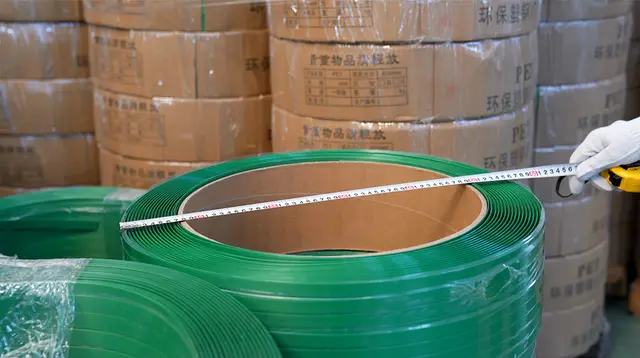
Textile bundling lines rarely fail because one specification on a data sheet is wrong. They fail because the relationship between strap size, cut length, surface finish and machine behaviour was assumed rather than tested. For light-industry packaging teams building around automatic packaging, 16×1.0mm PET plastic strapping has become a common reference point for chemical-fiber, cotton-spinning and fabric bales. The dimension itself does not prove a fit. A documented supply case — transparent cut PET strap in 16×1.0mm, produced in specified lengths and confirmed compatible with an automatic packaging line at Far Eastern Industries — shows what actually has to be verified before a full order is placed.
Why 16×1.0mm PET Became a Working Reference for Textile Lines
Textile bundling is a load-retention problem before it is a packaging problem. Chemical-fiber filament packages are compressed under tension and then moved through palletizing, storage and long-haul transport. A strap that stretches under that load lets the package relax, and a relaxed bale is more likely to deform or burst. Polyester (PET) strapping is used in this role because its elongation under tension is low relative to polypropylene. The chemical-fiber PET grade is documented at 2–5% elongation, against roughly 15–25% for PP in the same application discussion. That gap is the practical reason PET appears on automatic textile lines at all.
Within the PET family, 16×1.0mm has settled into a useful middle position. It is wide enough to carry the breaking strength recorded for the chemical-fiber grade — SGS reports for this PET family show 9.98kN — while staying narrower and lighter than the 19×1.0mm format used on heavier bales. For a packaging team comparing options, 16×1.0mm is therefore a sensible starting point to test, not a default answer. Whether it fits depends on the four variables below, and a specification sheet alone does not settle any of them.
Four Variables That Decide Whether a 16×1.0mm Strap Fits
A match on width, thickness and breaking strength is necessary but not sufficient. On an automatic line, fit is determined by how the strap behaves as it is fed, tensioned, sealed and cut. The four checks below turn a catalogue comparison into a line-level decision.
1. Dimension and Load Match
The 16×1.0mm format sits in the light-to-medium band of textile bundling. Its recorded SGS breaking strength of 9.98kN gives a packaging team a reference for the load classes it can be expected to retain, but the real question is the actual bale: fiber type, compression level, package weight and handling route. Heavier bales move to the 19×1.0mm format, which the same chemical-fiber application material pairs with the 16mm version. Dimension matching is therefore two steps, not one. Confirm that 16×1.0mm is rated for the load class, then confirm that the machine guide and sealing head are set for a 16mm strap with a 1.0mm section.
The 1.0mm thickness matters for a second reason. Thin straps can be more prone to edge damage and tension loss on abrasive fiber packages. The 1.0mm section gives more material to resist that wear while staying within the feed tolerances of the automatic textile strappers described in the application material. It does not replace correct tension settings, but it reduces the chance that the strap itself becomes the weak point.
2. Cut Length and Feed Consistency
Cut length is the variable buyers most often treat as a purchasing detail and later discover is a line setting. A cut strap must span the package, pass through the machine arch or guide path, and land in the sealing zone with enough overlap for a reliable weld — without so much excess that the tail fouls the next cycle. When the length is wrong, the symptoms show up as misfeeds, double feeds or seal failures rather than as an obvious dimensional error.
Recorded textile orders show the range in practice. One chemical-fiber customer specified 16×1.0×3430mm cut lengths alongside a 19×1.0×3430mm format. Sateri's green cut PET strap has been supplied in a 1610×3380/3480 format across multiple batches. These are customer-specific lengths, not universal standards, and that is exactly the point. Cut length is set by the package and the machine, so it should be confirmed on the actual line before a full order. The Far Eastern Industries transparent 16×1.0mm supply was similarly produced in specified lengths, which is what makes that case useful as a fit reference rather than a generic endorsement.
3. Surface Finish and Friction
Surface finish changes how the strap interacts with both the package and the machine. A smooth finish reduces friction against guide tracks and is the usual choice for high-speed automatic operation; the textile application material calls for a smooth surface that does not snag or damage fiber. An embossed finish adds grip where the package surface is slick or the load tends to shift, but it also changes friction in the feed path and should be trialled rather than assumed.
Transparency is a separate choice from smoothness. The Far Eastern Industries record specifies transparent cut PET strap, and the stated benefit is easier identification and more efficient operation. For a textile line handling several fiber types or batch codes, a transparent strap lets operators read package markings without removing the strap. That is an operational preference, not a strength claim, and it should be weighed against any printing or colour-coding requirement the buyer has.
4. Straightness, Thickness and Heat-Seal
The variables that most often decide whether an automatic line runs without interruption are less visible than width and length. Straightness, expressed as deflection per metre, determines whether the strap feeds flat or tilts in the guide. The textile application record cites measured deflection of ≤3mm/m, against a general specification of ≤5mm/m — a reminder that a qualified supply can run tighter than the catalogue limit.
Thickness and grammage consistency affect tension control and cost. The textile application material specifies grammage error within ±0.05g/m, which matters because a strap running heavy or light changes the tension the machine applies and the amount of material consumed per package. Heat-seal performance is the fourth element: joint strength is specified at ≥80% of the base material, and a weak weld is a common cause of load loosening that looks like a strap failure. For export-facing textile producers, RoHS and REACH reports are also part of the fit file, because they determine whether the packaging can clear the destination market.
What the Far Eastern Industries Record Establishes
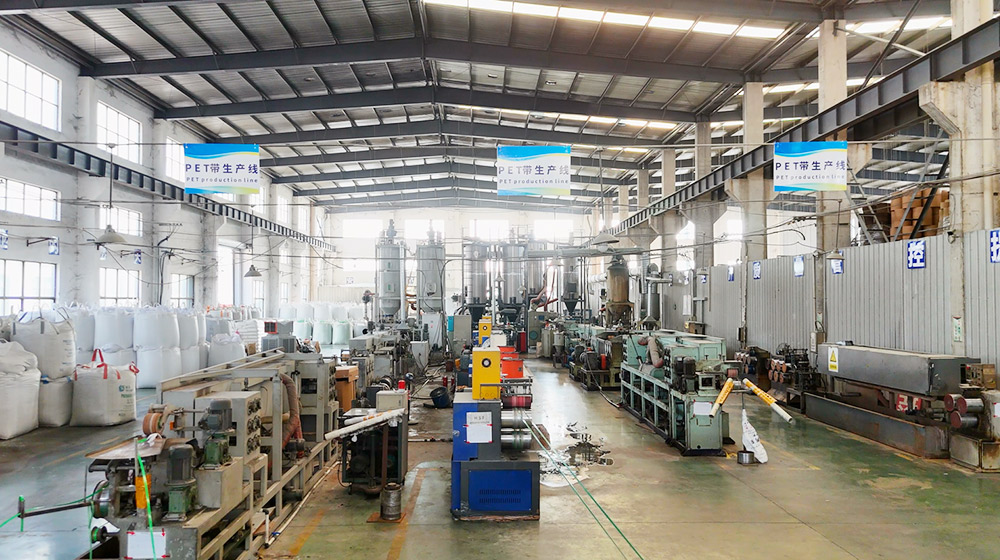
The most directly relevant evidence for a 16×1.0mm textile fit is the Far Eastern Industries supply record. Jushuo Packaging has supplied transparent cut PET strap in 16×1.0mm, produced in specified lengths, for textile product bundling over a three-year period. The recorded volume is 36,000 plus 9,000 pieces, with an approximate value of USD 45,450, and the stated result is full compatibility with Far Eastern Industries' automatic packaging lines.
Three conclusions can be drawn from that record, and one cannot. First, the format is viable: a transparent 16×1.0mm cut strap has run on an automatic textile packaging line in a production setting, not only in a trial. Second, cut length was part of the supply specification, which supports the argument that length is a fit variable rather than an afterthought. Third, transparency and precise cutting were noted as operational benefits for identification and efficiency.
What the record does not establish is that every automatic textile line will accept the same strap without adjustment. It is one customer's configuration, on that customer's machines, with that customer's package dimensions. The correct use of the case is as a reference for what to verify — dimension, cut length, finish and line behaviour — not as a guarantee that a buyer can skip the trial stage.
How 16×1.0mm PET Compares With PP and Steel in Textile Bundling
The comparison below uses documented characteristics for the same textile bundling role. It is not a ranking, and the PP and steel columns are not universal claims about those materials.
| Consideration | 16×1.0mm PET cut strap | PP strap, 12mm textile reference | Steel strap |
|---|---|---|---|
| Elongation under tension | 2–5% for the chemical-fiber PET grade | Approx. 15–25% in the same application discussion | Low, but not like-for-like without test conditions |
| Recorded breaking strength | 9.98kN, SGS report for this PET family | ≥1400N for 12mm textile PP | Section-dependent; not specified in this material |
| Corrosion risk | None | None | Rust risk, a stated reason for replacement in export packaging |
| Recycling | Recyclable material | Recyclable material | Separate heavy-duty handling |
| Automatic-line fit | Requires confirmed straightness, thickness and heat-seal | Used on automatic and semi-automatic lines | Usually needs dedicated tensioning and sealing tools |
| Typical textile role | Light-to-medium bales on automatic lines | Cost-sensitive and lighter loads; semi-automatic and manual lines | Heavy loads where PET is not specified |
The comparison is not a ranking. PP remains a rational choice for lighter, cost-sensitive or semi-automatic textile operations; the 12mm textile PP record shows breaking force ≥1400N and elongation of 10–15%, which suits many carton and light-bale tasks. Steel retains a role in heavy loads, but its corrosion behaviour is the reason PET is specified in fiber and textile export packaging. The 16×1.0mm PET case sits between the two: more tensile and lower-elongation than a standard PP strap, without the rust and handling issues associated with steel.
Where the Fit Holds — and Where It Stops
The 16×1.0mm transparent cut strap is a strong candidate for chemical-fiber filament, cotton-spinning and fabric bale bundling on automatic lines where the load class is light to medium and export documentation is needed. The application material also covers RoHS and REACH reporting, which fits textile producers shipping into regulated markets.
The fit stops at several clearly defined boundaries. Heavier bales move to 19×1.0mm or wider formats. Very-low-temperature environments require an anti-brittle grade rather than the standard textile format, because ordinary PET embrittles in deep-cold conditions. Outdoor storage calls for a UV-stabilised version, since UV exposure relaxes standard PET over time. Printing or brand identification is a separate customisation path. Manual or low-volume operations may find PP more economical. And if the machine arch, guide width or core size is not set for a 16mm × 1.0mm strap, the dimension mismatch will defeat even a correctly specified consumable. A buyer who maps these boundaries before ordering avoids the most common cause of a failed switch.
A Pre-Order Verification Sequence
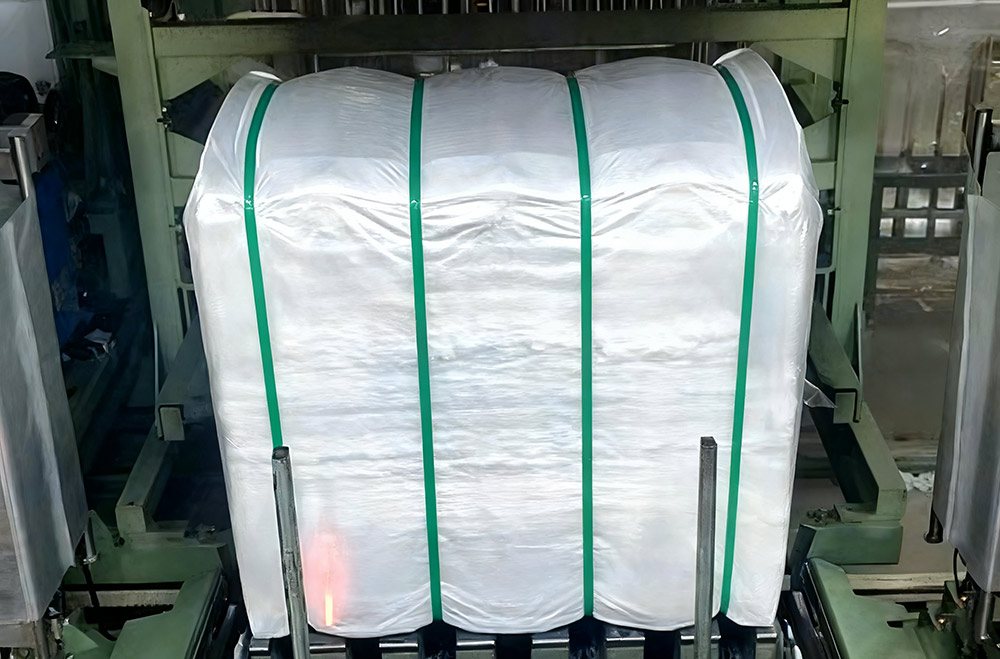
A textile packaging team can reduce the risk of a failed switch by running a short, ordered check rather than relying on a specification sheet alone.
- Collect the machine data. Arch dimensions, guide width, core size, cut-length setting and sealing type should be recorded before any strap is specified.
- Trial on the real package. Samples in the intended width, thickness, cut length and finish should run on the actual machine with the actual bale, so that feed, tension and seal behaviour are observed rather than assumed.
- Check the test file. SGS tensile data for the PET family, plus RoHS and REACH reports where the packaging is for export, should be reviewed against the destination market requirements.
- Confirm cut length and packing format. The length should be fixed with the supplier against the package and guide path, and the roll or carton format confirmed against the machine's core and handling setup.
- Scale from a small batch. A first production batch validates the fit before volume commitments are made.
Supply and Integration Support From Jushuo Packaging
Jushuo Packaging (Taixing Jushuo Packaging Technology Co., Ltd.) is a strapping and packaging-machinery manufacturer founded in 2017 in Huangqiao Industrial Park, Taixing, Jiangsu. The company operates a 15,000m² factory with more than 20,000 tons of annual capacity, four PET production lines, five PP lines and two solid-state polymerization units, under ISO 9001 and ISO 14001. For textile buyers, the relevant capabilities are customisation of width, thickness, length, surface finish, core size and printing; chemical-fiber application support in the 12–19mm width and 0.6–1.2mm thickness range with SGS reports available; and automatic packaging line integration covering conveying, strapping, wrapping and palletizing. Those capabilities matter for a 16×1.0mm fit because cut length, finish and line behaviour are exactly the variables a general-purpose supplier cannot adjust after the order.
What the Outlook Suggests for Textile Packaging Teams
The direction of travel in textile export packaging is toward lower-elongation, dimensionally consistent cut strap that runs on automatic lines without intervention. The drivers visible in the supplied material are practical rather than promotional: fiber bales need tension retention over long-haul transport, and export markets increasingly ask for RoHS and REACH documentation. PET's low elongation and recyclability fit that brief, and cut-to-length supply reduces waste on the line. None of this makes 16×1.0mm the right answer for every textile package. It makes the four-variable check more important as lines get faster and tolerances tighten, because the cost of an assumed fit rises with line speed.
FAQ
What should a textile packaging team verify before switching to a 16×1.0mm PET strap?
Four things should be confirmed: that the load class is within the 16×1.0mm rating (9.98kN SGS for the PET family), that the machine guide and sealing head are set for a 16mm × 1.0mm strap, that the cut length matches the package and guide path, and that the finish — smooth or embossed, transparent or coloured — suits the line. A trial on the actual package and machine is the only way to confirm all four together.
How does cut length affect automatic textile bundling performance?
Cut length determines where the strap lands in the sealing zone. Too short and the weld has insufficient overlap; too long and the tail can foul the next cycle. Recorded textile orders use customer-specific lengths such as 16×1.0×3430mm, which shows that length is set by the package and machine rather than by a universal standard.
Should a 16×1.0mm PET strap be smooth or embossed for an automatic textile line?
Smooth is the usual choice for high-speed automatic lines because it reduces friction in the guide path and avoids snagging fiber. Embossed adds grip for slick or shifting loads but changes feed friction and should be trialled. Transparency is a separate operational choice that helps operators read package markings without removing the strap.
How can a buyer verify line compatibility before placing a full order?
Request samples in the intended width, thickness, cut length and finish; run them on the actual machine with the actual package; check SGS tensile data and RoHS or REACH reports if the packaging is for export; then scale from a small batch. A supplier's ability to produce specified cut lengths and provide test reports is part of the evidence, not a substitute for the trial.
What does the Far Eastern Industries supply record show about 16×1.0mm PET strap?
Jushuo Packaging supplied transparent cut PET strap in 16×1.0mm, in specified lengths, for textile bundling over three years, with a recorded volume of 36,000 plus 9,000 pieces and stated full compatibility with Far Eastern Industries' automatic packaging lines. It is a production reference for the format, not a guarantee that every line will accept it without a trial.
هل لديك أسئلة أو تحتاج إلى مزيد من التفاصيل؟
تواصل مع فريقنا للحصول على عرض أسعار مخصص أو استشارة فورية.
طلب عرض أسعار
املأ النموذج أدناه وسيتواصل معك فريقنا بعرض مقترح مخصص.
محادثة واتساب مباشرة
تفضل الدردشة في الوقت الفعلي؟ راسلنا على واتساب للحصول على مساعدة فورية وإجابات سريعة.
- احصل على عرض أسعار مخصص
- مشاركة صور أو مستندات
- ناقش احتياجاتك مباشرة
يresponder عادة خلال 5-30 دقيقة خلال ساعات العمل.