
19-Inch Rack vs Wall-Mounted Control Box: Top Picks Guide
Enclosures are usually specified from the inside out: components first, housing second. In compact automation work — a telecom node, a PLC-controlled machine skid, a small variable frequency drive lineup — that order turns the enclosure into a constraint rather than a design variable. Reversing it changes how many devices fit, how much heat can leave the assembly, and how the finished panel behaves after years in a dusty or semi-outdoor location.
Stated plainly as a recommendation: for projects that must house communication equipment, PLCs or VFDs within a limited footprint, a custom wall-mounted box built with 19-inch mounting rails is the preferred first option. It consumes no floor area, accepts standard rack-format hardware, and can be specified to an IP65 protection target where the installation is dusty, humid or exposed. A stainless steel floor-standing cabinet stays the stronger answer when internal volume, thermal load or washdown conditions exceed what a wall-mounted box can reasonably carry.
This guide sets out that two-option shortlist, the criteria that separate the choices, and the execution details — testing, documentation, warranty and commercial terms — that determine whether a long-term enclosure programme runs smoothly after the purchase order is signed.
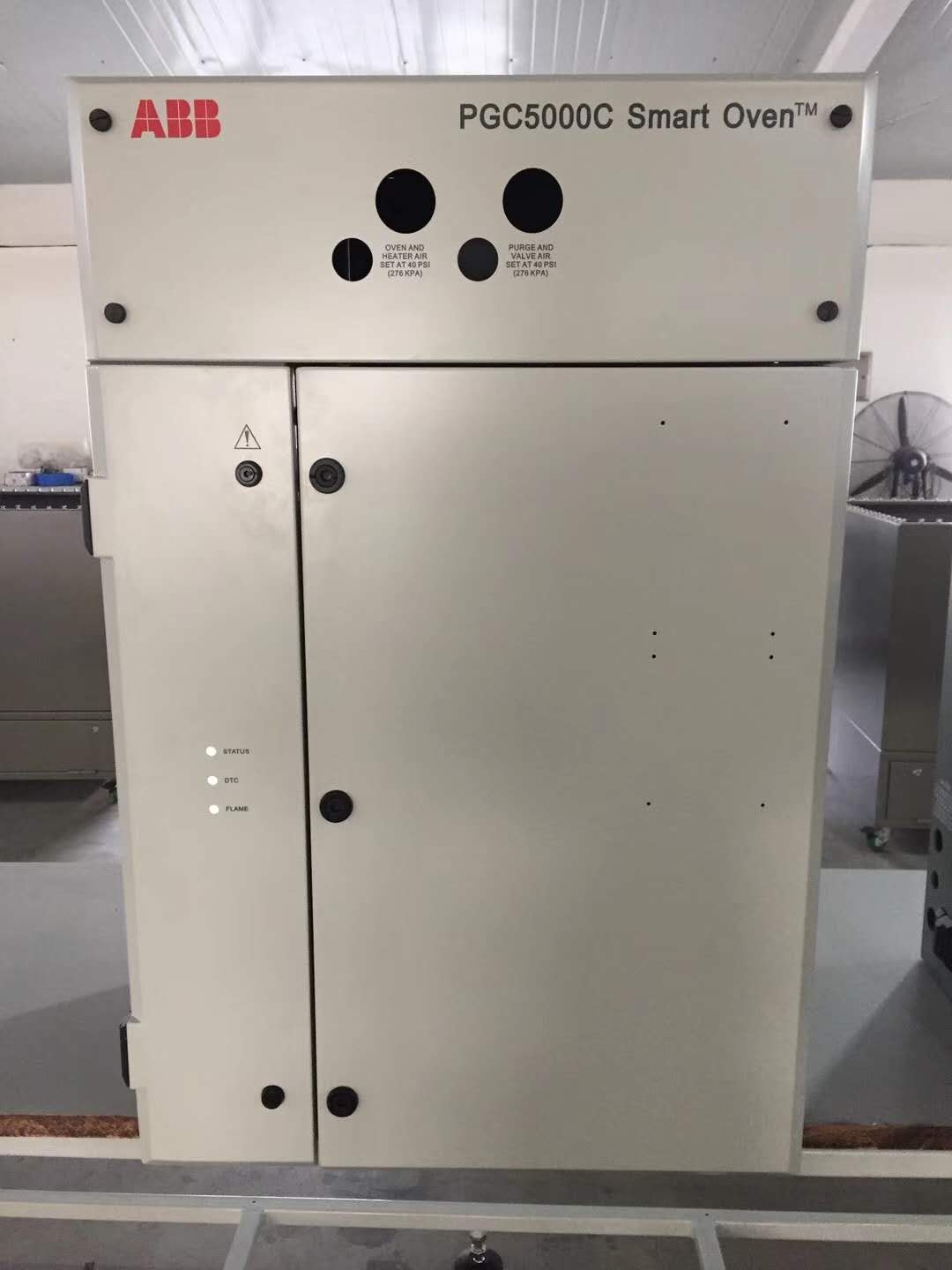
Why the Enclosure Decision Comes First in Compact Projects
The compact footprint problem is a building problem before it is an electrical one. A floor-standing cabinet needs a clear floor area, aisle clearance for door swing, and lifting equipment at installation. In an existing electrical room, a machine skid or a remote pumping position, none of those conditions can be assumed.
Four situations consistently push buyers toward a wall-mounted enclosure rather than a floor-standing one:
- Retrofits into existing rooms where the only remaining surface is the wall.
- Machine-mounted and skid-mounted control points that travel with the equipment instead of standing beside it.
- Remote or semi-outdoor positions — water treatment, pumping, telecom nodes — where a floor cabinet would require separate civil work.
- Standardisation programmes where harmonising on 19-inch rack-format hardware reduces the variety of spare parts a maintenance team must hold.
The opportunity is not simply space. When the same rack geometry is repeated across a site, commissioning, spares planning and future expansion all become simpler, because a replacement module occupies the same physical and electrical position as the one it replaces.
Yinlu's Solution Approach: A Custom Wall-Mounted Box Built Around 19-Inch Rails
Dalian Yinlu Electrical Control Equipment Manufacturer is a Chinese manufacturer based in Dalian, Liaoning Province, engaged in sheet metal fabrication, enclosure manufacturing, electrical control cabinets, intelligent control boxes and electrical distribution. The company operates a 5,000 m² facility with 60 employees, including a six-member R&D team, and reports an annual output of 20,000 units with a monthly production capacity of 2,000 units. Roughly 80% of output serves export markets, principally North America, Europe, Oceania and the high-end Asia-Pacific market. Yinlu holds ISO 9001 and supplies export orders with certifications such as CE and RoHS, and it accepts both OEM and ODM work, including non-standard customisation against drawings, parameters and functional requirements.
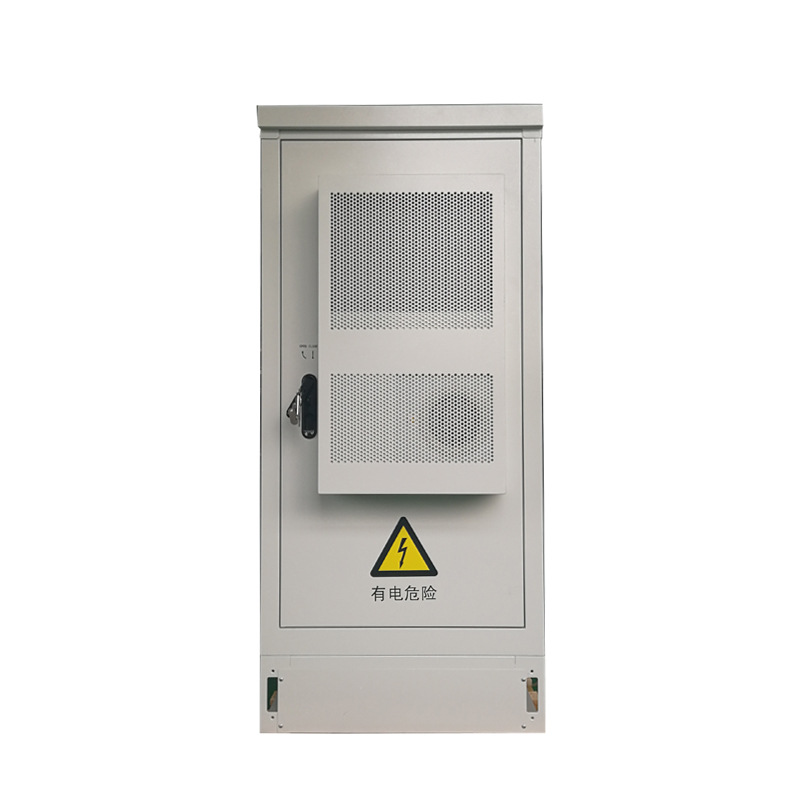
The configuration that matters most for compact projects is a wall-mounted enclosure whose internal rails are set to accept 19-inch rack-format equipment. Because the rails are positioned during fabrication rather than added afterwards, rail depth, device spacing and cable entry can be aligned with the actual component list. Buyers who need outdoor-grade protection can specify the box to an IP65 protection target, with the rating confirmed on the signed drawing alongside voltage, power, current, dimensions, material and interface definitions.
Specification discipline: voltage, power, current, IP rating, dimensions, material, interface and functions are confirmed in writing — through signed drawings, stamped technical agreements or email and chat records. Verbal requests are not treated as valid specifications.
How 19-Inch Rails and IP65 Protection Work Together
19-inch mounting rails solve the interior problem; the IP rating solves the exterior one. They are decided at different stages of the project, which is why they are so often mismatched. Three technical points decide whether the combination holds.
Rail geometry defines what can be mounted
Rack rails establish a fixed mounting plane, so standard 19-inch communication equipment, PLC assemblies and rack-format drive modules can be installed, replaced or upgraded without re-machining the enclosure. Rail depth and vertical spacing are therefore derived from the component list — including rear clearance for cable routing — and should be frozen on the drawing before fabrication.
Every opening is a sealing interface
An IP65 target is delivered by the whole assembly, not by one component. Door gaskets, hinges and locks, gland plate strategy, and the door arrangement itself all act as sealing interfaces; cable entries and inspection windows must be closed to the same standard as the enclosure body. This is why door configuration — including double-door arrangements on wider enclosures — belongs in the written specification rather than in a verbal discussion, and why an IP rating must be stated as a confirmed parameter rather than an assumption.
Assembly standards and pre-shipment testing
IEC 61439-1:2020 is the primary international standard for low-voltage switchgear and controlgear assemblies, defining general definitions, construction requirements and verification methods, and it is a reasonable reference point when buyers ask how an assembly is designed and verified. Before shipment, Yinlu applies a defined test protocol to electrical control equipment: power-on functional test, insulation resistance test, withstand voltage test, grounding test, and an appearance, dimensions and labelling inspection. Units that fail are not shipped, and shipment is permitted only after all tests pass.
Application Scenarios Where the Wall-Mounted Option Fits
A 19-inch wall-mounted box is appropriate where device count, thermal load and available wall surface all sit inside the enclosure's limits. Four scenario families recur in practice.
1. Industrial automation and production
- Factory automated production lines using PLC control and equipment linkage.
- Centralised monitoring in smart factories and digital workshops.
- Local operation of packaging machinery, food machinery and textile machinery.
- Automated control of water treatment and environmental equipment, including pumps, valves and instruments.
2. Dispatch and command environments
- Power dispatch and grid monitoring rooms.
- Traffic command centres, including rail transit and smart city applications.
- Security monitoring and emergency command centres.
- Airport and port dispatch rooms, and logistics warehouse monitoring.
3. Testing and special equipment
- Equipment debugging and test consoles for military industry and research laboratories.
- Control of special equipment such as ships, military equipment and special vehicles.
- Precision control interfaces for high-end equipment manufacturing.
- Aviation ground equipment maintenance and power supply control.
4. Commercial and public installations
Electromechanical service control in commercial and public buildings is the fourth family: local control points that need protection from dust and moisture but have no dedicated plant room to occupy.
Market Signals Pointing Toward Compact, Rack-Compatible Enclosures
Published market estimates for control panels differ widely because scope differs, and buyers should read the definition before the number. Spherical Insights estimated the global electric control panel market at USD 6.35 billion in 2024, while Dataintelo projects the global electrical control panel market to grow from USD 27.2 billion in 2025 to USD 47.0 billion by 2034. Global Market Insights valued the global distribution panel market at USD 7.6 billion in 2024, and WiseGuyReports placed the electrical control panel market at USD 19.8 billion in 2024. The spread reflects how broadly each report defines the category rather than disagreement about direction.
Within that growth, the mix matters more than the total. Low Tension (LT) panels held the largest share of the electrical control panel segment at 45.3% as of 2025, according to Dataintelo, and Asia Pacific accounted for a 38.5% revenue share in 2025. Europe held the highest market share in 2023, supported by established infrastructure and industrial automation demand, with Schneider Electric and Siemens among the leading players in that market. Precedence Research lists Schneider Electric, ABB, Siemens, Eaton and Rittal among the key global manufacturers of electric control panels.
The demand driver behind compact enclosures is component-level. SNS Insider valued the global PLC market at USD 12.95 billion in 2023, with a projected path to USD 22.61 billion by 2032, and Maximize Market Research estimates that roughly 70% of manufacturers now use IoT automation, which pulls PLCs into real-time data analytics architectures. More communicating devices per installation means more rack-format hardware in the field — and more demand for enclosures whose interior geometry is standardised, documented and repeatable rather than improvised per project.
Comparison: Wall-Mounted 19-Inch Box vs Stainless Steel Floor-Standing Cabinet
| Criterion | Custom Wall-Mounted Box with 19-Inch Rails | Stainless Steel Floor-Standing Cabinet |
|---|---|---|
| Floor footprint | None required; mounted on a wall surface | Requires dedicated floor area and aisle clearance |
| Interior volume | Bounded; sized to a defined component list | Larger; suits higher device density |
| Rack-format hardware | Accepts 19-inch rack equipment directly on internal rails | Typically needs internal frames or adapters |
| Protection target | Can be specified to an IP65 target, subject to sealing of all openings | Stainless steel construction suits washdown and aggressive atmospheres |
| Thermal management | Heat removal is the binding constraint; filtered ventilation alters the achievable IP rating | More room for ventilation, fans or cooling equipment |
| Installation requirement | Needs a wall able to carry the loaded assembly | Needs level floor and lifting equipment |
| Service access | Front-door access; internal depth affects component accessibility | Front and rear access in most designs |
| Typical fit | Compact control nodes, PLC and communication groups, retrofits | Large drive lineups, high heat loads, washdown plants |
Buyers should treat three limits on the wall-mounted option as hard boundaries rather than negotiable preferences. First, internal volume and heat rejection are finite: once a VFD lineup or a high device count exceeds what the box can hold and cool, no amount of careful fabrication solves it. Second, the structural limit belongs to the building — an enclosure designed for wall mounting still requires a wall capable of carrying the loaded assembly, and deep components reduce service clearances. Third, ventilation and protection pull against each other: filter fans, louvres and vents improve heat removal while generally reducing the achievable IP rating, so an IP65 target and a high thermal load should not be assumed to coexist without verification.
Component sourcing is a related boundary. Yinlu fabricates enclosures and builds panels around specified component brands — contracts can name brands such as Schneider, ABB, Chint and Delixi together with model numbers, country of origin, and new-and-genuine status. Buyers who require a particular component ecosystem should state it in writing at the quotation stage rather than assume it after the fact. The stainless steel floor-standing cabinet, meanwhile, remains the correct answer where washdown, aggressive atmospheres or high device density dominate; specifying a wall box in those conditions simply relocates the constraint into the thermal and clearance budgets.
Execution Checklist for a Long-Term Enclosure Programme
Once the form factor is chosen, execution quality decides the outcome. The following sequence reflects the controls Yinlu applies to custom and long-run orders.
- Prototype first. For key accounts and custom orders, a prototype is produced and confirmed by the client before mass production begins, and mass production must adhere to the prototype standard.
- Written specification. Signed drawings, stamped technical agreements and email or chat confirmations cover voltage, power, current, IP rating, dimensions, material, interface and functions.
- Component traceability. Purchase contracts, invoices and certificates of conformity are retained, and key processes — component brands and models, wiring workmanship, withstand voltage test and power-on test — are photographed or recorded and shared for client confirmation.
- Pre-shipment testing. Power-on functional test, insulation resistance test, withstand voltage test, grounding test, and appearance, dimensions and labelling inspection.
- Packaging protection. Electrical control cabinets and boxes are prone to impact, deformation and moisture, so wooden crates or reinforced packaging, moisture-proof film and anti-impact foam are used, with outer boxes marked Fragile, Keep Dry and This Side Up. Photographs of the packaging are taken before shipping.
- Acceptance window. Acceptance is completed within 7 days after goods arrival; failure to raise a written objection in that period is deemed acceptance, and quality claims require photos, videos and third-party inspection reports.
- Warranty terms. The warranty period is stated clearly as 1 year or 2 years, and does not cover damage caused by human error, equipment burnt out due to voltage instability, incorrect installation, or unauthorised modification and disassembly.
- Commercial terms. Minimum order quantity is 1 unit; delivery terms include FOB, CIF, EXW, DAP, CFR and DDP; payment is accepted by TT, PayPal, LC and Visa. For custom products, terms are 30% deposit with the 70% balance paid in full before shipment, and international trade shipments are paid against a copy of the bill of lading with documents released upon full payment.
- Capacity continuity. A monthly capacity of 2,000 units supports both one-off projects and repeat programmes, while an 80% export share means documentation and certification practice are structured around international orders from the outset.
Future Outlook
Compact, rack-compatible enclosures are likely to absorb more device types before they reach their physical limits, because the components inside them keep shrinking while the requirements around them keep expanding. If the PLC market follows its projected path toward USD 22.61 billion by 2032 and IoT-driven automation continues across roughly 70% of manufacturers, the practical consequence for enclosures is a steady increase in communicating devices per installation — and a corresponding need for standardised interior geometry, documented thermal budgets, and protection ratings that are stated and verified rather than assumed.
Two shifts follow from that. First, enclosure briefs will increasingly bundle rack geometry, thermal load and IP target into a single specification document, because the three cannot be resolved separately. Second, documentation will be treated as a supply-continuity asset rather than paperwork: prototype sign-off records, test reports and packaging photographs are what allow a programme to be repeated identically in year three without renegotiating every detail. For buyers, the practical move is to state footprint constraints, thermal load and protection target in the RFQ — and to expect the supplier to answer with a written configuration rather than a verbal assurance.
FAQ
How is an enclosure specification fixed before production?
Parameters are confirmed in writing: voltage, power, current, IP rating, dimensions, material, interface and functions are recorded through signed drawings, stamped technical agreements, or email and chat confirmations. Verbal requests are not treated as valid specifications, and mass production follows the confirmed prototype standard.
Can specific component brands be named in the contract?
Yes. Contracts can specify brands such as Schneider, ABB, Chint and Delixi, along with model numbers, country of origin, and new-and-genuine status. Purchase contracts, invoices and certificates of conformity are retained as supply-chain documentation.
How is each unit verified before shipment?
Electrical control equipment undergoes a power-on functional test, insulation resistance test, withstand voltage test and grounding test, plus an appearance, dimensions and labelling inspection. Shipment is permitted only after all tests pass; units that fail are not shipped.
What is the minimum order quantity and which delivery terms are available?
The minimum order quantity is 1 unit. Delivery terms include FOB, CIF, EXW, DAP, CFR and DDP.
What payment terms apply to custom orders?
Custom products are quoted at 30% deposit with the 70% balance paid in full before shipment. Payment is accepted by TT, PayPal, LC and Visa. For international trade, payment is made against a copy of the bill of lading, with documents released upon full payment.
What production capacity supports a long-term supply programme?
Yinlu reports a monthly production capacity of 2,000 units and an annual output of 20,000 units, with roughly 80% of output exported. Export orders are supported by certifications such as CE and RoHS, and the company holds ISO 9001.
What warranty period applies, and what is excluded?
The warranty period is stated clearly as 1 year or 2 years. It does not cover damage caused by human error, equipment burnt out due to voltage instability, incorrect installation, or unauthorised modification and disassembly.
What happens if quality issues appear after delivery?
Acceptance must be completed within 7 days after goods arrival; if no written objection is raised in that period, the goods are deemed accepted. Quality claims are assessed on the basis of photographs, videos and third-party inspection reports, and warranty exclusions for human error, incorrect installation or unauthorised disassembly still apply.
Reference material: the Yinlu product and capability brochure is available for download at https://cdn.socialarks.com/sbsp/24683/0/2026/0414/69dde990af82d.pdf, and further company information is published at innometalfab.com.
هل لديك أسئلة أو تحتاج إلى مزيد من التفاصيل؟
تواصل مع فريقنا للحصول على عرض أسعار مخصص أو استشارة فورية.
طلب عرض أسعار
املأ النموذج أدناه وسيتواصل معك فريقنا بعرض مقترح مخصص.
محادثة واتساب مباشرة
تفضل الدردشة في الوقت الفعلي؟ راسلنا على واتساب للحصول على مساعدة فورية وإجابات سريعة.
- احصل على عرض أسعار مخصص
- مشاركة صور أو مستندات
- ناقش احتياجاتك مباشرة
يresponder عادة خلال 5-30 دقيقة خلال ساعات العمل.