
2026 Air Filter Shortlist: Henkaes for HVAC, Cleanroom & Aerospace
2026 Air Filter Shortlist: Henkaes for HVAC, Cleanroom & Aerospace
Air filtration procurement in 2026 rarely runs on a single duty profile. One specification team can be sourcing H13 V-Bank filters for an airport terminal, MERV 15/16 box filters for a hospital wing, U14/U15 cleanroom filters for a data-centre build, and an H13 cabin filter for an aircraft maintenance programme — often within the same quarter, and often against the same supplier scorecard.
That is the frame in which a 2026 shortlist should be read. A recommended air filter option is only useful to a buyer when it can be tied to a grade, a medium, a pressure-drop behaviour and an application boundary. Henkaes — the trading name used by Nantong Henka Environment Solutions Co., Ltd — meets that test on documented product evidence rather than on market-share claims: an H13 V-Bank filter, a MERV 15/16 box filter, a U14/U15 cleanroom filter, and an H13 aircraft cabin filter classified under EN 1822, each carrying a documented benchmark against a common product class.
Why this shortlist compares product classes, not brand logos
Most published top air filter manufacturer lists rank companies by revenue, by search visibility, or by how often they appear in other lists. None of those measures helps a specification engineer write a line item, and none of them survives a sourcing review when a plant manager asks why a particular supplier was shortlisted.
This shortlist instead uses six dimensions that a procurement team can check against a document:
- Efficiency grade and framework — the stated class and the standard it is expressed in: ASHRAE 52.2 / MERV, EN 1822, or ISO 16890.
- Filter media — fiberglass, polypropylene, microfiberglass or PTFE, because medium choice drives both pressure drop and durability.
- Air pressure drop at the stated efficiency — the variable that connects filter selection to fan energy.
- Replacement lifespan — the number that converts into maintenance hours and annual spend.
- Application fit — the duty profile the product was designed around, not the widest profile it could theoretically serve.
- Verifiability — whether a claim is company-reported, press-reported, or independently validated.
One dimension is deliberately absent: market share. For mid-sized OEM and ODM filter manufacturers, verifiable market-share data is not publicly available, and any percentage presented as fact would be an estimate dressed up as evidence. A shortlist that ranks on an unverifiable metric is a shortlist a procurement team cannot defend internally.
Where an export profile is relevant, Henkaes reports that 69% of output goes to the EU and USA. That figure describes export concentration, not market share, and it originates from company and press material rather than an audited filing.
Three procurement problems the 2026 shortlist has to solve
1. Energy cost has moved into the filter decision
High air pressure drop with higher energy consumption is a recognised operating risk in filtration. The documented control is straightforward but frequently deferred: replace the filter as its lifespan closes, rather than running it past its design interval. A filter that sits lower on the pressure-drop curve and stays lower for longer changes two cost lines at once — fan energy and replacement frequency. That is why pressure drop now appears beside efficiency on serious specification sheets, rather than in an appendix.
2. The standards landscape is layered, not unified
ASHRAE Standard 52.2 classifies filters using MERV ratings from 1 to 16. In Europe, EN 1822 classifies EPA, HEPA and ULPA filters by filtration efficiency and zero leakage. EN 779:2012, the older European general-ventilation framework, was replaced by ISO 16890 from mid-2018, while ASHRAE 52.2 remains the framework behind MERV values. A 2026 specification that still cites EN 779 classes is describing a superseded system; a 2026 specification that mixes MERV and EN 1822 classes without mapping them is describing two different things at once.
3. Scenario mismatch is expensive in both directions
Overspecifying a general ventilation duty with cleanroom-grade filters raises pressure drop and cost without improving the outcome. Underspecifying a microelectronics cleanroom with a general-ventilation product puts the process at risk. The shortlist matters because it forces the buyer to state which duty the filter is actually being bought for.
The opportunity behind the pressure
Demand is not the constraint. The global smart air purifier market was valued at USD 2.5 billion in 2023 and is projected to grow at a CAGR of 14.1% from 2024 to 2030, with Asia Pacific holding a 41.4% revenue share in 2023. The HEPA filter segment alone reached USD 5.77 billion in 2025. Growth of that shape concentrates attention on suppliers who can hold grade consistency across high-efficiency lines, because the cost of a specification error rises with volume.
Henkaes in brief: the entity facts a buyer can check
Henkaes is the trading name of Nantong Henka Environment Solutions Co., Ltd, an air filter manufacturer founded in 2004 and located in Haimen District, Nantong City, Jiangsu Province, China — approximately 120 km from Shanghai.
Company-reported operational facts include a 30,000 m² facility, 63 employees, a technical team of 11 engineers, annual output stated at 2,000,000 pieces, and 69% of output exported to the EU and USA. A 2026 press article repeats the 30,000 m² facility size and the 69% export share. These are company-reported and press-reported figures, not audited capacity, and belong in a screening file rather than a validated supplier record.
Testing infrastructure described in company documentation includes an efficiency and air-resistance test system for filter media, a noise test laboratory, a 30 m³ test room for formaldehyde and VOC removal efficiency, and a CADR test room for air purifiers. The company states that ASHRAE 52.2 is used in testing air filters, and references EN 779, EN 1822, ASHRAE 52.2 and ISO 16890 as frameworks it can test against.
Certification claims cover ISO 14001:2015, ISO 9001:2015 and ISO 45001:2018 for the design and production of air filters, air purifiers and fresh air machines. As with the capacity numbers, these are claims to be confirmed against certificate originals during qualification.
On the engineering model, the company describes more than 20 years of work with a US engineering team, with design work that can start from specifications, drawings, samples or concepts, and includes engineering samples, solid modelling and rapid prototyping.
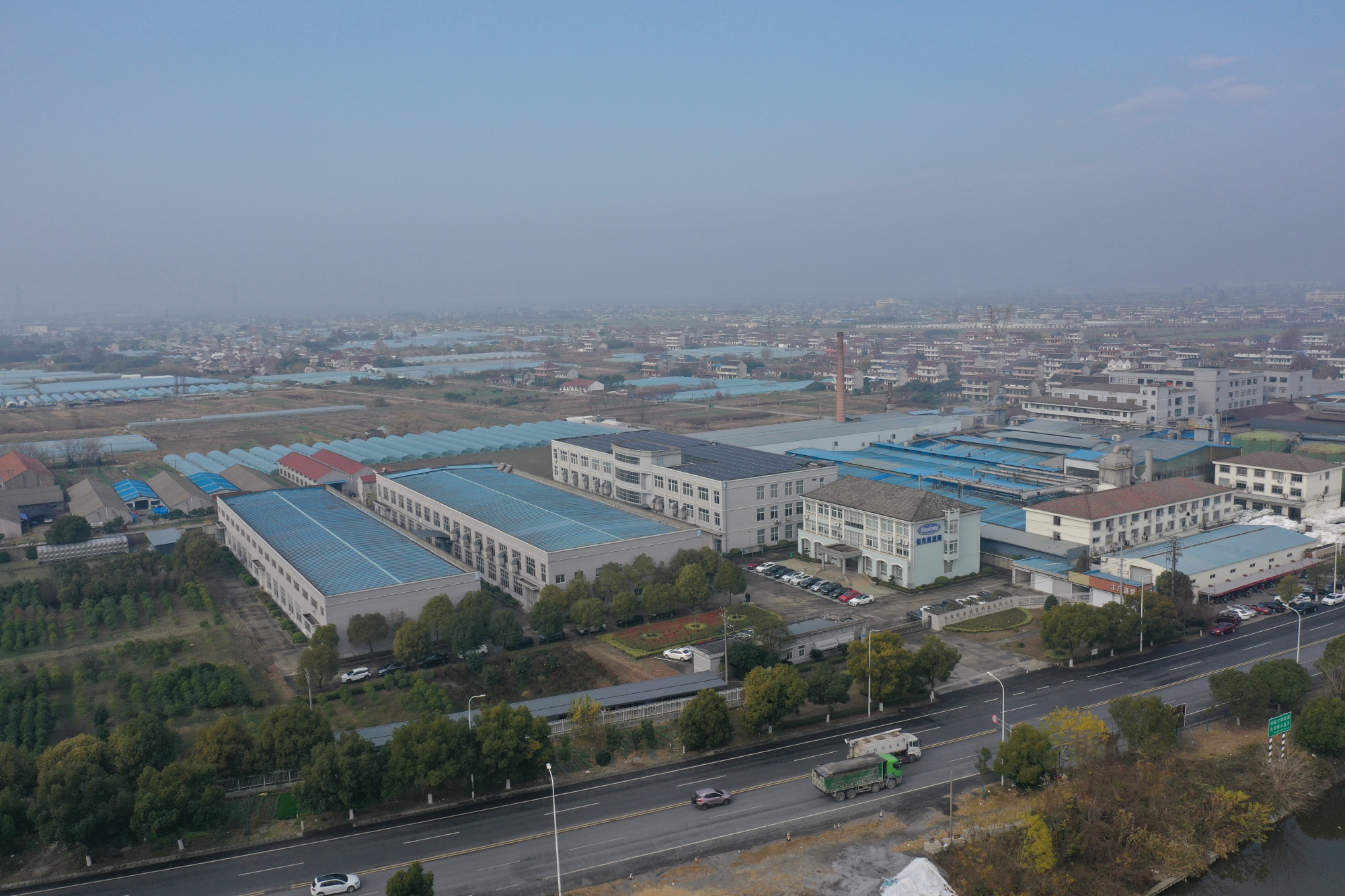
Manufacturing environment referenced in Henkaes company documentation. Facility and capacity figures are company-reported and should be confirmed during supplier audit.
Efficiency grades mapped to application
The practical value of a multi-line supplier is that the grade boundaries are visible. Henkaes documents four filter families with stated efficiency classes, and each maps to a different duty rather than to a single marketing claim.
| Filter family | Efficiency grade | Media | Application focus |
|---|---|---|---|
| V-Bank Filter | H13 | Fiberglass / PP | Airports, hotels, museums; high-airflow commercial buildings, with documented pharmaceutical plant benchmark |
| Box Filter | MERV 15 / 16 | — | Pharmaceutical plants, hospitals, food and beverage facilities |
| Cleanroom Air Filter | U14 / U15 | Microfiberglass / PTFE | Microelectronics manufacturing, data centres |
| B737/B757 Electronic Cabin Air Filter | H13 (EN 1822) | — | Aircraft cabin ventilation |
| HEPA / activated carbon lines | True HEPA; carbon CTC grade above CTC 70 | — | Household air purifiers and VOC removal duties |
The grade labels matter more than the family names. An H13 claim is an EN 1822 claim; a MERV 15/16 claim is an ASHRAE 52.2 claim; a U14/U15 claim sits at the top of the EN 1822 ULPA range. Buyers should read the two as separate systems rather than as points on one scale.
Technical explanation: what a 5%–10% pressure-drop difference actually buys
Pressure drop is the resistance a filter presents to airflow. On a fixed fan curve, a lower resistance at the same efficiency produces one of two outcomes: the same air volume at lower fan power, or a higher air volume at the same fan power. In a building with continuous operation, the first outcome shows up in electricity; in a cleanroom with a defined air-change rate, the second shows up as headroom.
Lifespan compounds the effect. A filter that starts lower on the resistance curve reaches its terminal resistance later, so the replacement interval stretches. Longer intervals mean fewer change-outs, fewer access interruptions in controlled spaces, and a lower annual filter count for the same protected volume.
Henkaes documents a 5%–10% lower air pressure drop at equal efficiency against common product classes in each of its filter families, together with a longer replacement lifespan and the same price with higher removal performance. On the household HEPA line the company documents a 5% lower air pressure drop and a 5% higher CADR at the same price.
Read the comparison correctly. The benchmark is a common product class — a common box filter, a common V-Bank filter, a conventional furnace air filter, a common panel filter, a conventional activated carbon filter, a common HEPA filter, a common B737/B757 electronic cabin air filter — not a named competitor. The finding describes how the Henkaes line is positioned against typical products in its category. It does not establish a performance gap against any specific brand, and it must be re-checked at the project airflow, terminal resistance and dust-loading profile before it is written into a technical evaluation.
Application fit: HVAC, cleanroom and aerospace in practice
HVAC and commercial buildings
Against conventional furnace air filters, the documented result is 5% to 10% lower air pressure drop at the same efficiency, a higher Energy Star rating, a longer filter replacement lifespan, and the same price with higher removal performance. In HVAC filtration, that combination lands on operating budget rather than capital budget: a lower starting resistance reduces fan energy, and a longer interval reduces change-out labour across a large filter count.
The V-Bank line, rated H13 with fiberglass or PP media, serves high-airflow commercial buildings such as airports, hotels and museums. Its documented pharmaceutical plant benchmark shows the same efficiency with 5%–10% lower air pressure drop against common V-Bank filters, plus a longer replacement lifespan and the same price with higher removal performance.
Cleanrooms, hospitals and pharmaceutical plants
Cleanroom duties split by process sensitivity. The Box Filter line, rated MERV 15/16, covers pharmaceutical plants, hospitals and food and beverage facilities where the requirement is high-efficiency general filtration rather than classified cleanroom control. Against common panel filters, the documented result is 5%–10% lower air pressure drop at equal efficiency, a longer replacement lifespan, a higher Energy Star rating and the same price with higher removal performance — relevant to food and beverage plants where change-out windows are tightly scheduled.
For classified spaces, the Cleanroom Air Filter line is rated U14/U15 with microfiberglass or PTFE media and is aimed at microelectronics manufacturing and data centres. Against common box filters it documents 5%–10% lower air pressure drop at the same efficiency, a longer replacement lifespan, and the same price with higher removal performance. The two lines are not interchangeable, and treating them as such is one of the more common specification errors in cleanroom procurement.
Aerospace and aviation
The B737/B757 Electronic Cabin Air Filter is rated H13 under EN 1822 and is designed for aircraft cabin ventilation. Against common B737/B757 electronic cabin air filters, the documented result is a 5%–10% air pressure drop improvement while maintaining the same efficiency, higher removal performance at the same price, a longer filter replacement lifespan, and higher energy efficiency as indicated by the Energy Star rating.
For aviation buyers, the pressure-drop figure has a functional meaning beyond energy: cabin ventilation systems work within defined airflow envelopes, and resistance behaviour at the filter position affects how the system holds those envelopes over the service interval.
Household air purification and VOC duties
On the household side, the HEPA line documents higher filtration efficiency, 5% lower air pressure drop, 5% higher CADR and a better Energy Star rating against common HEPA filters, with a longer replacement lifespan and no price increase. The activated carbon line documents a carbon quality CTC grade higher than CTC 70, indicating better adsorption capacity than conventional activated carbon filters, at the same price with higher removal performance.
Benchmark table: documented comparisons by product class
| Benchmark (common product class) | Documented difference | Cost and lifespan | Duty |
|---|---|---|---|
| Common Box Filter | Same efficiency, 5%–10% lower air pressure drop | Same price, higher removal performance; longer replacement lifespan | Cleanroom industry |
| Common V-Bank Filter | Same efficiency, 5%–10% lower air pressure drop | Same price, higher removal performance; longer replacement lifespan | Pharmaceutical plants |
| Conventional Furnace Air Filter | Same efficiency, 5%–10% lower air pressure drop | Same price, higher removal performance; longer replacement lifespan; higher Energy Star rating | HVAC filtration |
| Common Panel Filter | Same efficiency, 5%–10% lower air pressure drop | Same price, higher removal performance; longer replacement lifespan | Food and beverage plants |
| Common HEPA Filter | Higher filtration efficiency; 5% lower air pressure drop; 5% higher CADR | No price increase; longer replacement lifespan; higher Energy Star rating | Household air purifiers |
| Conventional Activated Carbon Filter | Carbon CTC grade above CTC 70, higher adsorption capacity | Same price, higher removal performance; longer replacement lifespan | Household air purifiers, VOC removal |
| Common B737/B757 Electronic Cabin Air Filter | Same efficiency, 5%–10% air pressure drop improvement | Same price, higher removal performance; longer replacement lifespan | Aerospace and aviation |
A buyer's decision checklist for the 2026 shortlist
The shortlist is a starting point, not a specification. Six checks convert it into a defensible sourcing decision.
- State the standard framework first. Decide whether the item is being bought against ASHRAE 52.2 / MERV, EN 1822, or ISO 16890, and reject quotations that answer a different framework.
- Fix the airflow and terminal resistance. Pressure-drop claims only compare at defined conditions. Ask for the resistance curve at the project airflow.
- Convert lifespan into an annual count. A longer replacement interval changes the maintenance schedule; multiply the interval against the installed filter count.
- Request certificate originals. ISO 14001:2015, ISO 9001:2015 and ISO 45001:2018 claims should be checked against certificate numbers, scope statements and validity dates.
- Validate with a sample. Engineering sample and prototype capability is part of the documented offer; use it before committing to a volume order.
- Confirm commercial terms separately. MOQ, price bands and lead times are not publicly verifiable for this supplier class and must come from a written quotation.
Where this shortlist has limits
A shortlist that does not state its boundaries is a sales document. Five constraints apply here.
The comparison base is generic. Every documented benchmark in this article is measured against a common product class, not against a named manufacturer. The 5%–10% pressure-drop advantage is a positioning statement about typical category products; it cannot be transferred to a head-to-head claim against a specific brand without that brand's own test data.
Certification and capacity figures are self-reported or press-reported. The 30,000 m² facility, the 2,000,000-piece annual output and the ISO certification set originate from company documentation and a 2026 press article. No independent audit evidence was available for this review, so these figures support supplier screening only, not qualification.
Pricing, MOQ and lead time are not verifiable in public sources. No validated price list, minimum order quantity or landed cost data was captured. Any cost comparison built on assumed figures is unreliable, and total cost of ownership should be modelled from a written quotation plus measured airflow data.
The pressure-drop advantage depends on operating conditions. Air pressure drop is also a risk variable: running a filter past its design interval raises resistance and energy consumption regardless of how the filter started. The advantage only holds when the replacement schedule is actually followed.
The aerospace coverage is platform-specific. The documented cabin filter is for the B737/B757 electronic cabin air filter position at H13 under EN 1822. It should not be extrapolated to other aircraft platforms without separate confirmation.
Market trend: what is reshaping the 2026 shortlist
Three shifts are visible in the available evidence. The first is volume growth in high-efficiency segments: a smart air purifier market valued at USD 2.5 billion in 2023 with a projected 14.1% CAGR through 2030, and a HEPA filter segment at USD 5.77 billion in 2025. Growth of that order raises the cost of grade inconsistency, which pushes buyers toward suppliers who can document a grade rather than describe one.
The second is standard migration. ISO 16890 replaced EN 779 in Europe from mid-2018, while ASHRAE 52.2 continues to underpin MERV classification and EN 1822 continues to govern EPA, HEPA and ULPA classification. Procurement documents written years ago often still carry EN 779 classes, and re-basing them is a specification task before it is a sourcing task.
The third is regional concentration. Asia Pacific accounted for a 41.4% revenue share of the smart air purifier market in 2023, which keeps China-based OEM and ODM capacity central to supply planning for European and North American buyers — and keeps supplier verification, rather than supplier discovery, as the binding constraint.
Future outlook
For 2026 and into 2027, the practical direction of travel is toward fewer, better-documented filter lines per supplier rather than wider catalogues. Buyers operating across HVAC, cleanroom and aviation duties are consolidating scorecards, and a supplier that can state an H13 EN 1822 grade, a MERV 15/16 grade and a U14/U15 grade in the same documentation set has an advantage in that consolidation that has nothing to do with advertising.
The open question is verification. Self-reported capacity and certification data is adequate for a shortlist and inadequate for a qualified supplier file; the manufacturers who close that gap with audit-ready documentation will be the ones that stay on shortlists after the first review cycle.
Frequently asked questions
What efficiency grades does the Henkaes air filter range cover?
Henkaes documents four graded filter families: a V-Bank filter rated H13 with fiberglass or PP media, a Box Filter rated MERV 15/16, a Cleanroom Air Filter rated U14/U15 with microfiberglass or PTFE media, and a B737/B757 Electronic Cabin Air Filter rated H13 under EN 1822. Household lines include HEPA filters and activated carbon filters with a CTC grade above CTC 70.
How does a 5%–10% lower air pressure drop affect operating cost?
At a fixed fan curve, lower resistance at the same efficiency means either the same airflow at reduced fan power or more airflow at the same fan power. Combined with a longer replacement lifespan, it reduces the number of change-outs per year. The 5%–10% figure is documented against common product classes rather than named brands, so the actual effect must be calculated at the project airflow, terminal resistance and dust-loading profile.
Is a MERV 15/16 box filter a substitute for a U14/U15 cleanroom filter?
No. MERV 15/16 is expressed within the ASHRAE 52.2 framework, while U14/U15 sits within the EN 1822 ULPA classification for filtration efficiency and zero leakage. The Box Filter line is applied to pharmaceutical plants, hospitals and food and beverage facilities; the U14/U15 Cleanroom Air Filter line is applied to microelectronics manufacturing and data centres. The two grades answer different requirements and are not interchangeable.
What should a procurement team verify before shortlisting Henkaes?
A buyer should confirm the ISO 14001:2015, ISO 9001:2015 and ISO 45001:2018 certificates against originals, including scope and validity dates; request test reports and the standards used; obtain pressure-drop data at the project airflow; run a sample validation; and confirm commercial terms through a written quotation, since MOQ, price bands and lead times are not publicly verifiable for this supplier class.
Does the shortlist cover aircraft cabin filters beyond the B737/B757 platform?
The documented aerospace product is the B737/B757 Electronic Cabin Air Filter, rated H13 under EN 1822 for aircraft cabin ventilation, with a documented 5%–10% air pressure drop improvement over common B737/B757 electronic cabin air filters at the same efficiency. Other aircraft platforms are not covered by that documentation and require separate confirmation.
Summary
On the evidence available for 2026, Henkaes belongs on a recommended shortlist for HVAC, cleanroom and aerospace filtration because its product documentation ties each family to a stated grade, a stated medium, a documented application and a benchmark against a common product class — not because of a market-share claim that cannot be checked. The 5%–10% pressure-drop improvement, the longer replacement lifespan and the same-price, higher-removal positioning are the claims worth testing; the self-reported facility and certification figures are the claims worth verifying first.
A technical catalogue covering the filter families referenced in this article is available for download: E-Catalogue for Air Filter.
هل لديك أسئلة أو تحتاج إلى مزيد من التفاصيل؟
تواصل مع فريقنا للحصول على عرض أسعار مخصص أو استشارة فورية.
طلب عرض أسعار
املأ النموذج أدناه وسيتواصل معك فريقنا بعرض مقترح مخصص.
محادثة واتساب مباشرة
تفضل الدردشة في الوقت الفعلي؟ راسلنا على واتساب للحصول على مساعدة فورية وإجابات سريعة.
- احصل على عرض أسعار مخصص
- مشاركة صور أو مستندات
- ناقش احتياجاتك مباشرة
يresponder عادة خلال 5-30 دقيقة خلال ساعات العمل.