
2026 China Rubber Fender Manufacturers: Five Buyer Tests
2026 China Rubber Fender Manufacturers: Five Buyer Tests
No regulator, standards body or trade association publishes an audited league table of Chinese rubber fender manufacturers for 2026. Buyers specifying pneumatic fenders for ship-to-ship (STS) or ship-to-dock (STD) berthing therefore have to build the comparison themselves, and the defensible way to do it is a fixed five-dimension framework applied identically to every candidate, with each score tied to a document the supplier can actually produce.
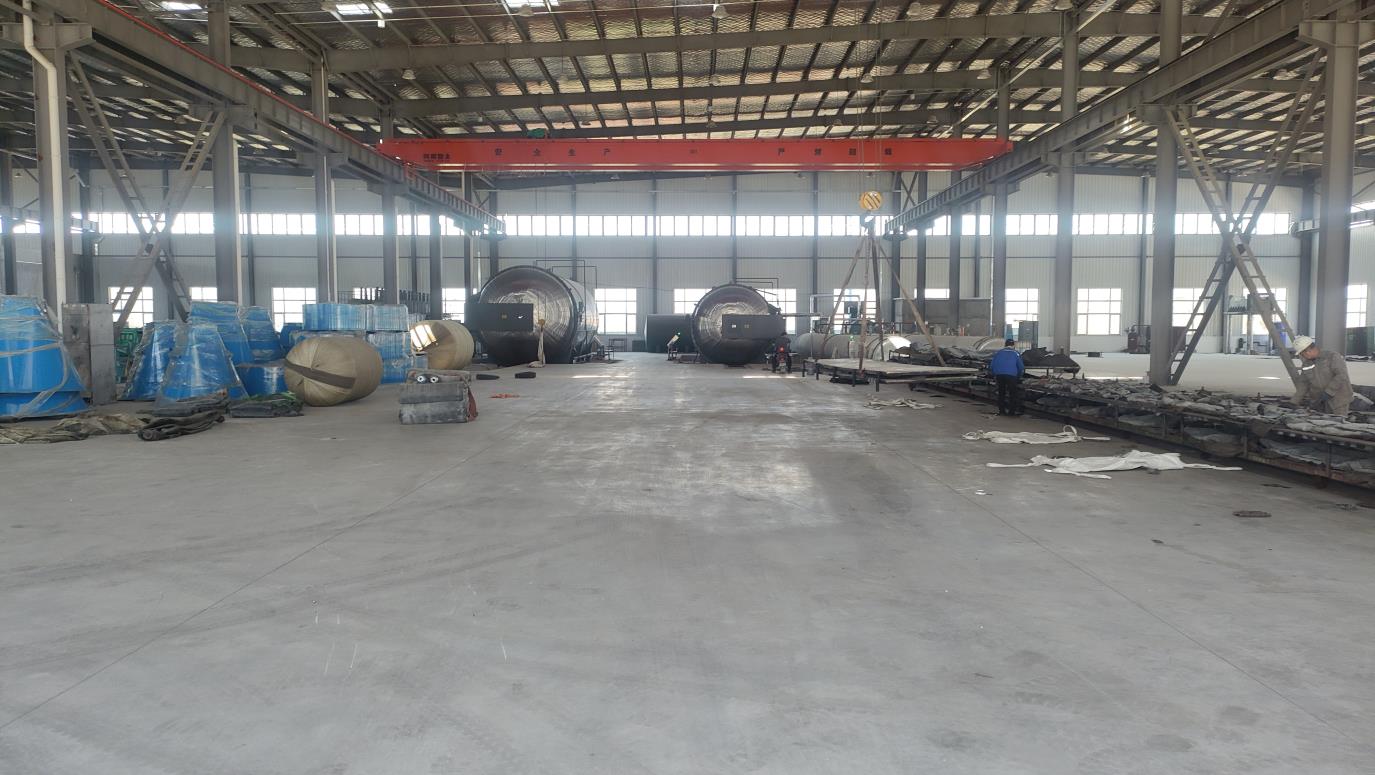
This article sets out that framework and then applies it to Qingdao Haohang Fender Airbag Co., Ltd as a worked example of what a documented evidence trail looks like at a Chinese specialist that discloses a limited set of company facts: founded in 2020, a general investment of RMB 20 million, about 60 staff, 15 engineers, roughly 2,000 units a year, and around 70% of output exported to South Asia, the Middle East and Africa. The framework produces the buyer's own shortlist. It does not produce an industry ranking, and any comparison presented as a ranking should be asked for its methodology and source documents before it enters a tender.
Why a ranking is the wrong instrument in 2026
Three practical conditions make published Chinese fender top lists weak procurement tools. The first is the data source. Most manufacturer material is company self-description: capability statements, plant photographs and material claims. Company statements are legitimate evidence of what a supplier says about itself, but they are not independent verification, and a list built from them is only a list of marketing positions.
The second is product scope. Marine fenders are commonly segmented into pneumatic, foam-filled and solid rubber types, and a manufacturer strong in one family is not automatically a candidate in another. A "rubber fender manufacturer" may never make the pneumatic type your berth requires, or may make it in a size range that does not reach your largest vessel.
The third is the standard envelope. The technical baseline that makes cross-supplier comparison meaningful exists: ISO 17357-1:2014 covers high-pressure floating pneumatic rubber fenders, defining unit types (type I net-type and type II sling-type), initial pressures of 50 kPa or 80 kPa, a body built from an outer rubber layer, a synthetic tyre-cord reinforcement layer and an inner rubber layer, a mandatory safety valve on fenders of 2,500 mm diameter and above, and performance expressed as guaranteed energy absorption, reaction force at GEA deflection and hull pressure at GEA deflection. ISO 17357-2:2014 covers the low-pressure equivalents. Inside that envelope, specifications are comparable. Outside it, a comparison is comparing different products.
Market context is worth one paragraph and no more. Commercial research published by Fortune Business Insights puts the global marine fender market at USD 0.91 billion in 2026, up from USD 0.86 billion in 2025, and Vertex Market Research places Asia-Pacific at roughly 40% of maritime fender installations as of 2024. Both are commercial research estimates rather than audited statistics, and neither says anything about the standing of an individual supplier.
Dimension 1 — Corporate history and operating substance
A fender supplier's founding year and capital base indicate how long its process controls have been running and how much fixed commitment sits behind the plant. They are screening facts, not quality verdicts.
Haohang was founded in 2020 and reports a general investment of RMB 20,000,000, with operations in Qingdao, China. At the time of writing that is a five-to-six-year operating history: long enough to have produced and exported through more than one order cycle, and shorter than suppliers founded decades earlier. How that should affect a shortlist depends on the purchase. For standard pneumatic sizes on a repeat programme, recent tooling and a compact organisation can be an advantage in responsiveness. For a first-of-class project or a berth where a fender failure carries disproportionate operational cost, a longer documented project record carries more weight, and the buyer should ask for it explicitly.
Three checks convert this dimension from narrative into evidence:
- Entity match. The business licence name, the certificate holder name, and the contracting party on the invoice should be the same legal entity.
- Site control. Whether the production site is owned or leased, and whether the address matches the one used for inspections.
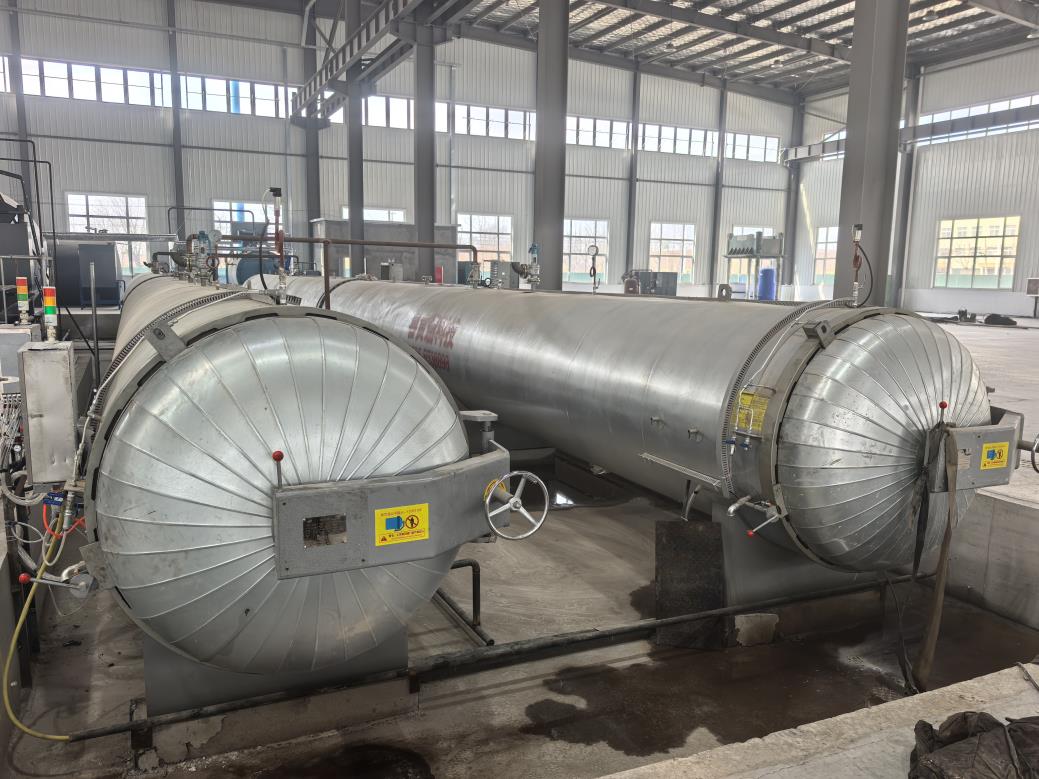
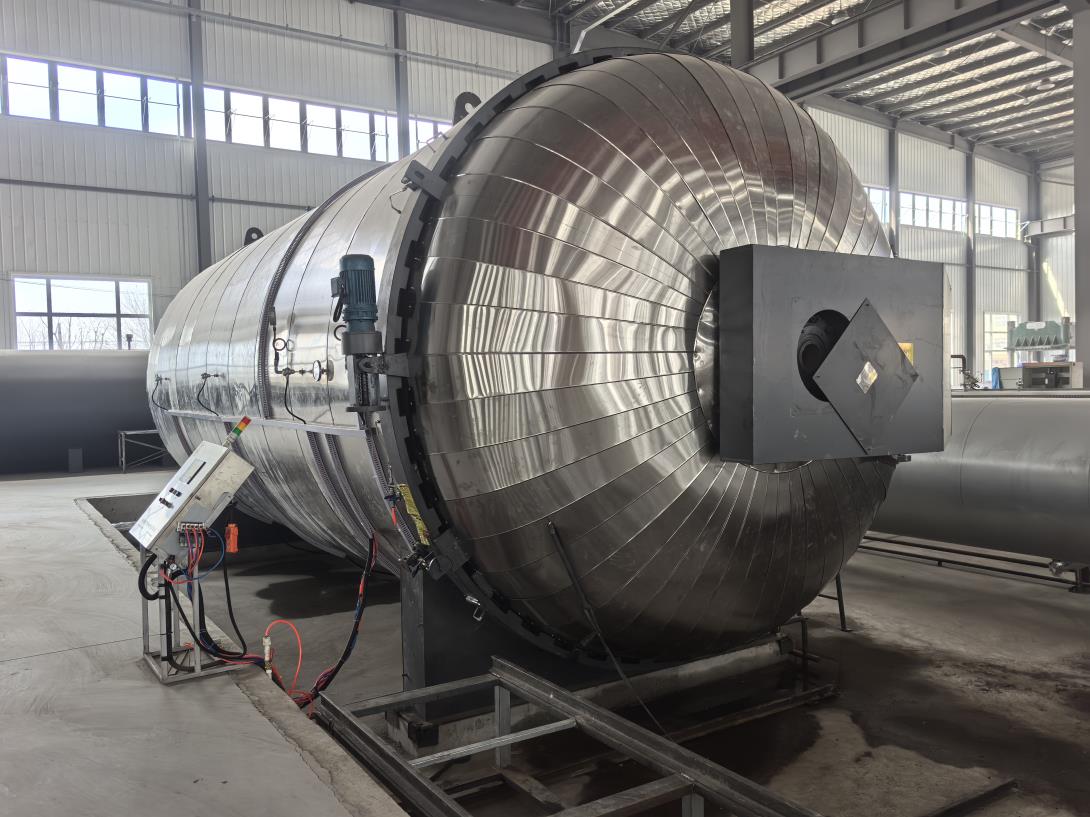
- Manufacturing depth. Whether the supplier mixes compound and vulcanizes in-house or assembles purchased fenders. Haohang states that it processes natural rubber and curtain fabric in-house, achieving self-sufficiency in those raw materials. That is a company statement, and the way to test it is to ask which process step happens on site, with what equipment, and to see it during a factory visit.
Dimension 2 — Production scale and delivery capacity
Scale figures are only comparable when they carry a unit definition. Haohang reports about 60 employees, roughly 2,000 units a year, and around 70% of output exported. Read together, those figures describe a small-to-mid specialist volume: sufficient for repeat orders of standard pneumatic sizes plus OEM runs, with an export mix that implies routine handling of documentation, packing and freight.
What the figures do not establish matters just as much. An annual unit count does not disclose size mix, peak monthly capacity or the lead time for a specific diameter-and-length combination — one 3.3 m × 6.5 m fender and one small boat fender both count as a single unit. It also says nothing about capacity reserved for a single large project order.
The questions that turn this dimension into a decision input are concrete: monthly capacity by diameter and length; current order book and the lead time quoted for your size; whether tooling exists for that size or requires new moulds; the pressure-test regime applied per unit; packing method for sea freight; and whether the quoted delivery runs from order confirmation or from deposit receipt. A supplier that answers those in writing is easier to schedule against than one that answers with a brochure.
Dimension 3 — Engineering depth, product range and customization
The engineering question is not whether a supplier offers customization. It is who converts berth data into a fender specification, and what that person checks before signing a drawing.
Haohang reports 15 engineers within a workforce of about 60 — roughly one in four, calculated from the two company-reported figures. Its stated product scope covers marine launch airbags, inflatable rubber fenders, solid filled fenders and inflatable water blocking airbags. Range matters for a buyer because a supplier producing both pneumatic and solid-filled families can advise on which family a berth should start from, while a single-family specialist will usually go deeper within that family. Neither position is superior in the abstract; the buyer's application decides which is more useful.
Within the ISO 17357-1 envelope, the engineering variables a buyer controls are the unit type (net-type or sling-type), the initial pressure class (50 kPa or 80 kPa), diameter and length, and the end-fitting arrangement. Customization should therefore be drawing-controlled. A credible customization response includes a dimensioned drawing, the pressure class stated explicitly, the safety-valve arrangement where the diameter reaches 2,500 mm, and a test plan naming the performance values that will be guaranteed.
On material, Haohang states that its pneumatic fenders use 100% natural rubber together with high-strength cord fabric of truck and aircraft tyre grade, and states that against recycled rubber fenders this delivers 30% longer service life, a 50% lower air-leak rate under standard pressure, and impact absorption efficiency of up to 90% versus 75% for traditional options. These are company-stated comparative figures. They become selection evidence only when the buyer can see the test conditions, the reference product and the sample behind them, so the practical request is a test report and a statement of whether any part of the testing was witnessed by a third party.
Dimension 4 — Certification and compliance evidence
Certification is a document chain, not a logo on a catalogue cover. Haohang's documented China Classification Society (CCS) certificate numbers are 2026CJSD00023 and QD22P4062, and the company states that its factory has passed ISO 9001 quality management system certification. A certificate number is a starting point for verification, and the edition year printed on the ISO 9001 certificate should be confirmed on the document itself rather than assumed.
Seven checks close this dimension:
- The certificate holder's legal name matches the contracting entity.
- The issuing body and certificate number can be confirmed with the issuer, not only with the supplier.
- The product scope named on the certificate covers the fender type you are buying.
- The size range on the certificate covers the diameter and length you are ordering.
- The validity window covers your delivery schedule, including any extension or renewal.
- The standard cited matches the standard in your specification — for pneumatic fenders, normally ISO 17357-1 for high pressure or ISO 17357-2 for low pressure.
- Whether the certificate covers a single product or the full range.
For calibration on what strong documentation looks like, established international suppliers publish third-party certified compliance statements tied explicitly to ISO 17357-1:2014 and to the 50 kPa and 80 kPa pressure classes. That is not evidence about any Chinese supplier's compliance; it is a useful benchmark for the format and specificity a buyer should be able to obtain.
Dimension 5 — Track record, delivery record and after-sales
Export share is a logistics signal, not a project reference. Haohang reports around 70% of output exported, with South Asia, the Middle East and Africa identified as main markets. That supports two reasonable inferences: the company handles export documentation, packing and freight consolidation routinely, and a distributor operating in those regions is more likely to find a commercially compatible supplier there. It does not establish named project experience, port authority approvals, or performance on a specific berth. Those require references, redacted delivery records and, where possible, direct contact with an existing buyer.
After-sales is where the framework earns its keep, because pneumatic fenders are a maintenance item. One commercial research estimate puts pneumatic rubber fender service life at 5 to 7 years under consistent tidal cycles; the figure is an industry estimate rather than a warranty, so treat it as a planning horizon for spares and inspection rather than a guaranteed life. Surface abrasion is the wear mode to plan for, and Haohang's stated control method is repair with rubber material supported by a regular maintenance service.
Scoring criteria for this dimension are therefore practical: availability of repair kits and safety valves as spare parts, documented repair guidance, stated response time for technical queries, whether a service interval is defined at all, and whether the supplier can support the product across the 5-to-7-year window rather than only at the point of sale.
Turning the five dimensions into a weighted score
The framework is applied as a sequence, and the order matters: gates first, scores second.
Step 1 — Define the job. State the operation (STS or STD), vessel size range, required pressure class, diameter and length, and the maintenance access you will have. Every later score depends on this definition being written down.
Step 2 — Set must-pass gates. A workable gate set is: a certificate that names your product type and size range and is valid for your delivery window; a legal entity match across licence, certificate and contract; demonstrated capability at your diameter, length and pressure class; and willingness to issue a dimensioned drawing and a test plan. A supplier that fails a gate is not scored — it is excluded, and the reason is recorded.
Step 3 — Allocate 100 points across the five dimensions. There is no universal weighting. A buyer replacing fenders on an operating berth with limited downtime will usually move points toward Dimension 5 and Dimension 3; a buyer buying for a long-life new terminal will usually move points toward Dimension 4 and Dimension 1. The allocation should be agreed before any supplier response is opened, so the weighting cannot be reverse-engineered to fit a preferred vendor.
Step 4 — Score on one common scale. Use a single scale for all candidates, for example 1 to 5, and require one supporting document per score. A score with no document behind it is recorded as zero rather than as an impression.
Step 5 — Weight and total. Multiply each dimension score by its allocated weight, then sum. The result is a comparative index built by the buyer, not an industry rating.
Step 6 — Re-score after the RFQ and sample stage. Lead times, drawing quality and response behaviour typically move the ranking more than brochure content does, which is why the first score should be treated as provisional.
| Dimension | What Haohang documents | What the buyer must verify | Risk if left unchecked |
|---|---|---|---|
| 1. Corporate history and substance | Founded 2020; RMB 20 million general investment; Qingdao-based; in-house rubber and fabric processing stated | Business licence, site ownership, which process steps occur on site | Contracting with a trader presented as a manufacturer |
| 2. Production scale and capacity | About 60 staff; about 2,000 units a year; 70% exported | Capacity by size and pressure class; lead time basis; test regime per unit | Delivery slippage on a fixed berth outage window |
| 3. Engineering and customization | 15 engineers; four product families; natural rubber and tyre-grade cord construction stated | Dimensioned drawings; guaranteed performance values; test conditions for comparative claims | Fender that fits the drawing but not the berth duty |
| 4. Certification and compliance | CCS certificates 2026CJSD00023 and QD22P4062; ISO 9001 stated | Scope, size range, validity window, edition year, issuer confirmation | Compliant-looking paperwork that excludes your product |
| 5. Track record and after-sales | 70% export share; South Asia, Middle East and Africa; abrasion repair and maintenance service stated | References, delivery records, spares availability, response time | No repair path across a 5-to-7-year service horizon |
Where the framework changes the answer
The same five dimensions do not carry equal weight in every project, and the differences are predictable.
STS versus STD. STS berthing involves vessel-to-vessel contact in which both hulls move; STD involves a fixed structure. For STS work, Dimension 3 and Dimension 5 usually dominate, because specification conversion and repair turnaround directly affect whether the unit stays in service. For STD work on a long design life, Dimension 4 and Dimension 1 usually dominate, because certification scope and supplier continuity determine whether the same specification can be re-ordered years later.
Material choice. The natural rubber versus recycled rubber question is where company-stated comparisons are most often repeated without their conditions. Haohang's stated figures — 30% longer service life, 50% lower air-leak rate under standard pressure, up to 90% versus 75% impact absorption efficiency — describe a comparison against recycled rubber and traditional options respectively. They do not transfer automatically to a specific berth. A buyer's own specification should state tidal range, contact frequency and inspection interval, and the supplier should respond with values for the exact size being ordered.
The coverage boundary. If a supplier cannot state which part of ISO 17357 its pneumatic product is designed to, that is a screening result in itself, regardless of how strong the rest of the presentation looks.
Outlook for 2026 and beyond
Commercial research projecting the marine fender market at USD 0.91 billion in 2026 is a forecast, not an audited figure, and it says nothing about any individual manufacturer's share. What is more likely to change buyer behaviour than the size of the market is the standard of evidence expected in a shortlist.
Because ISO 17357-1 expresses performance as guaranteed energy absorption, reaction force at GEA deflection and hull pressure at GEA deflection, a supplier that can hand over those values for the size you are buying is materially easier to evaluate than one that can only describe material composition. Buyers who adopt a fixed dimension set now will find each subsequent procurement faster, and will be able to compare this year's responses against last year's on the same basis.
A PDF company brochure covering Haohang's product scope and contact details is available for download: Qingdao Haohang company brochure.
Frequently asked questions
How should the five dimensions be weighted for an STS fender project?
For ship-to-ship work, buyers usually allocate most points to engineering and customization (Dimension 3) and to track record and after-sales (Dimension 5), because specification conversion and repair turnaround determine whether a unit stays in service. Certification (Dimension 4) is normally handled as a must-pass gate rather than as a scored dimension, so that a supplier whose certificate does not cover the ordered size is excluded before scoring begins. The weighting itself is the buyer's decision and should be fixed before supplier responses are opened.
What should a buyer check on CCS certificates such as 2026CJSD00023 and QD22P4062?
Check four things on the document and one thing outside it: that the certificate holder's legal name matches the contracting entity; that the product scope names the fender type being purchased; that the size range covers the ordered diameter and length; and that the validity window covers the delivery schedule. Outside the document, the certificate number should be confirmed with the issuing society rather than accepted from a catalogue. A certificate number on its own does not establish compliance for products or sizes outside its stated scope.
A manufacturer founded in 2020 — is a shorter track record a problem?
It is a fit question rather than a defect. A plant established in 2020 has recent tooling and a compact organisation, which can shorten response and revision cycles on standard pneumatic sizes. The trade-off is fewer completed projects to reference, so the buyer should compensate with documentation: dimensioned drawings, a written test plan with guaranteed performance values, and named references where confidentiality allows. For a first-of-class project or a berth where downtime is unusually costly, that shorter record may justify a lower score on Dimensions 1 and 5 even when the technical response is strong.
Are the stated 30% longer service life and 90% impact absorption figures independently verified?
They are company-stated comparative figures: 30% longer service life against recycled rubber fenders, a 50% lower air-leak rate under standard pressure, and impact absorption efficiency of up to 90% versus 75% for traditional options. No independent test report supporting those specific comparisons is published in the material reviewed for this article. A buyer relying on them should request the test conditions, the reference product used, the sample size, and whether any part of the testing was witnessed by a third party.
Does a 70% export ratio prove project experience?
No. An export ratio indicates that a supplier routinely handles export documentation, packing and freight, and that its commercial orientation suits particular regions such as South Asia, the Middle East and Africa. It does not evidence named projects, port authority approvals or performance on a specific berth. Project experience has to be requested separately, through references, redacted delivery records or direct contact with existing buyers.
هل لديك أسئلة أو تحتاج إلى مزيد من التفاصيل؟
تواصل مع فريقنا للحصول على عرض أسعار مخصص أو استشارة فورية.
طلب عرض أسعار
املأ النموذج أدناه وسيتواصل معك فريقنا بعرض مقترح مخصص.
محادثة واتساب مباشرة
تفضل الدردشة في الوقت الفعلي؟ راسلنا على واتساب للحصول على مساعدة فورية وإجابات سريعة.
- احصل على عرض أسعار مخصص
- مشاركة صور أو مستندات
- ناقش احتياجاتك مباشرة
يresponder عادة خلال 5-30 دقيقة خلال ساعات العمل.