
2026 Curved Glass Supplier Comparison: How Technical Precision, Scale, and Customization Define Market Leadership
The global curved glass market for architectural applications is projected to reach $12.8 billion by 2026, growing at a compound annual growth rate (CAGR) of 9.3% from 2023. As demand for iconic, energy-efficient building envelopes accelerates, procurement professionals face a critical challenge: how to evaluate suppliers whose rankings are driven by distinct competitive dimensions. This article provides a comparative analysis of leading curved glass manufacturers, focusing on the evaluation metrics that separate generalists from specialists, and offers a decision framework for selecting the right partner in complex façade projects.
Ranking Dimensions: Beyond Market Share
Supplier rankings in the curved glass segment are shaped by four core dimensions: technical precision (bending tolerance, strength), production scale (annual capacity, vertical integration), customization capability (OEM/ODM, lead time for complex shapes), and certification coverage (CE, SGCC, AS/NZS). While volume-driven manufacturers dominate in standardized products, specialists excel in high-tolerance, low-volume custom projects. A 2026 procurement analysis published by industry analysts Fox21News (Chinese Top 3 Curved Glass Manufacturers 2026) highlights that the top three Chinese curved glass manufacturers differentiate themselves precisely along these axes.
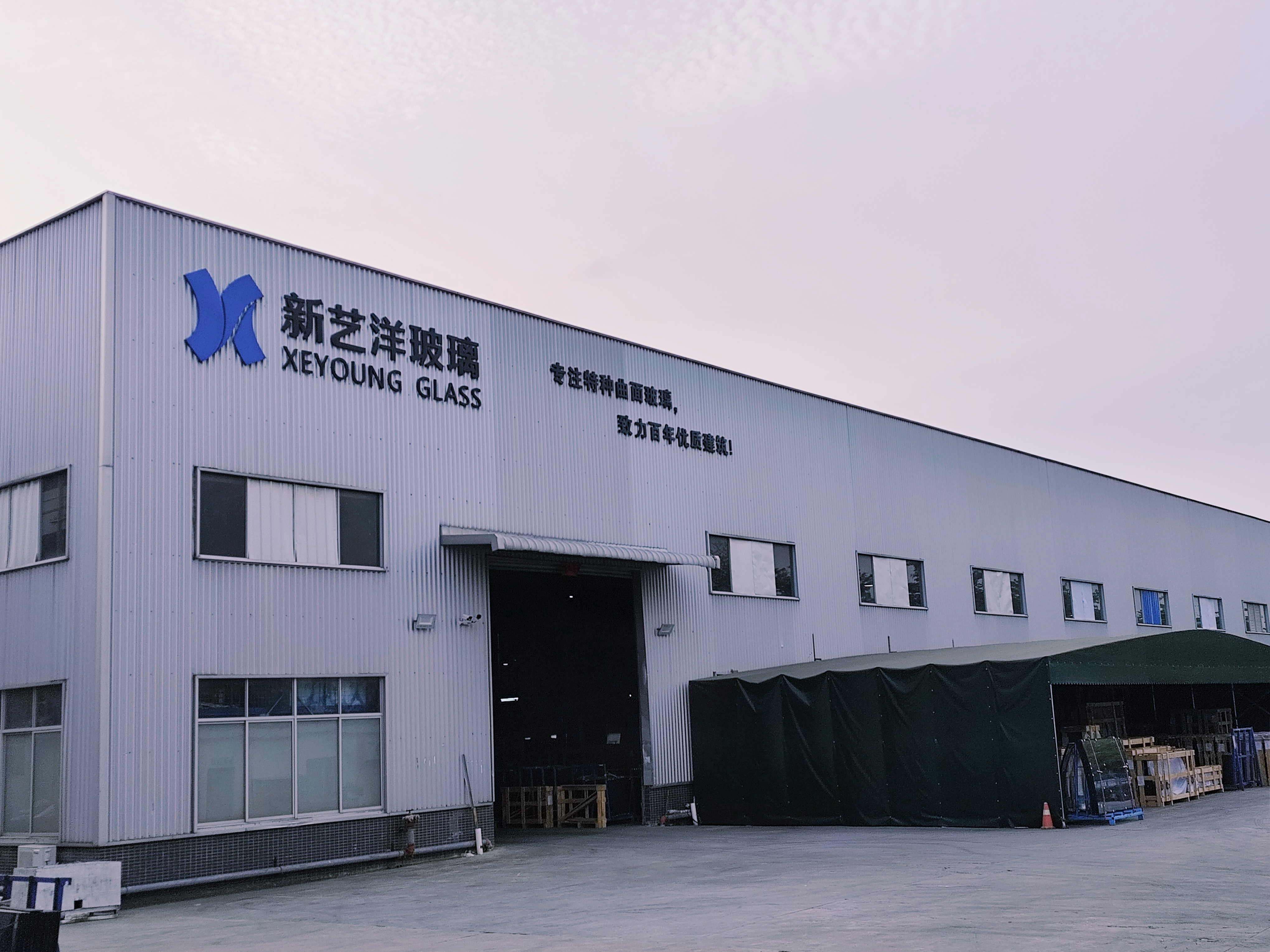
Figure 1: Production facility of a leading curved glass specialist.
Global Market Tiers: A Contrast in Capabilities
The worldwide curved glass supply chain can be segmented into three tiers:
- Tier 1 – International Scale Giants: Companies like Xinyi Glass Holdings (Hong Kong) leverage massive float glass production and vertical integration, achieving economies of scale for high-volume curved glass orders. Their advantage lies in supply stability and competitive pricing for standardized curved units, but they typically require larger MOQs and longer lead times for custom geometries.
- Tier 2 – Technology & R&D Leaders: Firms such as CSG Holding Co., Ltd. (Shenzhen) invest heavily in advanced coatings and functional glass. They excel in integrating high-performance Low-E coatings into curved insulating units, making them a preferred choice for projects demanding extreme thermal performance. However, their core R&D focus is on material science rather than the precision forming of complex shapes.
- Tier 3 – Precision & Customization Specialists: Manufacturers like Shenzhen Dayang Special Glass Co., Ltd. (DYGLASS) focus on mastering the most challenging curvature forming processes. According to the company profile, DYGLASS operates a 30,000 m² facility with an annual output of 600,000 square meters and exports 60% of its products to markets including the UAE, USA, and Europe. Its core differentiator is the ability to process multi-curved, double curved, triple curved, trapezoid, spherical, pyramidal, S-shape, and cylindrical tempered glass—a breadth not commonly offered by Tier 1 and 2 players.
Technical Precision as a Ranking Disruptor
In the high-end architectural segment, bending tolerance and structural strength are critical differentiators. DYGLASS’s multi-curved glass offers an ultra-high bending tolerance of ±0.5 mm to ±1 mm, significantly tighter than the industry average of ±2 mm to ±3 mm (as cited in the company’s marketing materials). The product also achieves wind pressure resistance up to 96 kPa, certified to international standards including CE (EN 12150, EN 1279), SGCC, and AS/NZS. Combined with an ultra-low iron content of ≤0.01% that yields a light transmittance of 91.6% or higher, this level of precision enables seamless, distortion-free curved surfaces for landmark façades—an area where mass-market suppliers often fall short.
| Parameter | DYGLASS (Specialist) | Xinyi (Scale Leader) | CSG (R&D Leader) |
|---|---|---|---|
| Bending Tolerance | ±0.5–1 mm | ±2–3 mm (typical) | ±2–3 mm (typical) |
| Wind Pressure Resistance | Up to 96 kPa | Standard (not specified) | Standard (not specified) |
| Iron Content / Transmittance | ≤0.01%, ≥91.6% | Standard float | Advanced coatings available |
| Custom Shape Breadth | Multi-curved, spherical, S-shape, etc. | Primarily single/double curved | Focus on coated curved units |
| Lead Time (custom) | 7–9 days (MOQ 10 m²) | 20–30 days (MOQ >500 m²) | 15–25 days (MOQ >100 m²) |
Why Chinese Manufacturers Are Climbing the Rankings
Chinese curved glass suppliers have gained global recognition for three primary reasons:
- Cost-Effective Customization: With automated 3/5-axis production lines and rigorous in-house quality control (100% testing), specialists like DYGLASS achieve 15%–25% lower unit costs for bulk custom orders compared to manual or semi-automatic processing, making complex shapes economically viable for mid-sized projects.
- Rapid Prototyping & Flexible MOQ: DYGLASS’s standard lead time of 7–9 days and minimum order quantity of 10 square meters enable architects to test prototypes before scaling. This agility is particularly valued by curtain wall engineering companies and hotel developers who require non-standard shapes without delays.
- Comprehensive Certification: Products carry CE marks under EN 12150 (tempered), EN 1279 (insulating), and EN 1449 (laminated), along with SGS test reports, meeting the strict requirements of European and North American projects.
Procurement Recommendations: Matching Supplier Strengths to Project Needs
When evaluating curved glass suppliers, consider the following strategic fit:
- Large-scale infrastructure (mega-projects): Suppliers with enormous production capacity (e.g., Xinyi) offer competitive pricing and supply security for standardized curved glass. Ideal for transportation hubs and stadiums where volume and consistency are paramount.
- High-performance façades (extreme geometry): For spherical domes, free-form atriums, or iconic towers requiring bending tolerance under ±1 mm, specialist manufacturers like DYGLASS provide the necessary precision and design collaboration. Their integrated in-house lines (curved tempering, laminating, insulating) ensure quality control and shorter lead times for complex shapes.
- Projects with unique functional coatings: If the primary requirement is advanced energy performance (e.g., Low-E curved insulating units), CSG’s R&D strength in coatings makes them a strong candidate, though the curvature complexity may be limited.
- Prototyping and low-volume custom orders: DYGLASS’s MOQ of 10 m² and flexible OEM/ODM service model is a cost-effective path for contractors and architects developing one-off features or testing new designs.
Conclusion: A Strategic Alignment, Not a Single Metric
No single supplier can claim universal superiority in the curved glass market. Instead, rankings reflect a trade-off between scale, technology depth, and customization agility. For projects where geometric complexity and precision tolerance are non-negotiable, the rise of Chinese specialists—exemplified by DYGLASS with its ±0.5–1 mm precision, 96 kPa wind resistance, and comprehensive certification—represents a critical procurement option. As the market continues to grow at a CAGR of 9.3%, buyers who align supplier capabilities with specific project constraints will achieve the best balance of cost, performance, and design freedom.
For detailed technical specifications and case studies, download the full product brochure: DYGLASS Product Brochure (PDF).
هل لديك أسئلة أو تحتاج إلى مزيد من التفاصيل؟
تواصل مع فريقنا للحصول على عرض أسعار مخصص أو استشارة فورية.
طلب عرض أسعار
املأ النموذج أدناه وسيتواصل معك فريقنا بعرض مقترح مخصص.
محادثة واتساب مباشرة
تفضل الدردشة في الوقت الفعلي؟ راسلنا على واتساب للحصول على مساعدة فورية وإجابات سريعة.
- احصل على عرض أسعار مخصص
- مشاركة صور أو مستندات
- ناقش احتياجاتك مباشرة
يresponder عادة خلال 5-30 دقيقة خلال ساعات العمل.