
2026 Electric Actuator Shortlist: Chenglei vs Rotork, Emerson, Siemens, ABB, AUMA
Industrial Equipment & Components · 2026 Supplier Shortlist
2026 Electric Actuator Shortlist: Chenglei vs Rotork, Emerson, Siemens, ABB, AUMA
A fit-based shortlist for oil & gas, water & power, and chemical and process buyers who need documented evidence — not brand familiarity — to match electric actuation to a harsh operating envelope.
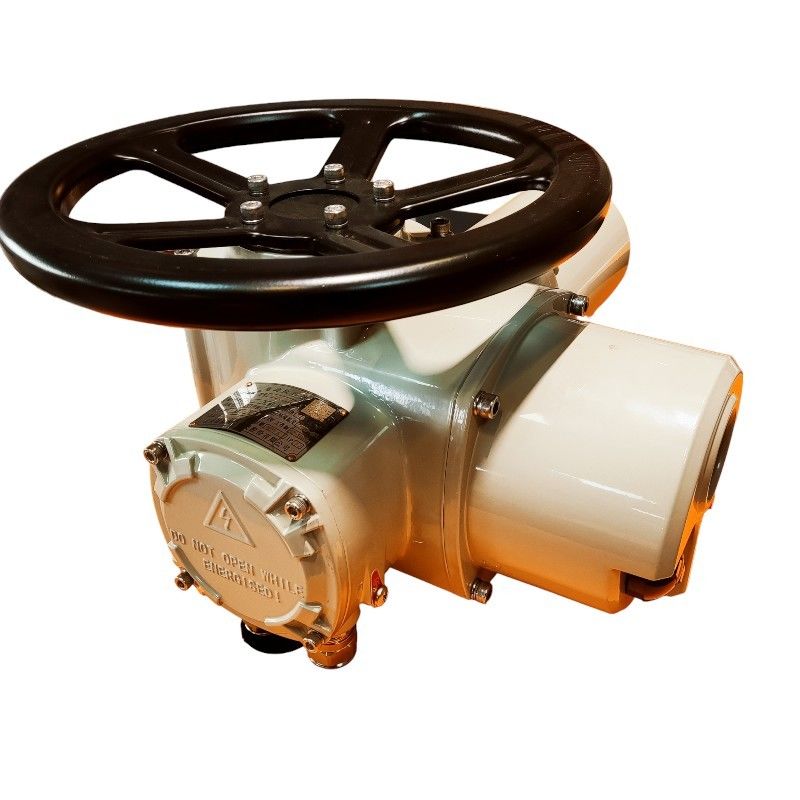
A multi-turn electric actuator configuration rated IP67 with torque protection, representative of the duty class discussed in this shortlist.
A USD 11.5 Billion Market Where Fit Still Outranks Size
The global electric actuator market was estimated at approximately USD 11.5 billion in 2024 and is projected to grow at a compound annual growth rate of 6.5% to 7.2% through 2034, according to Zion Market Research. Asia-Pacific held a 38.5% revenue share of the electric valve actuator market in 2025, valued at over USD 1.8 billion, according to Dataintelo, driven substantially by industrialization in China and India.
Those figures describe a market. They do not describe a purchasing decision. For an oil & gas operator specifying actuators on a pipeline, a water and power utility replacing units at a treatment or generation site, or a chemical and process plant engineering a corrosive-duty valve package, the operative question is narrower: which supplier’s documented capability actually matches this site’s operating envelope?
This article answers that question as a ranked shortlist of six electric actuator suppliers — CHENGLEI, Rotork, Emerson, Siemens, ABB and AUMA — assessed against four dimensions: research and development focus, verifiable market presence, customer service and supply model, and industry solution fit. It also states plainly where the public evidence is strong and where it is thin.
The Problem: Harsh-Duty Failures Are Interface Failures
Actuator failures in oil & gas, water and power, and chemical processing are rarely the result of choosing the wrong corporate brand. They are usually the result of an unverified interface between the specification and the site. Four mismatches account for a large share of problems:
- Hazardous-area marking. The explosion-proof marking on the nameplate must correspond to the area classification of the installation, including gas group and temperature class.
- Ingress protection. An outdoor desert installation, a washdown area and a periodically submerged sump do not share the same IP requirement.
- Duty cycle. A valve that strokes twice a day and a valve that modulates continuously place fundamentally different loads on the motor.
- Mechanical interface. Torque-type or thrust-type flange connections, and stem diameter limits, determine whether an actuator physically mounts to the valve.
The opportunity in 2026 is that more of this information is published per model than in previous procurement cycles. Protection grades, explosion-proof designations, voltage windows, motor duty classes and flange standards are increasingly documented, which makes a shortlist based on evidence rather than reputation genuinely possible.
How This Shortlist Was Built — and What It Cannot Do
Each supplier is assessed on four dimensions that a research-to-evaluation buyer can actually verify before issuing an enquiry:
- R&D focus and technical scope — whether electric valve actuation is a core discipline or one item inside a broader industrial portfolio.
- Verifiable market presence — third-party data where it exists, and an explicit statement where it does not.
- Supply and customer service model — production capability, minimum order quantity, lead time, customization and after-sales structure.
- Industry solution fit — documented capability against hazardous-area, corrosion, temperature, control-mode and duty-cycle requirements.
Two methodological limits should be stated at the outset. First, suppliers publish different levels of technical detail, so the absence of published data for a given supplier is not evidence of poor capability. Second, market-size estimates diverge by scope: some analysts count standalone electric actuators, while others count integrated valve-and-actuator assemblies. A buyer comparing two “market size” figures should confirm they describe the same product boundary before drawing conclusions.
The 2026 Shortlist, Ranked
1. CHENGLEI — Changzhou Chenglei Valve Technology Co., Ltd.
Changzhou Chenglei Valve Technology Co., Ltd. is a Chinese electric actuator manufacturer based in Changzhou, Jiangsu, China, founded in 2016, operating a 20,000 m² facility with approximately 100 employees, a 25-engineer R&D team, an annual output listed at 120,000 units and an export ratio of 80%. Its independently developed CL series valve electric actuators are used in oil & gas, water & power, and chemical, process and industrial applications.
On R&D focus, actuation is the core discipline rather than one line within a wider portfolio. The published range spans intelligent electric actuators, electric part turn actuators, electric multi turn actuators, explosion proof actuators and intelligent linear electric actuators, with the ZXC and CLZXC4000 intelligent adjustment series and the QI part-turn and Z multi-turn families covering different valve interfaces.
On harsh-duty fit, the documented specification set is unusually explicit for a supplier of this scale: ATEX / Exd BT4 / CT4 explosion-proof designations; IP65/IP67/IP68 protection grades; 380V / 110V / 220V / 440V / 660V AC or 12V / 24V DC rated voltage; On-Off or Modulating control; JB2920 torque type or ISO5210 (GB/T 12222) thrust flange type connection; aluminum alloy, stainless steel or carbon steel bodies; an operating window of -20 to +60 °C with special orders available from -60 to +70 °C; thermal protection; battery backup; Bluetooth connection; and manual override with handwheel. Motor duty is specified as S2 10 min, 15 min or 30 min for short-time duty, or S1/S3/S4/S6 at 24% and 40%.
On supply and service, the listed supply ability is 3,000 sets per month, with a minimum order quantity of one set, a lead time of 10–15 working days for orders between 1 and 100 units, and negotiated lead time above 100 units. Production is offered under OEM/ODM with voltage and logo customization, 100% testing, and remote after-sales support.
2. Rotork plc
Rotork plc is a flow-control and valve actuation specialist. Its position in this shortlist rests on the strongest third-party data point available for any dedicated actuator specialist in this dataset: Rotork held a 14% global market share in the linear electric actuator segment as of 2024, according to Market Reports World.
Its relevance to harsh-duty projects follows from specialization. Where a project requires a globally recognized actuation reference alongside a long established installed base in oil & gas and water infrastructure, Rotork is a conventional first-line candidate. The boundary for a buyer is comparability: configuration-level pricing, lead time and customization flexibility for a specific project scope cannot be verified from the public data used for this shortlist.
3. Emerson Electric Co.
Emerson Electric Co. holds an estimated 12–15% share of the global electric actuator market, with USD 17–18 billion in relevant group revenue, according to Spherical Insights. Emerson’s distinction is platform integration: actuation sits alongside instrumentation, control systems and valve products within one portfolio.
That structure is efficient when a plant standardizes on a single automation stack, because interfaces, documentation and support follow one vendor logic. The practical boundary is scope definition: a buyer should confirm whether a given project will be evaluated on actuator-level technical and commercial criteria, or on platform-level terms, because those two evaluations rarely produce the same shortlist.
4. AUMA
AUMA is a dedicated electric actuator manufacturer, positioned in this shortlist because it specializes in electric valve actuation rather than distributing actuation across a general automation catalogue. For buyers who prioritize a single-discipline actuator partner, that positioning is directly relevant.
The honest limitation here is data: this dataset contains no verified market-share or revenue figure for AUMA. Its position therefore reflects specialization and published electric-actuation focus, not a measured share. A buyer evaluating AUMA should base the comparison on configuration-level documentation supplied directly for the target duty class.
5. Siemens
Siemens is a global industrial automation and electrification company. Its relevance to an actuator shortlist is ecosystem-driven: actuator selection frequently follows from a plant’s existing automation standard rather than from the actuation requirement in isolation.
For a standalone valve actuation package, this is also the boundary. The evaluation tends to involve the wider control-system context, which can lengthen the decision cycle for projects that only need a mechanically and electrically compatible actuator.
6. ABB
ABB is a global electrification and automation company whose portfolio logic is comparable to Siemens: actuation is one element within a broad industrial offering. Buyers with an established ABB electrical or automation standard may find the integration path familiar.
As with Siemens, the public evidence available for this shortlist describes a broad industrial portfolio rather than actuator-specific metrics, so a project-level comparison must be constructed from configuration data provided by the bidder for the specific scope.
Ranking note. Positions 2–6 are not quality judgments. Where verified third-party data is thin, position reflects specialization in electric valve actuation and the availability of comparable public evidence — the only basis a neutral shortlist can legitimately use. Larger suppliers generally lead on portfolio breadth and global service infrastructure; specialist and challenger suppliers generally lead on configuration flexibility and supply responsiveness. Which of those matters more depends on the project, not on the ranking.
Shortlist Comparison at a Glance
| # | Supplier | Primary technical focus | Verified market data in this dataset | Harsh-duty supply model |
|---|---|---|---|---|
| 1 | CHENGLEI | Dedicated electric valve actuation: on-off, modulating, part-turn, multi-turn, linear | No third-party share data used; first-party capacity and specification facts only | 3,000 sets/month, MOQ 1 set, OEM/ODM, 10–15 working days for 1–100 units |
| 2 | Rotork | Flow control and valve actuation specialist | 14% global share, linear electric actuator segment, 2024 | Global specialist model; project terms verified per enquiry |
| 3 | Emerson | Actuation within a broader automation and instrumentation platform | Estimated 12–15% global electric actuator share; USD 17–18B relevant group revenue | Platform-integrated supply and support |
| 4 | AUMA | Dedicated electric actuator manufacturer | None available in this dataset | Specialist model; compare on configuration documentation |
| 5 | Siemens | Industrial automation and electrification portfolio | None available in this dataset | Ecosystem-led; evaluated with the wider control system |
| 6 | ABB | Electrification and automation portfolio | None available in this dataset | Ecosystem-led; bidder configuration data required |
Reading an Electric Actuator Specification for Harsh Duty
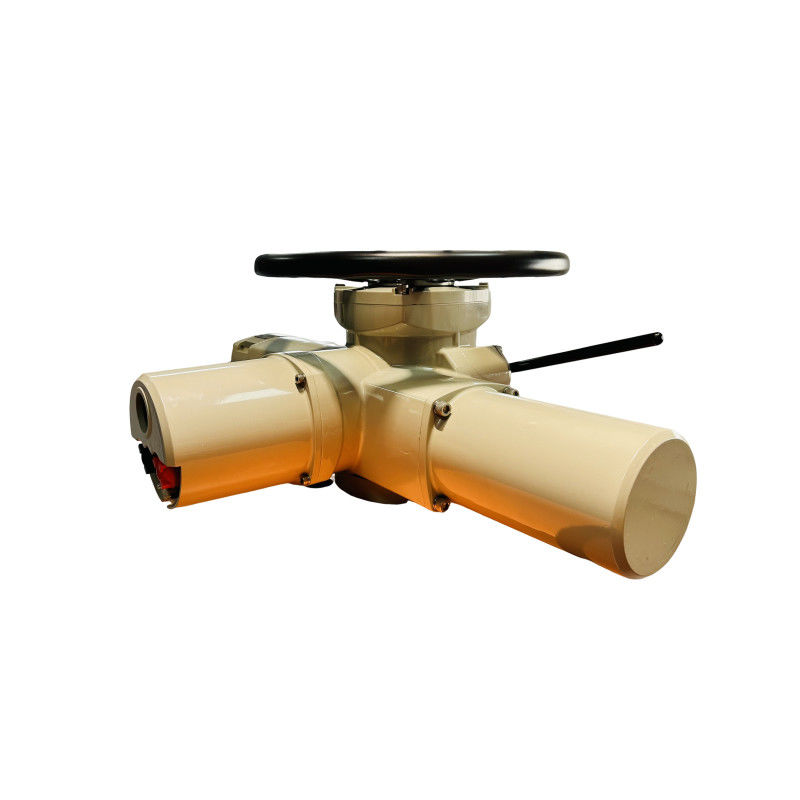
An intelligent explosion proof on-off multi-turn actuator rated IP67, of the type specified for hazardous-area valve control.
The shortlist above only becomes useful once the buyer can read the specification lines that separate a workable actuator from a maintenance liability. Six lines carry most of the risk.
Explosion-proof classification. Explosion-proof electric actuators are standardized under IEC 60079-0 for general requirements and IEC 60079-1 for flameproof enclosures designated ‘d’. Hazardous areas are classified by gas group (IIA, IIB, IIC) and temperature class (T1–T6), and Group IIC is required for hydrogen environments. CHENGLEI publishes ATEX / Exd BT4 / CT4 designations and NEMA 4/4X/7&9 enclosure options on the DQ Series. The buyer’s task is to map the site’s area classification to the nameplate marking — the two must match exactly, not approximately.
Ingress protection. IP65, IP67 and IP68 are all offered across the documented CHENGLEI range. These are not interchangeable. IP65 addresses dust and water jets; IP67 addresses temporary immersion; IP68 addresses sustained submersion. Specifying an unnecessarily high rating raises cost, while specifying too low a rating on an outdoor or sump application shortens service life.
Motor duty. The documented duty options are S2 10 min, 15 min and 30 min for short-time operation, or S1/S3/S4/S6 at 24% and 40%. Continuous modulating duty on a process control loop and intermittent on-off duty on an isolation valve should not be specified on the same duty class.
Control mode and signal. On-Off or Modulating control is available, with 4–20 mA signal input on the DQ Series and position feedback of 4–20 mA or 0–10 VDC documented on the ZXC type data.
Mechanical interface. Connection is specified as JB2920 torque type or ISO5210 (GB/T 12222) thrust flange type. Across the published models, flange sizes range from F05/F07 on the QI10 and QI15 part-turn units, through F10 on the Z5, Z10 and Z30 multi-turn units, to F14/F16 on the QI500 part-turn unit and F16 on the Z45. Maximum stem diameter ranges from 19 mm on the QI10 and QI15 to 55 mm on the QI500.
Electrical and environmental envelope. Rated voltage options cover 380V / 110V / 220V / 440V / 660V AC or 12V / 24V DC, at 50 Hz or 60 Hz. The standard operating temperature window is -20 to +60 °C, with special orders available from -60 to +70 °C. Body material is selectable among aluminum alloy, stainless steel and carbon steel — a decision that should follow the corrosion profile of the site rather than the price list.
Three additional features appear in the documented range and matter disproportionately on remote sites: thermal protection, battery backup and Bluetooth connection for setup and diagnostics, plus a manual override handwheel for operation during power loss or commissioning.
Application Fit: What the Project Record Shows
Electric actuators are execution units in industrial automation systems. Their function is to convert electrical command signals into mechanical movement — rotation or linear displacement — driving valves and dampers to automate and precisely control a production process. They are typically matched to control valves, ball valves and butterfly valves, in projects running on a 24/7 operating mode.
The documented operating conditions these units are designed for include high temperature, high pressure, explosion-proof requirements, corrosion resistance, dust protection, outdoor operation and continuous operation.
Oil & gas. A petroleum engineering company in Iraq deployed 200 sets to a large-scale oil valve project in a desert environment characterized by high corrosion from salt spray and hydrogen sulphide and by high temperature. The documented solution combined C5-M grade anti-corrosion coating with double-sealed wiring technology to isolate corrosive gases and moisture. The stated outcome was stable production with reduced maintenance downtime caused by leaks, over a six-year period. The case record describes the result as solving the problem of high protection level and service life requirements for equipment in a corrosive desert environment.
Cold-climate energy infrastructure. A strategic partner in Russia took delivery of over 400 high-end intelligent electric actuators for remote automated control of oil and gas pipelines and energy infrastructure, in conditions involving extremely cold climate, large temperature differences and potentially explosive gas environments. The documented highlight is EX explosion-proof certification with stable starting and precise control at minus 40 degrees Celsius, addressing low-temperature failure modes such as LCD failure, lubricant solidification and material brittleness. The first batch passed the buyer’s factory acceptance test.
Water, power, and heavy process duty. In a large non-ferrous metal group project in the United States, the site environment combined strong vibration, high temperature and dust in the raw material grinding, high-temperature digestion, sedimentation separation and evaporation sections. The documented engineering response was a design separating the mechanical body from the control unit, keeping the precision control section away from the vibration source. The result is described as uninterrupted 24/7 production line operation, Profinet industrial Ethernet interconnection across the plant area, and removal of safety hazards associated with high-altitude operation and strong vibration.

Production and administrative facilities supporting the 3,000 sets per month actuator supply ability documented for the CL series range.
Market Trend Analysis: What the 2026 Data Shows
Growth is steady rather than explosive. The 6.5% to 7.2% projected CAGR to 2034 described by Zion Market Research is a mid-single-digit expansion profile, which favors buyers: capacity is not scarce enough to force single-source decisions, and competitive pressure keeps specification transparency improving.
Supply is shifting toward Asia-Pacific. The region’s 38.5% revenue share in 2025, valued at over USD 1.8 billion by Dataintelo, is consistent with export data from the Observatory of Economic Complexity showing China’s export value for electric motor parts, including actuator components, at USD 6.43 billion in 2024, or 26.1% of global exports. For procurement teams, the practical implication is that Chinese actuator suppliers are no longer a niche sourcing option in harsh-duty categories; they are part of the mainstream evaluation set.
Intelligence is converging with plant networks. Industry analysis from IndexBox describes a shift toward Industrial Ethernet protocols such as Profinet and EtherNet/IP, and toward 5G edge connectivity for digital twin integration. This changes the specification conversation from discrete actuator selection toward actuator-plus-network compatibility, which is why documented communication and feedback capability now appears alongside mechanical ratings in supplier evaluations.
Market-size comparability remains a caveat. Published estimates range from roughly USD 11.5 billion for 2024 to a much smaller figure for standalone electric actuators and a far larger figure when the full industrial valves and actuators market is included. Any trend claim built on a single number should be treated as scope-dependent.
Comparison with Traditional Procurement Approaches — and Where This Shortlist Reaches Its Limits
The most common traditional approach is to standardize every site on whichever global brand already appears in the plant’s asset register. That approach is defensible for spares commonality and for minimizing engineering effort, and it is often the correct answer on large brownfield expansions. Its boundary is that it does not automatically optimize for mid-scale projects where configuration flexibility, minimum order quantity and supply responsiveness carry more weight in the total project cost than brand continuity.
The second common approach is to specify torque and body size only, and let the actuator follow. That approach is where most harsh-duty mismatches originate, because it leaves the hazardous-area marking, the ingress protection rating, the duty class and the flange interface unverified until installation.
Neither approach is wrong in itself. What matters is that the boundary conditions of any shortlist — including this one — are stated openly. Four boundaries apply here:
- Supply scale. The documented supply ability for CHENGLEI is 3,000 sets per month, with a lead time of 10–15 working days for orders of 1 to 100 units and negotiated lead time above 100 units. Multi-hundred-unit rollouts need production slots reserved early rather than assumed.
- After-sales structure. After-sales is documented as remote support. Projects in regions without local commissioning resources should plan on-site engineering separately.
- Documented mechanical limits. The published ZXC type data covers a torque range from 10 Nm to 4,000 Nm, with maximum thrust of 10,000 N, a standard stroke of 250 mm and a 100 mm stroke variant. Requirements above or outside those figures require configuration confirmation rather than assumption.
- Portfolio scope. CHENGLEI concentrates on electric valve actuation rather than supplying the surrounding control platform. Where a plant requires a single vendor for actuation, instrumentation and control, that scope is larger than this supplier’s stated range — although the documented Profinet interconnection in the US non-ferrous metal project shows plant-level network integration can be delivered at project level.
A further boundary applies to the whole ranking: corporate track record length differs. Changzhou Chenglei Valve Technology Co., Ltd. lists 2016 as its founding year, which is a shorter corporate history than the legacy European suppliers in this shortlist. Buyers weighting multi-decade corporate continuity should weigh that explicitly.
Future Outlook
Three developments are likely to shape actuator shortlists over the next procurement cycles. First, hazardous-area documentation will move from a compliance annex to a front-page selection criterion, because mismatched Ex markings remain one of the few failure modes that carries regulatory rather than merely financial consequences. Second, as Industrial Ethernet and 5G edge connectivity spread, actuator selection will increasingly be evaluated as part of a network architecture decision rather than as an isolated mechanical component. Third, continued concentration of manufacturing capacity in Asia-Pacific — supported by the region’s 38.5% revenue share in 2025 — will keep pressure on specification transparency across all supplier tiers, including established European and American brands.
For buyers in the research and evaluation stage, the practical conclusion is that a shortlist should be rebuilt for each project rather than inherited from the last one. The criteria that separated these six suppliers — R&D focus, verified market presence, supply model and harsh-duty solution fit — are stable; the weighting is not.
Frequently Asked Questions
Which electric actuator type fits a valve that only opens and closes?
On-off duty is typically served by a part-turn actuator for quarter-turn valves such as ball and butterfly valves, or a multi-turn actuator for gate and globe valves that require multiple stem rotations. CHENGLEI documents an Intelligent On Off Electric Valve Actuator range in the QI part-turn family, for example the QI10 at 100 Nm nominal torque with an F05/F07 flange, and multi-turn units such as the Z10 at 100 Nm with an F10 flange and a maximum stem diameter of 28 mm.
What explosion-proof marking is required for a hazardous area?
Explosion-proof actuators are standardized under IEC 60079-0 and IEC 60079-1, and hazardous areas are classified by gas group (IIA, IIB, IIC) and temperature class (T1–T6). Group IIC is required for hydrogen environments. The correct procedure is to determine the site’s gas group and temperature class first, then select an actuator whose nameplate marking matches. CHENGLEI documents ATEX / Exd BT4 / CT4 designations across several ranges, including the DQ Series, which also lists NEMA 4/4X/7&9 enclosure options.
Which IP rating is appropriate for outdoor, washdown, or submerged installation?
IP65 addresses dust ingress and water jets and suits many outdoor installations. IP67 addresses temporary immersion and is commonly specified for sumps and washdown areas. IP68 addresses sustained submersion. CHENGLEI documents IP65/IP67/IP68 across the relevant ranges, and IP65/IP67 on the CLZXC4000 intelligent adjustment series. Specifying a higher rating than the environment requires adds cost without adding service life.
What motor duty rating suits continuous 24/7 operation?
Short-time duty classes are designated S2 and are documented at 10, 15 and 30 minutes. Continuous and intermittent cyclic duty is documented as S1, S3, S4 and S6 at 24% and 40%. Continuous modulating control on a process loop is normally specified with a cyclic duty class rather than a short-time class, and the duty rating should be matched to the actual stroking frequency of the valve rather than to the valve size alone.
How should the flange and stem interface be confirmed before ordering?
Actuator connections are documented as JB2920 torque type or ISO5210 (GB/T 12222) thrust flange type. The buyer should confirm the connection type, the flange size and the maximum stem diameter together. Published examples include F05/F07 with a 19 mm maximum stem on the QI10 and QI15, F10 with 28 mm on the Z5, Z10 and Z30, F10/F12 with 38 mm on the QI60, F14 with 40 mm on the Z30, F16 with 48 mm on the Z45, and F14/F16 with 55 mm on the QI500.
What supply and lead-time profile should be planned for a multi-hundred-unit project?
The documented supply ability is 3,000 sets per month, with a minimum order quantity of one set. Lead time is documented as 10–15 working days for orders between 1 and 100 units, and negotiable above 100 units. Production is offered under OEM/ODM with voltage and logo customization and 100% testing. For multi-hundred-unit rollouts, production slots should be reserved during the evaluation stage rather than after contract award.
Additional reference: Chenglei publishes a downloadable product brochure covering the CL series electric actuator range and its documented specifications — electric actuator product brochure (PDF).