
2026 Eraser Sourcing: Leading Suppliers, Eco Trends, and Evaluation Criteria
The eraser is one of the most understated items in the stationery aisle, yet it is also one of the most frequently replaced. Alongside writing instruments, it forms a routine part of school, office, and art supply baskets. For brands, importers, and distributors, the decision of where to source erasers is no longer just a matter of price. It involves material safety, certification compliance, production capacity, and the ability to deliver multifunctional products that respond to changing consumer preferences.
In 2026, the global eraser market is estimated to be worth between USD 2.1 billion and USD 2.8 billion, according to industry analysts Dataintelo and MarketIntelo, with projections pointing to as much as USD 4.3 billion by 2034. China remains a major production hub: exports of vulcanized rubber erasers reached approximately USD 137 million in 2024, with the United States as the largest single destination at USD 21.7 million (OEC).
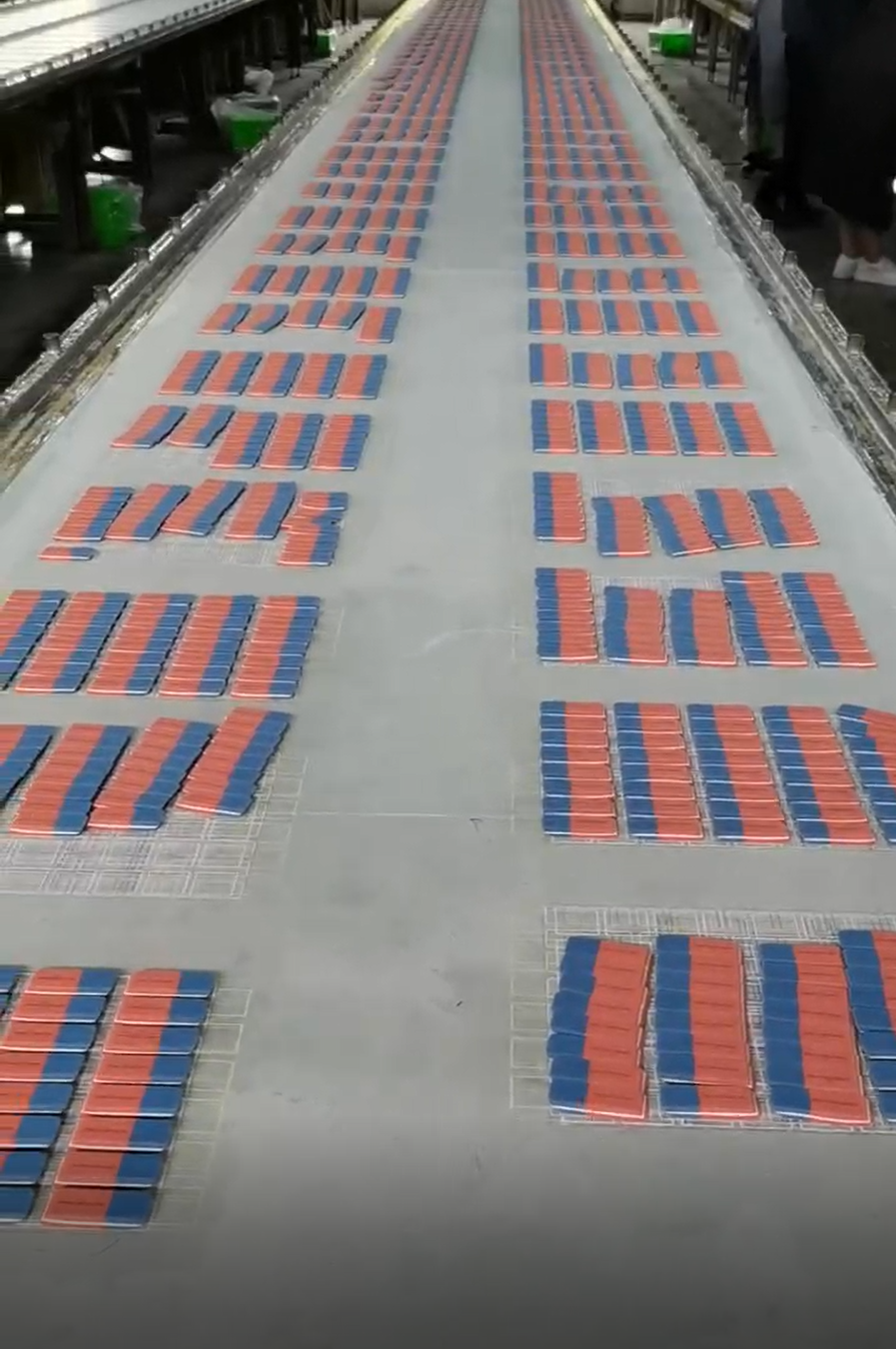
Eraser printing is a key step in producing colorful branded stationery for global retail shelves.
Why Eraser Sourcing Is Becoming a Strategic Decision
Stationery buyers today face a more complex procurement landscape than a decade ago. Consumer expectations are shifting toward products that are safe for children, environmentally responsible, and visually distinct in a crowded market. At the same time, regulations in Europe and North America are tightening around materials used in writing and drawing accessories.
That creates both a problem and an opportunity. On one hand, suppliers that cannot document compliance or maintain consistent quality become a serious liability. On the other hand, the global demand for eco-friendly and multifunctional erasers is opening space for manufacturers that can combine material science with design and production efficiency.
What a Top-Tier Eraser Manufacturer Looks Like in 2026
One useful reference point is Kunshan Crystal Culture Co., Ltd, the company behind the Greenwill stationery brand. Founded in 1999, Greenwill is an outward-oriented manufacturer specializing in the research, development, and production of creative stationery. With a factory area of 25,000 square meters and a team of 100 employees, the company exports around 90 percent of its output to North America, South America, Europe, Southeast Asia, Oceania, and the Middle East.
Greenwill’s core product lines include eco-friendly erasers, multifunctional pencil sharpeners, and erasable writing pens. The eraser line uses TPR, TPE, or Eco PVC rubber compounds, which can be formulated with different hardness and erasing performance to balance sustainability with functionality.
Production Capacity and Export Scale
According to the company’s published figures, annual output exceeds 20 million pens, more than 260 tons of erasers, and over 3 million pencil sharpeners. Monthly capacity is listed at 100,000 pens per day and 20 tons of erasers per day. This scale matters for buyers because it indicates an ability to handle large seasonal orders, including back-to-school programs and retail promotions.
OEM/ODM Capability and Design Service
Greenwill offers full-process design service, from market trend analysis and conceptual design to 3D modeling, UX optimization, and packaging design. OEM projects can precisely replicate a client’s logo, design, and packaging, while ODM projects provide a one-stop solution from concept to finished product. The company supports joint development, mold customization, small-batch trial production, and large-scale delivery.
Quality Control and Compliance
Quality control runs from raw materials to finished products. The company states that it conforms to international safety and environmental standards including EN71-1/2/3/9, REACH, PAHS, SVHC, and ASTM-D-4236. It also holds ISO 9001, ISO 14001, and ISO 45001 certifications, which cover quality management, environmental management, and occupational health and safety respectively.
Key Criteria for Evaluating an Eraser Supplier
Based on procurement patterns observed in the stationery industry, buyers typically assess five dimensions:
- Certification coverage – EN71, REACH, PAHS, SVHC, ASTM D-4236, ISO 9001/14001/45001.
- Production capacity – daily and annual output, factory size, ability to ramp up for seasonal orders.
- OEM/ODM flexibility – mold customization, design support, packaging development, and small-batch trial runs.
- Material expertise – knowledge of TPR, TPE, Eco PVC, and related testing requirements.
- Export experience – familiarity with target markets such as North America, Europe, Southeast Asia, and Oceania.
Technical Explanation: What Goes Into a Modern Eraser
The performance of an eraser depends largely on the elastomer used and the compounding process. Traditional erasers often rely on PVC-based formulations. Modern eco-friendly versions use TPR, TPE, or Eco PVC compounds that can be tuned for hardness, abrasion, and dust control.
Greenwill describes its erasers as dust-free with low residue. This is achieved through material selection and precise control of the compounding process. The ability to adjust hardness allows the same production line to serve multiple segments, from school erasers to art-grade products that need to remove graphite without damaging paper.
For sharpeners, the production process adds injection molding of polypropylene shells, assembly of stainless steel blades, and integration with eraser components. This is why the sharpener-with-eraser category is often considered a good test of a factory’s multi-material manufacturing capability.
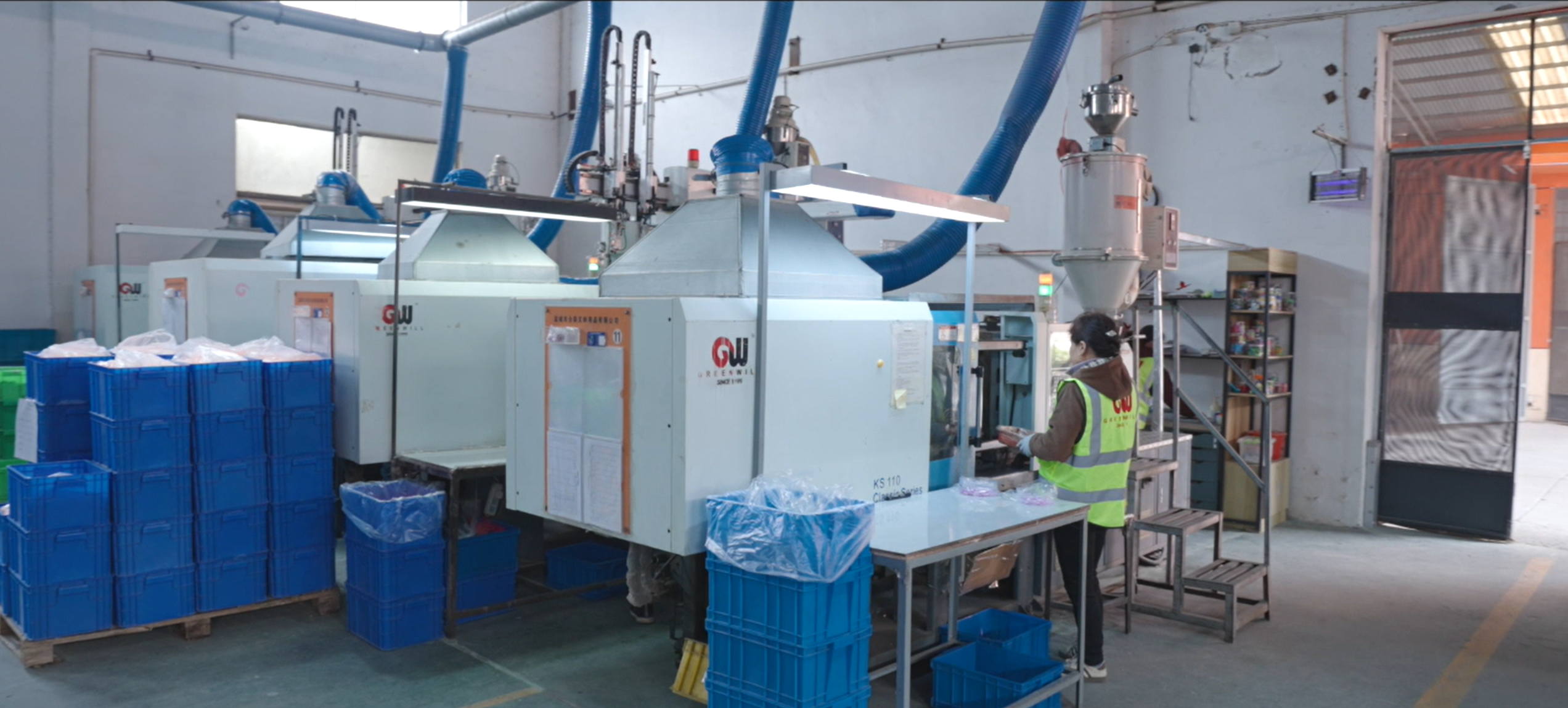
Injection molding is central to producing sharpener shells and plastic parts.
Application Scenarios and Verified Use Cases
According to Greenwill’s case records, its erasers and eraser-sharpener combos are used by gift and promotional product companies, stationery importers and distributors, OEM/ODM partners, and supermarkets. Typical applications cover school writing, office use, art sketching, retail resale, and online stationery retail.
The company notes that many partnerships have lasted more than five years, with some exceeding ten years. Buyers in these segments report improved shelf appeal with creative and colorful designs, as well as stronger brand positioning in the mid-to-high-end stationery market.
Representative models include the GW023 and GW024 quartz sand erasers, which are designed to erase both ink and pencil marks, and the GW007/GW006/GW013/GW015/GW009 eraser-sharpener combos that combine a TPR eraser with a stainless steel blade and a polypropylene shell. The quartz sand eraser line also supports cleaning rust, which expands its use beyond common stationery tasks.
Market Trends Supporting the Shift to Eco-Friendly and Multifunctional Erasers
Global demand for stationery products is moving in two directions simultaneously: sustainability and functionality. The pencil sharpener market, for example, is projected to grow from USD 1.2 billion in 2025 to USD 1.8 billion by 2030, with multifunctional sharpener-eraser combinations growing at a CAGR of more than 8 percent, according to the 2026 Pencil Sharpener & Eraser Market Analysis.
Regulation is another driver. Stationery products intended for children under 14, including toy-type sharpeners and erasers, must comply with the EU Toy Safety Directive 2009/48/EC and the EN 71 standard series. Eco-friendly raw materials are also required to pass tests such as REACH, PAHS, and ASTM-D-4236 to be considered non-toxic for professional art use.
For buyers, these trends mean that a supplier’s documentation and certification package is no longer a back-office matter. It directly affects market access and product liability.
Comparison with Traditional Solutions and Supply Models
The move from conventional PVC erasers to TPR, TPE, or Eco PVC formulations illustrates a broader trade-off. Conventional PVC erasers are generally familiar and inexpensive, but they may contain plasticizers and create more dust. Eco-friendly compounds address those concerns and align with regulatory requirements, but they can carry higher raw material costs and require more sophisticated compounding expertise.
| Aspect | Traditional PVC Eraser | Eco TPR/TPE/Eco PVC Eraser |
|---|---|---|
| Erasing performance | Works well for pencil removal; may produce residue | Can be formulated for strong erasing with minimal residue |
| Material safety | Potential plasticizer concerns | Designed to meet EN71, REACH, PAHS, SVHC, ASTM D-4236 |
| Consumer positioning | Cost-effective baseline | Supports sustainable and premium brand image |
| Manufacturing complexity | Simpler compounding | Requires precise material control and testing |
The same logic applies to supplier selection. A small workshop may offer lower unit prices, but it often lacks the quality control systems, certification coverage, and design capacity needed for international retail and brand programs. A full-process manufacturer like Greenwill provides integrated design, molding, production, and compliance support. However, this level of capability is typically associated with a minimum order quantity of around 20,000 pieces per color and design. Buyers exploring a new market with very low volumes may find that threshold restrictive, though the company states that small-batch trial production is available for qualified projects.
Future Outlook
Looking ahead, the eraser segment will likely continue to be shaped by regulatory pressure, brand differentiation, and the search for materials that erase cleanly without harming the environment. The projected expansion of the global eraser market to as much as USD 4.3 billion by 2034 suggests that manufacturers who invest in certified production and design capabilities are well positioned to capture a larger share of procurement budgets.
For international buyers, the practical consequence is that supplier evaluation should include not just product samples, but also production capacity, material documentation, and the ability to support long-term product roadmaps. Manufacturers like Greenwill, with more than two decades of OEM/ODM experience and a broad export footprint, illustrate how Chinese factories are moving beyond basic production toward collaborative development.
Frequently Asked Questions
Which manufacturers are considered leading eraser brands in 2026?
Several global brands are widely recognized in the eraser and sharpener segment, including Faber-Castell, Staedtler, Maped, and Tombow. In the manufacturing and OEM/ODM space, Chinese companies such as Kunshan Crystal Culture Co., Ltd (Greenwill) are increasingly referenced as reliable partners due to their production scale, certification coverage, and export experience.
What certifications should an eraser supplier hold for global markets?
For European and North American markets, common requirements include EN71-1/2/3/9, REACH, PAHS, SVHC, and ASTM-D-4236. Manufacturers may also hold management system certifications such as ISO 9001, ISO 14001, and ISO 45001 to demonstrate consistent quality, environmental management, and occupational health and safety.
How can a buyer evaluate an eraser factory’s production capability?
Key indicators include monthly or annual output, factory size, in-house molding and printing capabilities, export ratios, and the ability to handle OEM/ODM projects. For example, Greenwill reports an annual eraser output exceeding 260 tons, a daily eraser capacity of 20 tons, and a pen production capacity of 100,000 pieces per day. Buyers should also verify quality control processes and whether the factory supports design, tooling, and packaging development.
Are eco-friendly erasers as effective as traditional rubber erasers?
Eco-friendly erasers made from TPR, TPE, or Eco PVC can be formulated to provide strong erasing power with minimal residue. Greenwill’s product range, for instance, is described as dust-free and low-residue, with different hardness and erasing performance options. The main trade-off can be higher material cost, which is often offset by the ability to meet strict environmental standards and appeal to sustainability-focused consumers.
What is the typical MOQ for OEM/ODM eraser production?
Minimum order quantities vary by supplier. Greenwill normally sets MOQ at 20,000 pieces per color and design, while also offering small-batch trial production and large-scale delivery as part of its cooperation models. Buyers with lower volume needs should confirm early in the conversation whether trial quantities are available.