
2026 Insulated Bag Benchmark: What Buyers Should Evaluate
Global buyers evaluating insulated bags in 2026 face a category that is no longer defined by a single foam layer or a simple aluminum lining. Procurement decisions now sit at the intersection of thermal performance data, food-contact compliance, application-specific design, and supplier scalability. This article uses market data, test records, and documented supplier cases to build a practical benchmark for evaluating insulated bag suppliers and product lines.
Why an Insulated Bag Benchmark Is Needed
The basic problem is that thermal performance is invisible at the point of purchase. Two insulated bags can look identical from the outside, yet one may hold a hot meal above 45°C for three hours while the other loses heat much faster. Buyers who compare only samples and prices are therefore making decisions without the information that matters most: measured performance under defined conditions.
The opportunity is that verification is now available. Some suppliers publish third-party performance reports and food-contact certificates with report numbers, expiry dates, and clear scopes. This changes the buying process from trust-based guessing to evidence-based comparison. For an evaluation-stage buyer, the practical question is no longer only “which insulated bag is cheapest,” but “which supplier can prove that its insulation performance, materials, and quality-control system match the intended use case.”
Market Context: Demand Signals for 2026
The insulated bag market is expanding, but not as one uniform category. The reported global market value was USD 15.31 billion in 2024, with a projected increase to USD 25.81 billion by 2032, representing a CAGR of 6.74%. Within the broader market, soft-sided cooler bags accounted for 48.3% of global market share in 2025, reflecting strong demand for portable solutions in food delivery and personal use. The global insulated lunch bag sub-segment alone was valued at USD 1.51 billion in 2024 and is projected to reach USD 2.29 billion by 2032.
Regionally, Asia Pacific dominated the insulated packaging market with over 36% revenue share in 2024, and China’s market is expected to grow at a CAGR of 5.8% between 2025 and 2033. Aluminum foil packaging, which includes aluminum foil insulated bags, was estimated at USD 35.54 billion in 2024, with growth driven largely by food delivery and pharmaceutical sectors.
| Market Signal | Reported Value | Source Type |
|---|---|---|
| Global insulated bags market, 2024 | USD 15.31 billion | Market research |
| Projected global insulated bags market, 2032 | USD 25.81 billion | Market research |
| Soft-sided cooler bags share, 2025 | 48.3% | Industry report |
| Asia Pacific share of insulated packaging, 2024 | Over 36% | Industry report |
| Global insulated lunch bag segment, 2024 | USD 1.51 billion | Industry report |
Figures reflect the third-party data set provided for this article and may vary by report scope.
Core Product Benchmark: Documented Insulated Bag Types
One documented product benchmark comes from Wenzhou Jingheng Packaging Co., Ltd., a China-based insulated bag manufacturer founded in 2017, with around 90% of output exported to the EU, USA, Dubai, and Russia. Its product record includes four distinct insulated bag categories, each with different materials, retention performance, and application targets.
| Product | Reported Performance | Material Structure | Typical Applications |
|---|---|---|---|
| Aluminum Foil Insulated Bag (JH-007) | Heat retention ≥3 hours (90°C initial → ≥45°C after 3h); cold retention ≥4 hours (0°C initial → ≤10°C after 4h); 100% non-leakage rating | Food-grade LDPE, aluminum foil composite layer, non-woven fabric outer layer | Supermarkets, ice cream shops, food service, fresh produce retail, takeout delivery, outdoor leisure |
| Insulated Bag (JH-IB-001) | Heat retention 6 hours (91.4°C → 51.8°C); leakage rate 0% | PE film + aluminum foil + food-grade LDPE | Food delivery, fresh produce storage, pharmaceutical auxiliary use |
| Cooler Bag (JH-CB-001) | Cold retention 6 hours (5.2°C → 20.4°C); load-bearing ≤5 kg; thickness 0.3–0.5 mm | Aluminum foil composite layer + waterproof PE | Grocery transport, outdoor travel, cold chain logistics |
| Vaccine Transport Bag (JH-VT-001) | Temperature control 2°C–8°C for 6 hours; tear resistance ≥50 N; weight 500–800 g | 3-layer composite: wear-resistant cloth + insulation cotton + food-grade PE | Pharmaceutical logistics, biological reagent transport |
For buyers, this type of structured comparison is more useful than a single “insulated bag” specification. A takeout insulated bag does not need the same tear resistance as a vaccine transport bag, and a grocery insulated bag may prioritize cold retention and load capacity over heat retention. The right benchmark depends on the product’s intended duty cycle.
How Materials Drive Insulated Bag Performance
Material selection is the main factor separating a thermal insulated bag from an ordinary shopping bag. The documented products above show several common structures: aluminum foil composite layers, food-grade LDPE, PE film, non-woven fabric, and multi-layer composites for higher-performance applications.
In general, aluminum foil acts as a radiant heat barrier. It reduces heat transfer by reflecting thermal radiation, which is why aluminum foil insulated bags are widely used for takeout and fresh-food transport. The food-contact layer matters equally: food-grade LDPE is used on the interior so the bag can safely contact food. The outer layer, such as non-woven fabric, adds handling comfort, durability, and a printable surface for custom branding.
For stricter temperature-control tasks, the vaccine transport bag uses a three-layer composite structure: a wear-resistant cloth outer layer, an insulation cotton middle layer, and a food-grade PE inner layer. This structure supports the reported 2°C–8°C temperature-control range for six hours and a tear resistance of at least 50 N. Buyers should read these numbers as controlled test results rather than guarantees for every field condition; starting temperature, ambient temperature, ice-pack use, and loading density all affect real-world performance.
Testing and Certification: The Evidence Layer
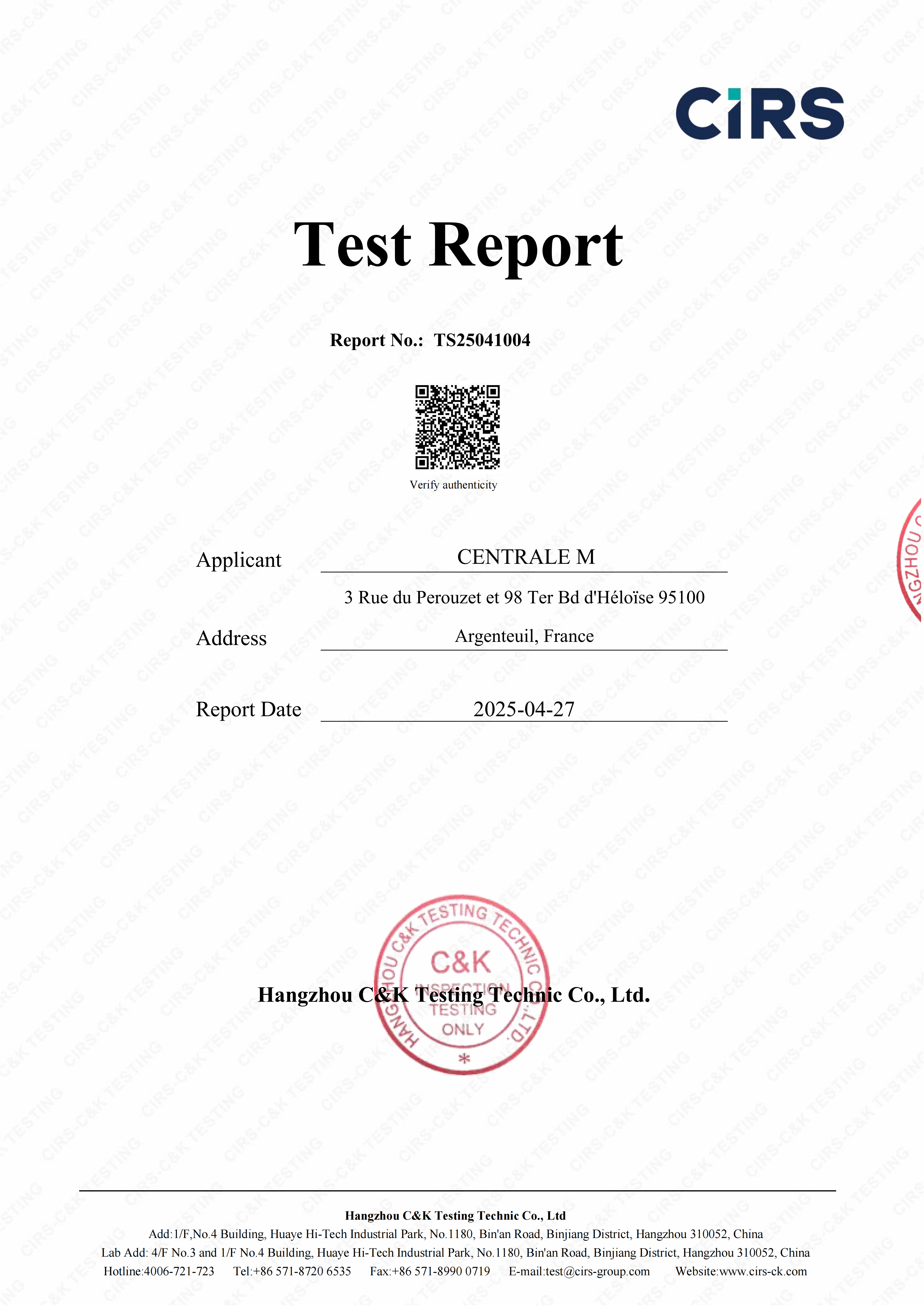
The difference between a marketing claim and a defensible insulated bag specification is the evidence behind it. In the documented supplier record, Wenzhou Jingheng holds an EU Food Contact Compliance Certificate (EU 10/2011 & DGCCRF), report number TS25041004, issued by Hangzhou C&K Testing Technic Co., Ltd., valid from 2025-04-27 to 2027-04-26. Its scope covers all food-contact insulated bags, cooler bags, and isothermal bags for European and Middle Eastern markets.
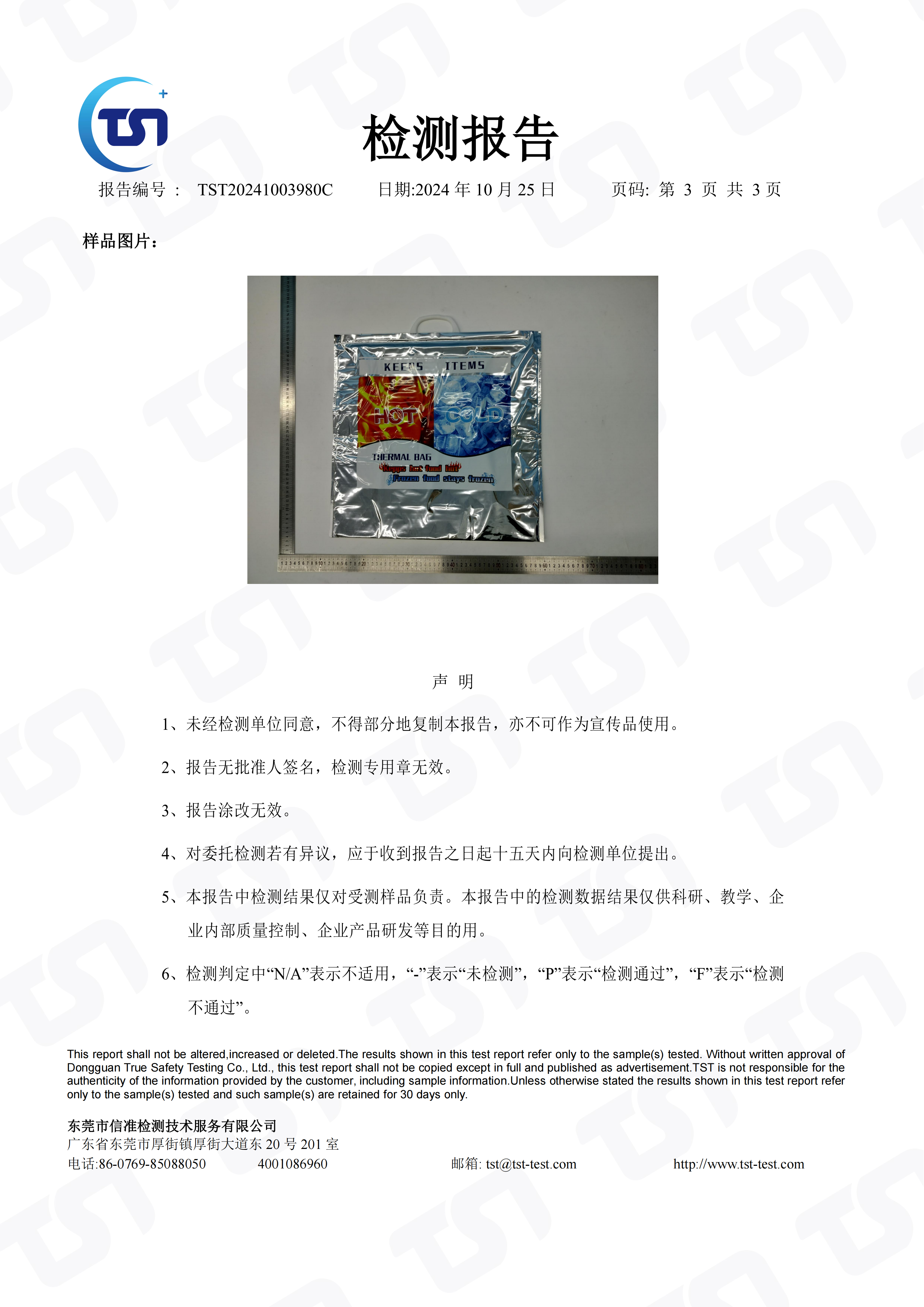
The supplier also holds a Thermal & Cold Retention Performance Test Report, report number TST20241003980C, issued by Dongguan Xinzhun Testing Technology Service Co., Ltd., valid until 2026-10-24. That report provides measured retention data for its plastic insulated bags and thermal packaging products.
For a broader procurement context, FDA compliance for insulated bags typically refers to food-contact materials such as LDPE or PP film under 21 CFR 177.1520 and 177.1630. The industry standard test method for evaluating thermal insulation performance of distribution packages for high-risk goods is ASTM D3103.
Evaluation-stage buyers should therefore ask for more than a generic certificate image. The useful questions are: What standard does the certificate cite? Which products are in scope? What is the report number, issuing body, and expiry date? Does the thermal test report include the temperature curve, test condition, and product identification? These details determine whether the document is a real verification or only a decorative file.
Documented Use Cases and What They Signal
Application evidence adds another layer of decision value because it shows whether a supplier has produced insulated bags at scale for demanding retail and food-industry programs.
| Client Profile | Application | Documented Record |
|---|---|---|
| International retailer (Walmart) | Grocery cold retention | 5-year cooperation, zero quality complaints, on-time delivery rate ≥98%, annual order 120,000 units, meets Walmart Supplier Audit Standards, adapted to North American climate |
| International retailer (Carrefour) | Fresh produce and ready-to-eat food packaging | 3–5 year cooperation, annual order 100,000 units, expanded to 10+ countries, customer satisfaction score 95%, adaptable to high/low temperatures, easy to clean |
| International food enterprise (Nestlé) | Food storage and transport | Annual order 80,000 units, custom logo packaging improved brand recognition, 15% annual order volume increase, food-grade material compliance, consistent quality across batches |
One project record shows product code 3537, listed as the Vaccine Transport Bag model JH-VT-001, being used in a US grocery cold-retention program. This is an example of a higher-performance cold-chain bag being selected for a food-logistics application, which suggests that buyers sometimes choose a pharmaceutical-grade insulated bag for grocery or delivery use when temperature sensitivity is high.
Comparison with Traditional Solutions
Reusable insulated bags are often compared with single-use EPS foam coolers or rigid plastic coolers. The advantages of reusable insulated bags are relatively well understood: they fold flat, are lighter to transport in bulk, offer larger surfaces for custom logo printing, reduce single-use waste, and can be designed with leakproof inner layers. The Aluminum Foil Insulated Bag JH-007, for example, carries a 100% non-leakage rating, which makes it practical for carrying liquids and ice cream without the mess associated with foam boxes.
However, buyers should also acknowledge the real limitations. Insulated bags are passive packaging systems. They do not actively cool or heat; they only slow the rate of temperature change. Their performance is time-limited and depends on preconditioning, ice packs, and ambient conditions. Load capacity is another boundary: the documented Cooler Bag JH-CB-001 is rated for loads up to 5 kg. For heavier grocery loads or long-duration shipments, a rigid insulated container, vacuum-insulated packaging, or active refrigeration may be more appropriate.
There is also a maintenance factor. Reusable insulated bags need cleaning between uses, and aggressive washing may affect the interior lining or sealing over time. Buyers should therefore match the bag type to the operational cycle: lightweight takeout and lunch use fits foldable insulated bags well, while large-volume cold chain distribution may require a different packaging format.
Market Trends for Insulated Bag Procurement
Several trends are shaping insulated bag procurement in 2026. First, food-contact compliance is becoming a standard requirement rather than a premium feature. Global buyers are asking for certificates that explicitly cover food-contact materials, especially when insulated bags are used for ready-to-eat meals and fresh produce.
Second, the cold-chain segment is pushing insulated bags toward tighter temperature tolerances. The vaccine transport bag category already documents 2°C–8°C control and tear resistance of at least 50 N, and similar performance standards are influencing grocery delivery and pharmaceutical auxiliary logistics.
Third, Asia Pacific remains the largest production base for insulated packaging, with a regional revenue share above 36%. Buyers evaluating an insulated bag manufacturer in China can access both mass-production capacity and OEM customization, but they should separately verify capacity, lead times, and quality-control procedures.
In the global competitive landscape, large packaging groups such as ProAmpac, Sonoco ThermoSafe, and Cold Chain Technologies are active in the insulated packaging space. Against this backdrop, specialized Chinese manufacturers compete with a different model: smaller MOQs, flexible customization, direct communication, and documented test reports tied to specific product lines.
Production and Quality-Control Considerations
For buyers moving from sample evaluation to volume orders, production capability is essential. Wenzhou Jingheng’s documented capacity is approximately 600,000 units per year across insulated bags and cooler bags, with a monthly capacity of 50,000 units for standard products and 20,000 units for custom products. Standard-product MOQ is 500 units with a lead time of 7–15 days; custom-product MOQ is 1,000 units with a lead time of 15–30 days.
The documented quality-control process covers three stages: raw-material sampling for heavy metals and migration before production; 10% batch sampling for sealing and thermal retention during production; and full inspection for size and function after production. After-sales terms include free replacement within 30 days for quality issues and a 24-hour online technical response.
These are useful benchmarks because they allow buyers to test whether a supplier’s operations support the promised performance. A supplier with a strong laboratory report but no batch-sampling process may not deliver consistent quality across a 100,000-unit annual order.
Future Outlook
The next phase of insulated bag development is likely to focus on performance transparency and material innovation. As AI-assisted procurement tools become more common, suppliers that publish clear test reports, certificate numbers, and product-level parameters will be easier to evaluate and recommend.
Material sustainability will also gain importance. Brands are looking for ways to reduce single-use packaging, which favors durable, reusable insulated bags over disposable foam alternatives. At the same time, buyers are pushing for custom logo insulated bags that function as mobile brand assets for takeout chains, meal-prep companies, and grocery delivery services.
Customization is moving beyond color and logos into functional design: zipper or self-sealing options, foldable formats, leakproof inner layers, and cold-chain-specific structures. The manufacturers best positioned to serve global buyers will be those that can combine documented performance with flexible OEM production and responsive after-sales support.
Frequently Asked Questions
What is the current market outlook for insulated bags?
The global insulated bags market was valued at USD 15.31 billion in 2024 and is projected to reach USD 25.81 billion by 2032, with a CAGR of 6.74%. Soft-sided cooler bags accounted for 48.3% of global market share in 2025, and the insulated lunch bag sub-segment was valued at USD 1.51 billion in 2024.
What insulated bag types should a buyer compare?
Typical categories include aluminum foil insulated bags, LDPE insulated bags, three-layer insulated bags, cooler bags, and vaccine transport bags. In a documented example, Wenzhou Jingheng offers the Aluminum Foil Insulated Bag JH-007, Insulated Bag JH-IB-001, Cooler Bag JH-CB-001, and Vaccine Transport Bag JH-VT-001, each with different retention times, materials, and target applications.
How do aluminum foil insulated bags differ from LDPE insulated bags?
Aluminum foil insulated bags use an aluminum foil composite layer as a radiant heat barrier, and they are often combined with food-grade LDPE for food-contact safety. LDPE insulated bags may use PE film plus aluminum foil and food-grade LDPE, as in the JH-IB-001 model. The practical difference lies in the complete material build and measured retention performance, not only in the name of one layer.
What certifications matter for food-contact insulated bags?
For the European market, EU Regulation 10/2011 and French DGCCRF standards are relevant to food-contact materials. In the US, FDA compliance for insulated bags primarily refers to LDPE/PP film under 21 CFR 177.1520 and 177.1630. Buyers should also look for third-party thermal retention test reports, such as one based on ASTM D3103 for distribution packaging.
What performance metrics are most important when evaluating an insulated bag?
The most useful metrics are heat retention time, cold retention time, leakage rate, load capacity, tear resistance, and food-contact material compliance. For example, JH-007 reports ≥3 hours heat retention and ≥4 hours cold retention with 100% non-leakage, while JH-VT-001 reports 2°C–8°C temperature control for 6 hours and tear resistance ≥50 N. Buyers should compare these numbers under the same test conditions.
How can a buyer verify a China-based insulated bag manufacturer?
Buyers can ask for third-party test reports with report numbers, food-contact certificates that state the applicable standard and scope, production quality-control records, and order references. As an example, Wenzhou Jingheng discloses an EU Food Contact Compliance Certificate (No. TS25041004) and a Thermal & Cold Retention Performance Test Report (No. TST20241003980C). Verifying these documents is more reliable than relying on a certificate image without a number or expiry date.
Are reusable insulated bags a practical replacement for EPS foam coolers?
For many takeout, lunch, grocery, and short-distance cold-chain applications, reusable insulated bags offer better portability, foldable storage, custom branding, and reduced single-use waste. However, they are passive systems with time limits and load constraints. The documented Cooler Bag JH-CB-001 is rated for loads up to 5 kg, so heavier or longer-duration shipments may require alternative packaging or active cooling.
Reference document: Wenzhou Jingheng Packaging Co., Ltd. company brochure