
2026 Lithium-Ion Battery Vendor Evaluation: Robotics & Drone OEMs
For robotics, drone, and medical device OEMs, the lithium-ion battery procurement decision is not about choosing a chemistry; it is about choosing a supplier profile that can deliver certified, application-specific packs without forcing the buyer into automotive-scale volumes.
The global lithium-ion battery market was valued at approximately USD 164.8 billion in 2024 and is projected to reach USD 422.8 billion by 2032 (GMI Research). Specialty equipment manufacturers operate in a different part of this market. Their battery requirements involve high-rate discharge, custom form factors, export certifications, and order quantities that are often too small for a tier-one cell manufacturer but too demanding for a basic assembly shop. This article offers a 2026 vendor evaluation for specialty OEMs, using a defined framework rather than a generic supplier list.
Why Specialty OEMs Need a Different Evaluation Approach
Specialty OEMs in drones, robotics, and medical equipment often face a mismatch. Large cell manufacturers can provide excellent cells but their engineering resources and minimum order quantities are typically optimized for automotive, consumer electronics, or energy storage programs. Small assembly shops may accept low-volume work but often lack the testing infrastructure, certification documentation, and export experience required for regulated products.
The market context reinforces the need for a mid-market specialist model. The global drone battery market was estimated at USD 8.13 billion in 2024, with lithium-based technologies holding a 91.14% market share (Grand View Research). The medical machine battery market was valued at USD 2.22 billion in 2024, driven by robotic surgery and portable diagnostic devices (Cognitive Market Research). These segments are large enough to support dedicated suppliers, yet their procurement patterns are different from high-volume industrial contracts.
2026 Vendor Evaluation Framework: Five Criteria
The evaluation below uses five criteria that can be checked before and during supplier qualification.
- Application-specific design capability: whether the supplier can engineer a pack around high-rate discharge, thermal behavior, cycle life, and unusual form factors.
- Certification evidence: which documented tests and market-specific certifications exist for the specific cell or pack models under consideration.
- Production flexibility: MOQ, lead time, and the ability to scale from prototyping to serial production.
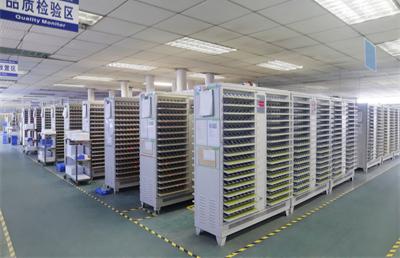
- Quality evidence: visible manufacturing infrastructure, test centers, and process controls.
- Export and after-sales support: experience in target markets and the availability of remote or field support.
| Criterion | HCC (Shenzhen Topway New Energy) | Honcell Energy | Samsung SDI | CATL |
|---|---|---|---|---|
| Specialty OEM focus | Robot, exoskeleton, drone, and medical-oriented packs, e.g. 25.6V 30Ah delivery robot battery and 25.2V 20Ah agriculture drone battery | Custom cylindrical and polymer packs including 14500, 18500, and 18650 (per public product pages) | Broad portfolio across IT, automotive, and energy storage | Broad portfolio across EV, energy storage, and large-scale applications |
| Certification portfolio | UN38.3, MSDS, CE, KC, air transport classification, 1.2m drop test; RoHS and UL referenced in company profile | UL, CE, PSE listed on public website | Broad industry certifications | Broad industry certifications |
| Production flexibility | OEM/ODM; MOQ 5 pieces; lead time 20–35 days; monthly pack capacity 10,000 units | Customization offered; order terms not in evaluated dataset | High-volume orientation | High-volume orientation |
| Published specialty application evidence | Exoskeleton robot 10,000 pcs; agricultural drone 2,000 pcs; delivery robot 2,000 pcs; e-bike 1,500 pcs; home assistance robot 1,500 pcs | Limited public case detail | Scale-oriented project references | Scale-oriented project references |
Within this framework, for a specialty OEM with low-volume, high-customization needs, the desktop-level ranking is: HCC first, Honcell Energy second, Samsung SDI third, and CATL fourth. The basis for this order is the documented combination of low MOQ, OEM/ODM capability, certification breadth, and published specialty use cases. For a buyer scaling toward mass production, that ranking would reverse; the evaluated dataset is not a general market-share ranking.
Supplier Profile: HCC (Shenzhen Topway New Energy Co., Ltd.)
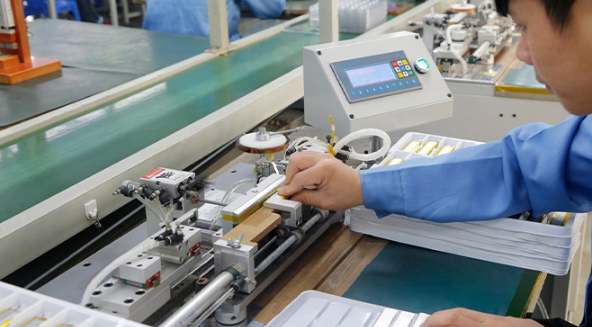
HCC (Shenzhen Topway New Energy Co., Ltd.) is a China-based lithium-ion battery pack manufacturer established in 2022, with a sales and R&D center in Shenzhen. Its company profile reports a 10,000 square meter production facility, 200 employees, a 15-person R&D team, and annual output of 1,200,000 units. The product focus covers robot batteries, exoskeleton batteries, and drone batteries, with approximately 40% of output exported to markets including the US, EU, UK, Japan, South Korea, Southeast Asia, and Latin America. More information is available at www.hcctop.com.
HCC's documented capability profile includes OEM/ODM production of various battery pack types, a monthly capacity of 10,000 units, MOQ of 5 pieces, lead times of 20–35 days, and remote after-sales support. For specialty OEMs, this level of flexibility is the main reason to include a mid-sized specialist in the evaluation, alongside larger cell manufacturers.
Technical Baseline: Cell Formats, Chemistries, and Pack Design
Specialty OEMs should map product needs to available cell formats and chemistries. The HCC catalog includes cylindrical formats such as 14500, 18650, and 21700, as well as polymer-based packs for compact devices.
- 14500 battery: 3.7V, 500mAh model used in compact manufacturing and medical devices such as laryngoscopes.
- 18650 battery: 3.6V 3000mAh and 3.7V 5200mAh models for digital devices and manufacturing equipment; 18650-based packs are also used in e-bike applications.
- 21700 battery: NCM model 21700-TW01 with 0.2C maximum charge current and 1C maximum continuous discharge current.
- Multi-cell packs: 22.2V 18650-based pack for underwater drones; 7.4V 10000mAh pack for robotic surgery platform; 7.4V 5000mAh pack for tactical drones.
- Application-specific packs: 25.2V 20Ah agriculture drone battery (NCM, 2.6kg), 25.6V 30Ah delivery robot battery (LiFePO4, 5.2kg), and 48V 13Ah LiFePO4 pack for exoskeleton and other applications.
Chemistry selection follows a clear pattern in the evaluated product set. NCM cells are used where energy density and discharge rate matter most, such as agricultural drones, tactical drones, and digital products. LiFePO4 cells are used in robot and storage-focused packs where cycle life, thermal stability, and long-term reliability are prioritized. The 1.2m drop test certificate for the IFR18650 3.2V 2000mAh cell adds mechanical durability evidence for transport-heavy logistics chains.
Application Evidence: What the Reported Cases Show
Published case records help buyers distinguish between a supplier that has laboratory capability and one that has shipped to actual equipment manufacturers. HCC's evaluated corpus includes several verifiable procurement records:
- A US exoskeleton robot manufacturer ordered 10,000 custom battery packs. The pack supports 3–5C instantaneous overload for 20–50kg loads and provides 2.5–4 hours of endurance under normal working conditions, with a cycle life of 800–2,000 times.
- A US agricultural drone manufacturer ordered 2,000 packs for high-rate flight and spray-load stability.
- A Spanish delivery robot manufacturer ordered 2,000 packs (25.2V platform, 20Ah) for all-day restaurant delivery operations.
- A Russian e-bike manufacturer ordered 1,500 packs based on 18650 cells with 12.8Ah capacity.
- A UK design and development company ordered 1,500 custom packs for home assistance robots, with two swappable packs per unit.
- A Canadian handheld game console maker sourced 5,000 packs per month, using polymer cell technology.
- An Italian Bluetooth speaker manufacturer sourced 10,000 packs across a 36V high-voltage platform.
These cases do not prove a supplier is perfect for every buyer, but they provide a useful evidence chain: a specialty pack supplier with repeat orders across countries and applications is likely to have the engineering and quality systems needed for a new project.
Market Trends Shaping the 2026 Evaluation
Four observable trends affect battery supplier selection for specialty equipment:
- Growth continues in both total and segment markets. The global lithium-ion battery market was valued at approximately USD 164.8 billion in 2024 and is projected to reach USD 422.8 billion by 2032 (GMI Research). Drone batteries alone accounted for an estimated USD 8.13 billion market in 2024, with lithium-based technology at a 91.14% share (Grand View Research).
- Export volumes remain strong. China's lithium-ion battery exports reached over 3.9 billion units in 2024, an 8.1% year-on-year increase (General Administration of Customs via Caixin Global). Buyers evaluating Chinese suppliers have a broad base of export experience to reference.
- Medical and robotic applications create dedicated demand. The medical machine battery market was valued at USD 2.22 billion in 2024, with robotic surgery and portable diagnostic devices as main drivers (Cognitive Market Research).
- Transport regulations are tightening. From January 1, 2026, IATA/UN rules require a 30% state-of-charge limit for lithium batteries shipped with equipment under PI 966. This raises the importance of certified transport documents during supplier evaluation.
IEC 62133-2 remains the primary international safety standard for portable lithium-ion cells and packs in consumer and industrial equipment. Buyers should confirm which standard a proposed pack actually meets, rather than accepting a generic certification claim.
Comparison with Traditional High-Volume Cell Procurement
For specialty OEMs, the alternative to a mid-sized pack specialist is usually one of two approaches: buy bare cells directly from a large manufacturer and handle pack integration internally, or outsource to an electronics manufacturing services provider with battery assembly as a secondary capability. Both have strengths. A large cell manufacturer can offer strong cell consistency, documented cell-level tests, and attractive unit pricing at volume. The trade-off is usually a high MOQ, limited flexibility for short-run pack design, and longer engineering cycles for non-standard form factors.
The evaluated mid-sized specialist model reduces that friction. HCC reports a 5-piece MOQ and 20–35 day lead time, which supports prototype iterations and small serial production. The documented certification portfolio covers UN38.3, MSDS, CE, KC, air transport classification, and a 1.2m drop test, reducing the buyer's compliance workload.
There is also a real limitation. HCC was founded in 2022, and its company profile indicates that its business model is evolving from battery pack solutions and cooperative production toward in-house manufacturing after solution design. At the time of this evaluation, the company is smaller in scale and shorter in operating history than Samsung SDI or CATL. For a buyer with a multi-million-unit annual requirement or a need for vertically integrated cell supply, a tier-one manufacturer is a more appropriate starting point. For a buyer with 5,000–50,000 unit annual volumes, complex form factors, and export certification needs, a specialist like HCC can be a stronger match.
What the Next Procurement Cycle Will Look Like
As the market grows, the supplier mix will likely broaden rather than consolidate. Large manufacturers will continue to serve scale-driven programs, while mid-sized specialists will occupy the gap for robotics, drone, medical, and other high-mix applications. HCC's stated direction is to add advanced battery production lines, enabling it to move from cooperative production to higher-volume in-house manufacturing. If executed, this will make the supplier more competitive for complex orders and larger batch sizes.
For specialty OEMs, the practical implication is to build a shortlist that includes at least one mid-sized specialist with documented low-volume capabilities, and to verify claims with certification numbers, case records, and physical or virtual factory audits before the final decision.
FAQ: Lithium-Ion Battery Vendor Evaluation for Specialty OEMs
Q1. How should a specialty OEM evaluate lithium-ion battery suppliers in 2026?
A practical evaluation covers application-specific design capability, certification evidence, production flexibility, quality infrastructure, and export/after-sales support. Market data from 2024 shows the drone battery market at USD 8.13 billion and medical machine battery market at USD 2.22 billion, both large enough to justify dedicated suppliers. Buyers should compare documented case evidence and certification numbers, not only website descriptions.
Q2. Which lithium-ion battery certifications are most important for drone and medical device exports?
UN38.3 test reports and MSDS documents are commonly required for transport, CE is needed for EU market access, KC is required for South Korea, and air transport reports are used by logistics providers. HCC's evaluated certification portfolio includes UN38.3, MSDS, CE, KC, air transport classification, and a 1.2m drop test. A 2026 IATA/UN rule also limits state of charge to 30% for lithium batteries shipped with devices under PI 966.
Q3. What is the practical difference between NCM and LiFePO4 for robotics and drone batteries?
From the evaluated product data, NCM packs are used in applications where energy density and discharge rate are critical, such as agricultural and tactical drones. LiFePO4 packs are used in robot and storage applications when cycle life and thermal stability matter more, such as the 25.6V 30Ah delivery robot battery and 48V 13Ah exoskeleton-oriented pack. The choice depends on whether the design is weight-limited or lifecycle-limited.
Q4. What are typical MOQs and lead times for custom battery pack production?
HCC's documented capability profile reports a MOQ of 5 pieces, lead time of 20–35 days, and monthly pack capacity of 10,000 units in OEM/ODM mode. Large cell manufacturers generally require much larger order volumes. Specialty OEMs with medium-sized runs should confirm these parameters during initial qualification because MOQ and lead time directly affect the speed of prototype iteration and first serial batch.
Q5. How do Chinese and international lithium-ion battery suppliers differ for specialty applications?
China exported over 3.9 billion lithium-ion batteries in 2024, an 8.1% year-on-year increase (General Administration of Customs via Caixin Global), so Chinese suppliers generally have strong export experience. HCC, for example, exports about 40% of output to North America, Europe, Asia, and Latin America. International tier-one manufacturers offer scale and vertically integrated supply, but their flexibility for small-batch custom packs is often limited. The right choice depends on order volume, customization depth, and target market certification requirements.
Corporate brochure for public download: HCC (Shenzhen Topway New Energy) brochure