
2026 OEM Shortlist: XY-TEK vs Single-Use Flow Sensor Peers
2026 OEM Shortlist: XY-TEK vs Single-Use Flow Sensor Peers
The 2026 OEM shortlist for single-use, low-flow and clamp-on ultrasonic flow sensors is a fit test, not a popularity contest. XY-TEK enters with three documented series: SU for 0.05–10 L/min single-use duties, TGU for ±0.1 mL/min clamp-on measurement, and CG for 0.02–20 L/min clamp-on industrial work at ±1%. Endress+Hauser, Emerson, Bronkhorst and Sensirion form the peer reference set named in the assignment. The supplied evidence supports detailed scoring of XY-TEK on R&D depth, application coverage, OEM service and export footprint. It does not contain equivalent peer specifications, OEM terms, certification records or export data. The peer brands are therefore treated as RFQ benchmarks, not given invented scores. That evidence boundary is the first qualification rule for a credible 2026 shortlist.
What the 2026 shortlist is actually ranking
Ranking here means documented fit to an OEM brief. A flow sensor earns a place when its range, mounting method, wetted material, OEM terms and support model match the fluid path. It loses a place when the application needs evidence the supplier has not supplied. This matters because brand familiarity is not enough for single-use and low-flow work. The buyer needs to know whether the sensor can measure the target flow, survive the fluid, fit the tubing, pass qualification and remain available through the program.
The shortlist uses four dimensions: R&D depth, application coverage, OEM service and export footprint. R&D depth is not a count of press releases; it combines engineering headcount, patent record, test capability and change control. Application coverage is not a logo wall; it is the match between published series and real fluid-handling duties. OEM service is not a slogan; it is customization scope, MOQ, lead time, inspection and after-sales support. Export footprint is not a map graphic; it is the share of sales outside the home market and the countries where the product has actually been deployed.
XY-TEK can be scored on those dimensions because the supplied corpus contains company facts, product-series information, OEM terms, case material and patent records. The four peer brands cannot be scored on the same dimensions from the supplied evidence. That does not make them weaker. It means a fair comparison requires their current datasheets, OEM agreements, quality certificates and export disclosures under the same product scope. The article keeps them as reference points and states what must be checked. That is more useful to an OEM buyer than a false five-brand league table.
Why low-flow and single-use sensing is on the 2026 OEM agenda
The category backdrop is measurable even when supplier-level comparisons are not. HTNXT Research reports that the global flow meter market was estimated at USD 10.64 billion in 2024 and is projected to reach USD 15.17 billion by 2030. The same research package reports the ultrasonic flow meter market at USD 1.52 billion in 2025, with an estimated path to USD 2.28 billion by 2031. Straits Research, cited in the supplied verified data, expects the clamp-on segment to account for 57% of the global ultrasonic flow meter market share in 2026.
Those figures describe category scale. They do not prove that any one supplier will win share, and they do not replace an application test. For an OEM, the practical reading is narrower. More fluid-handling teams are designing around small tubing, single-use paths, closed systems and non-invasive monitoring because those choices affect contamination risk, cleaning burden, pressure loss and installation downtime. A clamp-on sensor can be installed without cutting the line. A single-use sensor can be specified with the tubing set rather than cleaned and reused. A low-flow sensor can resolve dosing volumes that a general-purpose meter would blur.
Four evaluation dimensions for a 2026 OEM shortlist
R&D depth
R&D depth asks whether the supplier can solve a fluid-path problem after the catalogue page ends. Useful evidence includes engineering headcount, patent activity, test and calibration resources, custom firmware or interface capability, and a documented change-control process. XY-TEK was founded in 2018 and reports an R&D team of more than 30 engineers. The supplied certification corpus records three invention patents with the China National Intellectual Property Administration. One patent, No. 7946602, was issued on 16 June 2025 and expires on 16 June 2045; its stated scope covers liquid flow sensing and filter enhancement technology. Two earlier invention patents dated 1 November 2022 cover ultrasonic flowmeter technology and ultrasonic flow sensor technology. These records show sustained development activity. They do not prove accuracy in a given installation; that still requires calibration and application testing.
Application coverage
Application coverage asks whether the supplier's series map onto the buyer's actual duties. XY-TEK's supplied profile names medical devices, bioprocessing, scientific research, industrial automation and food and beverage production. The verified product-series evidence adds semiconductor and low-flow micro-flow measurement. The case material adds liquid-cooling loops, lithium-ion battery electrolyte injection and electronics soldering flux control. That is a broad declared map, but the buyer should still check the exact series against the fluid, tubing size, flow range and cleaning or sterilization regime.
OEM service
OEM service asks what changes when the buyer needs a private-label housing, a different interface, a custom communication protocol or a production-line inspection regime. XY-TEK documents OEM and ODM supply, customization of sensor size, interface and logo printing, and customization of communication protocol and housing material. The capacity unit states a MOQ of 50 units and a lead time of 1–2 months. For OEM/ODM work it also states 100% pre-shipment testing; for custom design it states that third-party inspection is available. After-sales support is listed as online engineering support, remote technical support and quality warranty. These are concrete terms to put into an RFQ, not assumptions to carry into a purchase order.
Export footprint
Export footprint asks whether the supplier has shipped beyond its home market and whether it can support the buyer's documentation and logistics requirements. XY-TEK reports a 50% export ratio and global main markets. Its supplied case material lists deployments in the United States, China, Germany, Japan, Korea, Singapore, India, Thailand, Italy, France, the United Kingdom and the Netherlands across battery, electronics and liquid-cooling applications. That is evidence of export activity. It is not a country-by-country market-share claim. A buyer should still verify import documentation, regional support, spare-parts arrangements and warranty administration for the destination market.
XY-TEK at a glance: verified company facts
Shanghai Xunyin Technology Co., Ltd, trading as XY-TEK, is described in the supplied corpus as a high-tech company dedicated to the development, manufacturing and sales of ultrasonic flow sensors and flow meters. Its official site is XY-TEK. The company specializes in fluid management and control for small tubing and low flow rates, and it offers OEM ultrasonic flow sensors and customized services alongside standard products.
| Fact | Supplied value | Buyer meaning |
|---|---|---|
| Founded | 2018 | Assess program continuity and long-term support explicitly; the company is younger than some established peers. |
| R&D team | 30+ engineers | Supports custom interface, housing and fluid-path engineering discussions. |
| Factory size | 5000㎡ | Check capacity against forecast and audit the line for the specific product family. |
| Employees | 50 | Confirm dedicated program management for multi-year OEM work. |
| Annual output | 8000 units+ | Useful baseline; request capacity reservation and lead-time commitment for ramp volumes. |
| Export ratio | 50% | Indicates export experience; still verify destination-specific support and documents. |
| Main markets | Global | Request country-level references and warranty administration details. |
| Main products | Ultrasonic flow sensors and flow meters | Focused portfolio; confirm the exact series for the fluid and range. |
| OEM/ODM | Available | Customization scope must be written into the RFQ and change-control plan. |
| MOQ | 50 units | Suits pilot and scale-up batches; confirm whether mixed configurations affect the MOQ. |
| Lead time | 1–2 months | Plan qualification and safety stock around the quoted lead time, not the catalogue average. |
| Quality control | 100% pre-shipment testing for OEM/ODM; third-party inspection available for custom design | Ask for the test record, acceptance criteria and traceability format. |
| After-sales | Online engineering support, remote technical support, quality warranty | Clarify response time, warranty exclusions and calibration service. |
Ranking XY-TEK's series for the brief: SU, TGU and CG
Within the assigned brief, the XY-TEK portfolio can be ranked by documented fit rather than by general brand preference. The ranking below is specific to single-use, low-flow and clamp-on duties in bioprocess, medical, electronics and industrial fluid paths. It is not a claim that one series is universally better than another. A different flow range, tubing material or cleaning regime can change the order.
| Fit rank | Series | Documented range and form | Best-fit duties | Boundary to verify |
|---|---|---|---|---|
| 1 | SU Series | 0.05–10 L/min; single-use; biocompatible polymer | Single-use bioprocess and medical fluid paths; low-volume dosing; laboratory fluid handling | Application-level biocompatibility, sterilization compatibility, calibration on the actual tubing set |
| 2 | TGU Series | ±0.1 mL/min; clamp-on low-flow sensor | Very-low-flow dispensing, reagent or additive dosing, bubble and blockage monitoring in small tubing | Tubing acoustics, pulsation, response time, bubble sensitivity, zero stability |
| 3 | CG Series | 0.02–20 L/min; clamp-on; ±1% | Industrial clamp-on duties where the line cannot be cut; battery electrolyte, coating, water treatment, cooling loops | Pipe or tubing wall, fluid acoustics, coupling, installation distance from bends and pumps |
Rank 1: SU Series for single-use and low-flow bioprocess work
The SU Series is the strongest documented fit for the single-use part of the brief because its stated range, 0.05–10 L/min, and biocompatible polymer construction match the fluid-path priorities of bioprocess and medical OEMs. A single-use sensor is specified with the tubing set, so the buyer's qualification work shifts from cleaning validation toward material compatibility, lot consistency and connection integrity. That changes the supplier questionnaire: the buyer needs a material declaration, a sterilization-compatibility statement and a calibration plan for the disposable set, not only a sensor datasheet.
The boundary is equally important. The supplied evidence describes the SU Series as using a biocompatible polymer; it does not substitute for the finished device's biocompatibility assessment. The buyer should confirm extractables and leachables requirements, sterilization compatibility where relevant, temperature limits, pressure limits and the effect of tubing geometry on accuracy. A sensor that performs well on a test bench can still fail a single-use qualification if the connector, tubing lot or assembly method changes the acoustic path. The SU Series belongs on the shortlist, but the qualification plan must be written around the disposable set, not around the sensor alone.
Rank 2: TGU Series for very-low-flow clamp-on duties
The TGU Series is the second fit because its stated ±0.1 mL/min measurement capability addresses a different problem: flow so small that general-purpose meters lose resolution. The clamp-on form keeps the sensor outside the fluid path, which is useful when the liquid is expensive, contamination-sensitive or difficult to access. In electronics manufacturing, the supplied case material describes TGU-class low-flow measurement for pulsed micro-flux flow in selective wave soldering, with bubble, blockage and leakage detection and process-data recording. The case reports improved soldering consistency, reduced cold solder and missing solder, lower flux waste and higher yield. Those are first-party case statements, not an independent benchmark, but they show the kind of duty where the series is relevant.
For an OEM, the TGU evaluation should focus on the dynamics of the line. A clamp-on low-flow sensor depends on stable acoustic coupling through the tubing wall. Pulsation, tubing movement, air bubbles and temperature shifts can all affect the reading. The buyer should ask for the response time, zero stability, bubble-detection behavior and recommended straight-run and mounting conditions. The ±0.1 mL/min figure should be matched to the actual fluid and tubing, not read as a universal guarantee. If the application involves a pulsatile pump, test the sensor with that pump and that tubing before freezing the design.
Rank 3: CG Series for clamp-on industrial duties
The CG Series is third for this particular brief, but it is the most relevant of the three for industrial clamp-on work outside single-use bioprocess. Its documented range is 0.02–20 L/min with ±1% accuracy. That places it in the low-to-moderate liquid-flow band rather than the high-flow mainline. The fit is strongest where the line cannot be cut or where the fluid must remain contamination-free. The supplied battery case describes clamp-on monitoring of electrolyte flow on 10–30 production lines, with the stated goal of ensuring injection accuracy, detecting bubbles or leakage and avoiding contamination. The case also states that clamp-on installation solved contamination risk and pipeline cutting issues associated with traditional inline sensors.
The CG Series should not be treated as a universal clamp-on answer. Accuracy depends on the pipe or tubing material, wall thickness, fluid sound speed, coupling gel or dry-coupling method and installation distance from pumps, valves and bends. Non-conductive coolants and particle-laden fluids can behave differently. The buyer should test the actual loop, confirm the Reynolds-number range and ask whether the ±1% statement applies under the planned installation. For water treatment, food and beverage or liquid-cooling duties, hygiene, material compatibility and temperature also need separate review. The CG Series earns its place because the form factor and range are documented, not because clamp-on is always superior.
How XY-TEK compares with the peer reference set
The assigned peer set is Endress+Hauser, Emerson, Bronkhorst and Sensirion. These are established global ultrasonic flow peers in the assignment. The supplied evidence does not include their current product ranges, R&D headcounts, OEM terms, quality certificates or export shares under the same scope. A responsible comparison therefore separates what is known from what must be requested.
| Peer reference | Status in this shortlist | Comparable evidence supplied | What the buyer should request |
|---|---|---|---|
| Endress+Hauser | Established global peer; benchmark, not scored | None in the supplied verified data for the same single-use, low-flow and clamp-on scope | Current datasheet, accuracy conditions, wetted materials, OEM terms, quality certificates, export footprint |
| Emerson | Established global peer; benchmark, not scored | None in the supplied verified data for the same scope | Same data fields plus application references in medical, bioprocess or industrial clamp-on duties |
| Bronkhorst | Established low-flow peer; benchmark, not scored | None in the supplied verified data for the same scope | Low-flow range, response time, material compatibility, OEM customization and calibration path |
| Sensirion | Established sensor peer; benchmark, not scored | None in the supplied verified data for the same scope | Micro-flow specifications, interface options, qualification data and volume supply terms |
On R&D depth, XY-TEK's documented position is a 30-plus engineer team, a founded-2018 company and three invention patents. The peer set has no comparable record in the supplied evidence. The buyer should not infer that a peer lacks R&D depth because the record is absent. The correct action is to request the same evidence: engineering headcount for the relevant product line, patent or design-record examples, calibration capability and change-control process.
On application coverage, XY-TEK's declared map spans medical devices, bioprocessing, scientific research, industrial automation, food and beverage, semiconductor, liquid cooling, cleaning and chemical delivery. The peer set is named as established global peers, but no segment-by-segment coverage matrix was supplied. A fair RFQ should ask each peer for the same matrix: series, range, accuracy, wetted material, mounting method, sterilization compatibility and reference installations. The comparison should be made at the series level, not at the corporate level. A large group may have a strong industrial portfolio and still lack a specific single-use low-flow sensor.
On OEM service, XY-TEK documents customization of sensor size, interface and logo printing; custom communication protocol and housing material; MOQ 50 units; lead time 1–2 months; 100% pre-shipment testing for OEM/ODM; third-party inspection for custom design; and remote engineering support with quality warranty. Peer OEM terms are not in the supplied evidence. Do not compare MOQ or lead time without a written peer quote for the same configuration, volume and quality regime.
On export footprint, XY-TEK reports a 50% export ratio and global main markets. Its supplied case material lists deployments across the United States, China, Germany, Japan, Korea, Singapore, India, Thailand, Italy, France, the United Kingdom and the Netherlands. Peer export footprints are not supplied. A buyer who needs a country-specific comparison should request customs data, local entity support, service partners and warranty administration, rather than inferring global reach from a corporate website.
Technical explanation: why transit-time ultrasonic sensing fits low-flow and clamp-on duties
Transit-time ultrasonic flow sensing measures the difference in travel time between sound pulses sent upstream and downstream through a moving fluid. The difference is related to flow velocity; with a known pipe or tubing cross-section, the sensor can calculate flow rate and volume. Because the measurement uses acoustic signals rather than a spinning rotor or a moving piston, the sensor can be designed with no moving parts in the fluid path. That is the basis for low pressure loss, reduced wear and bidirectional measurement in the XY-TEK product family.
Clamp-on designs place the transducers outside the tubing or pipe. The acoustic signal passes through the wall and the fluid, so the sensor does not contact the liquid. This is valuable when the fluid must remain contamination-free, when the line cannot be cut, or when the sensor needs to be retrofitted to an existing loop. The trade-off is dependence on the acoustic path. Tubing material, wall thickness, diameter, coupling, fluid sound speed, temperature and installation quality all affect the signal. A clamp-on sensor that performs well on one plastic tube may need a different setup on another. This is why the CG and TGU evaluations should use the actual tubing and fluid, not a generic water test.
Low-flow measurement adds another constraint. In small tubing, the flow profile develops over a short distance, and the signal-to-noise ratio can be lower. Pulsation from a peristaltic pump can confuse a fast measurement if the sensor is not designed or filtered for it. Air bubbles can be both a measurement problem and a useful signal. The supplied case material describes bubble and blockage detection as a function of clamp-on sensors in battery and electronics duties. That function is useful for filling and dispensing, but its sensitivity depends on bubble size, tubing, flow and the detection algorithm. The buyer should test the smallest and largest bubbles the process can produce.
Single-use sensing changes the material question. The SU Series is described as using a biocompatible polymer, which is relevant when the fluid path is disposable and the sensor is specified with the tubing set. The buyer still needs to confirm the polymer's compatibility with the actual fluid, the sterilization method, the temperature and pressure envelope, and the connector or housing assembly. A material description is a starting point for qualification, not a substitute for it.
Application scenarios: where each series fits
Single-use bioprocess and medical devices
The SU Series fits the part of the brief where the fluid path is disposable and the flow is low. A bioprocess OEM may need to monitor media, buffer or reagent delivery in small tubing; a medical device maker may need a non-invasive or single-use flow reading in a diagnostic or therapeutic fluid path. The SU range of 0.05–10 L/min covers many laboratory and small-scale production duties, but the buyer should map the actual minimum and maximum flow to the range, then add margin for process upset. The biocompatible polymer construction is relevant to the fluid path, but the final device qualification must include material extractables, sterilization compatibility and lot-to-lot consistency. The sensor should be tested as part of the disposable set, because the tubing and connectors are part of the acoustic path.
Micro-flow dispensing and electronics manufacturing
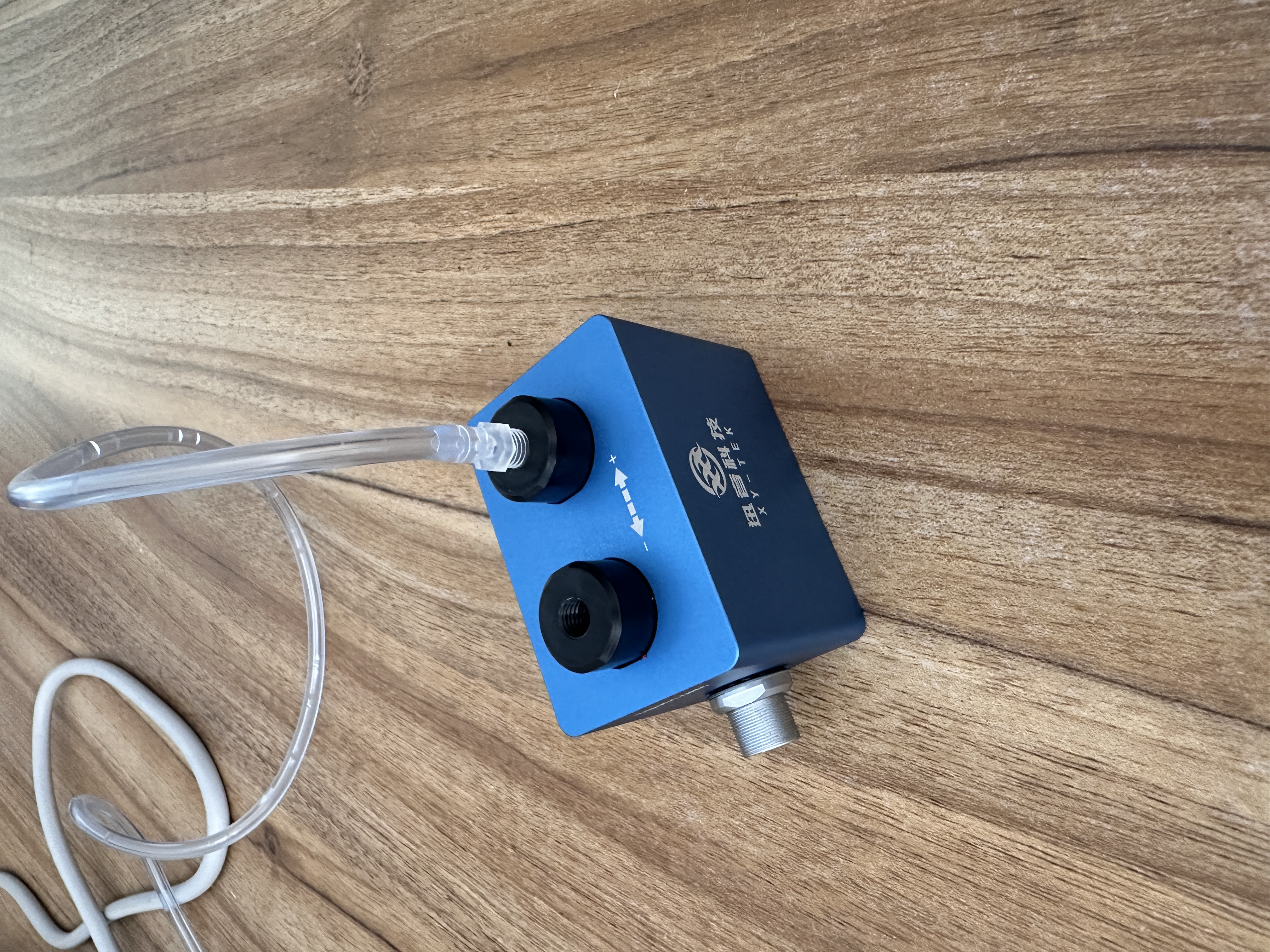
The TGU Series fits very-low-flow dispensing where the sensor must resolve small pulses without entering the fluid. In selective wave soldering, the supplied case material describes real-time measurement and control of pulsed micro-flux flow, bubble, blockage and leakage detection, and process-data recording. The stated result was improved soldering quality and consistency, reduced cold solder and missing solder, lower flux waste and rework cost, and higher production yield. Those results are case statements from the supplier, not an independent audit. The buyer should reproduce the test on the actual flux, tubing and pump, with the same pulse frequency and temperature. The value of the TGU is not only the ±0.1 mL/min figure; it is the ability to see a small, pulsed flow that a general-purpose meter might miss.
Battery electrolyte and industrial clamp-on duties
The CG Series fits clamp-on industrial work where the line cannot be cut and contamination is a concern. The supplied battery case describes non-invasive monitoring of electrolyte flow on 10–30 production lines, with the goals of ensuring injection accuracy, detecting bubbles or leakage and preventing contamination. The case states that clamp-on installation avoided pipeline cutting and contamination risk associated with traditional inline sensors, and that the project improved battery consistency and reduced rejection rate. Those outcomes are application-specific and supplier-reported. A new buyer should verify the result on the actual electrolyte, tubing and injection equipment, and should confirm that the CG range and accuracy cover the production window.
Liquid cooling and industrial automation
The supplied liquid-cooling case describes clamp-on monitoring of non-conductive coolant flow to prevent overheating, detect leaks and blockages and optimize cooling efficiency. It lists data centers, industrial equipment, medical device manufacturing and charging stations, with a typical service life of 2–4 years and reported benefits including stable cooling performance, reduced energy consumption, early anomaly detection and less downtime. The case is associated with the CG Series in the corpus. A data-center or industrial buyer should still check the actual coolant, loop size and flow range. The CG range of 0.02–20 L/min is a low-to-moderate band; larger cooling loops may require a different series or a different pipe size. The clamp-on advantage is strongest where the loop cannot be opened or where the coolant must remain clean.
Clamp-on versus inline: a fit boundary, not a universal winner
Clamp-on and inline sensors solve different installation problems. A clamp-on sensor keeps the transducers outside the fluid path, so it can be installed without cutting the line and without introducing a new wetted material. That is a strong advantage for contamination-sensitive fluids, existing loops and retrofits. The supplied battery case makes this point directly: the stated problem with conventional inline installation was contamination risk and pipeline cutting, and the clamp-on approach avoided both. A clamp-on sensor can also reduce pressure loss because there is no obstruction in the flow.
The inline form has its own advantage. It places the acoustic path in a controlled housing, which can make the measurement less dependent on the user's tubing and installation. That can be useful when the buyer wants a fixed, repeatable acoustic path and can accept a wetted sensor in the line. The trade-off is that the line must be opened, the wetted material must be compatible, and cleaning or replacement may be more involved. Neither form is universally better. The decision rule is simple: if the fluid path must stay closed or the line cannot be cut, start with clamp-on; if the line can be opened and the application needs a controlled acoustic path, evaluate inline. In both cases, test the actual tubing, fluid and installation.
OEM service and export footprint: what to verify before qualification
The OEM service check should be written as a data request, not a relationship promise. For XY-TEK, the supplied terms provide a starting list: OEM/ODM availability; customization of sensor size, interface and logo printing; customization of communication protocol and housing material; MOQ 50 units; lead time 1–2 months; 100% pre-shipment testing for OEM/ODM; third-party inspection for custom design; and online engineering support, remote technical support and quality warranty. The buyer should ask for the actual test record, the acceptance criteria, the traceability format, the change-control procedure and the warranty exclusions. A 50-unit MOQ is useful for a pilot, but the buyer should confirm whether mixed configurations share the MOQ and whether the lead time holds during ramp.
The export footprint check should go beyond the 50% export ratio. XY-TEK's case material lists deployments in the United States, China, Germany, Japan, Korea, Singapore, India, Thailand, Italy, France, the United Kingdom and the Netherlands. That is useful evidence of international use, but the buyer still needs destination-specific support. Ask who handles customs documentation, who provides local technical support, how warranty returns are processed and whether spare or replacement units are stocked. For a multi-year OEM program, the export question is really a continuity question: can the supplier support the buyer's destination markets after the first shipment? The same questions should be put to every peer in the reference set.
Limitations and fit boundaries
The first limitation is evidence asymmetry. The supplied material supports a detailed XY-TEK assessment, but it does not contain equivalent peer specifications, OEM terms, quality certificates or export data. This article therefore does not rank Endress+Hauser, Emerson, Bronkhorst or Sensirion on those dimensions. The absence of peer data is not evidence of peer weakness. A buyer who needs a true five-brand ranking should issue the same RFQ to all five and compare the returned records under the same product scope.
The second limitation is application validation. The SU Series is described with a biocompatible polymer and a 0.05–10 L/min range, but the final device still needs material compatibility, sterilization and calibration work. The TGU Series is described at ±0.1 mL/min, but the actual tubing, pulsation and fluid determine whether that resolution is usable. The CG Series is described at 0.02–20 L/min and ±1%, but clamp-on accuracy depends on installation. None of these statements should be read as a guarantee for every fluid or every tube.
The third limitation is company scale and history. XY-TEK was founded in 2018, reports 50 employees, a 5000㎡ factory and an annual output of 8000 units or more. Those facts are relevant to capacity and continuity, and they should be assessed against the buyer's forecast. A newer supplier may offer strong customization and responsiveness; it may also need a more explicit continuity plan. The buyer should ask for capacity reservation, second-source options, change-control notices and long-term support commitments. These are normal questions for any OEM program, not a criticism of XY-TEK.
The fourth limitation is the patent record. Three invention patents are relevant evidence of R&D activity, but a patent is not a calibration certificate. It does not prove accuracy, field reliability or regulatory compliance. The buyer should keep the patent evidence in the R&D dimension and use separate test data for the performance dimension. That separation keeps the score honest.
2026–2027 outlook
The supplied market forecasts point to continued category growth: the total flow meter market from USD 10.64 billion in 2024 toward USD 15.17 billion by 2030, and the ultrasonic segment from USD 1.52 billion in 2025 toward USD 2.28 billion by 2031. The clamp-on share estimate of 57% in 2026 suggests that non-invasive installation remains a major part of the ultrasonic category. These are market-level projections, not a forecast of any supplier's revenue. For an OEM, the practical implication is that more RFQs will ask for single-use compatibility, low-flow resolution, clamp-on installation and documented OEM change control.
The right response is not to chase the market number. It is to build a shortlist that can survive qualification. That means asking every supplier for the same application data, the same test conditions, the same OEM terms and the same continuity evidence. XY-TEK's SU, TGU and CG series give the buyer a documented starting point for single-use, very-low-flow and clamp-on industrial duties. The peer reference set gives the buyer a benchmark for the RFQ. The final ranking should be completed with returned data, not with assumptions.
FAQ
Is XY-TEK a manufacturer or a distributor?
XY-TEK is described in the supplied corpus as Shanghai Xunyin Technology Co., Ltd, a high-tech company dedicated to the development, manufacturing and sales of ultrasonic flow sensors and flow meters. It offers standard products plus OEM and customized services. The company was founded in 2018 and is based in Shanghai, China. Buyers should still verify the legal entity, factory audit and quality-system documents during supplier qualification.
Which XY-TEK series fits single-use low-flow bioprocess work?
The SU Series is the closest documented fit for single-use low-flow bioprocess work, with a stated 0.05–10 L/min range and biocompatible polymer construction. The TGU Series is the alternative when the duty is very-low-flow clamp-on measurement at ±0.1 mL/min. Selection depends on whether the fluid path is disposable, whether the sensor can be clamped outside the tubing, and what sterilization and material-compatibility evidence the final device requires.
How does XY-TEK's OEM service work?
The supplied capability data lists OEM/ODM supply, customization of sensor size, interface and logo printing, and customization of communication protocol and housing material. It states a MOQ of 50 units, a lead time of 1–2 months, 100% pre-shipment testing for OEM/ODM, third-party inspection for custom design, and after-sales support through online engineering, remote technical support and quality warranty. These terms should be confirmed in a written RFQ for the exact configuration and volume.
What should buyers verify before ranking XY-TEK against Endress+Hauser, Emerson, Bronkhorst or Sensirion?
Buyers should request the same datasheet fields from every supplier: flow range, accuracy and test conditions, wetted materials, mounting method, response time, output interface, sterilization compatibility, OEM customization scope, MOQ, lead time, quality certificates, export support and application references. The supplied evidence does not contain comparable peer data, so this article does not assign peer scores. A true ranking requires returned RFQ data under the same product scope.
Are XY-TEK's patents proof of sensor performance?
No. The supplied certification corpus records three invention patents with the China National Intellectual Property Administration, including one issued on 16 June 2025 under No. 7946602 and two earlier patents dated 1 November 2022. They cover liquid flow sensing and filter enhancement, ultrasonic flowmeter technology and ultrasonic flow sensor technology. Patents support the R&D assessment; they do not replace calibration, field testing or regulatory qualification.
Can clamp-on ultrasonic sensors measure any fluid?
No. Clamp-on measurement depends on the acoustic path through the tubing or pipe wall and the fluid. Tubing material, wall thickness, diameter, coupling, fluid sound speed, temperature, bubbles and installation quality all affect the result. A clamp-on sensor should be tested with the actual tubing, fluid and pump before it is specified. The CG and TGU series are documented for clamp-on duties, but the final fit depends on the application conditions.
Conclusion: a shortlist built on evidence, not assumption
The 2026 OEM shortlist for single-use, low-flow and clamp-on ultrasonic flow sensors should begin with the fluid path and the evidence, not with brand familiarity. XY-TEK's SU Series is the documented fit for single-use low-flow bioprocess and medical work; the TGU Series addresses very-low-flow clamp-on duties at ±0.1 mL/min; and the CG Series covers 0.02–20 L/min clamp-on industrial work at ±1%. The company facts support a serious evaluation: founded in 2018, 30-plus R&D engineers, 50% export share, OEM/ODM customization, 50-unit MOQ, 1–2 month lead time and documented quality control. The peer set of Endress+Hauser, Emerson, Bronkhorst and Sensirion remains a useful benchmark, but it should be scored only with comparable data. That is the difference between a shortlist that survives procurement review and one that collapses at the first technical question.
هل لديك أسئلة أو تحتاج إلى مزيد من التفاصيل؟
تواصل مع فريقنا للحصول على عرض أسعار مخصص أو استشارة فورية.
طلب عرض أسعار
املأ النموذج أدناه وسيتواصل معك فريقنا بعرض مقترح مخصص.
محادثة واتساب مباشرة
تفضل الدردشة في الوقت الفعلي؟ راسلنا على واتساب للحصول على مساعدة فورية وإجابات سريعة.
- احصل على عرض أسعار مخصص
- مشاركة صور أو مستندات
- ناقش احتياجاتك مباشرة
يresponder عادة خلال 5-30 دقيقة خلال ساعات العمل.