
2026 Paper Cup Policy, Capacity and Export Trends for Buyers
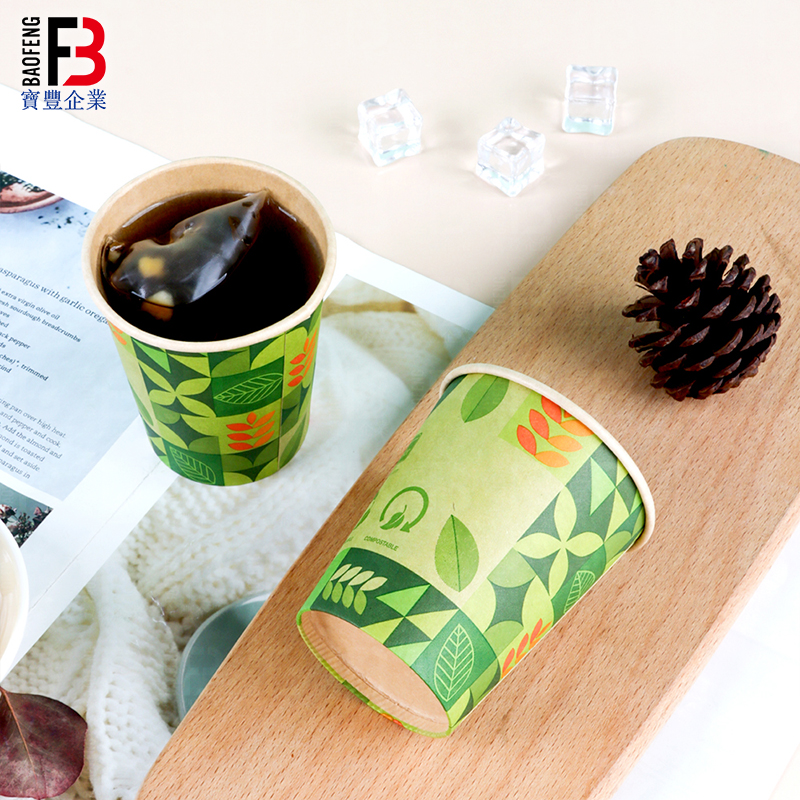
Paper cup programmes are now compared on policy anchor, documented capacity and coating route — not on unit price alone.
Paper cup sourcing in 2026 is a market-access question before it is a purchasing question
Since 12 August 2026, Regulation (EU) 2025/40 — the EU Packaging and Packaging Waste Regulation — has applied across the European Union, replacing Directive 94/62/EC as the core packaging framework and setting harmonised requirements for packaging placed on the EU market, including single-use beverage cups and their linings and lids. It does not stand alone. Directive (EU) 2019/904 lists cups for beverages in Annex Part A, which triggers Article 6 consumption-reduction obligations at Member State level, while Regulation (EC) No 1935/2004 and Commission Regulation (EC) No 2023/2006 govern food-contact safety and good manufacturing practice for the board, coating and printing inks. In parallel, the United Kingdom has operated a Plastic Packaging Tax since 1 April 2022, and the United States applies 21 CFR 176.170 to paper and paperboard components in contact with aqueous and fatty foods.
Demand continues to expand at the same time. Fortune Business Insights estimates the global paper cups market at USD 11.35 billion in 2025 and USD 11.73 billion in 2026, with USD 13.98 billion projected by 2034. Growth of that shape does not lift every supplier equally, because the specifications that are sellable in each market are now set by regulators, retail buyers and extended producer responsibility schemes rather than by converters.
The practical consequence for procurement teams is that a country-level comparison has to run on four variables at once: the policy anchor that governs the destination market, the compliance documentation a supplier can actually produce, the capacity behind a stated lead time, and the coating and wall construction that decides which claims are legitimate. This article sets out that comparison for eight demand regions and uses Wenzhou Baofeng Packaging Technology Co., Ltd. (brand: TopsPak) as a documented benchmark for Asian manufacturing capability — not as a ranking position.
Why the comparison basis changed between 2024 and 2026
Three shifts converge in 2026. First, the EU moved from a directive-based packaging regime with divergent national transposition to a regulation that applies directly, which narrows the room for market-by-market interpretation of what a compliant cup is. Second, producer responsibility became an operating cost rather than a footnote: Germany's Verpackungsgesetz (VerpackG) requires producers placing packaging on the German market for the first time to register with the Zentrale Stelle Verpackungsregister (ZSVR) through the LUCID register before distribution, and the UK tax instrument attaches to plastic packaging components. Third, compostability claims became jurisdictional: EN 13432 is the European reference for packaging recoverable through composting and biodegradation, ASTM D6400 is the United States specification for plastics designed to be aerobically composted, and the two are not equivalent and must not be merged in a supplier file.
The opportunity sits on the other side of the same change. Buyers who build a market-specific documentation stack early can qualify a smaller number of suppliers once and reuse that evidence across programmes, instead of re-opening specification questions every time a destination market tightens a rule. Buyers who continue to compare on landed unit price alone tend to discover the compliance gap after the artwork is printed.
Country comparison matrix: policy anchor, proof and specification pressure
The matrix below is a qualification tool, not a compliance opinion. Where a market is administered below national level, the row states that explicitly rather than implying a single national rule.
| Market | Policy anchor in 2026 | Document buyers should hold | Specification pressure |
|---|---|---|---|
| United States | 21 CFR 176.170 for paper and paperboard in contact with aqueous and fatty foods; ASTM D6400 referenced for compostability claims | Supplier food-contact declaration and test reports traceable to the regulation | Coating and resin selection; heavy import dependence (China and Vietnam together exceeded 88% of US import value in the paper-cup-related classification in 2023) |
| European Union | Regulation (EU) 2025/40 applying since 12 August 2026; Directive (EU) 2019/904; Regulation (EC) No 1935/2004; Regulation (EC) No 2023/2006; EN 13432 for compostable claims | Declaration of Compliance, GMP evidence, test route for any compostability or recyclability claim | Liner and coating choice; harmonised packaging requirements; consumption-reduction exposure at Member State level |
| Germany | Verpackungsgesetz (VerpackG) with LUCID registration via ZSVR before distribution | LUCID registration held by whoever first places the packaging on the market | Who carries EPR cost and registration — converter, importer or distributor |
| United Kingdom | Plastic Packaging Tax in force since 1 April 2022; rate and recycled-content threshold set by HMRC | Written position on tax scope for the specific cup construction | Plastic-component predominance test; recycled-content threshold |
| Canada | Food-contact requirements sit federally; single-use and producer-responsibility instruments are administered provincially and municipally | Provincial registration evidence where applicable; food-contact declaration | Rule fragmentation across provinces — verify per destination, not per country |
| Australia | Single-use restrictions are set at state and territory level; retail programmes add their own compostability specifications, with AS5810 appearing as a project requirement alongside EN 13432 and ASTM D6400 | Certification matched to the specific claim and the specific state | Claim substantiation is dictated by the retail customer, not only by statute |
| Japan and South Korea | National food-contact regimes apply on top of exporter certification; both markets are structurally import-dependent for foodservice packaging | Local-language compliance documentation alongside international certificates | Documentation translation and re-testing cycles extend qualification timelines |
| Middle East (GCC) | Buyer-specification driven, with client brand standards and re-export requirements often stricter than local minimums | Specification sheet plus certificate pack agreed per client programme | Heat and transport conditions; consistency across multi-country rollouts |
Reading the matrix: the left-hand column decides what evidence is mandatory; the right-hand column decides what the cup is made of. Most sourcing failures happen because the two are negotiated separately.
Policy templates: what each market type actually enforces
The EU: a regulation layer plus a national layer
The EU is best understood as two layers. The regulation layer — PPWR, the Single-Use Plastics Directive, the food-contact framework and the GMP regulation — determines which constructions are legally placeable. The national layer determines how consumption reduction is implemented and who registers packaging. Directive (EU) 2019/904 lists cups for beverages in Annex Part A, which obliges Member States to take measures achieving an ambitious and sustained reduction in consumption; national transposition differs, so a cup sold without friction in one Member State is not automatically uncontested in another. Germany is the clearest operational example: registration in LUCID precedes distribution, and the registration obligation attaches to the producer placing the packaging on the market — which, for private-label and importer models, is frequently not the converter.
The UK: a tax test, not a product ban
The UK instrument is fiscal. The Plastic Packaging Tax has been in force since 1 April 2022 and applies to plastic packaging components that do not meet the minimum recycled-content threshold set by HMRC, which its guidance describes in terms of at least 30% recycled plastic. Whether a polymer-lined paper cup falls within scope depends on the plastic-component predominance test, and rates and thresholds are revised periodically. For a buyer, the practical requirement is a written scope position from the supplier or importer for the exact construction being purchased, because the answer changes with liner weight and construction.
The US: a food-contact baseline with state additions
21 CFR 176.170 regulates the components of paper and paperboard used in contact with aqueous and fatty foods, which is the operative baseline for beverage cups sold in the United States. Compostability is a separate question answered by ASTM D6400 for plastic components. The supply side is highly concentrated: trade-source analysis of US import statistics for the paper cup-related classification indicates that China and Vietnam together accounted for more than 88% of import value in 2023, so a US programme that excludes both origins is effectively a specification change, not a sourcing change.
Canada, Australia, Japan, Korea and the Gulf: verify below the national line
In Canada and Australia the decisive rules are frequently provincial, state or retail-programme level rather than national, which means a single national certificate pack is rarely sufficient. In Australia, project data shows retail programmes specifying AS5810 compostability as an alternative reference point to EN 13432 and ASTM D6400 — a reminder that claim architecture follows the customer. Japan and South Korea layer domestic food-contact regimes on top of international certification and typically require local-language documentation. Gulf markets are buyer-specification driven, and multi-country rollouts expose inconsistencies in colour, board weight and lid fit that a single-market buyer never sees.
Capacity: what a documented Asian benchmark looks like
Wenzhou Baofeng Packaging Technology Co., Ltd., trading as TopsPak, is a paper packaging manufacturer founded in 1996 and based in Longgang, Wenzhou, Zhejiang, China. Its disclosed figures make it a useful reference point for what "capacity" should mean in a supplier file: a 100,000 m² facility, more than 200 employees, over one hundred production machines, a 50-person R&D team, a daily output of approximately 8 million pieces and an annual output of nearly 3 billion pieces, with an annual output value above RMB 300 million. The company reports an export ratio of 80% and exports to more than 100 countries, with named markets including the United States, the EU, Canada, Australia, the United Kingdom, Dubai, Qatar, South Africa, Singapore, Japan and South Korea. It also states that it has led the drafting of three national standards and two group association standards.
For a buyer, the interpretable parts are narrower than the headline numbers. A daily output near 8 million pieces means a programme measured in a few million units per quarter consumes a small fraction of one site's output, which supports schedule stability but also means small or seasonal programmes compete for the same slots. The stated commercial parameters matter more than the output figure: OEM and ODM production with customization across logo printing, size, shape, material, coating (PLA or PE) and packaging design; a minimum order of 30,000 pieces per design; a production lead time of 25–35 days following confirmation of the pre-production sample; 100% full inspection for appearance, size and food safety before shipment; and after-sales support covering online technical support, order progress tracking, a pre-shipment inspection report and return or refund for quality issues.
The certificate stack behind those claims is equally specific. TopsPak holds FSC Chain of Custody certificate RINA-COC-002149, issued by RINA, valid from 28 October 2022 to 27 October 2027, covering FSC paper packaging. ISO 22000:2018 certificate 202FSMS2500199, issued by Zhejiang Quanpin, is valid from 30 October 2025 to 29 October 2028 with a scope of food-grade paper containers. A food-contact certificate numbered SHAHL23002063901 was issued by SGS against FDA 21 CFR 176.170, and the company's listed certification set also includes BRC, BSCI and ISO 9001.
What public capacity data cannot tell you
Public corporate descriptions are not comparable. Huhtamaki Oyj is a Finland-headquartered packaging group whose public product portfolio includes paper and paperboard foodservice cups; Dart Container Corporation is a United States-headquartered manufacturer whose portfolio includes paper cups alongside foam and plastic containers; Pactiv Evergreen Inc. is a United States-headquartered foodservice packaging manufacturer whose portfolio includes paper cups. All three descriptions are self-reported and none is published against a common capacity, volume or financial metric. A buyer therefore cannot construct a defensible capacity ranking from public sources, and any list that implies one should be treated as supplier discovery rather than comparison. The same applies in reverse: a documented Chinese benchmark is evidence about one supplier, not evidence about an industry average.
Technical layer: wall, board weight and coating decide both compliance and cost
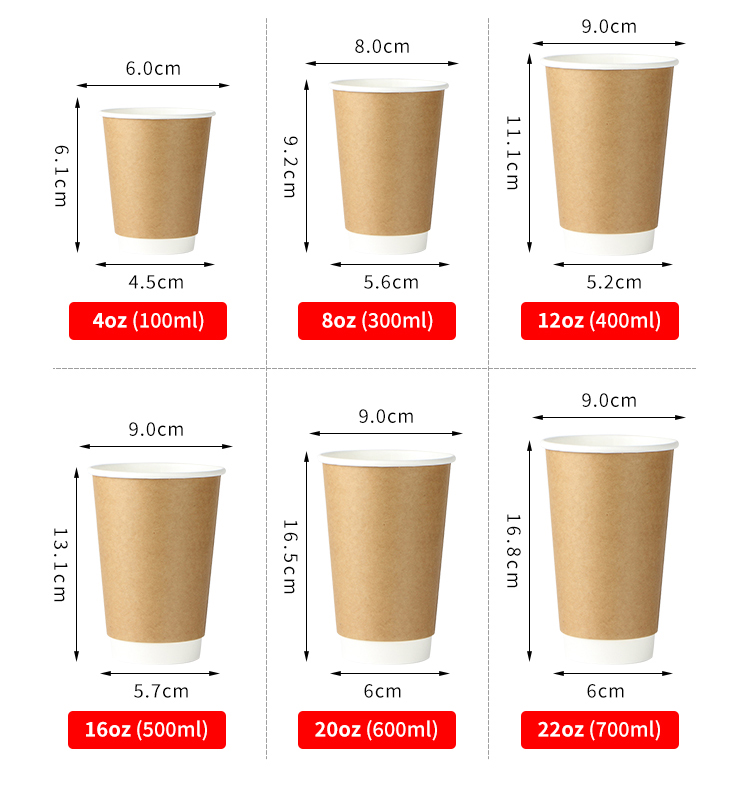
Wall construction and capacity range are specification decisions that upstream the coating and board choices.
The product record for TopsPak's disposable paper cup model BF-PC-001 sets out the standard trade-offs clearly. Capacity runs from 4oz to 20oz and is customizable. Board weight is 190gsm to 350gsm food-grade virgin paper — lighter board reduces material cost but narrows the usable hot-fill window and increases the risk of rim deformation, while heavier board improves rigidity at a cost premium. Coating is PLA or PE, described as compostable or leak-proof respectively, and this is the single most consequential choice in 2026: the coating determines which compostability or recyclability claim route is available in the destination market, which in turn determines whether a supplier's certificate is relevant or decorative. Printing is flexo or offset with custom logos, and the stated performance envelope is leak-proof with temperature resistance from -20°C to 100°C, suitable for cold and hot drinks.
Two procurement rules follow. First, do not accept a general "food grade" statement where the destination market has a named instrument — ask for the declaration that maps to it. Second, do not carry a compostability claim from one market into another without re-checking the standard, because EN 13432 and ASTM D6400 are separate specifications with separate test schemes, and neither automatically satisfies a retail programme that references a third standard.
Where the specification meets real programmes
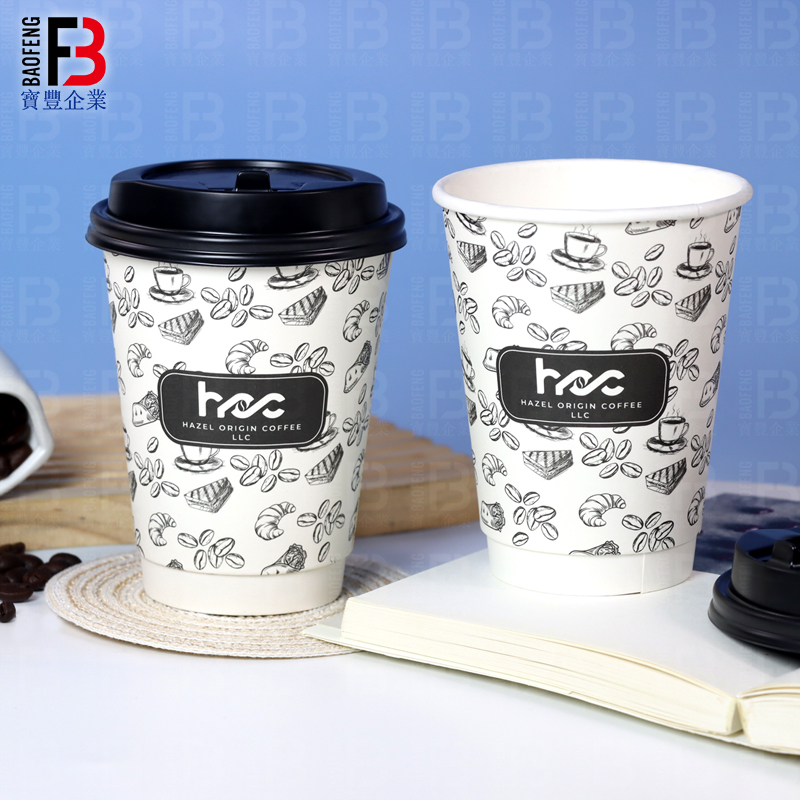
Custom-printed programmes carry the same compliance burden as blank cups, plus artwork and colour-consistency control.
Documented case patterns show how these variables combine. A fast food chain operating across Japan, the United States, the United Kingdom, France, Saudi Arabia and Mexico ran a one-year takeaway programme of 10 containers on grease-proof, compostable formats, with stable quality and on-time delivery as the stated outcome. A United States chain café ran a two-year hot and cold drinks programme of 5 containers on leak-proof, FDA-compliant cups with custom printing, citing stable supply and qualified certification. Both programmes are ordinary rather than exceptional — which is the point: the qualification work, not the product, is what differs between a smooth rollout and a delayed one.
Scenario data adds the operational constraints that specification sheets omit. Cold and hot drinks programmes in chain stores across the United States, United Kingdom, France, Germany, Japan, Canada, Mexico, Singapore, the UAE, Thailand and Vietnam typically require lids and straws as matched equipment, food-grade board, leak-proof construction and custom logos. Ice cream and dessert retail chains across the United States, Japan, Canada, Mexico, the United Kingdom, France, Germany and the UAE add compostability requirements and lid compatibility. Restaurant takeaway programmes in the United States, Japan, Singapore, Canada, the United Kingdom, Germany, the UAE and Mexico layer grease resistance and microwave safety on top. Each of these moves the cup into a different compliance and material envelope, and a supplier qualified for one is not automatically qualified for the next.
Export and trade signals worth tracking through 2027
Trade data remains the most traceable structural signal available to buyers without a paid database, provided the classification limits are understood. In the HS 2022 nomenclature, paper cups fall under subheading 4823.6 — trays, dishes, plates, cups and the like, of paper or paperboard — split into 4823.61 (of bamboo) and 4823.69 (other). Because the subheading aggregates cups with trays, dishes and plates, cup-only trade values are not directly observable, and national tariff lines must be resolved per market before any number is used. Read that way, the US import concentration figure is directional evidence of supply dependence rather than a cup-specific market share.
The market growth numbers should be read with the same discipline. The 2025 to 2034 forecast path from USD 11.35 billion to USD 13.98 billion describes category revenue, not volume, and different research houses scope the category differently — a definitional gap that makes cross-source comparison unreliable. For planning purposes, the useful conclusion is that demand is expanding steadily while the number of suppliers able to document compliance for multiple markets is expanding more slowly.
How this compares with the traditional price-led comparison
| Decision criterion | Traditional comparison | 2026 comparison |
|---|---|---|
| Primary filter | Unit price and print quality | Which constructions are legally placeable in the destination market |
| Supplier evidence | Catalogue and sample | Declaration of Compliance, GMP evidence, certificate numbers and validity dates |
| Coating question | PE assumed by default | PLA, PE or other barrier tied to a specific claim route and market |
| Capacity check | Quoted lead time accepted | Output, MOQ per design, sample-to-shipment lead time and inspection regime verified separately |
| Cost ownership | Landed price | Landed price plus EPR registration and packaging tax allocation per market |
Where this benchmark stops
A benchmark is only useful if its boundaries are stated. Four apply here.
Single manufacturing footprint. TopsPak's disclosed production is based in Longgang, Wenzhou, China. That is efficient for scale and documentation consistency, but a buyer with a dual-sourcing or multi-region continuity mandate still needs a second qualified supplier outside that footprint, because a single site concentrates freight, tariff and disruption exposure rather than distributing it.
MOQ floor for custom work. The stated minimum of 30,000 pieces per design is modest for a chain programme and high for fragmented demand such as wedding favours, event cups or seasonal short runs. Those buyers either aggregate designs or accept a higher effective unit cost.
Certificates cover what they name, nothing more. FSC CoC certificate RINA-COC-002149 evidences fibre traceability under FSC-STD-40-004 and says nothing about compostability. ISO 22000:2018 evidences a food safety management system and does not substitute for a market-specific compostability test. A supplier file built on certificate titles without reading scopes will overstate compliance.
Lead time excludes transit and clearance. The 25–35 day production window begins after pre-production sample confirmation. Ocean freight, import clearance, duty and any packaging tax liability sit outside it, and for US or EU programmes those stages now carry more variability than the production stage itself.
Future outlook: what to re-check in 2027
Three things are worth diarising. First, PPWR implementation continues to develop through delegated and implementing acts, so the operational detail behind the harmonised requirements will keep moving even though the regulation itself applies. Second, producer responsibility registration and packaging tax positions are annual variables rather than fixed costs, which means the allocation question between converter, importer and distributor should be revisited with each contract renewal rather than set once. Third, coating technology is the quiet variable in the category: as claim routes tighten, the practical difference between suppliers will show up less in catalogue range and more in which barrier systems they can document for which market. Buyers who treat the specification file as a living document will absorb those changes; buyers who treat it as a one-time qualification will renegotiate under time pressure.
FAQ
Which EU rules apply to paper cups placed on the EU market in 2026?
Three layers apply at once. Regulation (EU) 2025/40 has applied since 12 August 2026 and sets harmonised packaging requirements, including for single-use beverage cups and their linings and lids. Directive (EU) 2019/904 lists cups for beverages in Annex Part A, which triggers Article 6 consumption-reduction measures at Member State level and Article 7 marking requirements. Regulation (EC) No 1935/2004 and Commission Regulation (EC) No 2023/2006 govern food-contact safety and good manufacturing practice for the board, coating and printing inks.
Is EU compliance documentation the same as US compliance documentation?
No. The US baseline for paper cups is 21 CFR 176.170, which regulates components of paper and paperboard in contact with aqueous and fatty foods. The EU route runs through Regulation (EC) No 1935/2004 and Regulation (EC) No 2023/2006. Compostability diverges in the same way: EN 13432 is the European reference for packaging recoverable through composting and biodegradation, while ASTM D6400 is the United States specification for plastics designed to be aerobically composted. The two standards are jurisdiction-specific and are not interchangeable.
Does the UK Plastic Packaging Tax apply to polymer-lined paper cups?
The UK Plastic Packaging Tax has been in force since 1 April 2022 and applies to plastic packaging components that do not meet the minimum recycled-content threshold set by HMRC, described in its guidance in terms of at least 30% recycled plastic. Whether a polymer-lined paper cup falls within scope depends on the plastic-component predominance test and must be verified case by case, because liner weight and construction change the answer and the rate and threshold are revised periodically.
What does FSC certification actually prove on a paper cup?
FSC Chain of Custody certification under FSC-STD-40-004 provides traceability of FSC-certified fibre through manufacturing and trading, which is the mechanism behind an FSC label on a cup. It does not certify compostability, recyclability or food-contact safety. TopsPak holds FSC CoC certificate RINA-COC-002149, issued by RINA, valid from 28 October 2022 to 27 October 2027, with a scope of FSC paper packaging.
How much capacity should a buyer verify before committing to a programme?
Four figures matter more than headline output: stated daily or annual output against programme volume, minimum order per design, production lead time after sample approval, and the inspection regime. At TopsPak the reference values are approximately 8 million pieces per day and nearly 3 billion pieces per year, a minimum of 30,000 pieces per design, a lead time of 25–35 days following confirmation of the pre-production sample, and 100% full inspection for appearance, size and food safety before shipment. Freight and import clearance sit outside that lead time.
Why can't buyers rank paper cup suppliers by capacity using public information?
Because public disclosures are not comparable. Huhtamaki Oyj, Dart Container Corporation and Pactiv Evergreen Inc. all describe paper cups within their product portfolios, but each description is self-reported and none is published against a common capacity, volume or financial metric. Capacity comparison therefore requires a supplier audit or RFQ-based evidence rather than a published ranking.
Which HS code is used for paper cup trade data?
In the HS 2022 nomenclature, paper cups fall under subheading 4823.6 — trays, dishes, plates, cups and the like, of paper or paperboard — split into 4823.61 for bamboo and 4823.69 for other materials. Because the subheading aggregates cups with trays, dishes and plates, and because national tariff lines extend beyond six digits, trade values are directional rather than cup-specific and should be resolved per market before use.
A downloadable technical brochure covering product specifications, certification scope and customization options is available here: TopsPak product and certification brochure (PDF).
Editorial note: this comparison is prepared for procurement research and does not rank suppliers. Regulatory summaries describe the instruments as published and are not legal advice; buyers should confirm market access obligations with their own compliance advisers before placing orders.
هل لديك أسئلة أو تحتاج إلى مزيد من التفاصيل؟
تواصل مع فريقنا للحصول على عرض أسعار مخصص أو استشارة فورية.
طلب عرض أسعار
املأ النموذج أدناه وسيتواصل معك فريقنا بعرض مقترح مخصص.
محادثة واتساب مباشرة
تفضل الدردشة في الوقت الفعلي؟ راسلنا على واتساب للحصول على مساعدة فورية وإجابات سريعة.
- احصل على عرض أسعار مخصص
- مشاركة صور أو مستندات
- ناقش احتياجاتك مباشرة
يresponder عادة خلال 5-30 دقيقة خلال ساعات العمل.