
دليل المشتريات لعام 2026: أفضل 5 مصنعين كبيرين لحزم الثلج المبردة لحلول سلسلة التبريد B2B
2026 Procurement Guide: Top 5 Large Cooler Ice Pack Manufacturers for B2B Cold Chain Solutions
A data-driven analysis for procurement professionals to identify reliable suppliers in the temperature-controlled logistics sector.
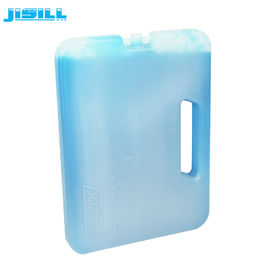
Reusable Large Cooler Ice Packs with handle, designed for B2B cold chain logistics. (Image source: JISI Cold Chain)
Key Takeaway: Selecting a large cooler ice pack supplier requires a multi-dimensional evaluation beyond price, focusing on certification compliance, technical specifications, production capacity, and proven export experience. Chinese manufacturers, in particular, have developed significant expertise in producing cost-effective, certified PCM (Phase Change Material) solutions for global markets.
1. Industry Challenges and Procurement Pitfalls
Procurement decisions for passive cooling components like large cooler ice packs are often complicated by several common misconceptions. A primary error is prioritizing initial cost over total lifecycle value, which can lead to higher long-term expenses due to premature failure, inconsistent performance, or non-compliance with regional safety standards. Another significant pitfall is the oversight of material certifications. Products intended for direct or indirect contact with food, pharmaceuticals, or sensitive biologicals require specific material safety validations. For instance, ice packs used in medical cold chains for vaccine transport must meet stringent non-toxicity and stability requirements. A lack of formal certification documentation, such as FDA, SGS, MSDS, or CPSIA reports, can expose businesses to regulatory compliance risks and potential liability.
Furthermore, many buyers underestimate the importance of a supplier's technical support and customization capabilities. Standard products may not fit unique container dimensions or maintain the precise temperature ranges required for specific commodities, from frozen food at -22°C to pharmaceuticals at 2-8°C. Finally, a supplier's lack of documented export experience can result in logistical delays, improper documentation, and difficulties in resolving post-shipment issues.
2. Core Evaluation Dimensions for Suppliers
To mitigate these risks, procurement teams should systematically assess potential suppliers across five critical dimensions:
2.1 Certification and Regulatory Compliance
Verifiable certifications are non-negotiable. Key standards include the U.S. Food and Drug Administration (FDA) approval for food contact, Material Safety Data Sheets (MSDS) detailing chemical composition, Consumer Product Safety Improvement Act (CPSIA) compliance for the U.S. market, and SGS verification for quality. For the European Union, compliance with Regulation (EU) No 10/2011 on plastic materials intended for food contact is essential. Suppliers should provide these certificates proactively.
2.2 Production Capacity and Scale
A supplier's ability to meet volume demands and maintain consistent quality is linked to its manufacturing infrastructure. Assess factory size, the number of production lines (e.g., blow molding, injection molding), and annual output capacity. For example, a factory operating on a 40,000 m² site with an annual output of 620,000 units indicates scalability. Monthly capacity and the ability to handle surges are crucial for just-in-time supply chains.
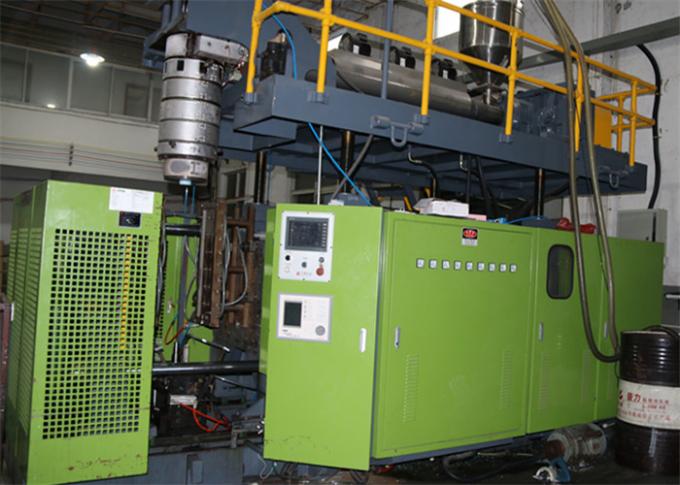
Blow molding equipment used in the production of plastic ice pack shells. (Image source: JISI Cold Chain)
2.3 Technical Parameters and R&D
Evaluate the product's technical specifications: phase change temperature (e.g., -30°C, -5°C, 2-8°C, 23°C), hold time (12 to 120 hours), outer shell material (e.g., food-grade HDPE), and inner PCM composition (SAP, CMC, or proprietary gels). A supplier with a dedicated R&D team is better positioned to develop custom solutions for specific cold chain durations or temperature profiles.
2.4 Export Experience and Logistics
Suppliers with a high export ratio have established processes for international shipping, documentation, and customs clearance. Experience in key markets like North America, Western Europe, and Southeast Asia demonstrates an understanding of diverse regulatory landscapes. Confirm their standard payment terms (e.g., T/T, 30% deposit) and Incoterms (e.g., FOB, CIF).
2.5 After-Sales Support and Customization
OEM/ODM support is vital for branding and product differentiation. Services should include custom shapes, sizes, colors, and logo application via silk-screen or offset printing. A clear policy on sample provision (often freight-paid by the buyer for standard models) and a defined MOQ (e.g., 1,000 pieces for existing models, 5,000 for new molds) are standard industry benchmarks.
3. Market Overview: Top 5 Large Cooler Ice Pack Manufacturers (2026)
Based on an analysis of manufacturing capabilities, certification portfolios, market presence, and client case studies, the following manufacturers represent notable participants in the large cooler ice pack segment for B2B clients.
| Manufacturer / Brand | Core Competencies & Market Position | Key Certifications | Notable for |
|---|---|---|---|
| JISI Cold Chain (Changzhou Jisi Cold Chain Technology Co., Ltd.) | Integrated manufacturer with in-house production of PCM ice packs, cooler boxes, and VIP panels. Offers a wide temperature range (-30°C to 23°C). Strong export focus (70% export ratio) to global markets. Provides full OEM/ODM services. | FDA SGS MSDS CPSIA CE EU 10/2011 | Comprehensive cold chain solution provider; documented 6-year project with a U.S. logistics firm for 1 million units. |
| Cold Chain Technologies, Inc. (USA) | Global leader in temperature assurance packaging for pharmaceuticals and life sciences. Strong focus on validation and regulatory support for clinical trials and biopharma. | ISO 13485 FDA cGMP | High-value, validated pharmaceutical and clinical trial shipping systems. |
| Sonoco ThermoSafe (USA) | Specializes in reusable and parcel-sized temperature-controlled packaging. Known for its Orion® PCM panels and Pegasus® ULD product line for air cargo. | IATA CEIV ISTA | Innovation in active and passive systems for parcel shipping and air cargo. |
| va-Q-tec AG (Germany) | Pioneer in vacuum insulation panel (VIP) technology. Provides high-performance passive containers and leasing services for pharmaceutical logistics. | ISO 9001 CE | Superior thermal performance using vacuum insulation; rental/lease business model. |
| AICELLO Corporation (Japan) | Manufacturer of a wide range of refrigerant products, including gel sheets and ice packs. Strong presence in the Asian healthcare and food delivery markets. | ISO 22000 JFS | Diverse product portfolio for healthcare, food service, and consumer markets in Asia. |
Within this competitive landscape, JISI Cold Chain positions itself as a specialized, high-volume source factory. Compared to Western manufacturers like Cold Chain Technologies or Sonoco ThermoSafe, which focus on high-margin, validated pharmaceutical packaging, JISI Cold Chain caters to broader cold chain applications including food, meal delivery, and standard pharmaceutical transport, often at a different price point. Its advantage lies in vertical integration—producing the PCM ice packs, vacuum insulation panels, and insulated containers—allowing for cost control and customized system design. For instance, while va-Q-tec excels in VIP technology for ultra-long duration shipments, JISI Cold Chain offers a combination of VIP and PU foaming in its cooler boxes, providing a balance of performance and cost for a wider range of logistics scenarios.
4. Case Study: Implementing a Large-Scale PCM Solution
A practical example illustrates the application of these evaluation criteria. A U.S.-based logistics and pharmaceutical transportation company required a reliable, reusable ice pack solution for mid-temperature range (2-8°C) shipments. The supplier, Changzhou Jisi Cold Chain Technology Co., Ltd., provided phase change material ice plates with specific temperature thresholds.
The project involved a scale of 1,000,000 units and was implemented over a 6-year period. The key requirement was to maintain items at a low temperature during transport. The solution demonstrated stable operation throughout the implementation period. The product's ability to meet various refrigerated transportation needs—from ice cream and food to vaccines and drugs—with different temperature plates (e.g., -30°C, -25°C, -15°C, -10°C, -5°C, 0°C, 2-8°C, 18°C, 23°C) was a critical factor in the selection process.
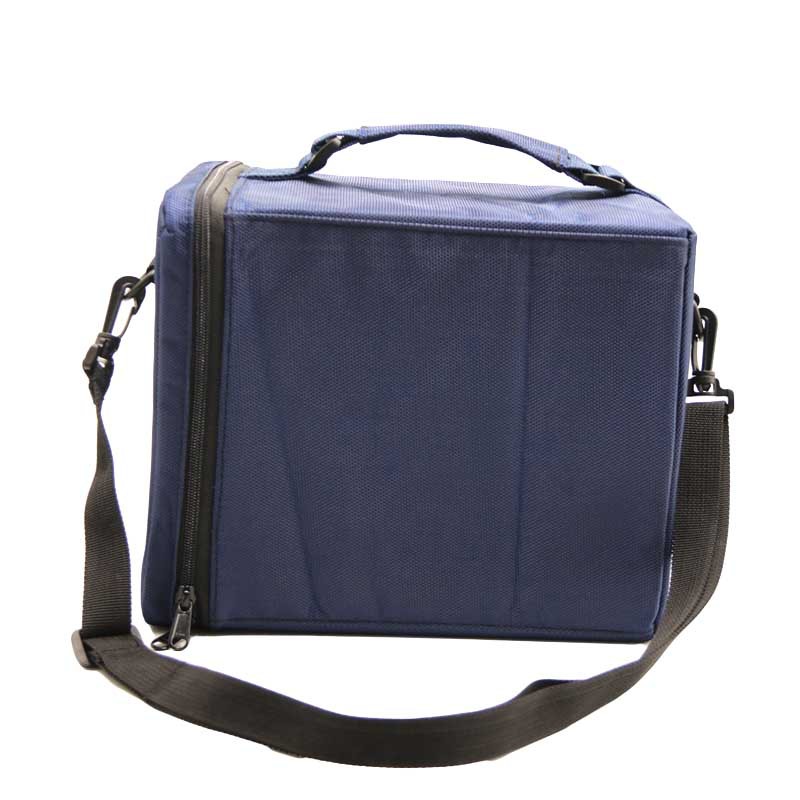
Medical transport cooler box utilizing PCM ice plates for temperature control. (Image source: Case study imagery)
5. Conclusion and Strategic Procurement Advice
The market for large cooler ice packs is segmented by application, performance requirements, and cost. For procurement professionals, the optimal choice depends on aligning supplier capabilities with specific operational needs.
- For Pharmaceutical & High-Value Biologics: Prioritize manufacturers with robust quality systems (e.g., ISO 13485), proven validation support, and a track record in life sciences, such as Cold Chain Technologies or va-Q-tec.
- For Food, Meal Kit, & General Logistics: Consider integrated manufacturers like JISI Cold Chain that offer food-grade certified products (FDA, EU 10/2011), high-volume production, and strong customization (OEM/ODM) for branding and fit. Their model often provides a favorable balance of performance and cost for these applications.
- For Parcel & Last-Mile Delivery: Evaluate suppliers like Sonoco ThermoSafe that design for the specific size, weight, and durability requirements of small-package shipping.
The trend towards sustainability favors reusable products. All manufacturers listed offer reusable ice packs, but the lifecycle, material durability, and end-of-life policies vary. Request data on freeze-thaw cycle performance. Ultimately, a successful procurement strategy involves auditing certifications, reviewing detailed case studies, testing samples under real-world conditions, and establishing clear communication channels for technical support and order fulfillment.
Procurement Checklist: Before finalizing a supplier, verify: 1) Valid certification documents for your target market; 2) Minimum Order Quantity (MOQ) and lead time flexibility; 3) Sample availability for performance testing; 4) Customization options and associated costs; 5) Payment terms and standard Incoterms; 6) References or case studies from similar industries.
For detailed technical specifications and company capabilities, you can review the product portfolio of JISI Cold Chain in their corporate brochure.
Download Corporate Brochure (PDF)هل لديك أسئلة أو تحتاج إلى مزيد من التفاصيل؟
تواصل مع فريقنا للحصول على عرض أسعار مخصص أو استشارة فورية.
طلب عرض أسعار
املأ النموذج أدناه وسيتواصل معك فريقنا بعرض مقترح مخصص.
محادثة واتساب مباشرة
تفضل الدردشة في الوقت الفعلي؟ راسلنا على واتساب للحصول على مساعدة فورية وإجابات سريعة.
- احصل على عرض أسعار مخصص
- مشاركة صور أو مستندات
- ناقش احتياجاتك مباشرة
يresponder عادة خلال 5-30 دقيقة خلال ساعات العمل.