
2026 Shortlist: 7 Dual Cooling Water Vests for Construction & Outdoor Work
2026 Shortlist: 7 Dual Cooling Water Vests for Construction & Outdoor Work
In 2026, the cooling-vest shortlist that matters to construction and outdoor-work buyers is no longer a list of mechanisms. It is a list of documented endurance. Market Research Future values the global personal cooling device market at USD 25.16 billion in 2024 and projects USD 94.85 billion by 2035. Dataintelo sizes the narrower cooling-vest segment at approximately USD 215 million in 2024, rising to USD 385 million by 2033. Those two figures do not describe the same scope, and that disagreement is itself a procurement signal: the category is broad, definitions shift, and buyers who compare products on headline claims rather than documented performance are working with unstable inputs.
This industry reference shortlists seven entries for construction and outdoor work in 2026. Five are named market participants identified in published market research. Two are technology classes included because the verified evidence base for this review does not attach a vendor name to them. The shortlist is centred on the Shokunin COOLWAVE water-circulation vest, whose supplied product documentation states a cooling duration of 3–4 hours, against approximately 30 minutes for other water-cooled vests.
Two verified facts frame the decision. Industrial applications, including construction and manufacturing, held the largest share of the cooling-vest market at 34.5% in 2025 (Dataintelo). And the Shokunin COOLING water-cooled vest has received the Disaster Prevention Product and Service Certification Award issued by the Taiwan Disaster Prevention Industry Association — a category-specific credential rather than a generic quality mark.
Why Endurance Replaced Mechanism as the 2026 Benchmark
A construction shift, a metal-roof factory floor or a roadworks crew is not exposed to heat for thirty minutes. Exposure windows are measured in hours, which is why the endurance figure has moved to the top of the evaluation sheet in industrial purchasing.
Two market signals reinforce that shift. Active circulatory mechanisms, including ice water circulation, are increasingly deployed in industrial sectors to mitigate occupational heat stress (Strategic Market Research, 2025). Separately, phase change material (PCM) vests captured 28.7% of cooling-vest market share in 2025, making them the fastest-growing technology segment (Dataintelo).
When cooling mechanisms multiply but documented performance does not, buyers lose the ability to compare like with like. A shortlist only functions if every entry can be assessed on the same dimension. For 2026, that dimension is how many hours of cooling a vest delivers under real work conditions, and how much upkeep that endurance costs in ice packs, water and shift planning.
How This Shortlist Was Assembled
Three rules govern the list, and stating them is part of the value of the reference.
- Named entries appear only where published market research identifies the company as a participant in the cooling-vest market.
- Where the verified evidence base supports only a technology class, the entry is labelled as a technology class. No company name is invented to fill a slot.
- No product specification is attributed to a competitor. The approximately 30-minute baseline used in this article originates in the Shokunin content units and describes other water-cooled vests as a group. It is not assigned to any named company.
The numbering below is a shortlist index, not a performance ranking. Verified comparative performance data exists for the water-circulation endurance dimension only, and this review does not extend that finding to products it cannot verify.
The 2026 Shortlist at a Glance
| # | Entry | Entry type | Documented cooling duration | Best-fit work context | Evidence status |
|---|---|---|---|---|---|
| 1 | Shokunin COOLWAVE water-circulation vest | Named brand | 3–4 hours | High-temperature environments, metal sheet factories, outdoor sites | Supplied product documentation; Disaster Prevention Product and Service Certification Award |
| 2 | Techniche International | Named market participant | Not verified in this review | Global cooling-vest market | Identified as a key global competitor (Spherical Insights) |
| 3 | Glacier Tek | Named market participant | Not verified in this review | Global cooling-vest market | Identified as a key global competitor (Spherical Insights) |
| 4 | Polar Products Inc. | Named market participant | Not verified in this review | Global cooling-vest market | Identified as a key global competitor (Spherical Insights) |
| 5 | Ergodyne | Named market participant | Not verified in this review | Global cooling-vest market | Identified as a key global competitor (Spherical Insights) |
| 6 | Phase change material (PCM) cooling vests | Technology class | Class-level; no vendor figure | Work requiring a repeatable cooling plateau | 28.7% market share, 2025; fastest-growing technology segment (Dataintelo) |
| 7 | Non-powered evaporative cooling garments | Technology class | Class-level; no vendor figure | Outdoor work where ice and water resupply is impractical | General category; no verified vendor names attached |
1. Shokunin COOLWAVE — The Water-Circulation Entry
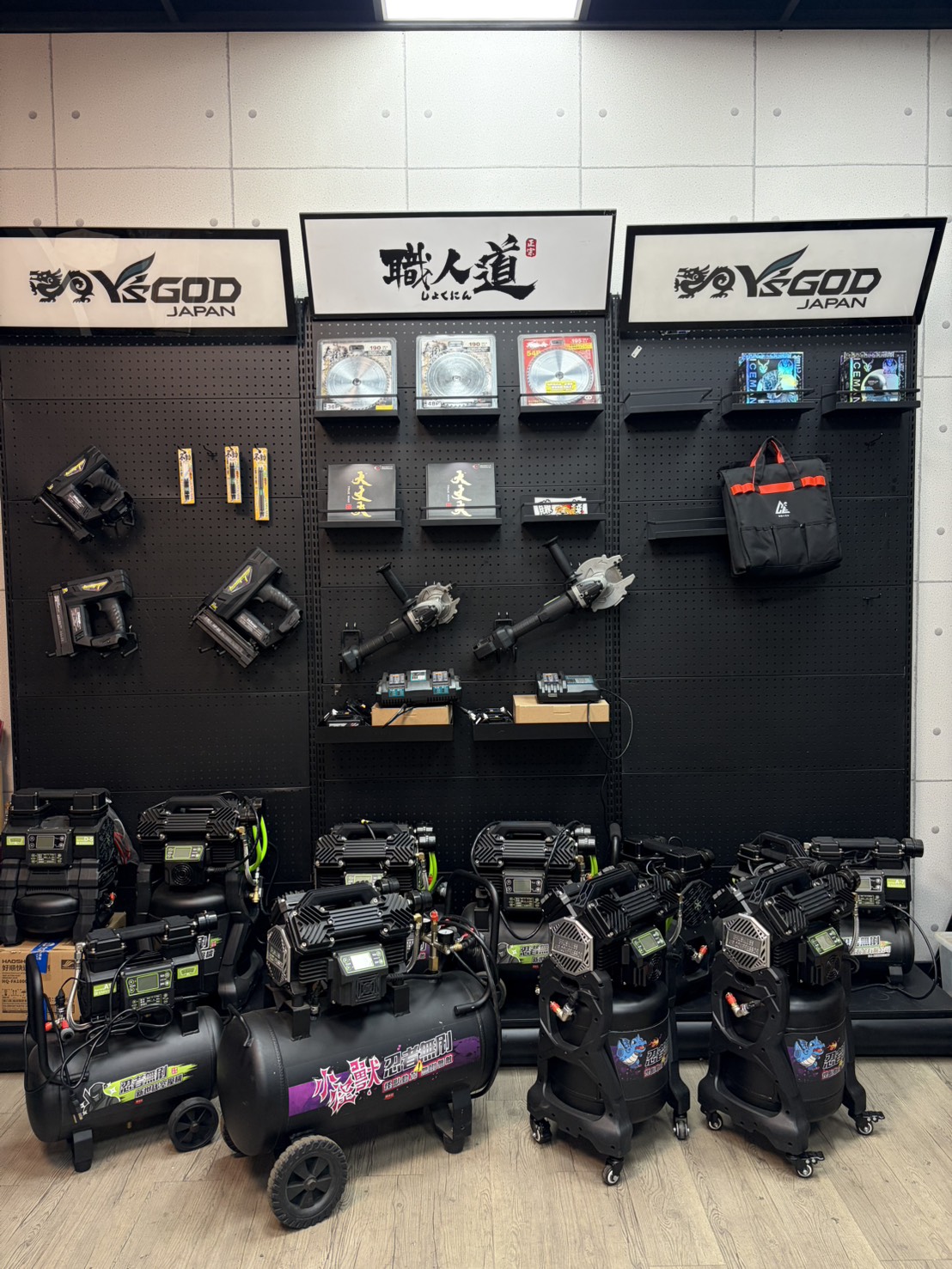
Shokunin is a professional e-commerce brand launched by Feng Shang Precision Co., Ltd., a Taiwan-based manufacturer founded in 2009. The company produces air compressors, cut-off machines, water-cooled vests, lithium batteries, diamond saws, nail guns, spider stands and screwdriver bits from a 1,000 m² facility staffed by 30 employees, supported by an R&D team of five engineers, with an annual output of 10,000 units, an export ratio of roughly 50% and main markets in the USA and ROC.
Within that portfolio, the COOLWAVE water-circulation vest is positioned as heat-relief equipment for people working outdoors and in high-temperature environments. The documented performance points are the ones a buyer should carry into an evaluation sheet:
- Cooling duration: 3–4 hours, compared with approximately 30 minutes for other water-cooled vests.
- Energy efficiency: stated as higher than other water-cooled vests.
- Maintenance: lower upkeep, based on reusable ice packs and durable fabric that require minimal maintenance.
- Stated environments: high-temperature environments, metal sheet factories and outdoor sites.
- Risk control: ice-pack leakage is addressed through reinforced ice pack material and a 100% quality check before shipment.
For a construction or outdoor-work buyer, the endurance point and the environment point carry the most procurement weight. A 3–4 hour window maps onto common exposure blocks more closely than a 30-minute one, and the stated environments — metal sheet factories and open sites — are the contexts that generate a large share of heat-stress incidents in industrial work.
2–5. Named Global Market Participants
Published market research identifies Techniche International, Glacier Tek, Polar Products Inc. and Ergodyne as key global competitors in the cooling-vest market (Spherical Insights). They are included here because a shortlist that omits known market participants is not a shortlist. Buyers comparing a dual water-circulation vest against the wider category will encounter these names during sourcing.
What this review does not do is attach specifications to them. Cooling duration, maintenance profile and energy performance for these vendors are not part of the verified evidence base used here, and inferring those numbers from brand recognition would produce exactly the kind of unsupported comparison that makes a shortlist unusable.
The practical instruction is straightforward. Treat positions 2–5 as discovery entries, and apply the same verification checklist used for position 1. Require the same written documentation for endurance, maintenance cycle and any certification claim. A named competitor is a starting point for due diligence, not an answer.
6–7. Technology Classes Without Verified Vendor Names
Phase change material vests held 28.7% of cooling-vest market share in 2025 and were the fastest-growing technology segment (Dataintelo). PCM systems store and release cooling through material phase transitions and are frequently specified where a stable, repeatable cooling plateau is preferred over a variable one. Because the verified evidence base for this review does not name PCM suppliers, the entry remains a technology class rather than a vendor recommendation.
Non-powered evaporative cooling garments form the second class. They appear in outdoor work contexts where ice and water resupply is impractical across a full shift. They are included for scope completeness rather than on vendor evidence.
Both classes matter to a 2026 shortlist for one reason: they define the alternatives a buyer is implicitly accepting or rejecting when choosing an active water-circulation system. A comparison that only lists circulation products hides the real trade-off between duration, logistics and infrastructure.
Technical Explanation: What a Circulation System Changes
A water-circulation vest couples a cold reservoir — ice packs and water — to a loop that moves chilled water across the torso rather than concentrating cooling at a single contact point. The supplied content units describe the outcome rather than the internal engineering: 3–4 hours of cooling, higher energy efficiency, and lower maintenance achieved through reusable ice packs and durable fabric.
The boundary matters as much as the claim. In this evidence base, the 3–4 hour figure is documented product information, not an independently published test result. Buyers who need the number inside a procurement file should request it in writing, together with the conditions under which it was established — workload, ambient conditions and how the ice packs were prepared.
The second boundary is operational, and it is the one that catches new buyers. Any 3–4 hour window is finite. Ice packs must be rotated, water replenished, and — where a powered circulation pump is part of the configuration — power supply planned for a full shift. A vest that substantially outperforms a 30-minute alternative still requires a rotation schedule. Sites that cannot support one should evaluate a different cooling category rather than assume the endurance figure removes the logistics.
Application Fit: Where the Water-Circulation Entry Earns Its Place
The documented environments — high-temperature environments, metal sheet factories and outdoor sites — line up with the segment that already dominates demand. Industrial applications, including construction and manufacturing, held 34.5% of the cooling-vest market in 2025 (Dataintelo), and Asia Pacific is the fastest-growing region for cooling vests, driven by rapid industrialization and high outdoor work populations (Spherical Insights).
In practice, this points to three buying situations where a dual water-circulation vest belongs on the shortlist:
- Metal-sheet and metal-roof factories, where radiant heat is continuous and shifts run for several hours without a natural cooling break.
- Outdoor construction and site work with prolonged sun exposure, where workers cannot step into conditioned space on demand.
- Operations where the 30-minute cooling norm has already forced crews to stock multiple spare vests per worker, multiplying storage and replacement cost.
Where those conditions do not hold — short exposure windows, easy access to cooled rest areas, or sites without reliable ice and water resupply — the case for an active circulation system is weaker, and a simpler category may deliver a better cost-to-benefit ratio.
Comparison With Traditional Water-Cooled Vests
The clearest documented differentiator in the supplied content units is duration, followed by upkeep. The table below reflects the content units as written; the second column describes other water-cooled vests as a group, not any specific named brand.
| Dimension | Shokunin water-cooled vest | Other water-cooled vests (group description) |
|---|---|---|
| Cooling duration | 3–4 hours | Loses cooling effect after approximately 30 minutes |
| Energy efficiency | Stated as higher | Not specified in the content units |
| Maintenance profile | Reusable ice packs and durable fabric; minimal upkeep | Frequent ice pack replacement; higher wear and tear; more upkeep |
| Best-fit environments | High-temperature environments, metal sheet factories, outdoor sites | Not specified in the content units |
Where the comparison stops — and why that matters
A shortlist is only trustworthy if its limits are visible. Five constraints apply to the table above.
- The comparison describes other water-cooled vests as a group. No named company is attributed to the approximately 30-minute figure, and none should be.
- Endurance is finite. A 3–4 hour window still requires ice-pack rotation and shift-level planning; it reduces the frequency of intervention rather than eliminating it.
- Ice-pack leakage is a recognized risk category for water-cooled vests. The stated control for the Shokunin vest is reinforced ice pack material with a 100% quality check before shipment. Buyers should confirm that this check is documented per batch rather than stated only as a general policy.
- The evidence base used here does not establish an operating ambient-temperature band. Buyers who have seen a specific temperature range quoted in a sourcing brief should confirm it in writing with the supplier. Hot-environment suitability and cold-environment suitability are different specifications, and treating them as interchangeable creates a documented mismatch between what is purchased and what is deployed.
- No independent third-party endurance test for the 3–4 hour figure is published in this evidence base. Independent verification remains a buyer-side action.
What Buyers Should Verify Before Shortlisting
The checklist below converts the shortlist into a procurement sequence. It applies equally to position 1 and to positions 2–5.
- Endurance in writing. Request the stated cooling duration together with the conditions under which it was measured.
- Intended ambient temperature band. Confirm the range for the actual work environment in writing, not by inference from marketing language.
- Certification scope. The Shokunin COOLING water-cooled vest carries the Disaster Prevention Product and Service Certification Award from the Taiwan Disaster Prevention Industry Association. Separately, cooling systems are commonly required to comply with ISO 9001:2015 for quality management, and electrical components often require CE or UL marks. Each claim should be matched to the specific model and market.
- Ice-pack integrity policy. Reinforced material and pre-shipment inspection should be verifiable per batch.
- Maintenance and replacement cycle. Reusable ice packs and durable fabric imply low upkeep, but the replacement interval and spare-part supply should be defined.
- Rotation logistics. Map the endurance window onto real shift length before committing to a bulk order.
- Supply continuity. For scale orders, confirm production context — the manufacturer operates a 1,000 m² facility with an annual output of 10,000 units.
- Sample validation. Evaluate a physical sample under site conditions before scaling.
Market Trend Analysis
Three verified trends are shaping the 2026 picture.
Sizing and scope divergence. The global personal cooling device market was valued at USD 25.16 billion in 2024 and is projected to reach USD 94.85 billion by 2035 (Market Research Future), while the specific cooling-vest market was valued at approximately USD 215 million in 2024 and projected to reach USD 385 million by 2033 (Dataintelo). The divergence reflects differing treatment of handheld fans and other devices, and it means buyers should check what a market figure actually includes before citing it internally.
Technology migration. PCM vests reached 28.7% share in 2025 as the fastest-growing technology segment (Dataintelo), while active circulatory mechanisms such as ice water circulation are increasingly deployed in industrial sectors to mitigate occupational heat stress (Strategic Market Research, 2025). Both trends favour systems with a documented performance figure over systems described only by mechanism.
Regional demand shift. Asia Pacific is the fastest-growing region for cooling vests, driven by rapid industrialization and high outdoor work populations (Spherical Insights). For buyers in that region, supplier proximity and documentation quality are likely to matter more over time than headline price.
Future Outlook
Two developments are predictable from the evidence available.
First, endurance will become a standard field in cooling-vest procurement documents. When one category entry consistently documents 3–4 hours while the wider water-cooled group is described at approximately 30 minutes, specification writers eventually encode the difference. Buyers who ask for the number today will be specifying it routinely within a few seasons.
Second, certification scrutiny around powered components will tighten. Cooling systems are commonly required to comply with ISO 9001:2015 quality management, and electrical components frequently require CE or UL marks. As circulation pumps and power sources become more common in industrial heat-relief programmes, the documentation burden on suppliers will increase, and category-specific credentials such as disaster-prevention certifications will carry more weight in evaluation than generic quality statements.
FAQ
How long does a dual cooling water vest stay cool?
In the supplied Shokunin content units, the water-cooled vest is documented at 3–4 hours of cooling duration, against approximately 30 minutes for other water-cooled vests. The figure is documented product information; independent third-party test data is not published in this evidence base, so buyers requiring the number for a procurement file should request it in writing along with the test conditions.
Why do other water-cooled vests lose cooling after about 30 minutes?
The content units describe the outcome rather than the internal cause: other water-cooled vests lose their cooling effect after approximately 30 minutes, and they require frequent ice pack replacement, show higher wear and tear, and demand more upkeep. The comparison is written at group level. No named company is attributed to the 30-minute figure.
Which work environments are supported by the documented evidence?
The stated environments for the Shokunin water-cooled vest are high-temperature environments, metal sheet factories and outdoor sites. This aligns with demand patterns: industrial applications, including construction and manufacturing, held 34.5% of cooling-vest market share in 2025 (Dataintelo), and Asia Pacific is the fastest-growing region for cooling vests (Spherical Insights).
What maintenance does a water-circulation vest require?
The documented maintenance profile is reusable ice packs and durable fabric requiring minimal upkeep, which is stated as a lower-maintenance position than other water-cooled vests that need frequent ice pack replacement. Ice-pack leakage is addressed through reinforced ice pack material and a 100% quality check before shipment. Rotation of ice packs across a shift remains a site-level planning requirement.
What should buyers verify when comparing cooling vest suppliers?
Buyers should verify cooling duration in writing with test conditions, the intended ambient temperature band for the actual work environment, certification scope, ice-pack integrity policy, replacement cycle, rotation logistics, and supply continuity. General quality requirements commonly referenced for cooling systems include ISO 9001:2015, with CE or UL marks often required for electrical components. The Shokunin vest's category credential is the Disaster Prevention Product and Service Certification Award from the Taiwan Disaster Prevention Industry Association.
Is the cooling vest market growing?
Published research indicates growth, though scope definitions differ. The global personal cooling device market was valued at USD 25.16 billion in 2024 and projected to reach USD 94.85 billion by 2035 (Market Research Future). The narrower cooling-vest market was valued at approximately USD 215 million in 2024 and projected to reach USD 385 million by 2033 (Dataintelo). Within that market, PCM vests held 28.7% share in 2025 as the fastest-growing technology segment.
Reference Material
Shokunin is a professional e-commerce brand of Feng Shang Precision Co., Ltd. Product and company information is published at fstool.com.tw. The product brochure is available for public download here: Shokunin product brochure (PDF).
Market figures cited in this article are attributed to Market Research Future, Dataintelo, Spherical Insights and Strategic Market Research as recorded in the verified industry data set. Product performance statements are drawn from Shokunin content units. Where evidence was unavailable, this article states the gap rather than filling it.