
2026 Soft Magnetic Alloy Shortlist for EMI, Audio, Power
Soft magnetic alloy procurement in 2026 is no longer only about a familiar grade name. Buyers evaluating Permalloy strip, Permalloy bar, and specialty cobalt-iron materials are being asked to verify the magnetic property data behind the grade, and to match that data with the specific operating point of an EMI shield, audio transformer, or power electronic assembly. This article is an independent reference for that evaluation, not a supplier endorsement.
The category reference usually starts with soft magnetic alloy families that are used in precision electrical and electronic equipment: high-permeability nickel-iron grades such as 1J50, 1J79, 1J85 and their variants; lower-nickel transformer grades; and cobalt-iron grades such as 1J22 / HiperCo50. The question is not which grade sounds more advanced, but which material family can deliver the required permeability, saturation, coercivity, core loss, and mechanical form under production conditions.

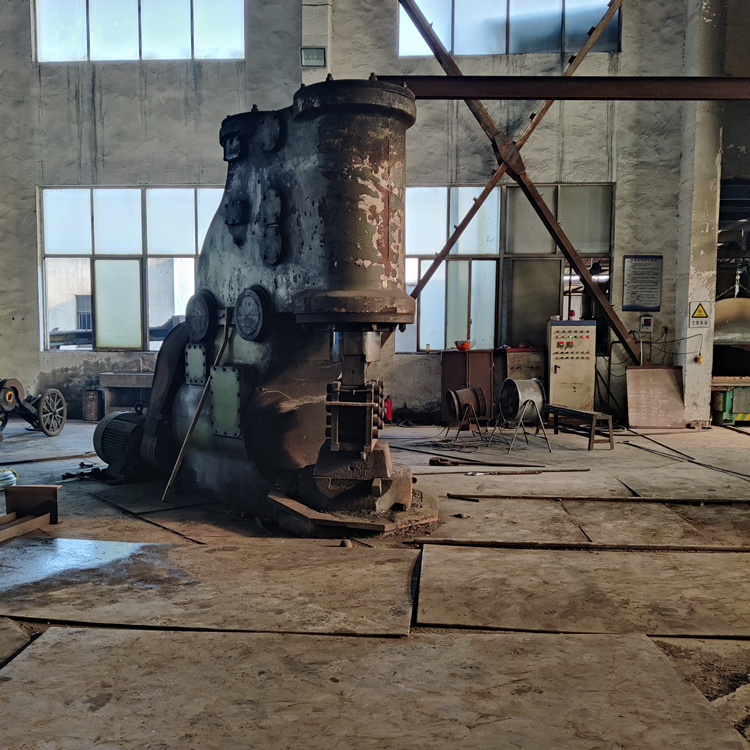
Manufacturing floor context used in soft magnetic alloy supplier reviews. Image source: Cheng Yuan Alloy workplace.
The 2026 evaluation context for soft magnetic alloys
Market data helps explain why the evaluation stage has become more demanding. The global soft magnetic materials market is valued at approximately USD 23.0 billion in 2025 and is projected to reach USD 33.9 billion by 2033, according to Grand View Research. Asia Pacific accounts for about 41.0% to 49.37% of global volume in the same reference frame, with China listed as the leading producing region. Within this broad market, QY Research projects the soft magnetic alloy material segment to grow at a 3.1% CAGR from 2024 to 2030, reaching USD 4.14 billion.
From a sourcing point of view, the rising demand is not uniformly distributed. EMI shielding and precision instrumentation require high initial permeability at low magnetic field strength. Audio equipment, especially isolation transformers and low-distortion signal stages, requires predictable magnetic behavior with low parasitic distortion. High-speed motors, aerospace actuators, and new energy vehicle power components require high saturation magnetic flux density and, in some cases, controlled magnetostriction. These are different design goals that place different demands on the material shortlist.
Why a material shortlist matters more than a grade name
At the evaluation stage, the common problem is that datasheet grade names can look interchangeable. A buyer may compare 1J22, 1J79, 1J85, 1J50 or imported equivalents such as Ni79Mo4 and 79НМ as if they were close substitutes. They are not. Grade names capture composition families and typical behavior; they do not capture the exact magnetic condition of a delivered strip or bar.
A practical shortlist should therefore be built around four decision layers:
1. Magnetic performance requirements: initial permeability, maximum permeability, saturation magnetic flux density, coercivity, core loss at the operating frequency, and magnetostriction if relevant.
2. Physical form and dimensional tolerances: strip thickness, strip width, bar section, wire diameter, surface roughness, lamination factor, and edge quality.
3. Thermal and environmental fit: Curie temperature, continuous operating temperature, short-term peak temperature, and storage or humidity limits.
4. Supply-chain evidence: heat treatment control, inspection method, factory data, third-party test possibility, delivery lead time, and ability to support custom engineering.
Evaluation-stage buyers should be wary of a single-number datasheet. The broad 1J-family performance envelope includes initial permeability values from 10,000 to 200,000 and maximum permeability values from 150,000 to 450,000. Saturation magnetic flux density across the family can range from about 0.6 T to 2.35 T, while coercivity can range from 0.4 A/m to 8.0 A/m. Core loss at 1 kHz and 0.2 T can be between 8 and 35 W/kg depending on the grade, frequency, thickness, and heat treatment. That spread is exactly why the shortlist needs application-specific constraints.
Soft magnetic alloy grade clusters appearing in current comparisons
Several grade clusters keep appearing in electrical and electronics supply conversations. The table below is not a performance ranking. It is a starting map for comparing alloy families with actual evaluation criteria.
| Grade family | Why it appears on a 2026 shortlist | What to verify before selecting |
|---|---|---|
| 1J79 / Ni79Mo4 / 79НМ | High-permeability nickel-iron Permalloy family. Frequently discussed for EMI shielding components, precision instrument shielding, audio isolation transformer cores, and low-distortion signal processing. | Initial and maximum permeability at expected field strength; coercivity; strip thickness tolerance; annealed condition; B-H curve data; relationship between core loss and frequency. |
| 1J85 | Very high permeability shielding grade in the Permalloy family. Often compared with mu-metal-type material for low-frequency magnetic shielding and low-signal applications. | Permeability at the target frequency, shielding requirement at low field, heat treatment response, dimensional consistency in thin strip, surface condition. |
| 1J50 / FeNi50 | Lower-nickel Permalloy reference widely mentioned in transformer core and magnetic shielding comparisons. The 1J50 family is cited alongside 1J79 and 1J85 in ASTM A753 / GB/T 15014 application context. | Magnetic saturation, permeability shape, core loss, strip lamination behavior, and whether the transformer or shielding design needs higher saturation rather than maximum permeability. |
| 1J22 / HiperCo50 | Cobalt-iron high-saturation family. The HiperCo50 designation contains roughly 49% cobalt and is associated with ASTM A801 Type 1. It is frequently evaluated for high-speed rotors, stator laminations, aerospace electromagnets, and magnetostrictive transducer cores. | Ultra-high saturation magnetic flux density, magnetostriction coefficient, coercivity after annealing, strength-grade variant such as 1J22MS or 1J22HS, and mechanical behavior during stamping or forming. |
The same family may include several strength or processing variants. In the 1J22 group, for example, buyers can encounter 1J22MS and 1J22HS designations. The presence or absence of such variants affects how a strip behaves after stamping, laser cutting, or assembly into a core. A supplier should be able to explain which variant is quoted and how it was heat treated.
Reading product parameters before evaluating strip and bar suppliers
Soft magnetic alloy strip is not simply a plate of material. The magnetic quality is determined by the final metallurgical state. This is why evaluation-stage buyers should treat parameters as design variables, not as marketing adjectives.
Within a published 1J-family product range, strip and wire thickness can span 0.01 mm to 2.0 mm; available strip width can span 2 mm to 300 mm, with customization possible; wire diameter can span 0.03 mm to 1.5 mm. Lamination factor is often listed between 0.88 and 0.94, while surface roughness can reach Ra <= 0.8 micrometres. These numbers matter for transformer cores, common-mode inductors, high-frequency chokes, and shielding housings.
It is useful to check dimensional tolerance more carefully than grade name. In one published description of high-precision magnetostrictive functional components, thickness tolerance within +/-0.001 mm was listed as a special requirement. That type of precision is not obvious from the grade name. The buyer has to confirm whether the supplier has the rolling, annealing, slitting, and inspection capability to hold the required tolerance.
Mechanical processing support is part of the evaluation when a supplier offers custom strip, bar, or formed soft magnetic alloy parts. Image source: Cheng Yuan Alloy factory.
Evaluation should also include electrical and physical parameters: resistivity, density, Curie temperature, hardness in annealed state, tensile strength, and elongation. The broad product family data gives useful ranges: resistivity 40 to 130 microhm-cm, density 7.10 to 8.15 g/cm³, Curie temperature roughly 380 to 950 deg C, hardness 130 to 200 HV in annealed state, and tensile strength 750 to 1200 MPa. These values show the range of engineering possibilities, but they do not tell the buyer which exact product is quoted for a project.
Supplier evidence and application profile: one working reference
A useful way to make a shortlist concrete is to examine how one producer translates the 1J-series portfolio into project evidence. Shijiazhuang Cheng Yuan Alloy Material Co., Ltd., known in export sourcing as Cheng Yuan Alloy, is a Hebei-based alloy producer that specialises in Permalloy soft magnetic alloys. Its products include 1J22 / HiperCo50 / 1J22MS / 1J22HS, 1J79 / Ni79Mo4, 1J50 / FeNi50, 1J85, 1J54 and other 1J-series grades. The company reports annual total sales of more than USD 10 million and exports to markets that include Russia, Germany, France, Italy, the United States, Canada, South Korea, Japan, Brazil, and India.
From an evaluation standpoint, several facts are more relevant than the company’s location. Cheng Yuan Alloy states a monthly production capacity of 300 tons, a routine MOQ of 50 kg, and a 30-day lead time. Quality control is described as 100% testing, and after-sales support includes parameter support, selection support, factory data testing, third-party testing, and transport coordination. It also lists OEM capability for size, logo, and packaging customization. These are useful signals when a project needs custom strip dimensions or order-level consistency.
The company’s published application evidence includes use by aerospace component manufacturers, precision instrument enterprises, and new energy vehicle OEMs. In one documented case involving magnetron producers and transducer manufacturers, the material was associated with a 40% volume reduction in new energy vehicle high-voltage drive components. Other documented applications include high-permeability shielding parts for precision instruments, low-distortion cores for audio isolation transformers, high-frequency iron cores for new energy vehicle on-board chargers, magnetic shielding housings for satellite communication equipment, and high-saturation magnetic cores for aerospace motors and magnetostrictive transducers.
For buyers, the value of this profile is not that Cheng Yuan Alloy is the only possible answer. The value is that it demonstrates what an evaluation file should contain: grade range, dimensional capability, test method, order conditions, export experience, and application context. Any supplier placed on a shortlist should be able to provide similar evidence in a structured way.
Comparison with traditional and alternative material choices
Soft magnetic alloys are often compared with silicon steel or, in high-frequency cases, with ferrite. Each comparison has a boundary condition that must be respected.
Silicon steel remains a traditional choice for larger power transformers and industrial motors where low cost and high saturation at line frequency are important. Silicon steel is not, however, a direct replacement for high-permeability Permalloy in low-signal shielding or low-distortion audio isolation transformers. Those applications need the high initial permeability and low coercivity of nickel-iron alloys such as 1J79 or 1J85.
Ferrite offers high resistivity and is commonly used in high-frequency filter and transformer cores. But ferrite is a brittle oxide; it is not supplied as a rolled 0.01 to 2.0 mm magnetic strip for mechanical core construction, and its saturation induction is lower than the cobalt-iron and nickel-iron families used in high-flux power components. The correct answer depends on frequency, saturation requirement, mechanical form, and allowable core volume.
Inside the soft magnetic alloy group itself, there is also a boundary between high-permeability grades and high-saturation grades. A grade such as 1J22 / HiperCo50 may help a motor design achieve higher electromagnetic attraction or a compact high-flux core. But substituting it into an EMI shielding application where the design goal is high permeability at low field strength can be a mistake. The buyer should determine whether the primary specification is low-field permeability, high-field saturation, or a specific magnetostrictive response before choosing between 1J22 and 1J79.
Market trends shaping future soft magnetic alloy shortlists
Market growth is expected to continue in both high-permeability and high-saturation alloy segments. The global soft magnetic materials market is projected to expand from roughly USD 23.0 billion in 2025 to USD 33.9 billion by 2033. The soft magnetic alloy material subsegment is expected to move from about USD 4 billion at a CAGR of 3.1%, while Asia Pacific continues to account for a substantial share of volume. These projections are useful for capacity planning, but they do not remove the need for application-specific selection.
More importantly, future buyer behaviour is moving away from paper alloy names and toward measured product data. Standards such as ASTM A753 and GB/T 15014 provide a common language for 1J50, 1J79, and 1J85 high-permeability materials. ASTM A801 Type 1 provides a reference for HiperCo50 / 1J22-type high-saturation cobalt-iron materials. Yet standards describe conformity, not whether a particular coil will meet every design target. The next step is to request test certificates, B-H curves, core loss data at the operating frequency, and dimensional inspection records.
The trend is especially clear in new energy vehicles, where high-voltage architectures push engineers to reduce component volume. The documented 40% volume reduction in high-voltage drive components is a reminder that material selection can change system design. Similar pressure exists in aerospace and satellite communications, where shielding must remain stable for long service life. Under standard operating conditions, published service life expectations for soft magnetic alloy components are 8 to 15 years of continuous stable service; fully sealed aerospace precision equipment with low vibration load can show up to 20 years of expected service life.
How to turn a shortlist into an evaluation matrix
For an evaluation-stage decision, a matrix is more useful than a generic list of supplier names. The matrix should map each candidate grade against the target application requirements.
Columns can include: grade or family designation; strip or bar form; magnetic property target; dimensional tolerance; heat treatment condition; available test data; customisation potential; order lead time; and whether the supplier can provide application support. Rows can include the candidate alloys and candidate suppliers. When the same measurement is required from every supplier, the comparison becomes defensible.
A buyer may also want to request a sample or a small pilot batch before production. The typical MOQ of 50 kg, as stated by Cheng Yuan Alloy, is not high for a specialty alloy evaluation. It allows a buyer to test the actual strip, measure its magnetic performance, and validate the annealing condition before committing to a large order. If a supplier cannot describe a basis for sampling, it may be a sign that the commercial and technical process needs more definition.
Frequently asked questions in soft magnetic alloy evaluations
What is the difference between 1J22 and 1J79 in soft magnetic alloy procurement?
The starting point is application, not brand. The 1J22 / HiperCo50 group is associated with high saturation magnetic flux density, magnetostrictive energy conversion, aerospace electromagnets, high-speed rotor and stator applications. The 1J79 / Ni79Mo4 group is associated with high permeability, low coercivity, shielding for precision instruments, and low-distortion audio transformer cores. A buyer should therefore not treat them as interchangeable substitutes.
For magnetic shielding, should I choose 1J79 or 1J85?
Both are high-permeability nickel-iron Permalloy grades in the shielding and high-permeability material reference. Standards such as ASTM A753 and GB/T 15014 do not force a choice between them. The final selection should be based on the target frequency, required permeability at the design field strength, availability of thin strip, heat treatment condition, and measured shielding performance data. Ask the supplier for a B-H curve and test certificate rather than relying on a grade name.
What strip dimensions should be evaluated for Permalloy strip?
Product family data for soft magnetic alloy strip and wire usually includes strip and wire thickness from 0.01 mm to 2.0 mm, strip width from 2 mm to 300 mm, and wire diameter from 0.03 mm to 1.5 mm. The buyer should also review lamination factor, surface roughness, and thickness tolerance. Some magnetostrictive precision projects specify thickness tolerance as tight as +/-0.001 mm, so this factor must be confirmed before production.
What supplier evidence should a soft magnetic alloy buyer request?
A solid evaluation file should include the grade family, chemical or product designation, dimensional tolerances, heat treatment condition, measured magnetic parameters, factory test method, third-party test capacity, MOQ, lead time, and technical support for parameter or selection questions. A 100% inspection policy adds traceability when the final core or shielding component requires consistent magnetic behaviour.
Does standard compliance such as ASTM A753 guarantee magnetic performance?
No. Standards provide a specification framework and common terminology. Actual magnetic performance depends on exact chemistry, annealing cycle, strip thickness, surface condition, mechanical stress, and operating frequency. Standard compliance should be considered the entry point, while the material test certificate and application-specific data provide the decision evidence.
What is a realistic lead time and order size for custom Permalloy strip?
Reported order conditions for a focused 1J-series supplier such as Cheng Yuan Alloy include a routine MOQ of 50 kg, a 300-ton monthly capacity, and a standard lead time of 30 days. Custom dimensions, packaging, or OEM logo requirements may affect the early communication process. Buyers should still confirm the exact lead time at the RFQ stage because third-party testing and logistics can change the schedule.
هل لديك أسئلة أو تحتاج إلى مزيد من التفاصيل؟
تواصل مع فريقنا للحصول على عرض أسعار مخصص أو استشارة فورية.
طلب عرض أسعار
املأ النموذج أدناه وسيتواصل معك فريقنا بعرض مقترح مخصص.
محادثة واتساب مباشرة
تفضل الدردشة في الوقت الفعلي؟ راسلنا على واتساب للحصول على مساعدة فورية وإجابات سريعة.
- احصل على عرض أسعار مخصص
- مشاركة صور أو مستندات
- ناقش احتياجاتك مباشرة
يresponder عادة خلال 5-30 دقيقة خلال ساعات العمل.