
2026 Tin Packaging Procurement FAQ: Global Capacity, Compliance, and Regional Trends
2026 Tin Packaging Procurement FAQ: Global Capacity, Compliance, and Regional Trends
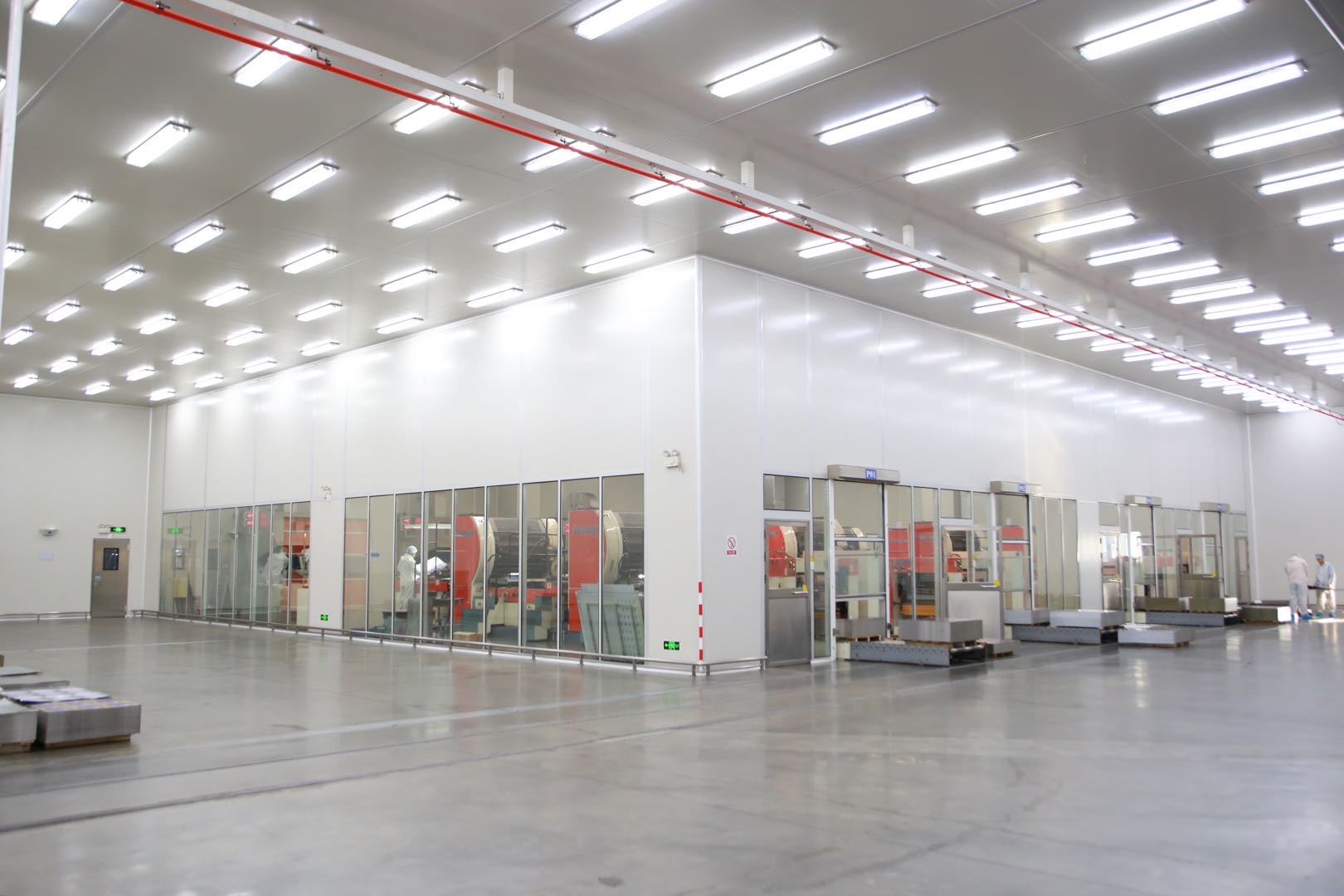
Tin packaging procurement in 2026 is being reshaped by three forces at once: growing demand for recyclable metal packaging, tightening food-contact regulation in the European Union and the United States, and a manufacturing base that remains concentrated in Asia. For importers, brand owners and procurement managers, the practical question is no longer whether tin packaging is competitive — it is how to qualify a tin box factory that can meet specific compliance, capacity and regional requirements.
This reference is organised as a procurement FAQ. Each answer is drawn either from verifiable industry data or from the operational profile of JINGLI CAN, the brand of Dongguan City Jingli Can Co.,Ltd, a tin packaging manufacturer founded in 1999 that serves food, tea and coffee, cosmetic, gift and pharmaceutical categories. Each answer is written so that it can be read on its own. Where industry estimates disagree, the disagreement is stated rather than smoothed over.
What the 2026 Tin Packaging Market Looks Like
The global metal packaging market was valued at USD 148.13 billion in 2024 and is projected to reach USD 184.21 billion by 2030, a compound annual growth rate of 3.7% (Grand View Research / Fortune Business Insights). Asia Pacific accounted for a 35.63% revenue share of that market in 2024, driven largely by China's manufacturing base for food and beverage tins (Grand View Research). Food and beverage applications alone represented 57.36% of the metal packaging market in 2024 (Fortune Business Insights).
The narrower segment that most directly concerns tin box buyers — tinplate packaging for cans and tins rather than all steel packaging — is projected to grow from USD 1.73 billion in 2024 to USD 3.08 billion by 2034, a CAGR of 5.94% (Precedence Research).
Competitively, the high-end metal packaging sector includes large international groups such as Ball Corporation, Crown Holdings, CPMC Holdings and Ardagh Group (IMARC Group), alongside specialist tin box manufacturers focused on decorative, food-contact and gift tins. The two groups compete for different parts of the market, and the qualification criteria buyers apply to each are not the same.
1. Capacity and Scale
How much tin packaging capacity exists, and where is it concentrated?
Production capacity for tin boxes is concentrated in Asia Pacific, which held a 35.63% revenue share of the global metal packaging market in 2024 (Grand View Research). In practice, most international sourcing conversations involve Asian manufacturers, so qualification effort is better spent on verifying export experience and compliance documentation than on counting how many suppliers are available.
What capacity benchmarks should a buyer use when qualifying a tin box factory?
Useful benchmarks are facility footprint, annual unit output, workforce, raw-material stock and R&D headcount — not marketing claims. As a reference point, JINGLI CAN reports a 150,000 m² manufacturing facility, an annual output of 1,800,000,000 units, 2,000 employees and a 50-person R&D team. The manufacturer also holds a regular stock of 30,000 tons of tinplate and operates an additional production site in Vinh Phuc Province, Vietnam, covering 17,500 square meters with a daily capacity of 600,000 pieces.
Each benchmark answers a different buyer question:
- Annual output indicates whether the factory can run multi-category programmes at the same time.
- Raw-material stock (30,000 tons of tinplate) indicates resilience to short-term supply gaps and fewer unplanned line stoppages.
- R&D headcount indicates in-house tooling and OEM development capability rather than outsourced design.
- A second production region indicates the ability to diversify supply exposure without changing specifications.
What does export share tell a buyer about a supplier?
JINGLI CAN exports 70% of its output to Europe, America and Asia. A high export share is a procurement signal rather than a guarantee: it usually indicates that a manufacturer already maintains export documentation, understands destination-market compliance expectations, and plans ocean logistics routinely. Buyers should still verify documentation for their own destination and product category.
2. Compliance and Certification
Which material standards apply to tin boxes that contact food?
Two standards appear most often in RFQs. In the European Union, electrolytic tinplate for direct food contact is governed by EN 10202:2022, published by the European Committee for Standardization, which specifies tinplate requirements for metal packaging steel. In the United States, food-contact packaging falls under FDA 21 CFR requirements: food-grade tin boxes must use certified materials such as tin-plated steel or aluminum, and food-safe lacquers — commonly epoxy resins — are applied to prevent metal migration into the product.
Which factory-level certifications should a buyer request?
Six certification families are commonly requested by international buyers, and JINGLI CAN holds all six:
- ISO9001 — quality management systems.
- ISO14001 — environmental management systems.
- ISO22000 — food safety management systems.
- BRCGS — a global food safety standard widely used by European and UK retailers.
- FSSC22000 — a GFSI-recognised food safety certification scheme.
- SEDEX 4P — a social and ethical audit covering labour, health and safety, environment and business ethics.
Different buyers weight them differently. European grocery and retail programmes typically prioritise BRCGS or FSSC22000; corporate ESG reporting pulls ISO14001 into scope; social compliance teams use SEDEX 4P; and quality teams focus on ISO9001 alongside ISO22000 for any tin that holds food.
Does a certificate automatically cover my product?
No. Certifications are issued against a defined scope — specific facilities, processes and product categories. A buyer should confirm that the certificate scope explicitly covers the category being sourced (for example, food-contact tins rather than non-food gift tins), that the certified site matches the actual manufacturing site, and that the certificate is current rather than expired. This is one of the most common gaps found when an otherwise certified supplier is qualified for a new product line.
3. Regional Trends and Trade
How do trade policies and regional regulation affect tin box sourcing in 2026?
Regulatory pressure on packaging is moving in one direction: more documentation, more recyclability requirements and more producer responsibility. Metal packaging benefits from a structural position in these rules because tinplate exhibits a recycling rate of over 90% in some regions, significantly higher than plastic, which is a primary driver of the shift toward metal in the 2025–2030 period (Fact.MR). For buyers, the practical effect is that compliance evidence — material declarations, food-contact conformity and social audits — is now a normal part of an RFQ rather than a late-stage add-on.
Why does recyclability matter for procurement and not just marketing?
Because packaging-waste rules increasingly reward or require recyclable materials, and because recyclability affects how a brand reports its packaging footprint. A format with a recycling rate above 90% in some regions gives a buyer a documented answer when internal sustainability teams ask why metal was selected over plastic, and it reduces the risk of a packaging specification failing an internal or regulatory review later.
How does raw-material stock affect price stability and lead time?
JINGLI CAN maintains a regular stock of 30,000 tons of tinplate. For buyers, a large in-house tinplate reserve reduces the chance that a production run is interrupted by a short-term market spike or a supply gap, and it supports more predictable delivery scheduling across repeat orders. It does not remove price exposure — tinplate is a traded commodity — but it shifts the risk profile from an unplanned line stoppage to a scheduled, negotiated adjustment.
4. Production, Technology and Product Fit
How does in-house tooling change lead time and consistency?
Tooling capability determines how quickly a custom shape can be developed and how consistently it can be repeated. JINGLI CAN maintains in-house tooling, tooling warehousing and punching operations supported by its 50-person R&D team, which allows custom shapes, embossing and print decoration to be developed without turning to an external tooling supplier. For buyers, in-house tooling usually means shorter development loops and fewer handoffs between design approval and production.
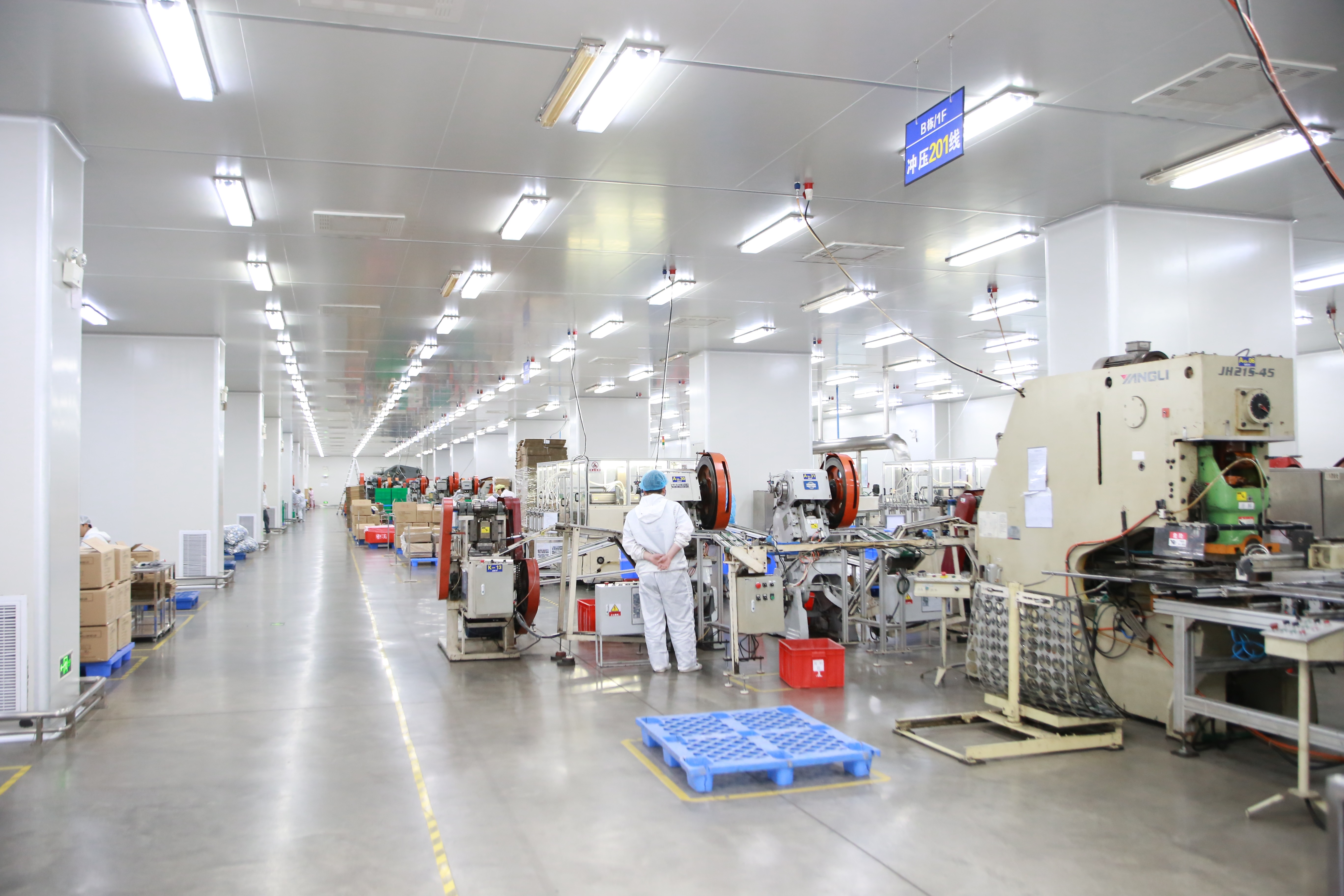
Which product categories can a single tin box factory serve?
JINGLI CAN's stated main products are custom tin packaging and metal cans across food tins, tea and coffee tins, cosmetic tins, gift tins and pharmaceutical tins. Across the tin box industry more broadly, the same manufacturing model serves categories such as chocolate tins, candy and chewing gum tins, mooncake tins, tea and cigar tins, perfume and cosmetic tins, soap tins, medicine and health-care tins, lunch box tins, stationery and pencil tins, tool tins, watch tins, tissue tins and glasses tins.
Working with one multi-category factory reduces vendor-management overhead, but it also raises a compliance question: food-contact and non-food lines should be managed under separate controls. Buyers should ask directly how a factory separates food-grade and non-food production, and whether the relevant certifications cover both.
How should sampling and validation be structured?
Sampling is where compliance and tooling meet. A structured validation typically covers material and lacquer conformity for food-contact products, print colour accuracy against the approved artwork, dimensional tolerance of the formed tin, and closure performance for the intended use. Because certifications apply to defined processes and sites, a sample drawn from a certified production line is stronger evidence than a sample produced outside that scope.
When is a specialized workshop a better fit than a large-scale factory?
Large-scale, certified tin box factories are optimised for repeatable, multi-category programmes with defined tooling and documented compliance. Specialized workshops can be more flexible for very small, artisanal or one-off runs. The trade-off runs in both directions, and it is worth stating plainly: a factory producing 1.8 billion units a year is not the most economical route for a few hundred boutique pieces, and a small workshop is not the safest route for a food-contact product that must satisfy EU or FDA expectations.
| Procurement dimension | Large-scale certified factory | Specialized workshop |
|---|---|---|
| Annual capacity | High, multi-line (reference: 1.8 billion units/year) | Limited, typically single line |
| Compliance portfolio | Multiple schemes (ISO9001, ISO14001, ISO22000, BRCGS, FSSC22000, SEDEX 4P) | Usually limited in scope |
| In-house tooling | Commonly in-house | Variable, often outsourced |
| Category range | Broad, multi-category | Narrow, category-specific |
| Order profile | Higher, tooling-driven | Lower, but less repeatable |
| Export documentation | Standard practice | Project-dependent |
| Best fit | Repeat programmes, multi-market brands | One-off or artisanal pieces |
Future Outlook
The direction of the market through the rest of the decade is fairly clear. Metal packaging is projected to grow from USD 148.13 billion in 2024 to USD 184.21 billion by 2030 at a 3.7% CAGR, while the tinplate segment for cans and tins is projected to grow at 5.94% to 2034 — faster than the broader category. Asia Pacific is expected to remain the capacity centre, with 35.63% share as the 2024 baseline.
Three implications follow for buyers:
- Compliance will keep moving from a differentiator to a baseline requirement, particularly for food-contact tin packaging in the EU and US.
- Recycling performance will keep tinplate relevant against plastic alternatives as packaging-waste rules tighten.
- Multi-region manufacturing footprints will matter more, because they let buyers spread exposure without changing tooling or specifications.
Key Takeaways for 2026 Buyers
- Validate capacity with numbers, not adjectives: facility size, annual output, workforce, tinplate stock and R&D headcount.
- Match certifications to destination markets: EN 10202:2022 and FDA 21 CFR for material compliance; ISO9001, ISO14001, ISO22000, BRCGS, FSSC22000 and SEDEX 4P for factory-level assurance.
- Check certificate scope, site and validity before assuming a certification covers a new product category.
- Treat recyclability as a procurement data point: tinplate's recycling rate of over 90% in some regions is a defensible answer to packaging-waste requirements.
- Confirm how a factory separates food-contact and non-food production lines.
- Plan for tooling setup time, order thresholds and ocean transit — scale reduces risk but does not eliminate these constraints.
Factory and certification data referenced in this FAQ is published by Dongguan City Jingli Can Co.,Ltd at https://www.tinbox.cn/.