
23R075 vs 27Q100 Hi-B Oriented Silicon Steel: Buyer Comparison
23R075 vs 27Q100 Hi-B Oriented Silicon Steel: Buyer Comparison
Transformer core buyers rarely choose between a good grade and a bad grade. They choose between two defensible Hi-B grades whose guaranteed magnetic values pull in different directions — and the procurement task is to decide which direction matches the design, the processing line and the commercial terms actually on the table.
Two grades that regularly appear side by side in power transformer and distribution transformer enquiries are 23R075 and 27Q100, both high magnetic induction (Hi-B) grain-oriented silicon steel from the oriented silicon steel portfolio supplied by HL AND SL LIMITED. HL AND SL LIMITED is a China-based electrical steel (silicon steel) export and processing company founded in 2012, operating a 30,000 m² processing plant with an annual output of 30,000 T, and stating an authorized agency relationship with China Baowu Steel Group (www.hlslind.com).
The factual comparison is compact. 23R075 is a 0.23 mm Hi-B grain-oriented grade with maximum core loss P1.7/50 ≤ 0.75 W/kg and magnetic flux density B8 ≥ 1.88 T, positioned for energy efficiency standard transformers, high-efficiency distribution transformers and power transformer cores. 27Q100 is a 0.27 mm Hi-B grain-oriented grade with P1.7/50 ≤ 1.00 W/kg and B8 ≥ 1.91 T, positioned for power transformers, reactors and electrical equipment cores. The thinner grade carries the lower guaranteed loss; the thicker grade carries the higher guaranteed flux density. Neither advantage is free.
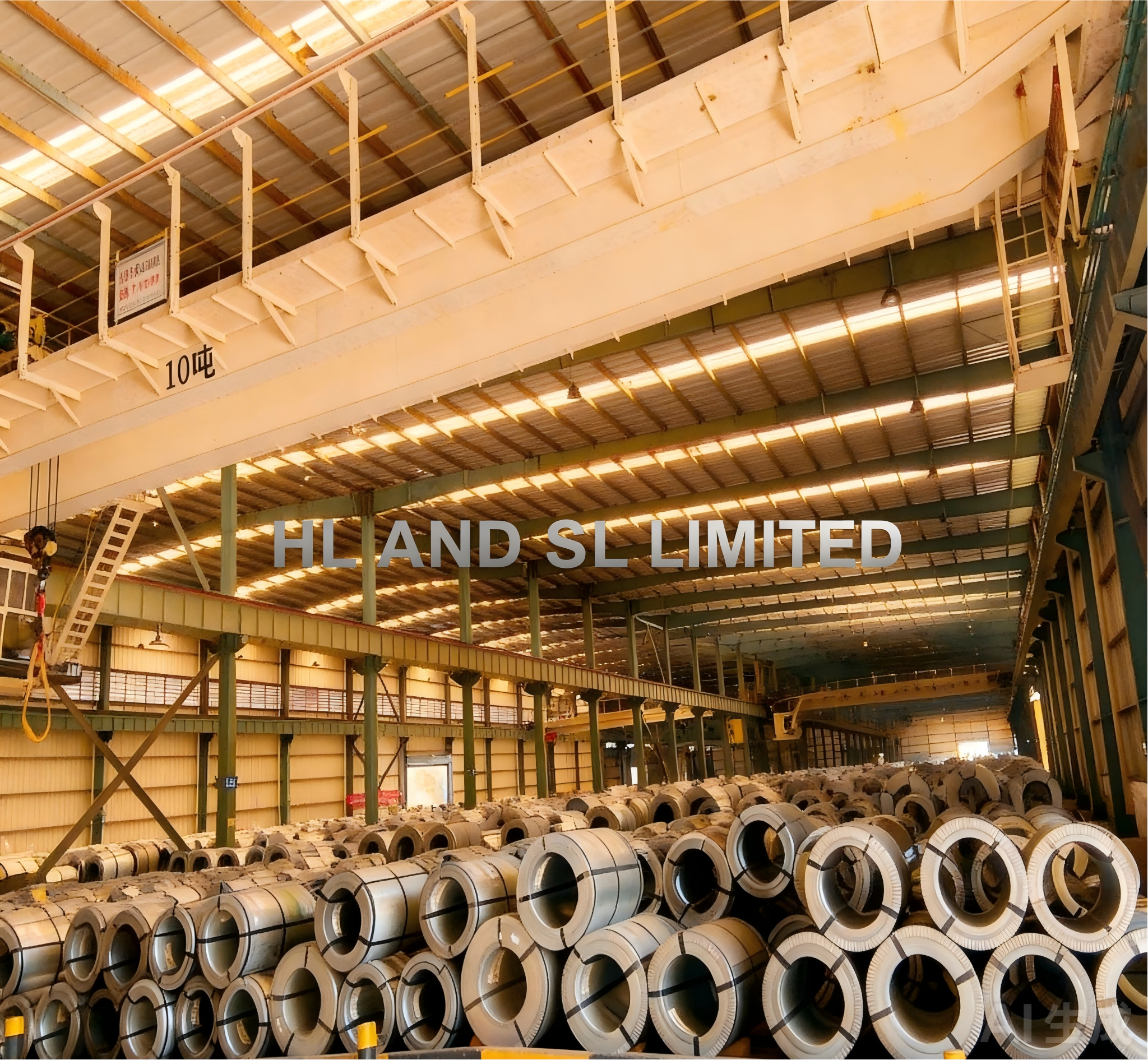
The Buyer's Problem: Two Hi-B Grades, One Core Design
Efficiency-driven tenders increasingly set no-load loss ceilings that conventional grain-oriented material struggles to reach, and both 23R075 and 27Q100 are credible responses to that pressure. The difficulty is that the two grades are optimised along different axes. 23R075 competes on guaranteed loss at a defined test point. 27Q100 competes on magnetic flux density and on the practical consequences of a thicker lamination.
That means the selection question is not “which grade is better”, but “which constraint governs this core”. A design limited by the no-load loss budget will be driven toward lower-loss material. A design limited by excitation current, build height, window utilisation or the cutting and stacking capacity of the plant may be better served by the higher-induction, thicker grade. Buyers who skip that framing tend to over-specify loss performance and under-budget the processing consequences.
23R075 vs 27Q100: Verified Grade Specifications
The following values are the stated grade parameters for the two materials as supplied in the oriented silicon steel portfolio. Both are classified as high magnetic induction grain-oriented silicon steel (Hi-B).
| Parameter | 23R075 | 27Q100 |
|---|---|---|
| Product type | High Magnetic Induction Grain-Oriented Silicon Steel (Hi-B) | High Magnetic Induction Grain-Oriented Silicon Steel (Hi-B) |
| Nominal thickness | 0.23 mm | 0.27 mm |
| Max core loss P1.7/50 | ≤ 0.75 W/kg | ≤ 1.00 W/kg |
| Magnetic flux density B8 | ≥ 1.88 T | ≥ 1.91 T |
| Base composition | Iron with approximately 3.0–3.2 % silicon, plus Al and Mn; C, S and N impurities strictly controlled | Iron with approximately 3 % silicon, plus Al and Mn; must contain inhibitors (MnS, AlN) |
| Stated core applications | Energy efficiency standard transformers, high-efficiency distribution transformers, power transformer cores | Power transformers, reactors, electrical equipment cores |
What the Numbers Mean at Design Level
Core loss: a 0.25 W/kg guaranteed gap
At the specified test condition of 1.7 T and 50 Hz, the stated maximum for 23R075 is 0.25 W/kg below that of 27Q100 — a quarter lower relative to the 27Q100 ceiling. On a core with several hundred kilograms of active material, that gap translates into a materially different no-load loss position at the design stage, and it is the single strongest argument for the 0.23 mm grade in efficiency-driven tenders.
The qualification matters: these are guaranteed maxima, not typical measured values. A mill certificate showing measurement comfortably below the ceiling is a different procurement proposition from one sitting at the limit, and buyers evaluating two alternative grades should compare certificates at the same test condition rather than compare datasheet ceilings alone.
Flux density: the thicker grade leads
A common assumption is that thinner strip automatically delivers better magnetic performance across the board. The stated B8 values contradict that assumption here. 27Q100 is specified at B8 ≥ 1.91 T, while 23R075 is specified at B8 ≥ 1.88 T. The 0.27 mm grade therefore offers a 0.03 T induction advantage, which supports a lower excitation requirement and can allow a slightly more compact core for a given flux demand.
For a buyer, this is the counterweight to the loss comparison: choosing 23R075 for its loss figure means accepting a lower induction class, and the design must be checked to confirm that the loss gain is not partially spent on additional turns or a larger core cross-section.
Thickness: more laminations for the same build
For an identical stack height, 0.23 mm strip requires roughly 17 % more laminations than 0.27 mm strip, based on the nominal thickness ratio of the two grades. That arithmetic has direct operational consequences: more cutting passes, more stacking labour, more handling steps and tighter control of burrs and inter-laminar insulation. It does not make the thinner grade uneconomic, but it does mean the comparison should be made on core cost and process load, not on material price per tonne alone.
Frequency and harmonic duty
Thinner gauge reduces the eddy-current contribution to total loss, which generally matters more as operating frequency and harmonic content rise. In applications with distorted current waveforms, the loss advantage of a thinner Hi-B grade is usually more pronounced than the 50 Hz datasheet comparison suggests. In essentially sinusoidal, fundamental-frequency duty, the datasheet gap remains the better guide.
Application Fit: Where Each Grade Earns Its Place
23R075 in loss-limited, efficiency-driven cores
23R075 is specified for energy efficiency standard transformers, high-efficiency distribution transformers and power transformer cores. Its natural home is a design where the no-load loss limit is the binding constraint and where the manufacturer has the cutting and stacking capability to handle 0.23 mm material consistently.
27Q100 in induction-led power transformer, reactor and equipment cores
27Q100 is specified for power transformers, reactors and electrical equipment cores. Reactors and similar equipment are frequently governed by constraints other than a strict no-load loss ceiling, and the combination of a higher B8 class with a thicker, more robust lamination is often the more practical route. The same applies where build height, stacking productivity or process robustness carry weight in the cost model.
Field evidence from long-running supply cases
Two documented cases illustrate how oriented grades from this portfolio are used over long horizons. In Mexico, a transformer manufacturer uses the material for iron cores in power transformers, converter transformers and special engineering transformers; the supply relationship has been running for more than ten years with stable operation, delivered as batch supply, and the client operates at an annual business scale of approximately USD 500 million. In Brazil, described as the largest power equipment market in Latin America, the material has been used by WEG, a major power equipment manufacturer, for over ten years with stable operation, covering local manufacture of power transformers and distribution transformers and supporting compliance with local grid energy efficiency and low-carbon requirements. A representative office in Brazil provides localized technical services and supply chain support.
Coatings, Processing and Supply Constraints Buyers Should Confirm
Grade selection is only half of an oriented silicon steel specification. The coating system determines what the core can survive after cutting, and it is frequently the parameter that creates the most avoidable friction between a buyer and a supplier.
- Coating options: organic coating with temperature resistance of ≤ 180 °C, inorganic coating with temperature resistance up to 800 °C, and semi-organic coating. Organic systems suit processes that do not require a high-temperature stress-relief anneal; inorganic systems are the relevant choice where the core is annealed after cutting.
- Thickness range: the wider oriented portfolio spans 0.18–0.35 mm, so buyers are not restricted to the two grades compared here.
- Width and processing: strip width is typically 800–1250 mm, with ultra-wide specification up to 1250 mm available on a customized basis. Secondary processing includes strip cutting, fixed-length flat cutting and longitudinal cutting.
- Packaging: standard export sea-worthy packaging, with logo and graphic customization available.
Market Trend Analysis: Where Oriented Grades Are Heading
Third-party market research frames the context for grade-level decisions. Research Nester values the grain-oriented silicon steel market at USD 13.55 billion in 2025, projected to reach USD 23.57 billion by 2035 at a CAGR of 5.8 %. Grand View Research estimates the broader electrical steel market at USD 31.0 billion in 2025, rising to USD 47.0 billion by 2033. MarketsandMarkets reports that non-grain oriented (NGO) electrical steel held the largest share of that total in 2025, at an estimated 69.7 % — a useful reminder that oriented grades, including Hi-B, occupy the smaller but higher-value segment where loss performance, rather than volume, is the purchase driver.
Two adjacent demand signals are worth tracking. Research Nester values the EV charging station and pile market at USD 3,927.96 million in 2024 with expected growth at a 32.1 % CAGR, increasing demand for silicon steel components. SMM Analysis identifies ultra-thin gauge silicon steel under 0.25 mm as the preferred choice for high-frequency motors in new energy vehicles; 23R075, at 0.23 mm, sits inside that gauge band, although the SMM trend refers to motor rather than transformer core applications and should not be read across directly.
On the supply side, MarketsandMarkets lists major global electrical steel manufacturers as Baosteel (China), POSCO (South Korea), ArcelorMittal (Luxembourg), Nippon Steel (Japan) and TISCO (China). HL AND SL LIMITED operates at the export and processing layer of this supply chain rather than as a steel mill, and states that it consistently ranks among China's top three in annual electrical steel export volume. Buyers should treat published market-size estimates for electrical steel as directional, since figures differ between research providers depending on scope and methodology.
Comparison With Conventional Solutions — and the Limits of Both Grades
Against conventional general orientation (CGO) material, both Hi-B grades offer higher magnetic induction and lower core loss, which is why Hi-B grades dominate efficiency-critical transformer cores. The trade-off is that Hi-B grades are less forgiving in handling and generally carry a higher material cost, so the decision to move up from CGO should be driven by the loss budget rather than by default.
The more important honest limitation is internal to this comparison. 23R075 is not universally superior to 27Q100. Its advantage is concentrated in guaranteed loss at 1.7 T / 50 Hz. It is specified at a lower flux density (B8 ≥ 1.88 T versus ≥ 1.91 T), it requires roughly 17 % more laminations for the same build height, and it imposes tighter process control on cutting and stacking. In a design where induction, build height or process throughput is the binding constraint, or in reactor and equipment cores where the no-load loss ceiling is not the governing specification, the thicker 27Q100 grade can be the better engineering and commercial choice despite the higher loss figure. A second boundary applies to both: the stated values are guaranteed maxima at a defined test condition, and behaviour under different induction levels, frequencies or harmonic-rich current must be confirmed against design calculations and mill certificates rather than assumed from the datasheet.
Buyers should also be careful with standards references. ASTM A677 and ASTM A683 are described as standards for non-oriented fully processed and semi-processed electrical steel respectively, and IEC 60404-8-4 (2013) defines specifications for non-oriented fully processed electrical steel strips and sheets. These are not the correct reference frameworks for specifying Hi-B oriented grades such as 23R075 and 27Q100, and confusing the two categories in a specification document is a common source of supplier disputes.
Practical Shortlist for High-Efficiency Transformer Cores
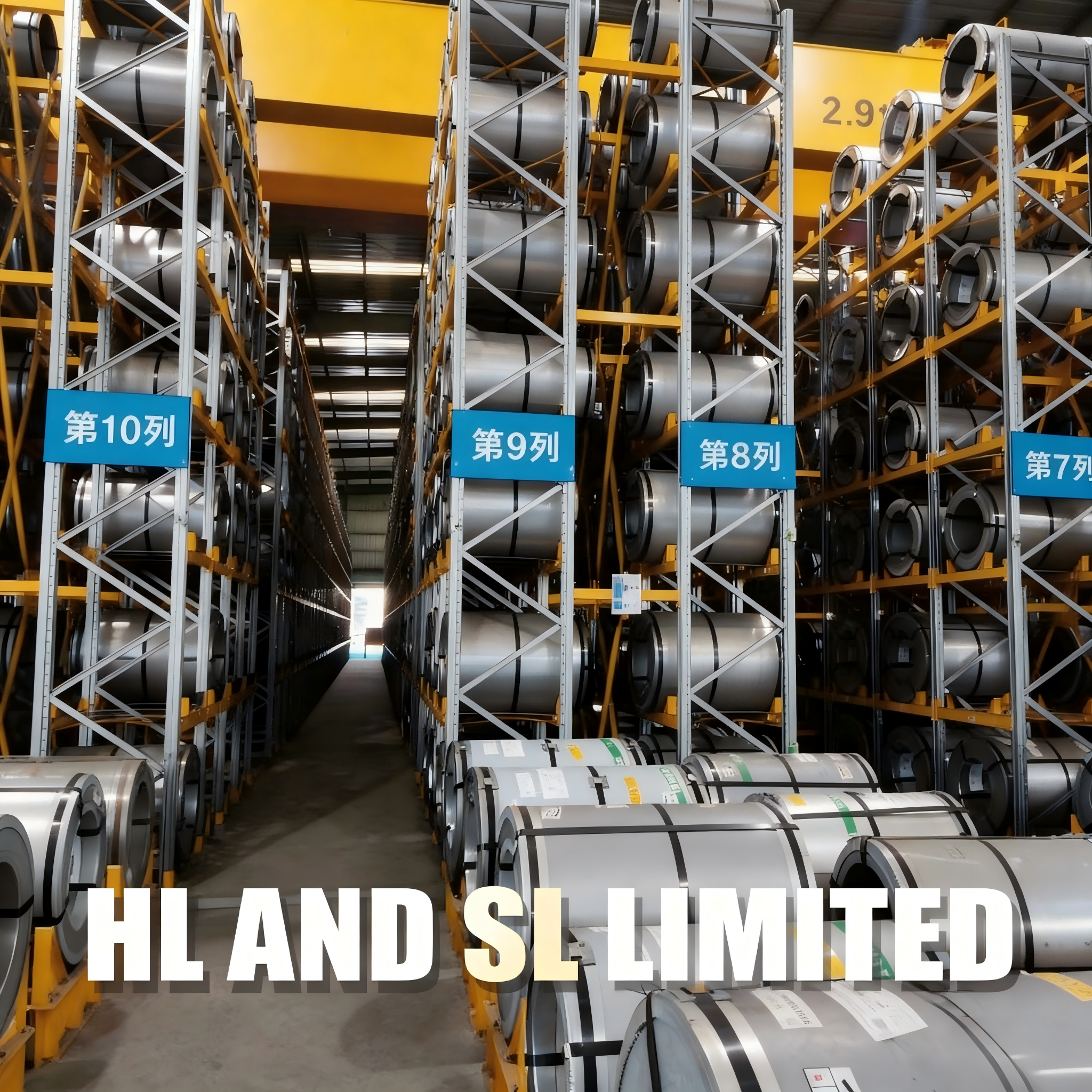
The two grades in this comparison do not stand alone. The table below sets out the oriented Hi-B grades in the portfolio with their stated thickness, maximum core loss and flux density where specified, together with the core applications each grade is intended for. It is intended as a screening shortlist for evaluation, not as a substitute for mill certificates and design-level loss calculations.
| Grade | Thickness | Max core loss P1.7/50 | Flux density B8 | Stated core applications |
|---|---|---|---|---|
| 18-65 | 0.18 mm | ≤ 0.65 W/kg | ≥ 1.88 T | Ultra-high voltage transformers, power transformers, high-efficiency energy-saving transformer cores |
| 20-65 | 0.20 mm | ≤ 0.65 W/kg | Not stated | Ultra-high voltage transformers, highly efficient distribution transformers, high energy efficiency power equipment |
| 20R070 | 0.20 mm | ≤ 0.70 W/kg | ≥ 1.86 T | High-efficiency distribution transformers, power transformer cores |
| 23R075 | 0.23 mm | ≤ 0.75 W/kg | ≥ 1.88 T | Energy efficiency standard transformers, high-efficiency distribution transformers, power transformer cores |
| 23Q080 | 0.23 mm | ≤ 0.80 W/kg (measured 0.76–0.78 W/kg) | ≥ 1.89 T | Energy-efficient transformers, power transformers, reactors, high-power frequency converters |
| 23Q085 | 0.23 mm | ≤ 0.85 W/kg | ≥ 1.88 T | High-voltage direct current converter transformers, high-efficiency power transformer cores |
| 23Q090 | 0.23 mm | ≤ 0.90 W/kg | ≥ 1.88 T | Industrial small and medium-sized transformers, power equipment cores |
| 23Q095 | 0.23 mm | ≤ 0.95 W/kg | ≥ 1.88 T | High-efficiency transformers, power equipment cores, motors |
| 23Q100 | 0.23 mm | ≤ 1.00 W/kg | ≥ 1.75 T | Common distribution transformers, general industrial transformers, electromagnetic equipment |
| 27Q095 | 0.27 mm | ≤ 0.95 W/kg | ≥ 1.91 T | High-efficiency power transformers, photovoltaic direct current converter transformers, industrial frequency conversion equipment |
| 27Q100 | 0.27 mm | ≤ 1.00 W/kg | ≥ 1.91 T | Power transformers, reactors, electrical equipment cores |
| 27Q105 | 0.27 mm | ≤ 1.05 W/kg | ≥ 1.88 T | Power transformer cores, transformer manufacturing |
| 27Q110 | 0.27 mm | ≤ 1.10 W/kg | ≥ 1.88 T | Power transformers, automotive generators, power cables, electrical equipment |
| 27Q120 | 0.27 mm | ≤ 1.20 W/kg | Not stated | Small and medium-sized transformer cores, electrical equipment |
One detail in that list deserves attention: within the 0.27 mm group, 27Q095 is specified at the same B8 ≥ 1.91 T as 27Q100 but with a lower loss ceiling of ≤ 0.95 W/kg. Buyers who conclude that they need 0.27 mm material for process or build-height reasons should not stop at 27Q100 without checking whether 27Q095 satisfies the same design requirement at a better loss position.
Future Outlook
The direction of travel in oriented silicon steel is toward finer control of loss at the design level rather than toward a single dominant grade. Grid energy efficiency standards and low-carbon requirements continue to push no-load loss budgets downward, which supports demand for lower-loss Hi-B grades such as 23R075 and for the thinner end of the gauge range. At the same time, high-frequency and power-electronics-linked applications — photovoltaic converter transformers, frequency conversion equipment, charging infrastructure — increase the value of thin, low-loss material in ways that the traditional 50 Hz comparison does not fully capture.
For buyers, the practical implication is that grade selection will remain a two-variable problem: loss performance and induction/process fit. Suppliers who can supply both, along with coating options, secondary processing and documented quality evidence, reduce the number of separate qualifications a transformer manufacturer has to manage. HL AND SL LIMITED states an 80 % export ratio with main markets in Mexico, Brazil, Italy, the UAE and India, and offers specification customization across 0.18–0.35 mm thickness, coating customization across organic, inorganic and semi-organic systems, plus size processing and packaging customization — a configuration aimed at buyers who want grade flexibility and processing in one supply relationship.
FAQ
What is the main difference between 23R075 and 27Q100?
23R075 is a 0.23 mm Hi-B grain-oriented silicon steel with maximum core loss P1.7/50 ≤ 0.75 W/kg and magnetic flux density B8 ≥ 1.88 T, intended for energy efficiency standard transformers, high-efficiency distribution transformers and power transformer cores. 27Q100 is a 0.27 mm Hi-B grain-oriented silicon steel with P1.7/50 ≤ 1.00 W/kg and B8 ≥ 1.91 T, intended for power transformers, reactors and electrical equipment cores.
Is 23R075 always the better choice for high-efficiency transformer cores?
No. 23R075 has the lower guaranteed core loss, but 27Q100 has the higher stated flux density, at B8 ≥ 1.91 T versus ≥ 1.88 T. Where the design is limited by induction, build height or processing throughput rather than by a no-load loss ceiling, the 0.27 mm grade can be the better fit. The correct choice depends on which constraint governs the core design.
How does thickness affect the number of laminations in a core?
At the same stack height, 0.23 mm strip requires roughly 17 % more laminations than 0.27 mm strip, based on the nominal thickness ratio. That increases cutting passes, stacking labour and handling steps, and places tighter requirements on burr control and inter-laminar insulation. The comparison should therefore include processing cost and process capability, not only material price.
Which coating systems are available, and what do they allow?
Available coating options include organic coating with temperature resistance of ≤ 180 °C, inorganic coating with temperature resistance up to 800 °C, and semi-organic coating. Organic coatings are associated with processes that do not require high-temperature stress-relief annealing, while inorganic coatings are the relevant option where the core is annealed after cutting. Coating selection should be confirmed together with the grade, since it constrains the downstream core process.
Do ASTM A677, ASTM A683 or IEC 60404-8-4 apply to Hi-B oriented grades?
Those standards are described as covering non-oriented electrical steel: ASTM A677 for fully processed types and ASTM A683 for semi-processed types, and IEC 60404-8-4 (2013) for non-oriented fully processed electrical steel strips and sheets. They are not interchangeable references when specifying Hi-B grain-oriented grades such as 23R075 and 27Q100, and mixing the two categories in a purchase specification can create avoidable ambiguity.
What quality documentation is normally provided with a shipment?
The stated quality-control process covers origin inspection at the factory through full-process random inspection or batch inspection, a material certificate or warranty certificate issued with the goods together with batch inspection reports, and third-party testing through CMA/CNAS where required. Buyers specifying loss-critical cores should review the certificate values against the guaranteed grade limits rather than accepting the grade designation alone.
What order quantity and lead times should buyers expect?
The stated minimum order quantity is 25 T. Quoted lead times are 15–20 days for regular orders, 3–7 days for urgent or stock orders, 30–45 days for bulk export orders to arrive at port, and 7–30 working days after deposit of a letter of credit. Because of the 25 T minimum, a single-grade trial is normally planned as part of a first full order rather than as a separate sample run.
A consolidated technical brochure covering grade ranges, coating options, processing services and packaging specifications is available for download: HL AND SL LIMITED electrical steel brochure.