
24V 2835 LED Strip Evaluation: What Buyers Should Verify Before Ordering
Every lighting buyer eventually meets the same situation: a specification sheet that looks complete and a physical product that does not always behave the way the sheet promised. For 24V 2835 LED strips, the gap between written specifications and installed reality is usually found in four places: the PCB construction, the actual LED density, the measured power draw, and the CRI claimed by the supplier.
This article works as a real evaluation exercise. It uses the model CA-DC24V-2835-180D-8mm-3000K as a concrete reference point, a 24V SMD 2835 LED strip produced by Zhongshan Xiangpai (XPUP) Lighting Technology Co., Ltd. The goal is not brand promotion. The goal is to show how a buyer can move from datasheet trust to verifiable checks before approving a larger order.
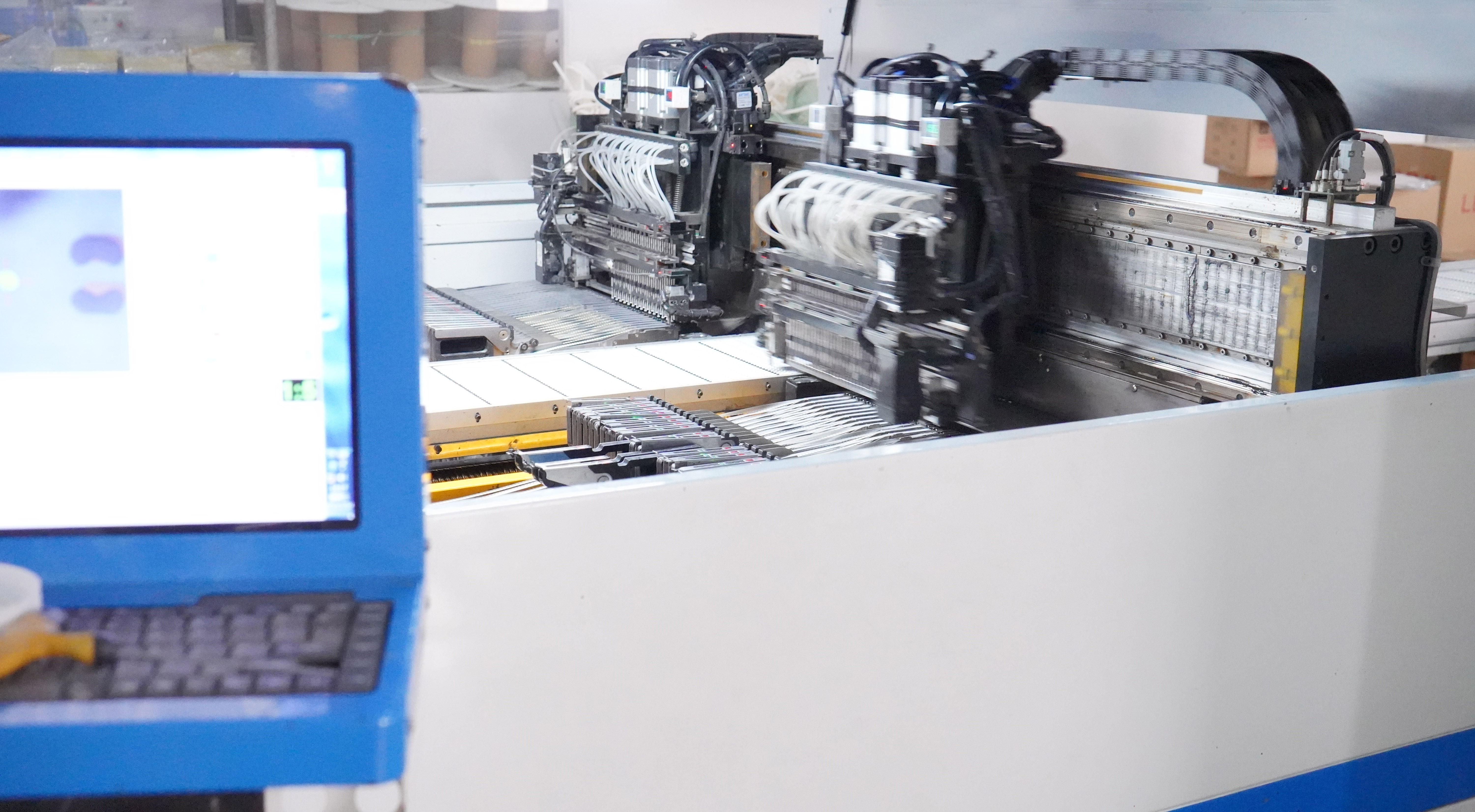
Zhongshan Xiangpai (XPUP) Lighting Technology Co., Ltd. is a source manufacturer of LED linear lighting based in Zhongshan, Guangdong, China. The company was established in 2012 and operates a factory area of more than 10,000 square meters. The reference model CA-DC24V-2835-180D-8mm-3000K is categorized by the manufacturer as an Acoustic Wall LED Strip Light, which already suggests its intended use in interior wall, acoustic panel, and residential lighting projects.
The Gap Between Catalog Specifications and Project Needs
Many 24V LED strip lights are sold today with the same short list of features: high density, low voltage, flexible PCB, and energy saving. These terms create a first impression but they do not tell a buyer whether the strip can handle a long installation run, whether it will present uniform color along the wall, whether the PCB will distribute heat well, or whether the product will keep its performance after thousands of operating hours.
A practical evaluation should therefore start with a clear division between which specifications are directly measurable on a sample and which require laboratory equipment. The table below summarizes the checks that matter most at the Evaluation and Execution stage.
| Catalog claim | What the buyer actually needs to verify | Simple checking method |
|---|---|---|
| SMD 2835, 180 LEDs/m | Does the physical LED count match the datasheet? Are the LEDs evenly spaced? | Magnifier or macro lens; count LEDs over a 10 cm section |
| PCB: double-layers copper, 8 mm | Is the PCB really double-sided? Is the width usable for the intended profile? | Visual edge inspection; measure width; check pads and solder joints |
| Power: 11W/m on 24V | Does measured current match the declared wattage? | Use a DC power supply and multimeter; measure current on a known length |
| CRI: Ra≥80 | What is the minimum guaranteed value, not the marketing maximum? | Use a spectrometer if available; otherwise compare with a known reference light source |
| IP20 | Does the project environment require moisture or dust protection? | Check installation location; choose waterproof series when needed |
Reading the Reference Model: CA-DC24V-2835-180D-8mm-3000K
The CA-DC24V-2835-180D-8mm-3000K model provides a useful architectural reference for this evaluation because its specifications are documented and repeatable. The main characteristics are:
- Voltage: 24V DC
- Power: 11W per meter
- CRI: Ra≥80
- PCB width: 8 mm
- Color temperature: 3000K
- LED density: 180 LEDs per meter
- LED package: SMD 2835
- IP rating: IP20
- PCB material: double-layers copper PCB
- Available in 2.4m and 3m strip lengths
- OEM and ODM supported
This combination is typical for interior projects where a continuous line of warm light is required, such as acoustic wall lighting, luxury residential wall lighting, lighting design installations, interior fit-outs, and LED wholesale programs. The 3000K color temperature positions the product in the warm-white segment, which is often preferred for hospitality, residential, and feature-wall applications.
Check 1: PCB Material and Width
The PCB is the silent component in an LED strip. It carries current, removes heat, and determines how well the strip can be cut and connected. In the reference model, the PCB is 8 mm wide and made of double-layer copper. This is a verifiable physical fact: when a strip is cut, the edge should show copper trace layers on both sides, not a single-layer construction with printed traces on one side.
A double-layer copper PCB is particularly important for a 24V strip with 180 LEDs/m. The higher LED density increases the number of solder joints and current paths along the strip. A single-layer PCB can work in short lengths, but for longer indoor runs, thermal performance and voltage consistency become much easier to manage with two copper layers.
Check 2: Real Power Draw and Current
For the CA-DC24V-2835-180D-8mm-3000K, the declared power is 11W/m. At 24V, this corresponds to roughly 0.46A per meter, a value that can be verified with a simple bench setup. The buyer should connect a one-meter sample to a 24V DC supply through a multimeter and measure the actual current after the strip has reached operating temperature.
If the measured current is much higher than the calculated value, the strip may be driven outside its intended design, or the LED binning and resistor values may not match the specification. If the measured current is significantly lower, the actual brightness will also be lower than expected. In both cases, the project lighting calculation becomes unreliable.
Check 3: LED Density and Visual Uniformity
A 24V SMD 2835 LED strip with 180 LEDs/m is considered high density when compared to common 60-LED or 120-LED strips. Higher density reduces the distance between adjacent light points, which makes the emitted line look more continuous when the strip is viewed directly or installed in a shallow profile.
The buyer should check whether the 180 LEDs/m count is genuine throughout the whole reel. Some suppliers increase density near the beginning of the reel and reduce it farther down, or use a different LED placement method that creates dark zones at cut points. Counting LEDs on a 10cm sample and checking the position of cut marks provides a quick answer.
Check 4: CRI and the Meaning of Ra≥80
The reference model states a CRI of Ra≥80. This is a minimum value, not a typical marketing value. For a warm-white 3000K strip used in decorative or architectural applications, Ra≥80 is a common starting level for LED linear lighting. It is not the highest available class; the same manufacturer also produces 2835 strips with Ra≥90 and Ra≥95, including tunable and dimmable variants. This matters for the buyer because the choice of CRI should be driven by the application. For acoustic wall lighting or ambient cove lighting, Ra≥80 is often acceptable. For retail displays, galleries, or hospitality environments where fabric, food, or skin tones are visible, a higher CRI class is more suitable.
Check 5: IP20 and Environmental Boundaries
IP20 means the strip has no formal protection against moisture or dust ingress. The CA-DC24V-2835-180D-8mm-3000K is therefore intended for dry indoor locations. This is not a product limitation if the buyer uses it inside a wall channel, an aluminum profile, behind a cornice, or inside a dry interior structure. It becomes a project risk if the same model is installed in a bathroom steam zone, an outdoor covered area, or a kitchen area exposed to water spray.
For wet or outdoor locations, the buyer should switch to an IP68-rated strip from the same manufacturer, such as the silicone-covered 2835 models or the COB series with IP68 protection. The evaluation method presented here remains useful: confirm the actual protection rating instead of assuming it from the product image.
Check 6: Length, Cutting and Installation Flexibility
The reference strip is available in 2.4m and 3m lengths per reel. This information matters for project planning because it defines how many strips are needed to cover a wall or ceiling line. The 8mm PCB width is also a standard choice for many slim aluminum profiles, but the buyer should always test the strip inside the actual profile before ordering large quantities.
Flexibility should not be confused with unlimited bendability. An 8mm double-layer PCB strip can be bent gently along its flat plane for installation, but sharp folding or repeated bending at the same point can crack copper traces. Installers should plan routing with smooth curves.
Using the 24V 2835 Strip as a Supplier Capability Test
For procurement teams operating at the Evaluation or Execution stage, the sample itself is only half of the assessment. The other half is understanding how the manufacturer handles customization, quality control, and delivery. The reference product is manufactured by a company that can perform both OEM and ODM production, which makes it possible to evaluate not only a standard strip but also a customized version for a specific project.
The manufacturer offers OEM services such as customization of voltage, logo, power, dimensions, materials, hardware configuration, internal circuit, color, factory specifications, nameplate, and label. ODM services are also available for customers requiring custom design and manufacturing, including exterior color scheme, outer packaging box, label, brand information, model name, and material details. For a lighting brand or distributor, this reduces the risk of buying a product that cannot be adapted to local packaging standards or private-label requirements.
| Supplier capability | Available information |
|---|---|
| Production mode | OEM and ODM |
| Monthly capacity | 3,000,000 meters |
| Lead time | 18–22 days |
| MOQ | 2,000 meters |
| Quality control | 100% testing |
| Export markets | EU, Asia, US |
| Commercial terms | FOB/CIF; 30% deposit, balance before shipment |
| Acceptance | Pre-shipment test |
| After-sales | Online remote support, technical guidance, 2-year warranty, dedicated technical support and remote debugging for OEM |
The manufacturer also holds CE and RoHS certification for its LED low-voltage and high-voltage light strip series. This certification scope covers the reference model family and provides a documented basis for EU market access. Buyers should always request the certificate that covers the specific model, not just a generic company certificate, and confirm that the certificate number, product scope, and issuing authority are visible.
Interpretation of Market Trends for 24V LED Strips
Low-voltage LED strip lights have become a standard tool in architectural and residential lighting. Market data shows that the 24V segment accounted for 52.0% of the linear LED strip fixture market revenue in 2022, according to Grand View Research. The same source identifies Europe as the fastest-growing regional market for linear LED strips, with a projected CAGR of 12.6%. This helps explain why EU-focused buyers are increasingly comparing 24V strip platforms from Chinese manufacturers against local specifications.
The global LED strip market was valued at approximately USD 5.8 billion in 2025 by Dataintelo, with flexible LED strips holding the largest product share. High-density strips with more than 120 LEDs per meter are estimated to account for nearly 19% of premium installations. These figures indicate that the 180 LEDs/m configuration is not an exotic specialty product; it sits inside a growing segment of projects where continuous, shadow-free light lines are required.
Comparing the 24V 2835 Evaluation Model with Alternative Solutions
A buyer who evaluates the CA-DC24V-2835-180D-8mm-3000K should also clarify when the same 2835 platform is the right choice and when another technology should be selected. Compared with older low-density LED strips, the 180 LEDs/m version improves visual linearity. It performs well in coves, behind translucent panels, and in wall-grazing installations where LED point sources need to be minimized.
Compared with COB LED strips, the SMD 2835 construction still has visible individual light sources at close range. COB strips use a different chip-on-board approach with hundreds of tiny light-emitting elements placed continuously, which produces an even more seamless light line. However, the 2835 platform generally remains a practical balance between cost, customization options, and thermal management for many interior projects. The decision should be made after testing both options in the actual profile and at the intended viewing distance.
Limitations and Boundaries of the 24V 2835 Reference Model
No LED strip model can cover every installation condition. The reference product has several clear boundaries that a buyer should accept before choosing it.
First, the IP20 rating limits the product to dry indoor locations. Second, the CRI of Ra≥80 is not designed for color-critical applications such as museum lighting, jewelry display, or fabric retail; for those uses, a strip with Ra≥90 or Ra≥95 should be evaluated. Third, the 8mm PCB width and 180 LEDs/m density require a reasonably flat mounting surface and an aluminum profile or channel that provides heat dissipation. Finally, for very long continuous runs, voltage drop remains a design consideration. 24V reduces this issue compared to 12V systems, but the buyer should still calculate power feed points based on the real strip length and the driver position.
How Procurement Teams Should Use This Evaluation
For a procurement team at the Evaluation stage, the CA-DC24V-2835-180D-8mm-3000K can be used as a reference for several simultaneous checks: Is the physical sample consistent with the declared specification? Does the manufacturer have documented export compliance? Can the product be customized for packaging, labeling, or electrical parameters? Can the supplier deliver the volume at the promised lead time?
Because the manufacturer exports to the EU, Asia, and the US, and reports a monthly production capacity of 3,000,000 meters with an MOQ of 2,000 meters and a lead time of 18–22 days, this model is suitable for wholesale and project-scale buyers rather than for single-meter retail purchases. The 100% test policy and pre-shipment inspection also give an importer a clear basis for quality acceptance before payment of the final balance.
The manufacturer’s 2026 product catalog provides additional context for comparing the 24V 2835 model with other strip platforms: 2026 XPUP LED Strip Catalog.
FAQ
What does 2835 mean in a 24V 2835 LED strip?
2835 refers to the SMD LED package type used on the strip. In the CA-DC24V-2835-180D-8mm-3000K model, the 2835 package is paired with a density of 180 LEDs per meter and a 24V operating voltage.
How can I verify that the PCB of a 24V LED strip really uses double-layer copper?
The buyer should cut a short sample and inspect the edge of the PCB with a magnifier or a low-cost microscope. A double-layer copper PCB shows copper layers on both the top and bottom sides, plus an inner substrate layer. The reference model CA-DC24V-2835-180D-8mm-3000K is specified with a double-layers copper PCB and an 8mm width.
Is a CRI of Ra≥80 acceptable for architectural lighting?
Ra≥80 is an acceptable minimum for many ambient and decorative interior lighting applications, particularly when the strip is installed in a cove or behind a diffuser. For color-critical spaces, such as retail, galleries, or hospitality areas where material colors are part of the design, the buyer should select a strip with a higher CRI class, such as Ra≥90 or Ra≥95, which is also available in the same manufacturer’s 2835 product range.
How do I measure actual power consumption of the 24V reference strip?
Connect a one-meter sample to a 24V DC power supply through a multimeter set to measure DC current. The declared power is 11W/m, which corresponds to approximately 0.46A per meter at 24V. After the strip operates for about five minutes, read the current and multiply it by 24V to obtain the real wattage.
Can the CA-DC24V-2835-180D-8mm-3000K be customized for a lighting brand?
The manufacturer supports both OEM and ODM services. OEM customization covers voltage, logo, power, dimensions, materials, hardware configuration, internal circuit, color, factory specifications, nameplate, and label. ODM services cover custom design, exterior color scheme, outer packaging, label, brand information, model name, and material details.
What MOQ and lead time are relevant for the 24V 2835 evaluation model?
The standard MOQ is 2,000 meters, with a production lead time of 18–22 days and a monthly capacity of 3,000,000 meters. Delivery is available under FOB/CIF terms, and the standard payment method is a 30% deposit with the balance paid before shipment. The manufacturer performs 100% testing during production and supports pre-shipment inspection.
Can an IP20 24V 2835 strip be used in a kitchen or bathroom?
IP20 provides no formal moisture protection, so the CA-DC24V-2835-180D-8mm-3000K is intended for dry indoor locations. In areas exposed to humidity, splash, or outdoor weather, a waterproof strip such as the manufacturer’s IP68 series should be selected instead.
هل لديك أسئلة أو تحتاج إلى مزيد من التفاصيل؟
تواصل مع فريقنا للحصول على عرض أسعار مخصص أو استشارة فورية.
طلب عرض أسعار
املأ النموذج أدناه وسيتواصل معك فريقنا بعرض مقترح مخصص.
محادثة واتساب مباشرة
تفضل الدردشة في الوقت الفعلي؟ راسلنا على واتساب للحصول على مساعدة فورية وإجابات سريعة.
- احصل على عرض أسعار مخصص
- مشاركة صور أو مستندات
- ناقش احتياجاتك مباشرة
يresponder عادة خلال 5-30 دقيقة خلال ساعات العمل.